
7 Blog Post Templates That Attract Organic Traffic
You’ve got hundreds of engaging blog posts on your website. Bravo! But if you are still waiting for them to see the light of the day, that is, to get the kind of viewership you expected then here’s the reality check.
Creating and publishing blog posts or articles consistently is surely a good practice to keep your website active. But that’s certainly not enough to get visibility on the web. Is your content well-structured? Does it match the user’s search intent? Is it SEO and AI-opimized?
If none of these questions yielded a YES, this article is for you! Here, we have discussed 7 of the most popular and highly searched blog post templates. Writing your blogs around these templates will help you create content that is not just published but also well read. So, let’s dive in.
The How-To Template
If you want to explain a procedure to your readers with simple step-by-step instructions then go for a how-to blog post template. These blogs address specific informational searches, focusing on every step involved, its relevance and the expected results.
Such blog templates should also include original insights, examples and statistics as a proof of their significance. You should also add enough FAQs at the end of the blog, providing quick and direct answers to user queries.
Read this blog for a better understanding: How To Gain More Social Media Likes
The Myth Buster Blog
Isn’t it great to break stereotypes and challenge assumptions with evidence-based insights? That’s exactly what a myth-buster blog post does! It sparks the readers’ interest by debunking myths around less-talked-about subjects.
If you wish to create something intriguing for your readers that keeps them engaged, this kind of blog post template definitely works. Start with the popular myth and then break it by providing possible explanations along with evidence. In the end, provide recommendations that readers can apply to and generate better results.
Take this an example: 10 SEO Myths around Generative Engine Optimization
The Classic List or Listicle Post
Is your blog about some tips, tools, techniques, strategies, mistakes or recommendations? If yes, then a listicle blog post is your best choice. Here, you can organize information in a list of items that are easily understandable and quick to scan.
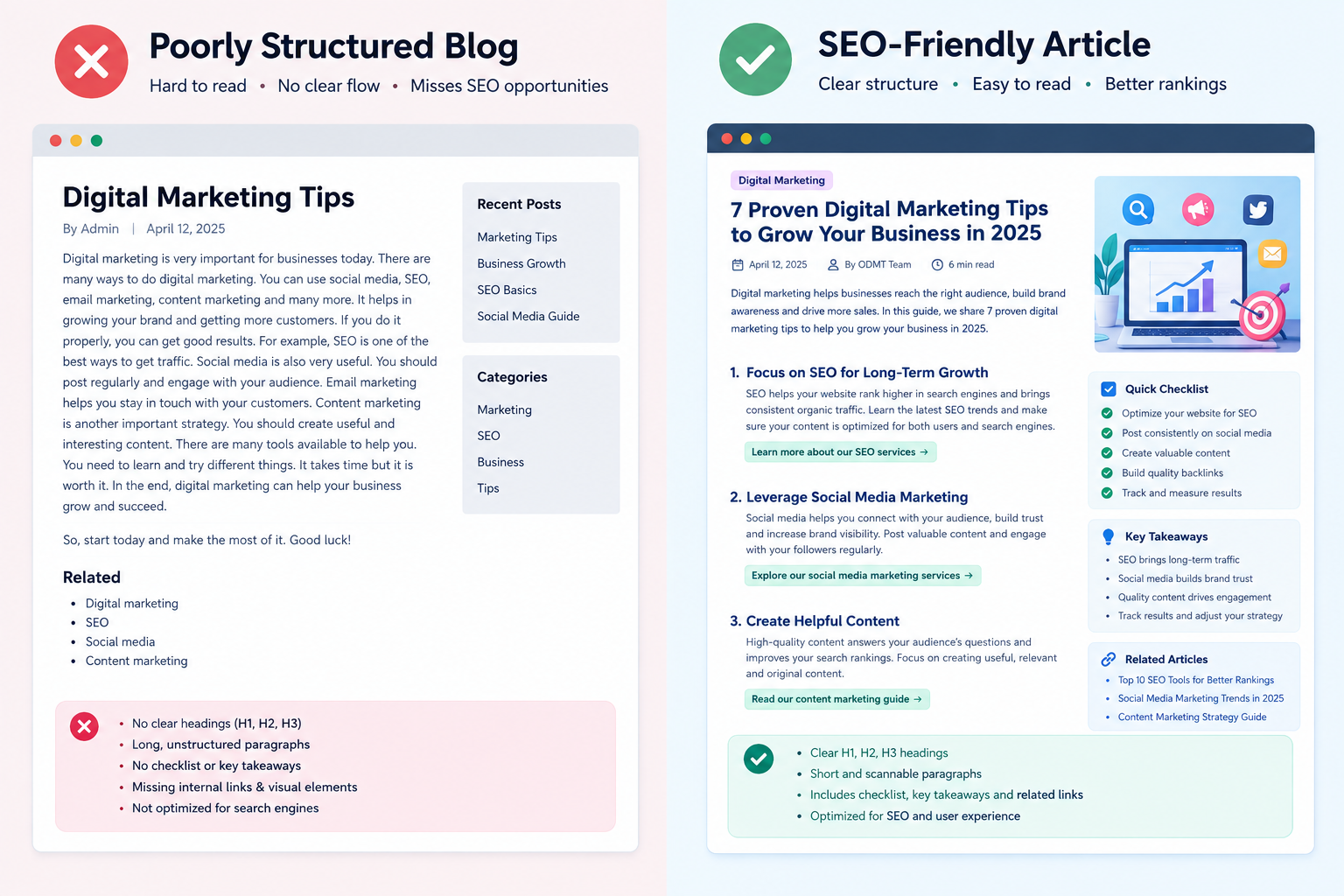
While creating a listicle blog, make sure every pointer offers unique information without repetition. This kind of template lets you add specific examples, tips and even related keywords naturally. Want to increase reader engagement with your listicle? Ask them to leave a comment about which one item on your list makes most sense to them.
An example of such a post could be: 3 Phases to Build Authority and Earn AI Citations
The Comparison Post
Another popular blog post template is one that showcases a comparison between two or more approaches, products, services or strategies. This template works well for readers searching with commercial intent, as they evaluate options and make decisions based on their needs.
Such blogs must focus primarily on drawing the key differences between the subjects involved. Such a blog should include distinct pointers discussing cost, scalability, time to generate results, long-term value and more. The best way would be to create a comparison table for easier readability.
An example could be: SEO Vs PPC: Which Marketing Strategy You Should Go for?
The Ultimate Guide Template
Have you ever struggled with how to get started with a complex subject? That’s where beginner’s guides and ultimate guide blog posts come in handy. They provide detailed information on all the subtopics covered under a broad subject, from basic to advanced levels.
You can begin with a simple definition, followed by a comprehensive explanation of key concepts, strategies, benefits and limitations. Adding real-life examples, FAQs or actionable tips to such blogs further increases their usability. If you are an SEO company website, you can use this template to introduce your readers to complex topics, such as, answer engine optimization, generative engine optimization, LLM SEO, etc.
Go through this blog for deeper insights: A Guide to Mastering Generative Engine Optimization in 2026
-
The Case Study Blog
The best way to showcase practical scenarios to your readers is to create a comprehensive case study around them. These blog posts address a real problem and suggest a solution, coping mechanism or implementation strategy for the same along with the measurable outcomes.
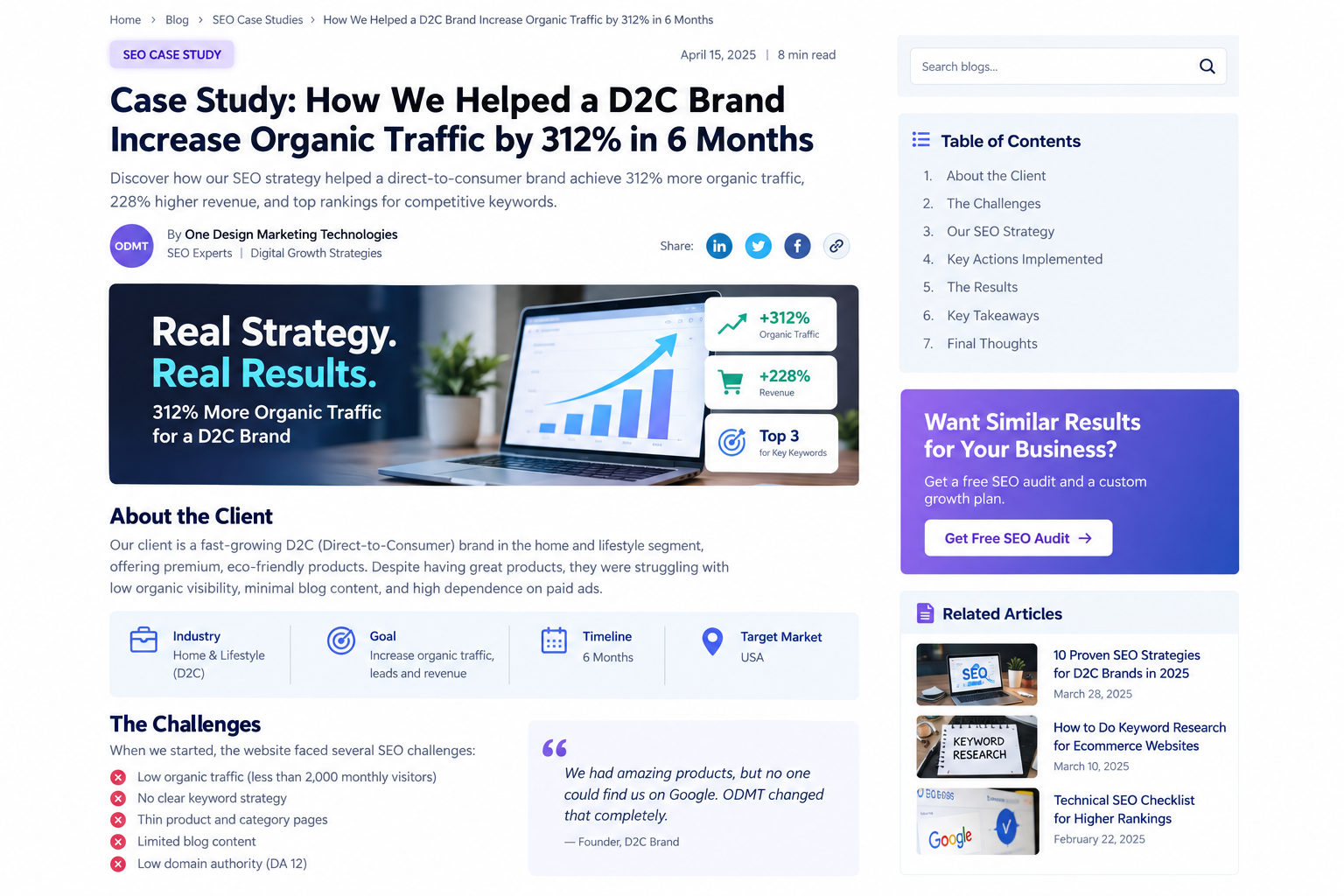
Such blogs are highly credible since they provide practical solutions to real-world issues. Planning on writing one? Start with stating the challenge, followed by explaining the original research conducted and the strategy adopted.
Here’s a live example of such a blog: How SEO and PPC Build Trust Across Search: Case Study
The Checklist Post
For readers looking for a simple reference blog that they can bookmark for later, we would recommend a checklist post. These templates break down a complex task into a series of actionable items that users can go through one by one to complete the task.
Make sure you divide the entire blog into smaller sections and then provide a detailed list of steps under each section. This makes the procedure easier to follow, both theoretically and practically.
An example could be: The Complete SEO Checklist for Optimizing a New Website
Final Words
A well-structured blog post with clearly-defined content not only attracts organic traffic on traditional search engines but also has higher chances of getting cited in AI-generated responses. Furnish it with real-life examples and original statistics to add value.
Are you also looking for content marketing services for your website? We are an AI SEO company in India, offering AI-powered SEO services as well as dedicated PPC services to our clients. Our SEO solutions are fully customized to help brands meet their business goals while staying within their budget constraints. Book an appointment to get a free quotation today.
Follow One Design Marketing Technologies on IndiaMART, YouTube and Upwork.

AI Search Improves When it Removes Work, Not Judgment
“AI is about amplifying human potential, not replacing it.”— Fei-Fei Li, American computer scientist, Stanford University.
Think of asking an AI to share a recipe of dolomades. It did its work, but it turned out too salty. Now, you’re blaming the AI platform for its taste. Can AI search platforms solve it? No. Artificial intelligence can only give you the instructions, but the tasting part is yours entirely. It can only improve your knowledge about something, but not replace your own intelligence.
This is a problem when you pass down tricky works to AI; it can’t give you a solution. On the contrary, when you delegate mundane work like giving you just the recipe, it becomes an “easy button.”
For many years, researchers and AI specialists talked about this “easy button” and how many industry leaders are blindly trusting artificial intelligence to do the work for their businesses.
Since the AI scams are already detectable and there are legal consequences for misusing AI, researchers have tried to do something different. They defended the “easy button.” Let’s talk about it in this article.
The Existence Proof of the Easy Button
AI specialists and researchers conducted many AI searches and found out that the easy buttons do exist. The problem here is that companies keep asking AI search engines questions that require expertise, accountability and context. The best way to use the easy buttons is to give them easy tasks that don’t require deep thinking. Here’s how to do it:
Create To-Do Lists for Meetings
This is perhaps the most transformative work researchers have done. They have stated that AI summarization and transcription is the most useful easy button. No one has ever pondered that one can have their cake and eat it as well.
SEO specialists and marketers can take their favored note-taking app and start recording meetings and extract the following things:
- The decisions
- Follow-up questions
- Assigned tasks and owners
- Deadlines of the tasks
- Unresolved topics
The coordinator of the meeting goes through the AI output of the entire thing and shares it with the team. AI doesn’t decide what the company should do, it just documents what people have already determined and attempts to hold them responsible.

The responsibility here suggests that if anyone took part in the meeting, and they said something or were given a task they were denied. And when confronted on that action, if they tell you “no, I didn’t say it,” or “I didn’t agree to do it,” you can tell them “yes my AI notes dated XX/YY states you said or committed to it.” If they still fight you, then you can present the original voice recordings.
Why It’s Important:
- No need to write down the meeting discussion.
- Tasks and due dates given to owners.
- Nothing missed and overdue follow-ups.
- Reduction of repeating what you did last time in another meeting.
Prior Detection of Data Patterns
Allow AI to export non-sensitive and approved datasets and ask it to categorize, summarize, detect the quality or flag things that aren’t working. Here are some search engine optimization examples:
- Arrange low-performing pages by content or template type.
- Classify thousands of search console queries by intent.
- Convert disorderly exports into functional graphics and tables.
- Compare winners and losers after a Google algorithm update.
- Monitor unusual changes that require more inspection.
Artificial intelligence recognizes if there have been any alterations. Therefore, it should be trusted to determine why one detail was changed without giving any reason.
Why It’s Crucial:
- Additional data anomalies and opportunities identified.
- The amount of data categorized.
- The hours saved in the task.
- Number of rows checked.
Add New Formats to Existing Work
It’s a well-known fact that we all want AI search engines to understand the prompt and give the complete work. But the easy button doesn’t work that way. To achieve your business desire, just use AI to recreate formats. Here are the examples:
- Transform documents into FAQs or training materials.
- Write meta descriptions from an existing content.
- Draft comprehensive summaries from public reports.
- Convert webinar videos and podcasts into LinkedIn posts.
AI takes care of the transformation and a human ensures the voice and accuracy of the content. You might have understood by now, that you’re not asking AI search to think for you, you are just letting it do the tedious part, so your actual work rolls out smoothly. QA is the new black amidst the orange that all marketers need to harness.
Why Use it:
- Reduced editing time.
- Number of valuables created from one place.
- Time saved in production.
Use AI as an Editor
Most businesses want AI to create more content, but hardly anyone cares about giving the final editing task to the tool. This can be a game changer. Allow AI to check the recording of the meeting or the draft, your expertise will still make the decision.
What You Can Ask AI to Review:
- Requirements that weren’t mentioned.
- Confusing language.
- Unanswered customer queries.
- Missing information and contradictions.
This isn’t the final thing, but a hard check for the missed opportunities before an experienced human can make the final call. You have to understand that AI is less tricky when it simply asks questions, suggests opportunities and identifies missing points. It doesn’t write, approve or submit the final draft.

The Usefulness of It:
- Identified issues before submitting the work.
- Reduced time for revisions and overall review time.
- Post-publication corrections if the content is already online.
- Feedbacks from stakeholders.
Remove Repetitive Technical Tasks
Giving AI bigger challenges with technical tasks can only end up in a messy detail. Instead try giving it small, testable pieces, such as:
- Schema markup
- Spreadsheet formulas
- Redirect mapping
- Regex expressions
- Basic scripts
- SQI questions
Whether the result is useful or not, but it will make the QA straightforward. You will still decide on the outcome and control the implementation. It’s crucial to avoid the deployment of AI-generated code across a production site without reviewing it.
Measurable Value:
- Reduced error rate.
- Less cost compared with manual execution.
- Number of records processed.
- Manual steps removed.
Distribute Labor but Not the Responsibility
The true concept of the easy button for AI isn’t the actual problem. The issue is to decide what users are willing to allow AI to do, and what its impact would be.
Content transformation, editing, reviews, data organization, repetitive technical projects and meeting notes are all tedious and relatively easy to QA. Start today and press the button for all of these tasks.
You can simply use AI to reduce time to when processing larger projects. Use human intelligence to determine the usefulness and accuracy of the content.

And if all of it feels overwhelming, get in touch with a reputed SEO company, such as One Design Marketing Technologies. We provide SEO services, PPC services, content marketing services, content writing and more. Also our years of expertise makes us the top-rated SEO company out there.
FAQ
Can an AI SEO company help my business with better visibility?
Yes, of course. At One Design Marketing Technologies, we offer LLM SEO, PPC services and a full GEO work, so your brand gets its deserved popularity.
Will you help me with content writing for my website?
Yes. We have an experienced team of content marketing services. They take care of the entire content requirements for your brand, so it ranks higher and gets cited in AI answers.
As a GEO company can you help my company to increase revenue?
Yes. We have over 16+ years of experience and an expert team who ensures your company is mentioned in AI answers and builds trust among your target audiences.
How long will it take to see the AI SEO result?
It may take several weeks to get the best result. However, it depends on your company size and the complexity of the requirements. But one thing is certain, that the results will come eventually.
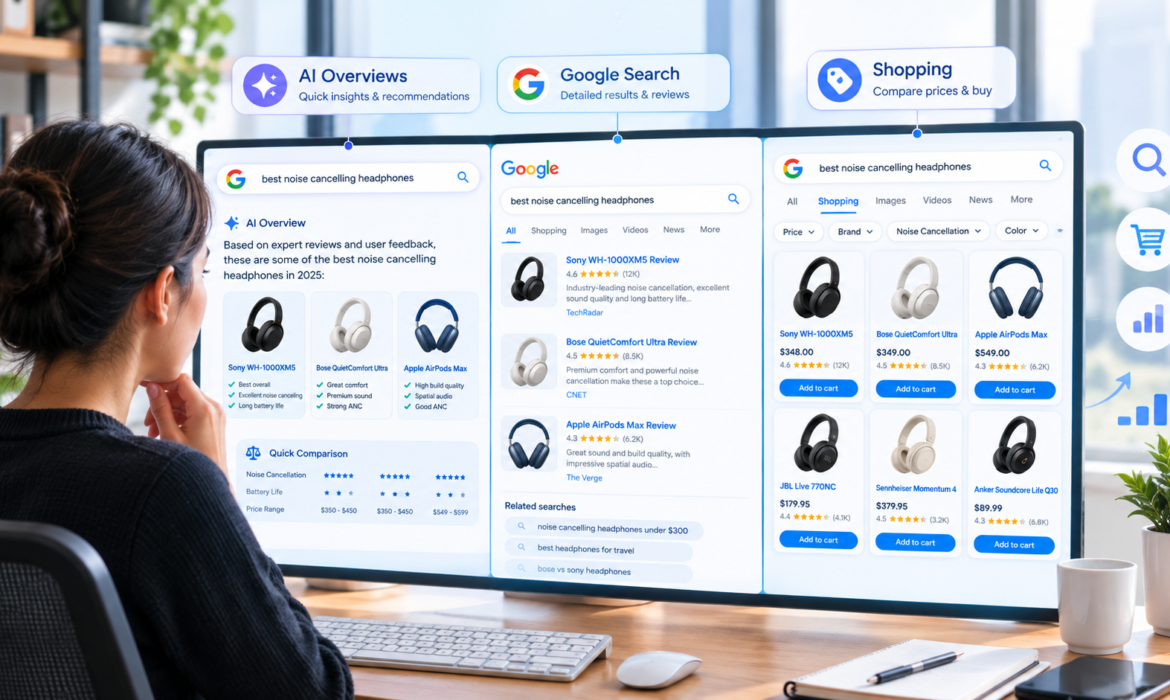
Top E-Commerce Search Trends That Matter in 2027
With the rapidly changing digital marketing environment, ecommerce brands are searching for new ways to improve their online visibility. Buyers are also getting used to new ways of discovering products and websites, namely, Google product listings, AI-generated responses and conversational queries.
So, to generate more revenue, brands need not just rank higher but also to get recommended by AI assistants. For this, businesses must optimize their ecommerce websites for different platforms and understand customer search patterns as well as their comparison and evaluation criteria. In this article, we will discuss the top ecommerce trends that can help your e-commerce website stand out in 2027.
Use of AI Search Will Grow Stronger
With the growing use of AI tools, such as ChatGPT, Claude, Perplexity and other AI assistants, product research is no longer the same as before. Ecommerce websites will need to optimize their content not just for traditional search engines but also for AI in 2027. AI optimization can help your website become more discoverable.
Some of the AI technologies you can use in this regard are Answer Engine Optimization (AEO), Large Language Model (LLM) SEO, Generative Engine Optimization (GEO) and ChatGPT optimization. Since AI searches are more conversational in nature, optimize your content around questions and answers rather than targeting keywords alone.
Non-Branded SEO Will Bring More Revenue
What if the user is not focused on a particular brand but only searching for the best option based on utility or budget? Non-branded product-based queries can introduce several new ecommerce websites to the users.
You can follow this emerging ecommerce trend by optimizing your product and category pages as well as informational content. Target high search-intent queries that increase your chances of being cited by AI tools. Get ready to gain an edge over your ecommerce competitor and generate higher revenue in 2027.
Google Shopping Will Continue To Seek Attention
Keeping your product information updated on your website can make your product eligible to be recommended in Google Shopping grid in 2027. This is one of those ecommerce trends that requires you to keep your product feed optimized alongside your content.

Once you do that, it makes your products eligible to be placed in Google product grids when users search for products with commercial intent. Users are likely to pick and compare options from the grid first than going for organic search. This arrangement not only promises higher visibility but also can generate better leads and higher conversion rates.
Search Experience Will Hold As Much Relevance As Ratings
Ratings are still among the most favored factors in ecommerce, says the previous ecommerce trends. But in 2027, we would like to turn your attention to providing a better search experience. Because what if your website appeared first but your page took all the time in the world to load, making your potential customer lose their interest? What if your website hides small but very relevant details about your policies or makes it difficult for users to evaluate products? That’s where lead generation and sales will eventually drop.
This is where Search Experience Optimization (SXO) comes into the picture. Make sure to elevate the user experience by making relevant product reviews, pricing, availability, specifications, images, comparisons and shipping details easily available. A better search experience can increase the chances of conversions.
Less Dependence on Agentic Commerce
Ever heard of AI-powered shopping agents? Well, these promising AI tools are redefining the future of the ecommerce landscape by automating the entire online search and purchase process for you. These agents can search for the requested product, compare multiple options and even buy the most viable product.
While the innovation seems quite tempting for the modern-day ecommerce brands to adopt readily, the technology is still in its early stages. As such, heavy dependence on it might not be the best solution for your business. Instead, we advise you to work on polishing your APIs, product descriptions and other technical aspects of your website.
AI Traffic Will Become More Intent-Driven
AI search will heavily influence ecommerce trends and user decisions in 2027. From making simple informational queries to asking for the best recommendations for specific products, AI assistants are answering user queries with increasing precision.
These platforms can summarize product details, compile reviews, narrow down choices and compare alternatives before the user reaches your ecommerce website. So, what you need is to perform ecommerce SEO on your website using AI capabilities to improve your visibility across traditional search engines and AI platforms.
Conversational Searches Will Become More Relevant
As for ecommerce trends, modern users are not limited to keyword-based searches. They may instead prefer to ask direct questions, making conversational queries that specify their product preferences, requirements, budget or other specifications. For instance, a user can search for “a laptop for graphic designing under $2000 with 16GB RAM.”
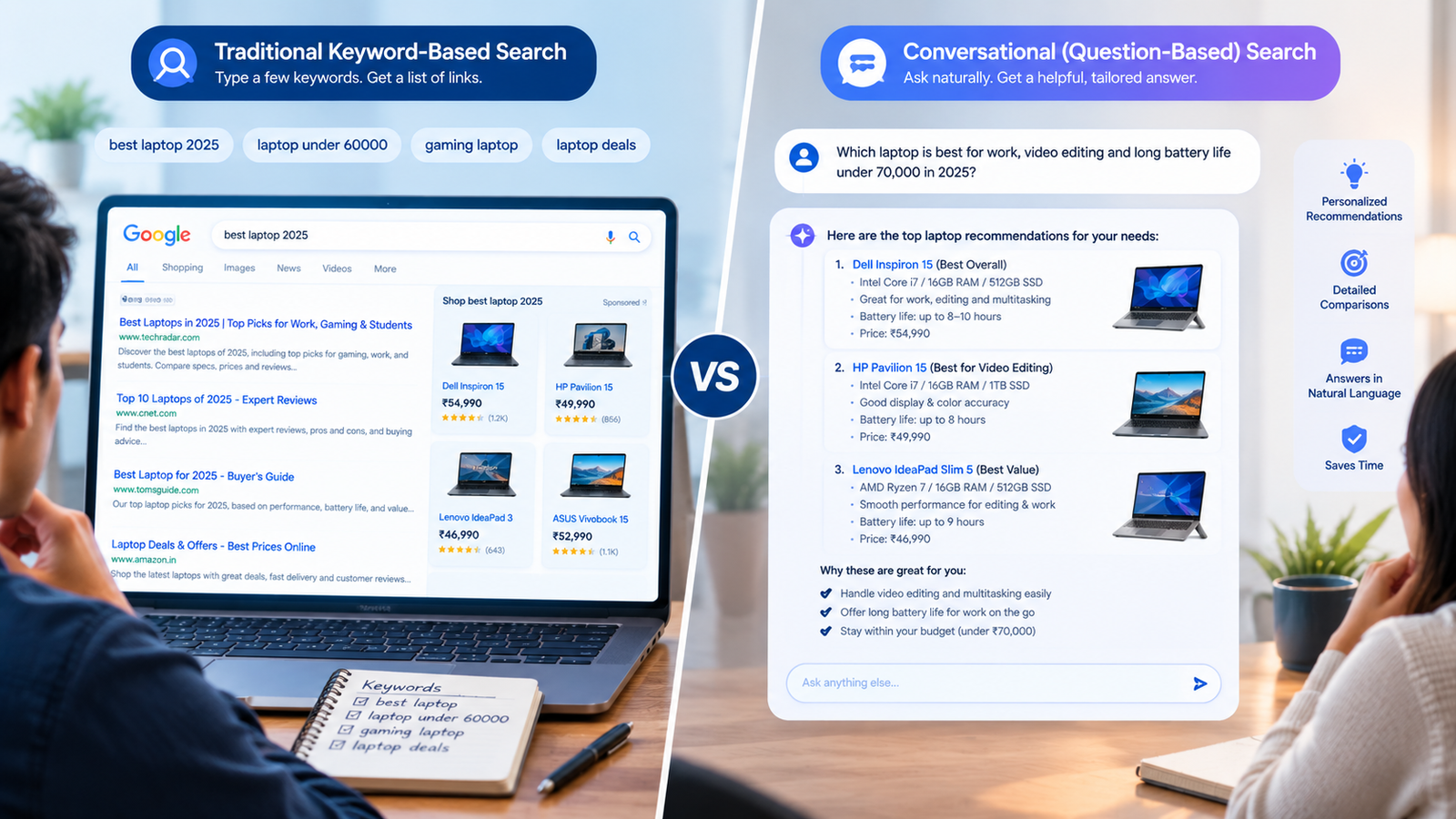
Now, if your product page clearly provides this information in an easily understandable format, then chances are high that an AI platform will recommend it. For instance, performing ChatGPT optimization can help make your content more easily accessible to AI platforms.
Future for E-Commerce Brands
Traditional SEO is here to stay even as digital marketing practices continue to shift rapidly. So, in 2027, brands need a comprehensive SEO solution combining SEO with PPC services along with GEO and AEO capabilities.
Ecommerce brands need to track their product offerings across different platforms, including AI overviews, Google, conversational search and shopping results. If you are also planning to give a boost to your ecommerce website in 2027, consider switching to AI-powered search optimization. Connect with us today and get started on your journey in digital marketing.
Follow One Design Marketing Technologies on Google Maps, Trustpilot and Fiverr.

GEO for Businesses with Revenue Targets
Most GEO advice optimizes for visibility, but if you’re seeking improved revenue and business results, it’s not the exact place to start.
Most budget services for AI search and generative engine optimization (GEO) optimize for the wrong KPI. Their only goal is to bring increased sales and profits. But what if I told you that AI search visibility to the right customers at the right time is another way to bring even better revenue figures? You have to believe it, because it’s true.
A citation is visibility, and when it comes to a booked opportunity, a new customer and incremental sales, those are performance. These outcomes are correlated, but they’re not the same. A gap between them is where the GEO budget sees no result.
That’s the reason the first task isn’t getting cited, it’s getting cited in the recommendations that actually ends up in a purchase. In this article, we’re going to discuss how to achieve your revenue goals with GEO. Let’s get started.
Approaching GEO in a Unique Way
From the past eras to this digital age, online search has seen several changes. Today, generative engine optimization or AI search is a big part of those changes. However, most GEO coverage is created by people who fail to carry a quota. The result here comes out as a sales check or a dictionary data.
What I want to show is the perspective of someone looking for revenue and not just after showing up in a screenshot.
Content Matters a Lot
Your website will see the light of success when you make significant changes to your content. There are few steps that can help your brand get the right kind of attention.
Write for Prompts
If you have been writing for the keywords, change the approach and write for the prompt. The backlog of “what is” queries in each article reads like the way your competitors have gathered from AI, and search engines can gather that detail from anywhere.
Content structured for buyer selections are different. Create it around real customer queries, such as “which provider gives the best solution to this specific requirement?”
Here, you can add named criteria, honest tradeoffs and situations where you don’t fit. Search engines will see these prompts like a recommendation.
Publish the Data You Own
Focus on the data that you own. Originally owned data is one of the strongest citation magnets because this is something an AI model can’t assemble from other pages. A single content that no one else can publish will often perform better than generic posts because, once it’s pulled into AI answers, it tends to be known by the brand name.
Show the Real Person behind the Content
Rather than using the author name as a faceless “admin,” add the name of real writers. A name and an image can help make the content credible. Your target customers will find it even more useful as a human name is written at the end.
Remove Weak Content
Regard your content as a tree. Its bad branches can affect its growth. Therefore, prune as much as you can. The ones that aren’t ranking or not getting mentioned remove them. For example, if a competitor simply removes your logo and posts the same content with their logo, the result will always go against them. So, if you do the same, the outcome for you won’t be any different either.

Technical Changes Matters
Some technical tweaks are important as they can bring improved visibility and mentions. Here are the ways to achieve it:
Make Content Accessible to AI Crawlers
Make sure AI crawlers aren’t blocked and your pages are indexed in Bing because ChatGPT’s search relies on Bing’s index.
Ensure Pages are Easier for AI to Cite
Ensure that publish and update dates are visible and keep refreshed pages always updated. Freshness and uniqueness are important in AI answers, and good materials often get cited repeatedly.
Format your webpages so AI searches select them. Use comparison tables where customers weigh options.
Ignore the Technical Hype
The llms.txt is an important thing, but Google doesn’t use it and there’s no evidence that it alters anything. Schema markup is good too, but it’s not something many SEO marketers use. You can use different technical audits, but none of it can ensure a purchase. It might help your website get discovered but it doesn’t assist with the citing.
The GEO Mistakes to Avoid
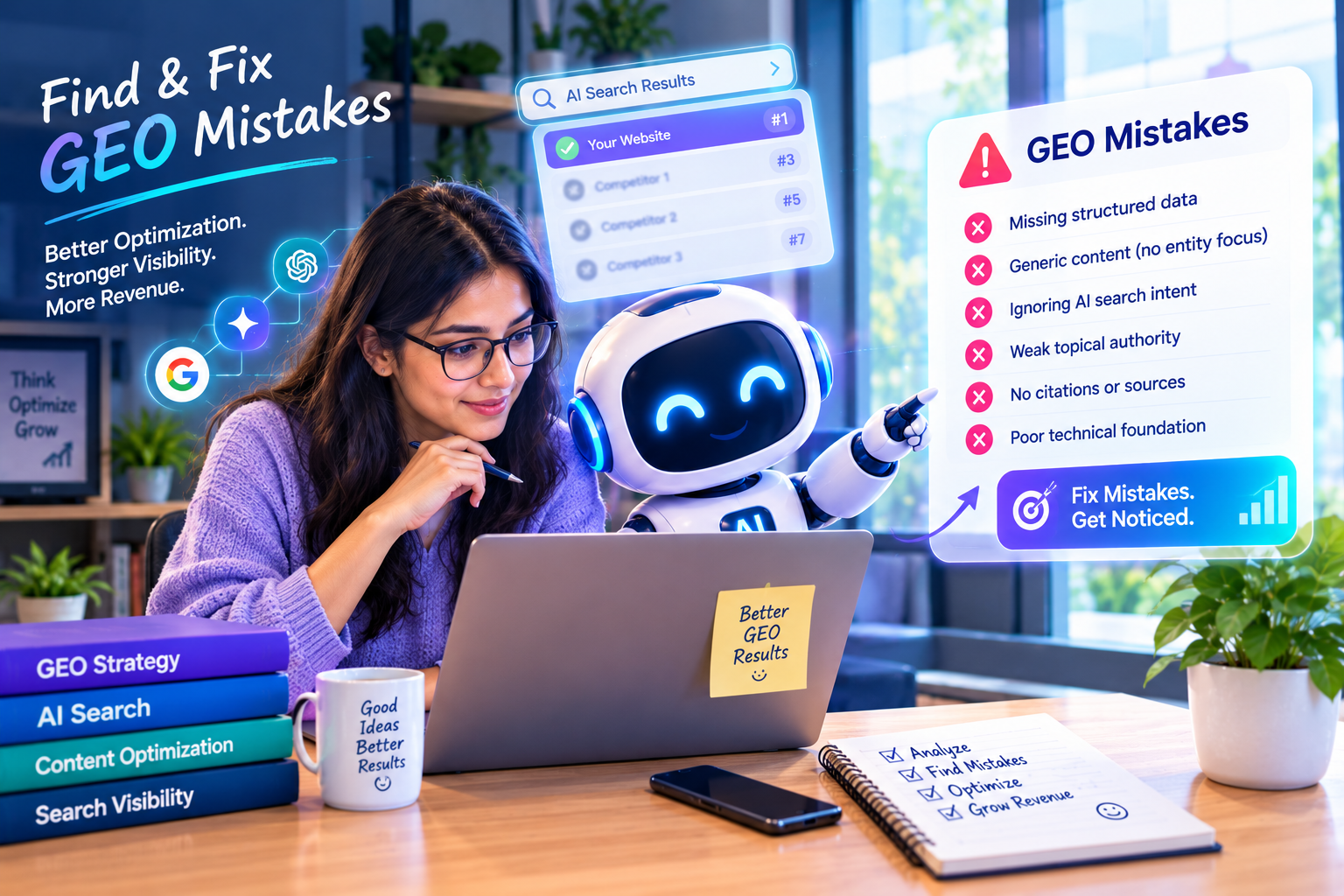
- Regarding monitoring tools results as a final word. Checking mentions increase when none of it turns into buys. Rising citation on wrong queries isn’t a proper progress.
- End up over indexing one single page. AI engines draw data from different sources, so you get visibility on all platforms.
- Making citations on informational queries the primary objective. These things have less value
- Ranking first in Google no longer guarantees that your brand will be mentioned in the AI answers when a target customer conducts a search.
Measure Against Pipeline
This is the part most articles skip. Here’s what you can do to make things work:
Start by Defining Money-Query Details
- Real customers use these prompts before making a decision. Usually, that’s just a few dozen prompts.
- Monitor citation share for that set only. When your brand gets mentioned in 10 recommendations, it’s a good thing.
- Connect those citations to revenue you can protect. Use the AI-referred sessions in analytics, transfer them into your CRM and follow them through to better opportunities.
- Set expectations on timing as well. There might be a lag of several weeks between the publication and the appearance in AI results. Don’t get frustrated in the second week and try not to declare victory in the third week. Ensure to judge performance by the quarter.
The Unchanged Part
The acronyms have changed a lot of time, but the discipline hasn’t. Businesses mostly get better results, that doesn’t let their competitors copy and measure success against revenue. If you have a revenue target you want to hit, optimize for the AI answers that bring qualified conversions.
The Section that GEO Advice Ignores: You Can’t Control the Citations
Marketers think that whatever you added to your webpage eventually gets cited. But in reality this isn’t always the case. Use public platforms like Quora and Reddit to understand which pages are being cited.
Next, make sure your brand entity is the same and consistent on every platform, such as LinkedIn, press mentions and other places. Just having the entity on blogs isn’t enough.
Finally, run the prompts on Google AI Overviews, Perplexity and ChatGPT to see how they perform and give answers. Test it like an audit to see how the answers change on each platform.
Final Thoughts
GEO or generative engine optimization or AI search as users often use, is a significant stop where you have to park your marketing efforts. Just getting cited will not turn things into conversions, only by making some changes to your strategies can give you the result.
Still waiting to see your revenue increase? Contact One Design Marketing Technologies to lend you a hand. With over 16+ years of experience. We’re the experts you need for all your digital marketing needs. So, without getting bombarded by citation hoaxes, choose an SEO company that ensures consistent brand mentions. Call us today!
FAQ
What is GEO?
Generative engine optimization is the system that ensures your webpage content gets mentioned and cited in AI answers. This builds better credibility among target customers whenever they conduct a search on Google AI Overviews, ChatGPT and other platforms. It’s better and effective than traditional ranking.
What’s the difference between SEO and GEO?
Search engine optimization is the traditional way of ranking websites on the search results. Generative engine optimization or GEO comes with approaches such as ChatGPT optimization, LLM SEO and answer engine optimization (AEO). These tools concentrate on getting your business mentioned and cited in AI answers. This is a whole new way that ensures better visibility than ranking.
Why AI visibility alone isn’t a good thing for improved GEO?
Visibility is just as the name suggests, your brand will show up, but it will not ensure qualified conversions. The moment your website is mentioned consistently across AI platforms, it can build credibility among your target audiences and this can bring purchases and ultimately greater revenue. And this is possible with AI-powered search engine optimization.
What’s a money-query set?
This is a small list of prompts that customers use before making their purchasing decisions. It’s just a few prompts. When you create your strategies based on these certain prompts, this ensures your brand is mentioned in the AI-generated responses.
Does ranking at the #1 position on the search results ensures mentions in the AI answers?
No. That’s the traditional way of ranking through SEO, but this process doesn’t work today. If your brand gets the highest rank on Google, it doesn’t mean you will be cited in the AI responses. This is the reason search experience optimization (SXO) has a different requirement, one that doesn’t match with the regular search engine optimization.
Is it possible to control what content gets mentioned by AI platforms?
Not exactly. AI platforms extract mentions from public forums such as Quora, Reddit and other sites that brands cannot control. So, GEO will not work only based on your website optimization.
Can llms.txt file improve my AI mentions?
Not really. Google never stated that it works, and there is no evidence of such results. This isn’t the fix for AI citations. Also, this isn’t the technical work you have to indulge in to build your AI SEO strategy.
How long does it take to see the results from GEO services?
It might take several weeks to see the result. You have to wait until AI answers cite your company. This will not happen in the second or the third week of publishing the content.
What’s the biggest mistake marketers make when it comes to GEO services?
They usually treat citations as the scoreboard. Even if the mentions are rising on wrong queries, it doesn’t convert into improved revenue.
How can I check the performance of my website in AI search engine results?
Add the money-query prompts on the AI platforms and check how it gives the responses. You can write them on Perplexity, Google AI Overview, Gemini and other AI places. Monitor the different responses.
Do I need SEO services to help with GEO and AI SEO strategy?
If you want to focus on your business, then yes. Let a reputed AI SEO services such as One Design Marketing Technologies handle your marketing strategies, so you won’t have to worry about AI citations, mentions and conversions. While you work on your business, we will help you achieve what you have dreamed of.

Guide to Build SEO Budget for 2027
Gone are the days when the SEO budget was all about assigning a fixed amount to a general list of activities. Now, brands need to survive in the fast-changing digital environment, especially with AI-powered searches.
Before AI came into the picture, SEO budgeting was mainly about content, traffic, keywords and rankings. But now, businesses must take into consideration AI visibility, customer acquisition and brand authority. This requires businesses to create flexible budgets that can adapt to changing user search behavior and emerging opportunities.
Are you also planning to frame an SEO budget for 2027 but unsure how to allocate your budget to accommodate these new challenges? If yes, then this article is just for you.
Begin With a Maintenance Budget
Prioritize setting aside a budget for your most important SEO assets that are essential for your business operations. This primarily includes content updates, SEO analytics, technical audits, local listings, website maintenance and internal linking. The ultimate purpose of creating this maintenance budget is to cover the ongoing maintenance activities of your website.
Build a Growth Budget Using Evidence
Now, create a budget for activities that would facilitate business growth. Carry out extensive research to find out which growth activities have the highest potential for success of your business. The budget for each of these activities must be planned around specific problems or measurable objectives.
For instance, if a professional SEO company detects weak category pages or declining keyword rankings for your website this year, then a budget can be assigned to improve these areas instead of focusing on other opportunities.
Allocate Budget for Core SEO Services
Next, assign your budget to all the core SEO services in your business based on their significance to your business. Some of these activities include setting aside a budget for technical SEO, keyword research, content creation, digital PR, linking building and website optimization. You can also allocate more resources to certain activities based on their potential impact.
For instance, a local business looking to increase local visibility clearly needs a larger budget for improving its local SEO. Similarly, an ecommerce brand would need additional resources to invest in managing its ecommerce and technical SEO.
Invest in Artificial Intelligence (AI) Search
In 2027, it’s a must to dedicate funds to AI search planning and optimization. Do not chase platforms; experiment with how users are interacting with AI and how you can attract them to your website. Plan on utilizing AI-powered techniques, such as GSO, GEO, AEO and LLM SEO in your future SEO budget.
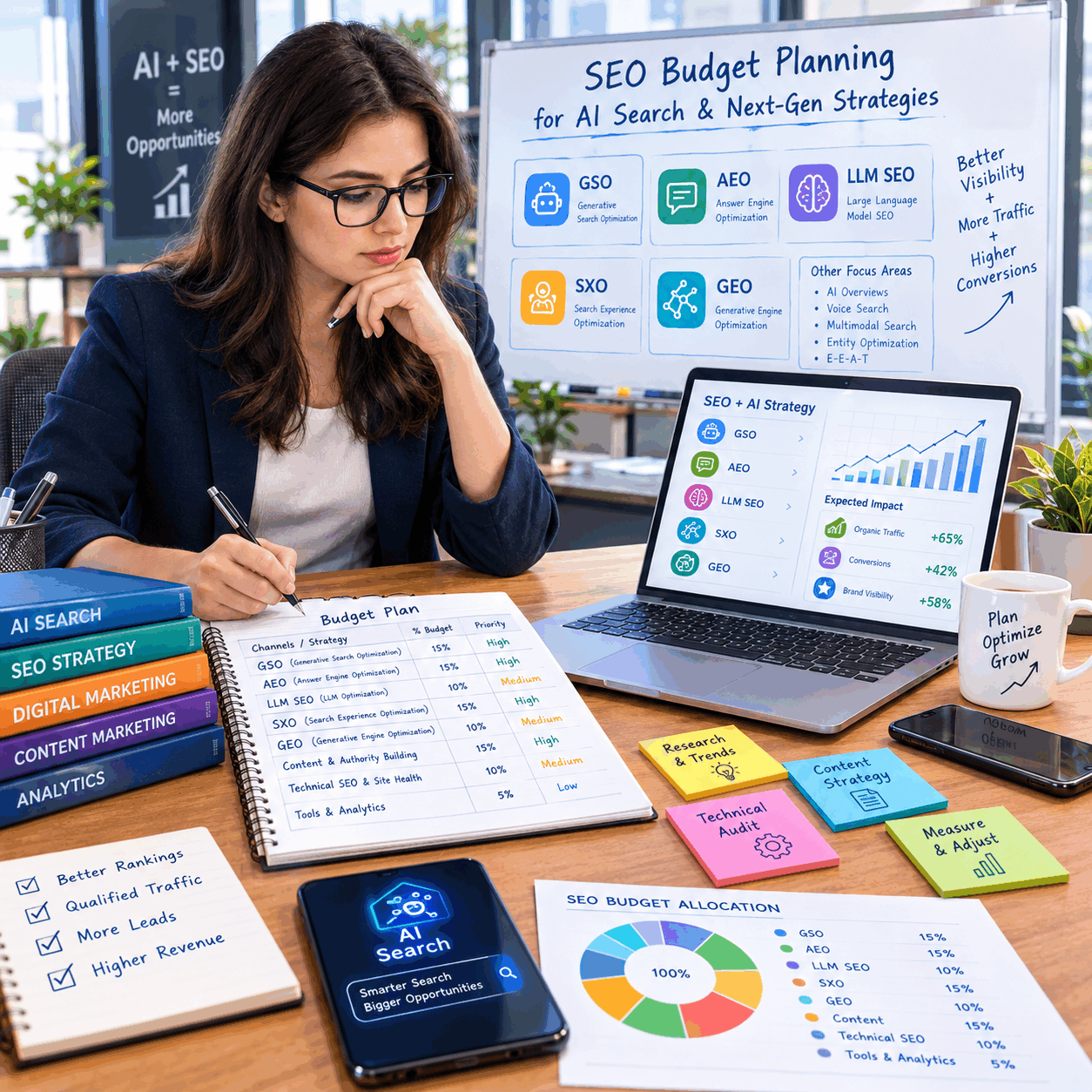
Using these AI capabilities can make your website more discoverable by AI systems. You can begin with optimizing your website content, such as guides, landing pages, FAQs, etc. for AI platforms to reference when generating responses.
Put Aside Budget for Search Experience Optimization (SXO)
In today’s digital era, users look forward to browsing websites that offer a seamless search experience. So, make sure your SEO budget for 2027 is also reserved for Search Experience Optimization (SXO).
It ensures that your website is user-ready, offering mobile usability, optimal page speed, seamless navigation, optimized content and user-friendly design. Simply put, if you want visitors to return to your website, you must provide them with the best UI (user interface) and UX (user experience) features.
Work on Experimentation Budget
When rolling out the 2027 SEO budget, don’t miss out on setting aside a budget for testing. Emerging search trends make it necessary for brands to make experimentation a priority. You can test an AI SEO strategy, invest in AI-powered search engine optimization or offer AI SEO services on an experimental basis.
Such experiments help brands test whether third-party mentions and links improve brand visibility and if optimization helps existing pages gain more AI visibility. You can also use ChatGPT optimization to check if the AI platform references or recommends your content.
Incorporate PPC Services in Your SEO Budget
If you are looking forward to SEO budgeting in 2027, you can’t leave out PPC services. They can be very helpful especially in identifying customer intent, valuable keywords and ways to improve conversion rates.
Besides, paid ads work really well if your brand wishes to promote seasonal deals, offers or discounts to increase sales. A smart SEO strategy is one that combines SEO and PPC services to maximize visibility and bring more qualified traffic to your website.
Build SEO Budget For Multiple Scenarios
Do not rely on a fixed budget forecast. You can create multiple budget scenarios to support your original SEO budget. This approach allows brands to create flexible budgets that could be revised according to changing business requirements.
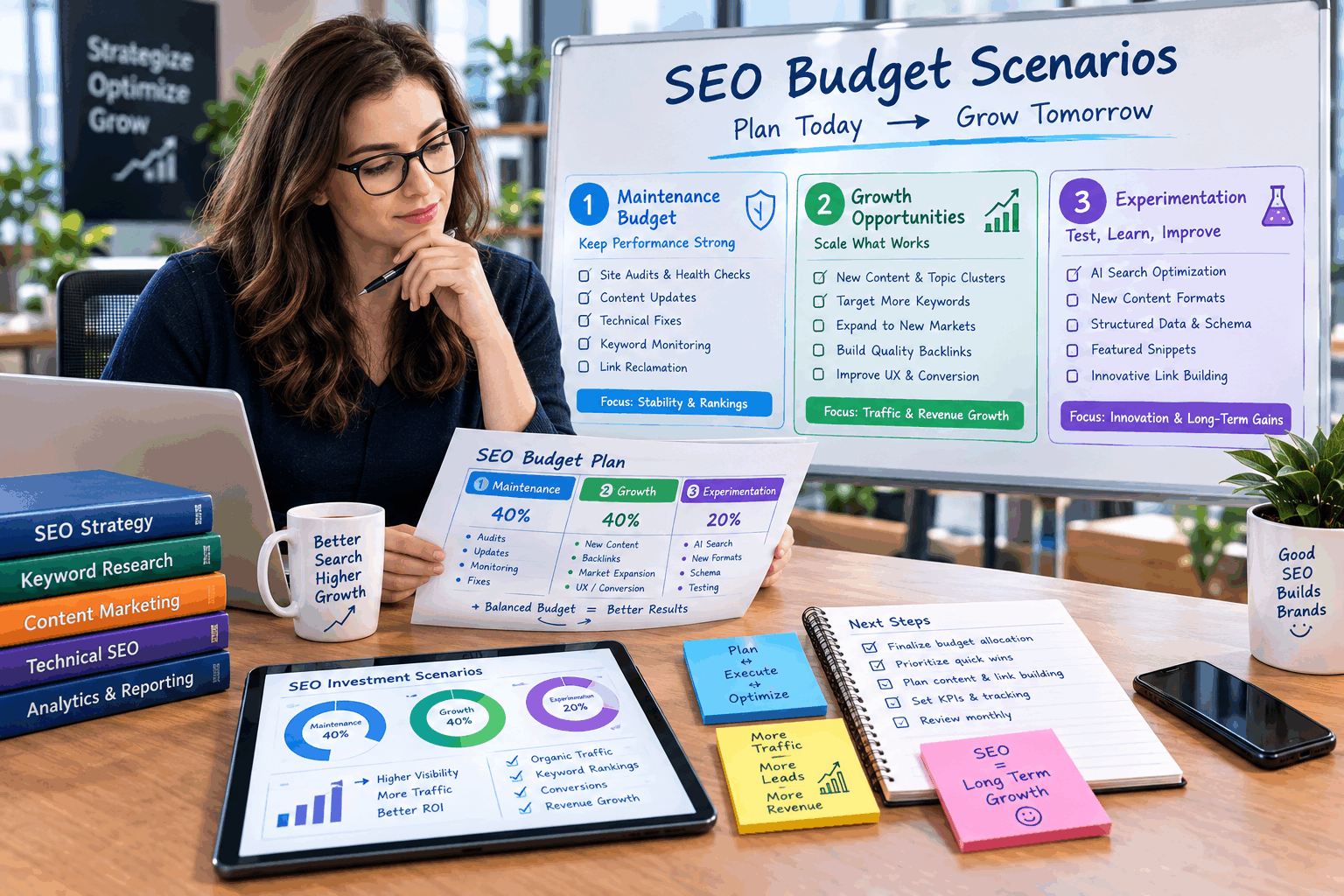
For instance, you can approve an annual budget that covers maintenance costs to ensure existing organic visibility. Another scenario could be one in which you add investments for growth opportunities. In yet another scenario, you could expand your existing budget for experimentation or leverage emerging search opportunities.
Conclusion
If you are planning to build an SEO budget for 2027, then you need to shift from fixed investments to a more flexible approach. Make sure you support core SEO services and set aside investment for experimentation. Also, incorporating AI, SXO and PPC into traditional SEO can further make your SEO budget for 2027 ready.
Remember, a smart SEO strategy in 2027 should keep track of where investments are made. It should reflect which resources drive growth and which ones hinder development. Accordingly, every SEO company should be able to make necessary changes to its budget based on the insights it gathers.
Want help in building your SEO budget for 2027? We are an AI SEO and GEO company, offering customized SEO solutions to brands. Our dedicated team of SEO experts can audit your existing website or help brands devise effective SEO budgets for new websites. Book an appointment today to get a free quotation.
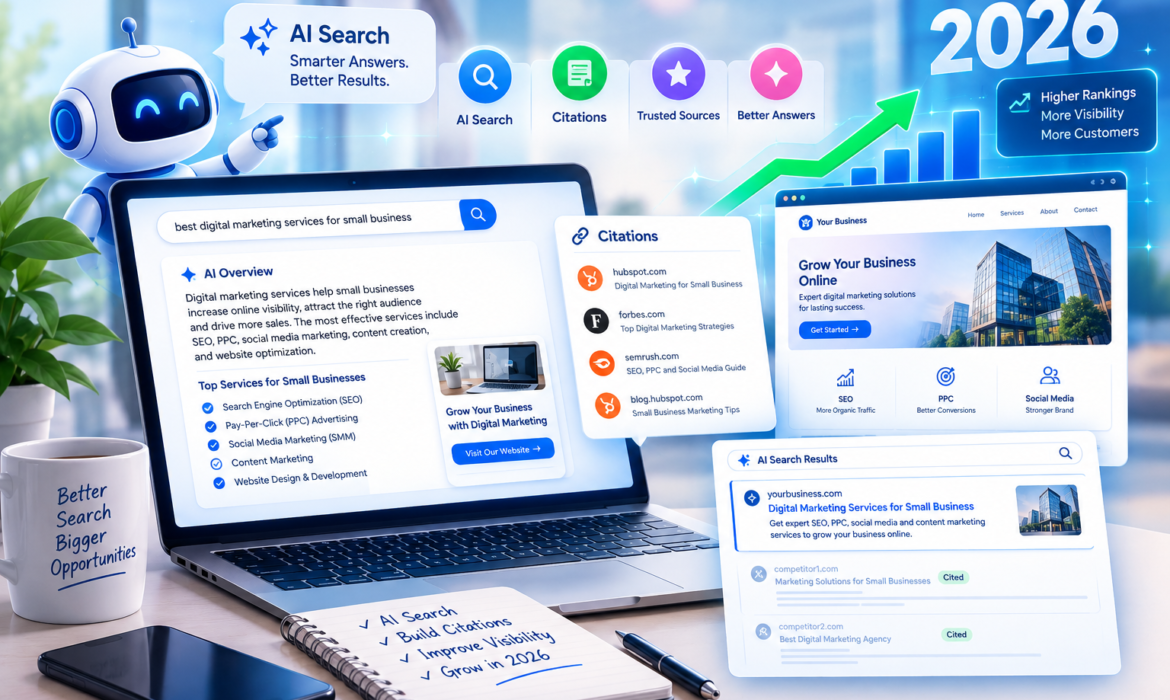
Step-by-Step AI SEO Guide for Growing AI Citations And Visibility in 2026
Search is not limited to traditional search engines. By 2026, people are increasingly using ChatGPT, Google AI Overviews, Perplexity and other AI-based platforms to get answers, recommendations and research. This makes AI SEO a key component of modern search strategy.
Now businesses need to optimize for AI citations, brand mentions and visibility in generated answers, as well as rankings. In this guide, we will walk you through practical steps for improving your AI search optimization, strengthening your digital authority and increainge your chances of being referenced by AI platforms. So, let’s get started, shall we?
What Is AI SEO?
AI SEO is the process of optimizing a website, content ecosystem and brand presence to be better understood and potentially referenced by AI-powered search and answer engines. The classic SEO approach focuses on improving your ranking for a given query. AI SEO takes a broader approach. Instead of asking only, “How can this page rank?”, marketers also need to ask:
- Is this content understandable to artificial intelligence systems?
- Is the brand knowledgeable about the subject?
- Are important facts easy to find?
- Can I rely on the information on the website?
- Is the business consistently represented on the web?
- Does the brand have references or validation from authoritative sources?
AI-generated responses often combine information from multiple sources. Therefore, being visible in this environment requires more than inserting keywords into an article. The objective is to create a strong information ecosystem that makes your brand easier for AI systems to interpret and associate with relevant topics.

Why AI Visibility Matters in 2026
The way people search for information is changing with AI. There is no need for users to check multiple websites and compare the answers; they can get a summarized answer from an AI platform. This creates another visibility opportunity for business. A brand can be discovered through an AI-generated answer even when the user does not see it among the traditional top-ranking results.
If an AI system considers a business a relevant and credible source, that business may earn a citation, mention, recommendation or inclusion in an answer. Thus, AI SEO is a vital extension of the modern search strategy. Plus, it should not be viewed as a substitute for traditional SEO. Good technical fundamentals, helpful content, links from other sites, user experience and search rankings can still help a website be more discoverable overall.
Step 1: Identify the Queries Your Audience Asks AI
The first step to an effective AI SEO is to understand how your audience searches for information. Prompting is the act of issuing conversational prompts to AI. People often use conversational prompts when interacting with AI. Instead of searching for “best CRM software“, they may ask “what CRM software is best for a small B2B sales team with a limited budget?” These longer questions reveal context, preferences, problems and comparisons.
Start by making a list of:
- Informational questions
- Product comparison queries
- “Best” and “top” queries
- Problem-solving questions
- Industry-specific questions
- Questions about products
- Local and service type queries
- Questions with competitors
- Pricing, Features & Alternatives Questions
Group these questions by customer journey stages.
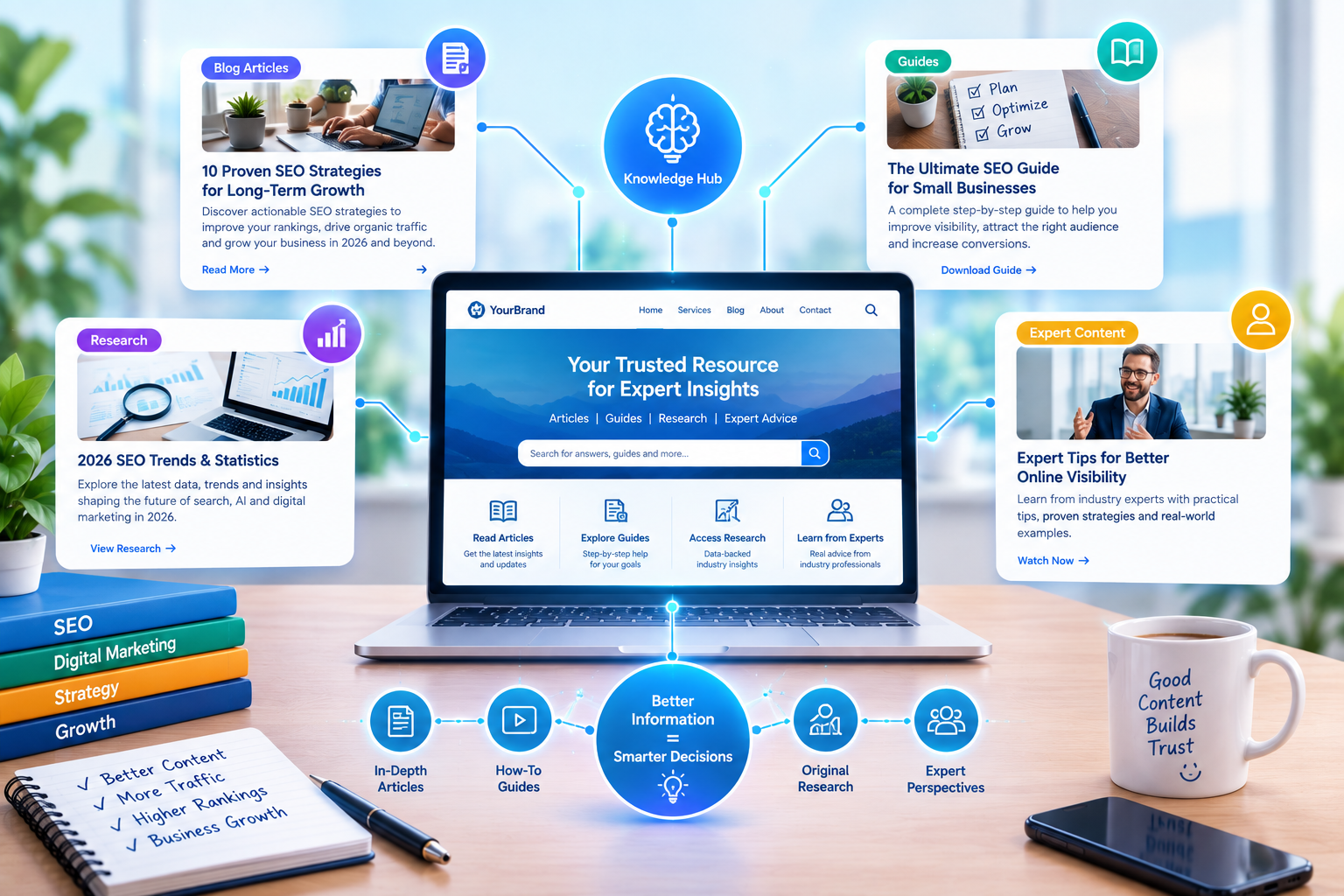
Build Question-based Topic Clusters
Create groups of articles around major topics, instead of isolated articles. For example, a cybersecurity company might have a central topic on “cloud security” and answer questions about cloud security risks, compliance requirements, cloud security tools, how to implement cloud security and common mistakes. This provides AI with a larger body of related information to comprehend.
Step 2: Build Strong Topical Authority
To generate useful answers, AI systems must have trustworthy information. Writing one article on a niche subject is rarely enough for you to be seen as an authority on the subject. Create detailed topic clusters that encompass the key areas of your industry. A good topical structure could include:
- Pillar page: A comprehensive resource on the main topic.
- Supporting articles: Answer specific questions on the pillar topic.
- Comparison content: Explains differences between solutions, methods or products.
- Expert Content: Offers original insights, opinions, research or professional perspectives.
- Practical resources: Includes guides, checklists, templates, examples, tutorials.
Connect these pages through contextual internal links. This helps users navigate the website while giving search engines and AI systems additional context about relationships between topics.
Step 3: Create Content That AI Can Easily Understand
Good writing isn’t just about writing long articles anymore. Content should be clear, organized, specific and useful. Use descriptive headings, short paragraphs, lists, tables where appropriate and simple explanations. Answer important questions without making readers dig through paragraphs to find basic info.
Write for Meaning, Not Keyword Density
Keyword stuffing is not very helpful in today’s search. Rather, focus on ideas and connections that orbit your main topic. For example, an article on “enterprise cybersecurity” would naturally discuss:
- Threat Detection
- Zero-trust Architecture
- Endpoint Protection
- Data Security
- Security Monitoring
- Compliance
- Incident Response
- Risk Management
This semantic depth provides AI systems with more context about what the content is actually about.
Step 4: Strengthen E-E-A-T Signals
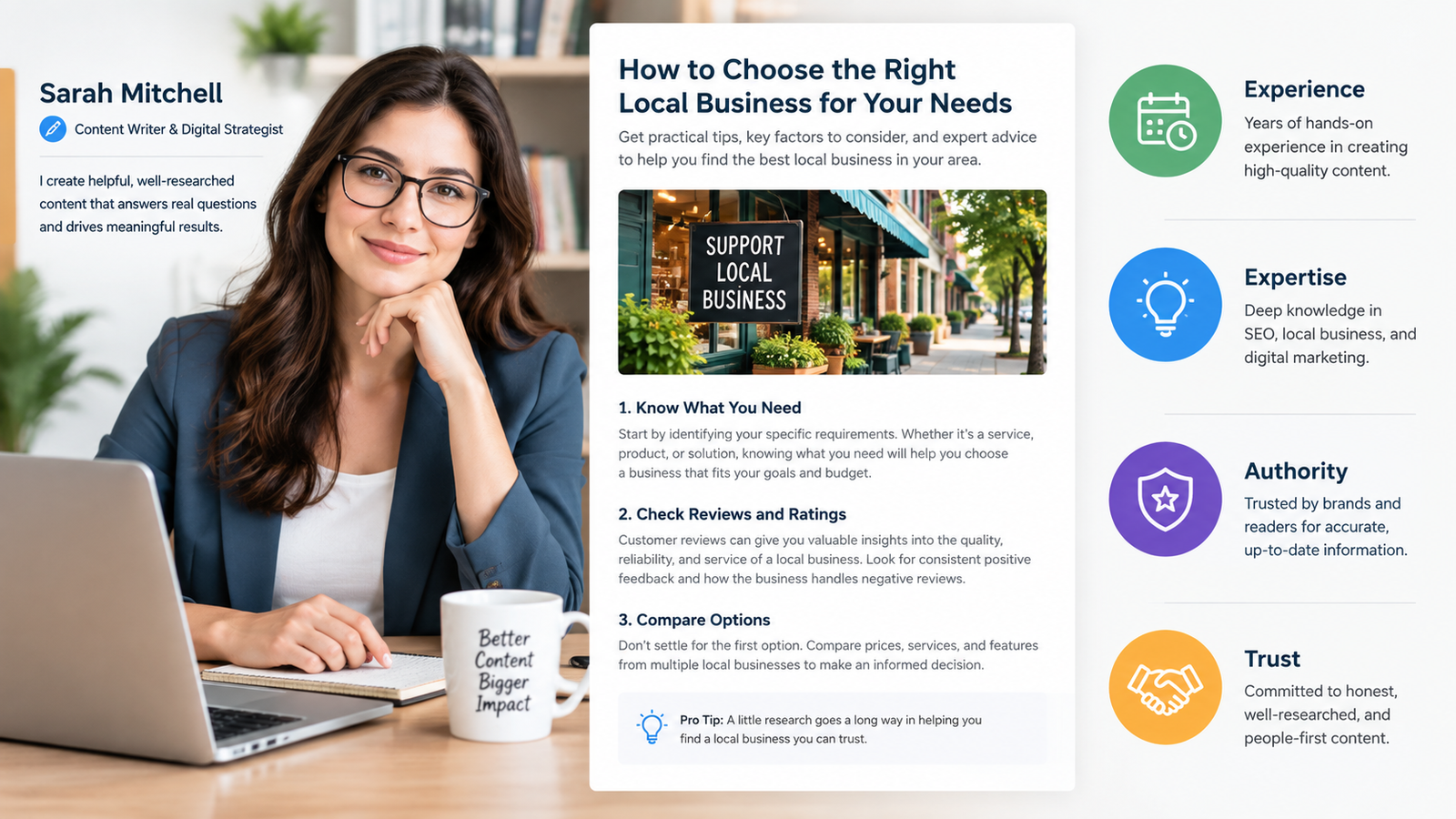
Experience, expertise, authoritativeness and trustworthiness still matter when creating content for AI SEO. Make your content more credible by showing who created it and why they are qualified to discuss the subject.
Consider adding:
- About the author(s)
- Professional qualifications
- Editorial Quality Standards
- Research Article
- Expert Interviews
- Case Studies
- First Hand Experiences
- Reliable Sources
- New Publication Dates
- Transparent company information
Don’t make unsupported claims. When you discuss statistics, research, regulations or industry developments, use appropriate evidence. The more credible your information ecosystem is, the more valuable your content becomes to readers, and automated systems alike.
Step 5: Optimize Your Brand as an Entity
One of the major differences between traditional SEO and modern AI SEO is the importance of entity understanding. An entity is a clearly identifiable person, organization, product, location or concept. AI systems need to know more than what your website says, they need to know who your brand is, what it does, where it does it and what topics it’s associated with.
Keep your brand information consistent across:
- Web Pages
- Directories of Businesses
- Social Profiles
- Trade Publications
- Review Sites
- Affiliated Websites
- Media Coverage
- Author Biographies
Make sure important information such as business name, services, locations, areas of expertise, etc are kept consistent. A consistent digital footprint reinforces the connections between your brand and related topics.
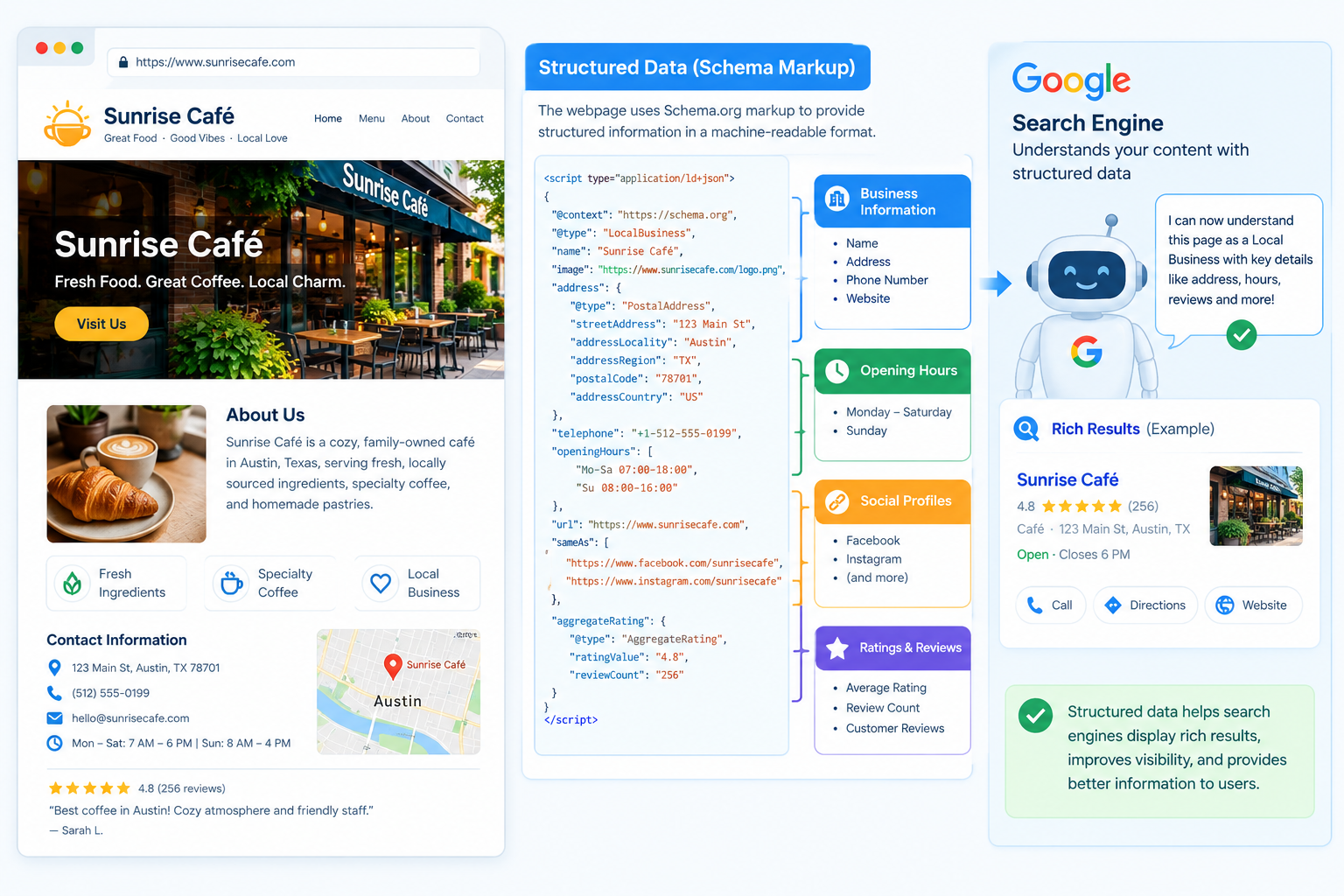
Step 6: Implement Structured Data
Structured data allows search engines to better understand the content on a webpage. Schema markup won’t guarantee you an AI citation, but it can help machines understand your website better. Relevant schema types may include, depending on the page:
- Organization
- Person
- Article
- Product
- Service
- FAQ
- Breadcrumb
- Local Business
- Review
Use structured data correctly and ensure the markup is for information that is truly visible and supported on the page. All in all, schema should be an addition to your content, not a replacement.
Step 7: Improve Content for AI Citations
An AI citation occurs when a response produced by an AI mentions or credits a source with information. You can’t guarantee that a particular AI platform is going to cite your website. However, you can make your content more citation-friendly. Begin with simple, factual statements.
For example, instead of writing a vague introduction about a technology, provide a direct definition followed by supporting details. Use the original information wherever possible. Thanks to research, proprietary data, expert observations, case studies, surveys and unique examples, AI systems have something valuable to draw upon.
Make Important Information Easy to Extract
Use clearly defined sections for:
- Definitions
- Processes
- Benefits
- Statistics
- Comparisons
- Features
- FAQs
- Expert explanations
When information is presented clearly, both human readers and automated systems can identify the important points more efficiently.

Step 8: Develop a Strong Off-Page Presence
Your website is a part of your digital identity. AI systems can encounter information about your brand across many sources. This makes off-page visibility more and more important for Generative Engine Optimization (GEO). Work toward earning legitimate mentions from relevant and trustworthy sources. These may include:
- Trade Publications
- News Outlets
- Industry Organizations
- Review Sites.
- Podcasts
- Interviews with Experts
- Affiliated Sites
- Research Papers
- Related Communities
It’s not about the number of mentions you can get, but about how relevant and credible those mentions are. A strong digital reputation can help provide context around your organization and expertise.
Step 9: Optimize for Conversational Search
AI platforms are built to understand natural language. So, your content has to be written the way people actually ask questions. Don’t make separate pages for slight variations of keywords. Create comprehensive resources that answer related questions naturally.
Use conversational headings like:
- How Does This Process Work?
- What Are the Main Benefits?
- Which Option Is Best for Small Businesses?
- What Should You Consider Before Choosing a Solution?
- How Much Does It Usually Cost?
These questions can help your content match longer, conversational searches.
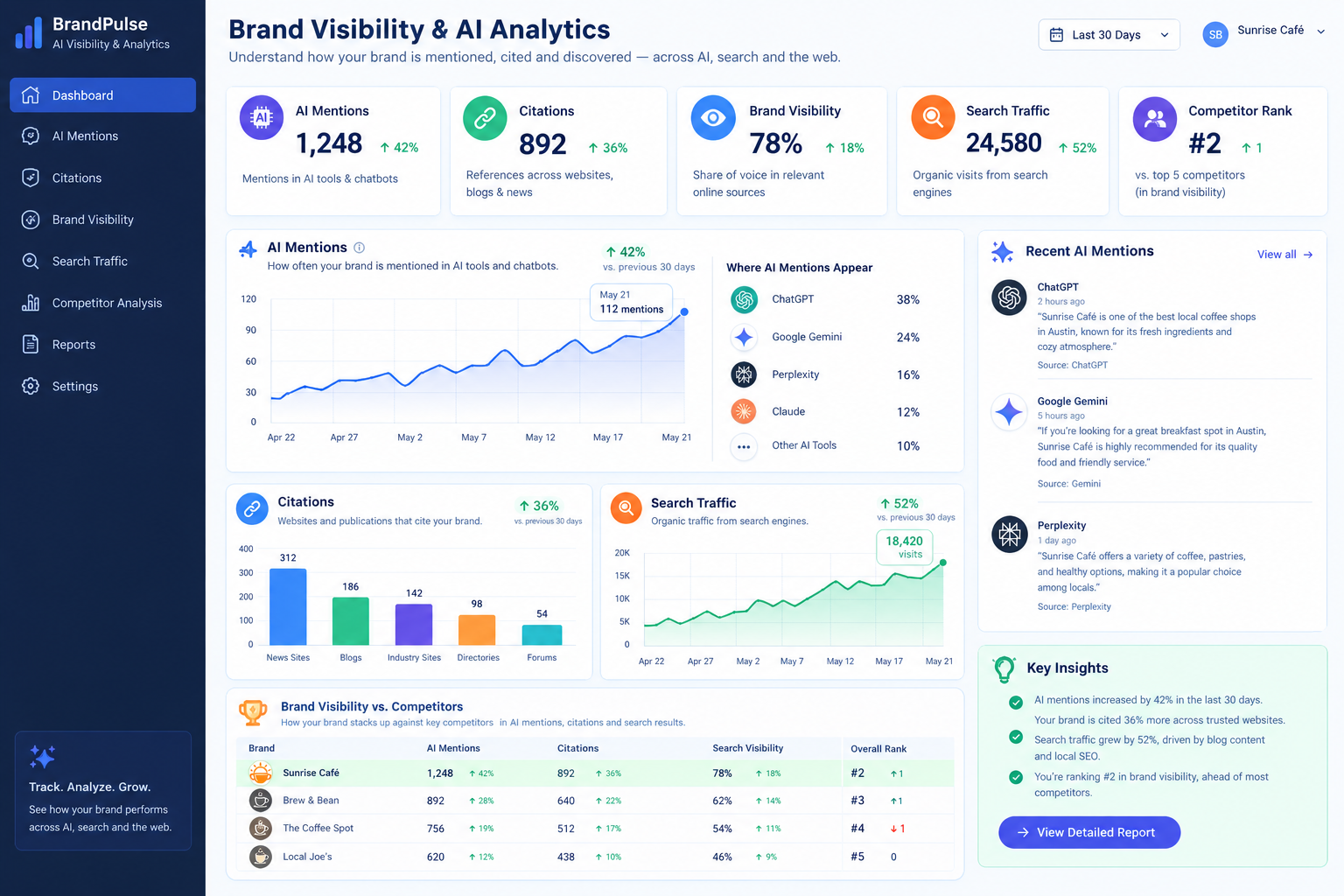
Step 10: Track Your AI Visibility
You cannot improve what you do not measure. Traditional SEO metrics such as rankings, organic traffic, impressions, clicks, conversions, and backlinks should continue to be monitored.
For AI search optimization, also monitor:
- Brand mentions in AI answers
- AI-generated citations
- Frequently cited competitors
- Questions where your brand appears
- Questions where competitors are mentioned instead
- Accuracy of AI-generated brand information
- Referral traffic from AI platforms
- Changes in branded search demand
Create a recurring prompt set based on your target customers and industry. Run the same questions periodically across relevant AI platforms & record which brands and sources appear. This can reveal visibility gaps and emerging opportunities.
The Future of AI Search Visibility
The search in AI will keep on evolving. New platforms, interfaces, retrieval systems and ranking mechanisms will appear and it will be hard to rely on one fixed optimization formula. The businesses that adapt best will likely be those that invest in something more fundamental: being genuinely useful and easy to understand. That means publishing accurate information, demonstrating expertise, developing recognizable entities, gaining credible mentions and developing content which directly meets customer needs.
Ultimately, AI SEO is not about finding a shortcut into AI generated answers; it is about building a digital presence that is strong enough to become a go-to resource when machines and people are looking for reliable information.
For businesses preparing their search strategy for 2026 and beyond, One Design Marketing Technologies can help build an integrated approach to AI SEO, GEO, content optimization, entity signals, and broader search visibility.

Early SEO Warning Signs of an Organic Traffic Decline
Your website impressions are surely rising but the CTR remains flat. Your organic traffic is rising but qualified leads are declining. Ever wondered why?
While it might not entirely be your fault, there’s no escape from declining organic traffic for more than one reason. Changing search engine guidelines and user search behavior along with competitors’ improving content strategies, can affect your online visibility.
But your SEO performance doesn’t drop overnight. Every website gives off some warning signs weeks or months before losing its footing. And what’s more alarming is that these signs mostly remain undetected in SEO performance reports, making early detection difficult.
Did you actually wait for the traffic data to show the decline while the warning signs actually existed much earlier? If yes, then this article will help you identify the early warning signs of an organic traffic fall.
Declining Rank of Primary Keywords
Moving one or two positions down for a focus keyword might not affect your business. But what if you have dropped four to five positions for a high-intent keyword? That’s where the problem arises.
What you can do is track the most important keywords every week. Start with keywords related to products, locations, services, transactional queries and then move on to high-performance long-tail keywords.
Falling Click-Through Rate
My website has gained 40% more impressions this month but received only 5% more clicks. Is this a positive result? Well, certainly not if the gap between visibility and organic traffic is so wide. Start by identifying the search queries leading to impression growth and then look for possible reasons behind lower clicks.
Some of these could be poor meta descriptions, weak title tags, increased competition or AI-generated responses directly answering the queries. You can also utilize Search Console data to compare impressions with clicks and other metrics.
Declining Actual Business Results
What if I see higher impressions, increased total traffic, more indexed pages and more ranking keywords in my SEO report but my business still struggles with lower sales, reduced conversion rates and fewer leads?
If that’s the case, then your SEO company is likely misguiding you. It’s time you looked for a reliable SEO services provider that offers customized SEO strategy with credible and measurable outcomes.
Ignoring the Content Decay
Did you notice any decline in visibility or rankings for your previously successful content? If yes, then your website is suffering from content decay, a warning sign that your individual pages or the entire website are losing organic traffic.
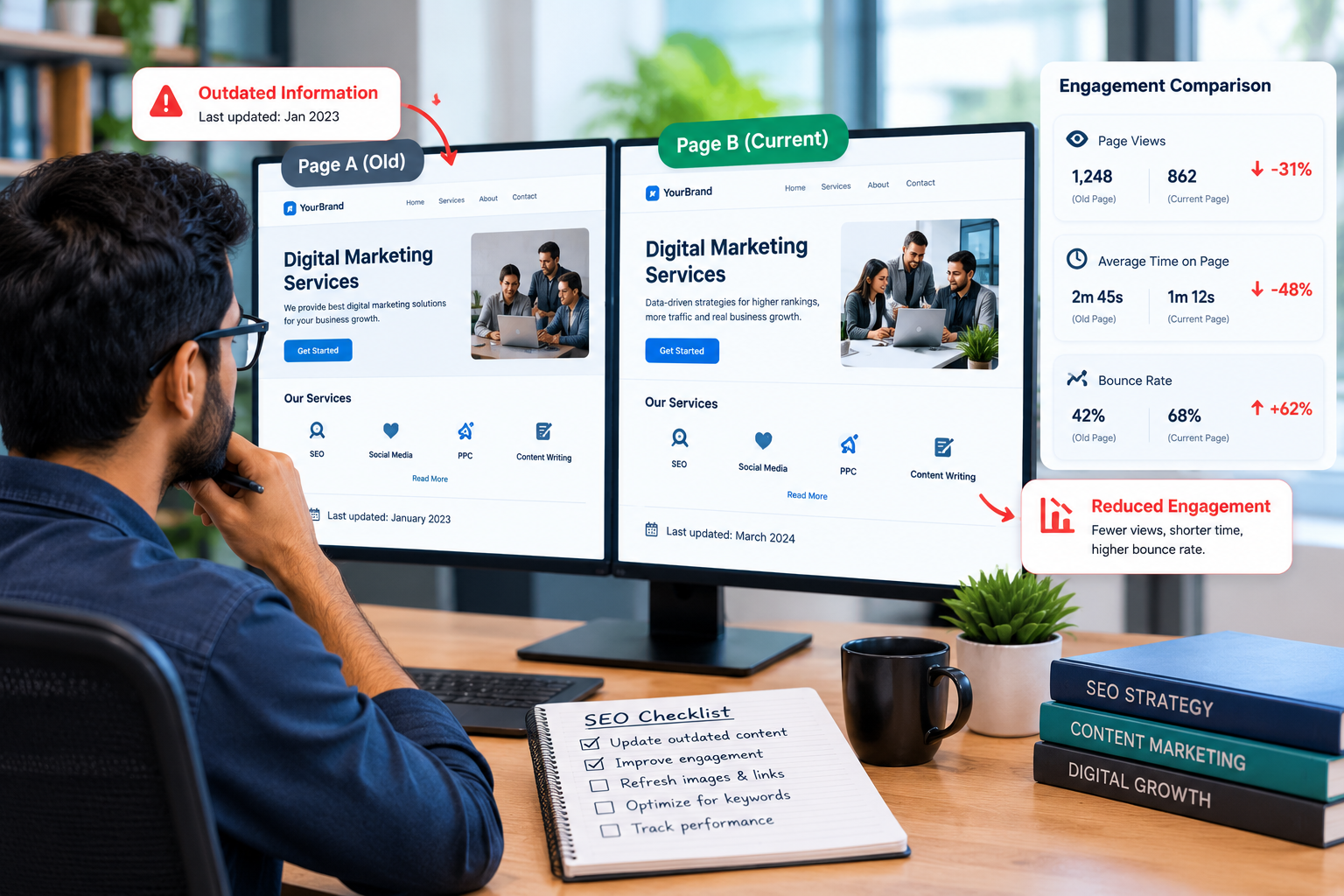
Content decay happens when your existing content contains outdated information, broken links and older examples, leading to falling clicks, reduced engagement and declining impressions. What’s the solution? You can refresh your website content, add new pages, improve internal linking or redirect pages for better performance.
Irrelevant Internal Linking
Most of the time, a strong internal linking network helps brands generate huge indirect organic traffic for other important pages. Check if your priority pages are getting more internal links from important commercial pages.
Look out for weak anchor text, orphan pages or competing pages with similar topics. Are there any blogs not linked to your product or service pages? Or, are there excessive links targeting low-value pages? If yes, then fix them first for better results.
Falling Search Experience
What if the users once visited your page but found it irrelevant? Would they return? Never, proving that user experience matters.
This is because poor navigation, low readability, slow page speed and poor content structure can dramatically reduce organic traffic in the long run. Search Experience Optimization (SXO) ensures that your website offers seamless user interface (UI) and user experience (UX).
Evolving Search Intent
Are your once informational keywords now showing product pages, videos, guides or forums? If yes, then it simply means these keywords are no longer aligned with their original search intent. It might lead to reduced SERP rankings and, in turn, a decline in your organic traffic.
Here’s what you can do. Review the search results for the focus keywords on a regular basis. Look out for increasing competition, more visual or transactional results and AI-generated responses.
Landing Pages Losing Visibility
Have you stopped updating your landing pages just because they have ranked well all this time? That’s one major reason why search engines may give an advantage to your competitors as they constantly evolve their websites for better content.
Review your existing product and service pages to find content gaps. You are likely to attract more organic traffic if you add customer reviews, original case studies, product demos, expert advice and FAQs to your pages, providing first-hand experience to your visitors.
Reduced Organic Leads
What if my organic traffic is growing but the qualified leads are actually declining? Is it a good sign? Certainly not! What’s the point of getting more visitors if only a small percentage of them are converting into customers?
Here, you first need to identify which landing pages are actually attracting more traffic and which are attracting less. For instance, are you getting more visitors to blogs but fewer product or service-page clicks? If yes, then start separating commercial traffic from informational traffic and then compare their performance metrics.
Ignoring AI-Powered Search
With AI-powered responses becoming more prominent alongside traditional search results, your website is likely to lose visibility if it fails to adapt to AI search.
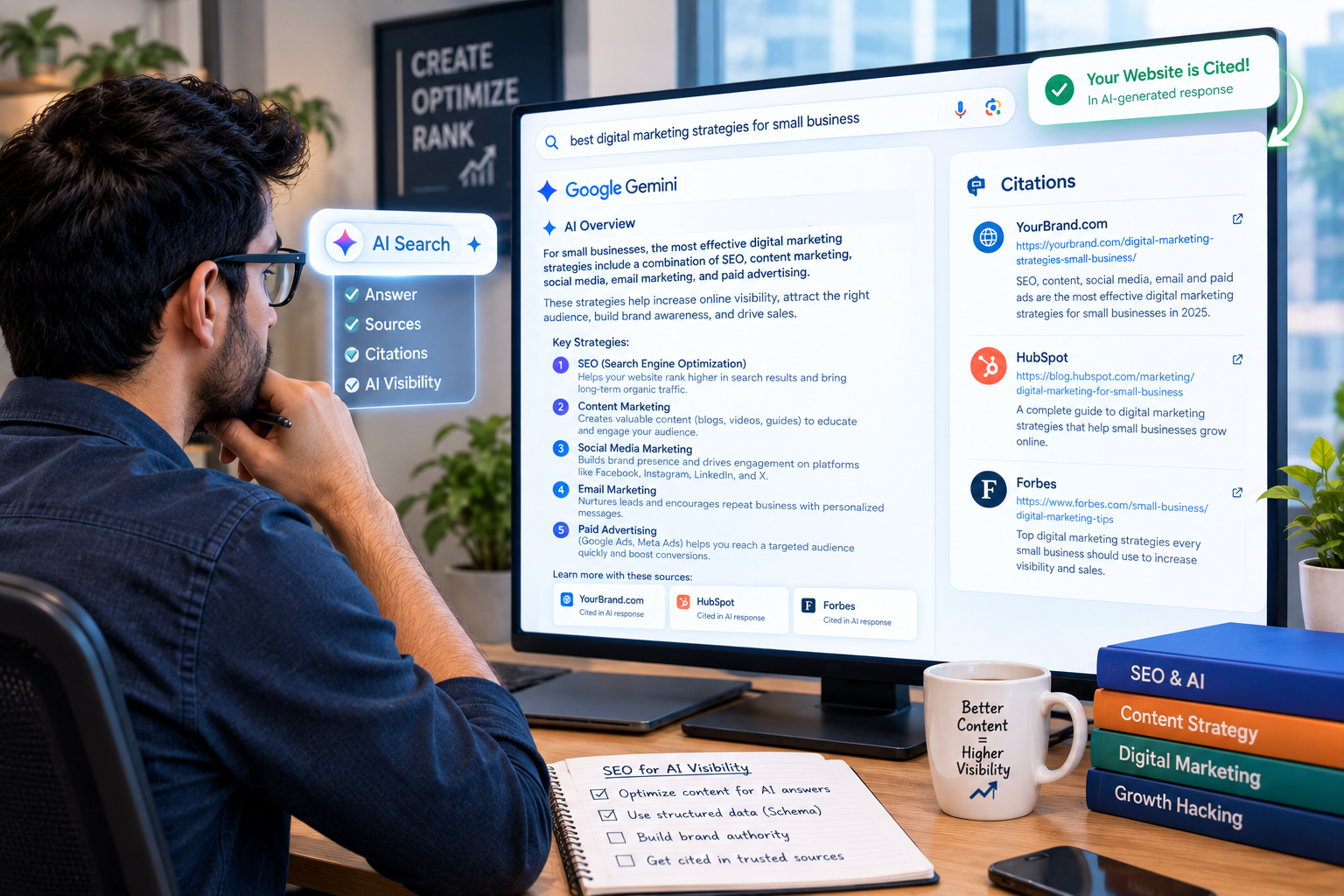
What you should do is optimize your website content for AI systems to make it more useful, credible and easier to understand. Besides, your website must incorporate modern-day AI strategies, such as GSO, LLM SEO, AEO, GEO and ChatGPT optimization to further improve its online visibility.
How Can I Identify the Warning Signs in Time?
You can do so easily by monitoring your website for the following indicators on a weekly, monthly and quarterly basis:
- Ranking URLs
- Impressions
- Organic clicks
- High-value landing pages
- Primary keyword positions
- Organic leads
- Competitor pages
- Conversion rates
- Content structure and quality
- Technical SEO
- AI search visibility
- Internal linking
- Search intent
Spotted a Warning Sign? Here’s What to Do Next
If you have already spotted one of the warning signs mentioned above, here’s what you should do.
- Identify what possibly led to reduced organic traffic. Find which pages or queries led to the change.
- Use PPC services, if necessary, to identify keywords that drive conversions, high-value landing pages or messages that boost engagement. This is another way to boost organic traffic
Conclusion
There could be many reasons behind declining organic traffic. The key to finding the right one at the right time is to look out for the warning signs. Don’t just get tempted by more impressions and higher rankings.
Regularly monitor competitor pages and change search behavior. Also, refresh landing pages from time to time and stick to relevant internal linking for improved organic traffic.
If you are also clueless about your website’s actual SEO health then we are here to help you. One Design Marketing Technologies (ODMT) offers customized SEO solutions to businesses of all types and sizes.
Our AI-powered SEO services and monitoring system help businesses stay competitive in today’s highly competitive digital environment. Book an appointment today for a free quotation.

How to Build Content Briefs Around Audience Situations
In today’s fast-paced competitive digital marketing environment, brands compete not just for keywords but also for authority. To build this authority, brands need more than keyword-focused content. They need an audience-focused content strategy to attract readers to their websites, thereby increasing the need to build content briefs that address audience situations.
An audience situation refers to the specific context associated with a piece of information. It describes the reader’s problem, its causes, possible solutions and expected outcomes. While designing a content brief, seeking the right keywords is just not enough. What you need to identify is the purpose behind utilizing those keywords.
A situation-based brief helps writers understand this purpose, thereby matching the content with its search intent. This article guides you through the simple steps involved in building content briefs around audience situations.
Identify Your Target Audience First
Keywords can help your content rank higher but cannot help you find the right audience. To attract qualified traffic, you must address your audience’s requirements first. Your content brief should specify the primary audience, major goals, key problem and expected outcome.
Identify the Reasons Behind the Search
Learn why readers would want to search for your content. This can help you understand their point of view and their expectations. For instance, for someone searching for “ways to improve website traffic”, the trigger might be a constant decline in the traffic.
Knowing this can help writers focus not just on solutions but also on the causes and expected outcomes. Some common triggers are a new venture, lack of knowledge, a change in the business environment, a missed opportunity or a business problem.
Create Audience Persona Around Situations
Giving a situation-based persona to every content brief further enhances its usefulness. For instance, instead of mentioning a “digital marketer or manager in his 40s looking for a content strategy”, a better option is to state the real situation.
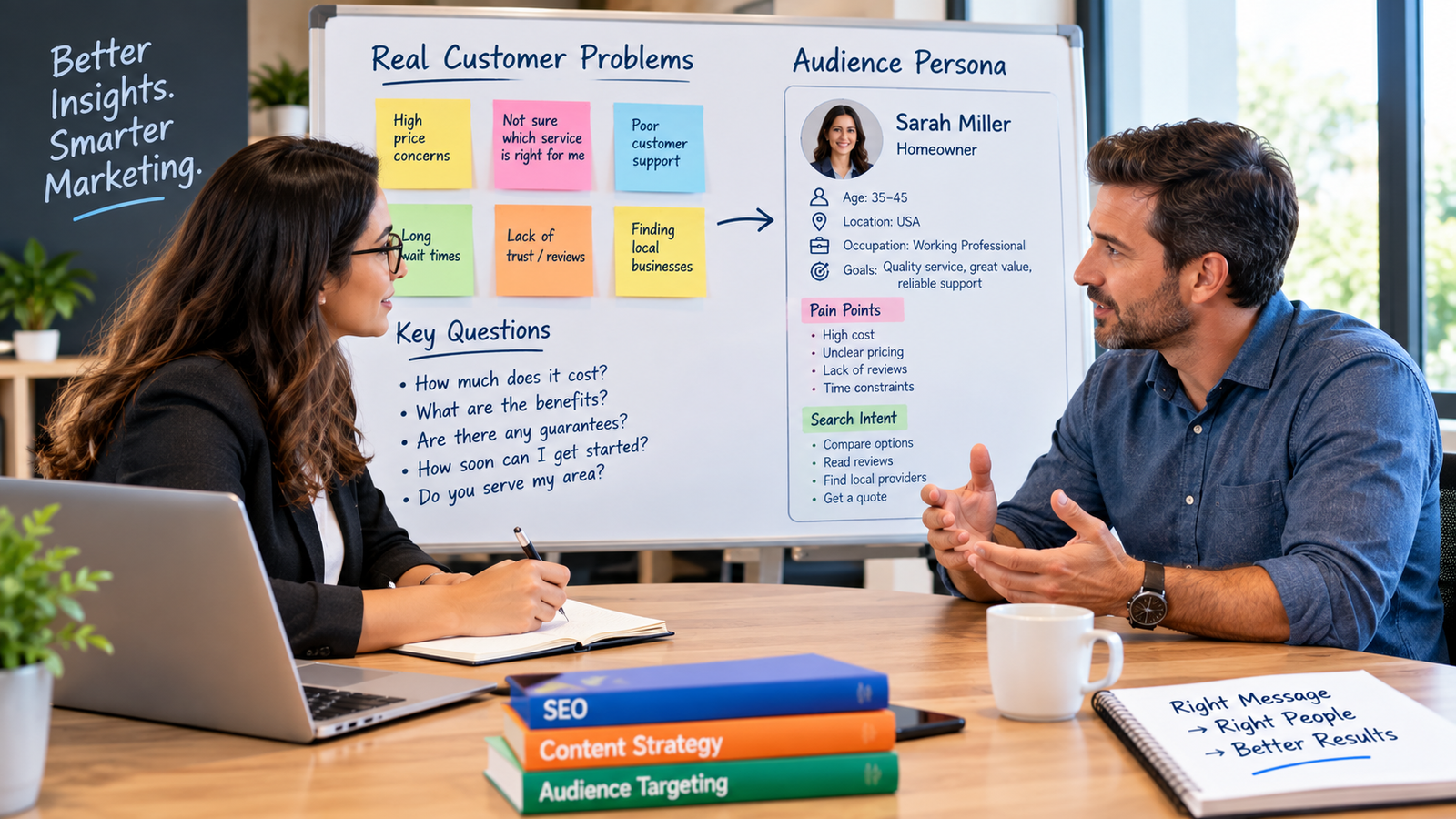
You can specify something like a “digital marketing manager with a limited launch timeline or one who requires measurable results” for a better understanding of the readers.
Look for Real Audience Problems
Readers aren’t searching for generic information, so don’t give them that. Instead, look into their real-life problems to create the outline for your content brief. Research questions on social media forums, discussion groups and customer reviews.
Look for what people are curious about, what confuses them, what mistakes they often make, what solutions they have tried and tested or where the content gap exists.
Identify the Search Intent
Once you identify the audience situation, understanding the search intent becomes easier. For instance, a user is searching for the “best CRM suitable for small businesses”. Even though it appears to have commercial intent, the user might be searching for a cost-effective automation tool, software for managing a growing sales team or a solution for improving customer engagement.
Pick the Reader’s Pain Points
Your content should solve an existing reader pain point; otherwise it’s of no use. Cover the most common pain points and explain how you address them.
Some of the most common pain points for readers are vague information, poor previous results, high costs, too many options and limited time. The only way to address pain points is to provide solutions to them and that’s exactly what your content should do.
Start with the Basics
Always treat your readers as beginners. No matter what specific subject area you are focusing on, always begin with basic knowledge of the broader subject.
However, your brief should still specify the expected knowledge level of your content. This ensures that the content is neither too basic nor too complicated for the audience it is meant for.
Create Content Based on Audience Situations
Ask yourself what audience situation your content brief is going to handle. This will help you create a content angle or context for your brief. For instance, instead of using the title “User’s Guide to SEO”, a title like “A Practical Guide to SEO for Businesses to Improve Qualified Organic Traffic” sounds more useful. Some other angles could be like:
- SEO for Beginners Starting from Scratch
- SEO for Small Businesses
- SEO for AI-powered Search
- SEO for Generating Qualified Leads
Adding such context to your content makes it more meaningful and easily discoverable for readers.
Create Brief Around Key Questions
Build your content brief around the core questions that align with the audience’s situation. Some of these questions could include:
- What’s the problem area?
- Why does the problem persist?
- Why does it need immediate attention?
- What possible solutions are available?
- Which option fits the audience’s situation best?
- How can you implement that solution?
- What resources are needed to achieve the desired result?
- What are the possible challenges?
- What are the common mistakes to avoid?
Incorporate Content Requirements
Provide clear writing instructions for the writers, specifying the primary situation, search intent, target audience and the content angle. Next, include the list of primary and secondary keywords along with the list of key topics and subtopics to cover.

Your content brief should also provide the writers with the key questions to be included in the FAQs and the pain points to be addressed. It is also advisable to specify the recommended structure and examples to be included in the brief.
Include Real Life Examples & Clarify Concerns
What’s a better way to understand a concept than through examples? Incorporating enough examples can simplify complex information. More importantly, use examples that align with the audience’s situation, creating more value for the reader.
Moreover, your content brief should address the reader’s doubts and concerns about the subject matter. For instance, you can discuss in your content how long an SEO strategy may take to show results. You can also specify the cost of implementing an SEO strategy and the expertise required.
Create a Flexible Brief for Writers
Don’t offer a rigid template; instead, provide clear directions on how to draft the content. This will give writers room for creativity to explain the concepts in their own writing tone.
What you can provide is the information that your writer needs to understand the core situation and the solutions to it. The content brief should further specify what kind of data, examples and case studies writers can include in the content.
Update Briefs with Changing Audience Situation
What if the audience situation changes? Several market factors, such as changing regulations, increased competition, new technologies or changing customer buying behaviour, may require you to update your brief on a regular basis.
Identify the shift in the audience’s search intent. How are your competitors addressing the topic? This way you can ensure that your content brief aligns with the audience’s situation.
Parting Thoughts
A content brief doesn’t work on a fixed pattern but changes based on the audience situation. The goal is not just to target keywords but also to understand the pain points of the audience and provide solutions to them.
A well-defined brief should give writers a clear direction on what points to cover and what to avoid. This way, readers get focused content that’s not just relevant but also solves real-world problems.
Are you also looking for an SEO company providing content creation and management services? If yes, then One Design Marketing Technologies offers you a complete suite of AI SEO services along with a free consultation. We offer our clients cost-effective SEO solutions tailored to their business needs and budget constraints. Book your appointment today!

Guide to Measuring Your Brand Visibility in Gemini
Your brand can be the top choice when it comes to the buying decisions of your target customers, and this time it’s not Google AI Overviews that is the mastermind, but Gemini is. So, how can you tweak your brand visibility using this popular AI platform? Before we get into the specifics, you must understand why Gemini should be your focus for marketing strategies.
In this blog, how often your brand will appear in this platform and if visibility can boost your return on investment. Let’s get started.
Why Gemini Brand Mentions aren’t Easy to Measure?
If you’re waiting for Google Analytics and search console to display your Gemini brand mentions, then I must break it to you that you have to keep waiting and it will never happen, not in the near future at least. The reason: unlike clicks, impressions and rankings, the mentions don’t just appear there.
A buyer might find your brand in a Gemini search, check more about it on Google and later return to click on your website with interest. This also comes to the fact that, in AI chats your company will not just show up because of its traditional top ranking on the search page. Which means, your brand visibility depends on direct measures only?
And what’s the most effective method for this? It includes analytics data, AI visibility and manual monitoring of the progress. But still the question remains why measuring on Gemini is the hardest approach of all? For that, you need to know how Gemini works.
How Gemini Works
In traditional search engine optimization, you get to continuously measure the process and improvement, but Gemini’s approach is totally different. Simply put, it plays American “football” and not actually football!
A single question from the user can lead to follow up questions such as location, age, personal preferences, budget options and many more. This alters the underlying structures of Google. The variations only keep coming and based on that Google has introduced new features to Gemini, such as photos, Gmail and videos so users can engage more.
Two different customers asking for the same product might not get the same brand mentions or get it alongside a competitor site. When it comes to brand visibility and Gemini, there’s no ranking rule, instead businesses use measuring patterns.
Ways to Track Brand Mentions in Gemini Search
Since there isn’t any ranking feature in Gemini, marketers use effective measurements. These measures can be quantitative or qualitative; atogether it offers a better picture than a single metric.
Method 1: Manual Monitoring of Prompts
Manual monitoring of prompts is the best way to work with Gemini. This isn’t a permanent scaling solution, but it provides something that automated tools fail to do. All you have to do is create some context and follow the below procedure:
Create a Prompt Library
You can begin by identifying prompts your target audience will most likely search on and end up buying your products and services.
Don’t Limit Your Reach with Category Keywords
Limiting your keyword to categories will only restrict your reach to the target audiences. For this, opt for industry questions, case study queries and competitor comparisons, branded searches, location-specific keywords and FAQs.
Repeat Your Process Regularly
The responses in Gemini keep evolving. Trends emerge, new content gets published and competitors update their sites, all of these reasons bring change to Gemini replies. To ensure your stance, review the priority prompts regularly and optimize the content to stay updated in the competitive market.
Monitor the important changes in citations, placements, competitor comparisons and inclusions, instead of depending on single responses.

Method 2: Use AI Monitoring Tools
Manual tracking can go so far, but when you’re monitoring a lot of prompts. The moment you’re tracking many, you have to be consistent, and here AI visibility tools can help a lot. There are some useful and popular options such as SEMrush, Peec AI, Scrunch AI and Profound.
These tools will help you track your brand visibility in Gemini, automate prompt testing and compare how your website performs across other AI platforms.
What AI Visibility Tools Can Offer
The capabilities of the tools may vary based on their work processes, but the common things these tools offer are, competitor comparison, instant coverage, trend visibility history, response placement, frequency of citations, answer inclusion rate, etc.
You literally don’t have to conduct hundreds of prompt searches, because you can do it faster with the tools that track the measures on Gemini.
Keep in Mind the Limitations
If you want to get a comprehensive benefit from these tools, it’s not entirely possible. Most platforms offer a predefined set of prompts, but when you’re searching on Gemini; the responses can be different based on the queries. It can show replies depending on the latest Algorithm updates, conversion history, location and personal preferences.
This is important to keep in mind, that Google continually makes changes to Gemini, so it can offer personalized responses for all products and services. A visibility tool on the other hand can give you the measures of your brand performance, but it can’t provide content on what real-time users might want from your website.
In the end, no visibility tool can replicate an AI system; it only works for measuring the right prompts steadily to give marketers better decisions.
Method 3: Track Analytics to Get AI Influence
When you work for brand visibility, it focuses on the display of your website online, whether on the search pages or in the AI responses. Analytics on the other hand helps you comprehend the visibility making and difference to your marketing strategies.
You will get the value and improved revenue the moment you combine these two, where one takes care of the brand being visible in Gemini, and the other gives you details on return on investment.
After you get the overview that focuses on both direct and indirect signs of AI responses, you can create strategies that align with your business. Also, don’t forget to monitor the traffic, engaged time, landing page experience and whether those visits are turning into conversions.
Monitoring these helps you discover your website. Still, it isn’t risk free, as Google can flag which pages are getting advantages from Gemini and whether your target customers are ending up buying your products or services, after going through the site. Here you can follow some easy steps:
Don’t get stuck with the referrals. To better understand the impact of Gemini, you need to track signals such as changes in customer demands, better performance of webpages that are regularly cited by Gemini, improvement in direct traffic and growth in brand search volume.
However, if you’re thinking these metrics can work perfectly for AI influence, you’re still not getting it. But the latest trends match with the solid visibility across various Gemini prompts; they show that Gemini is certainly influencing conversion, buyer decisions and awareness.
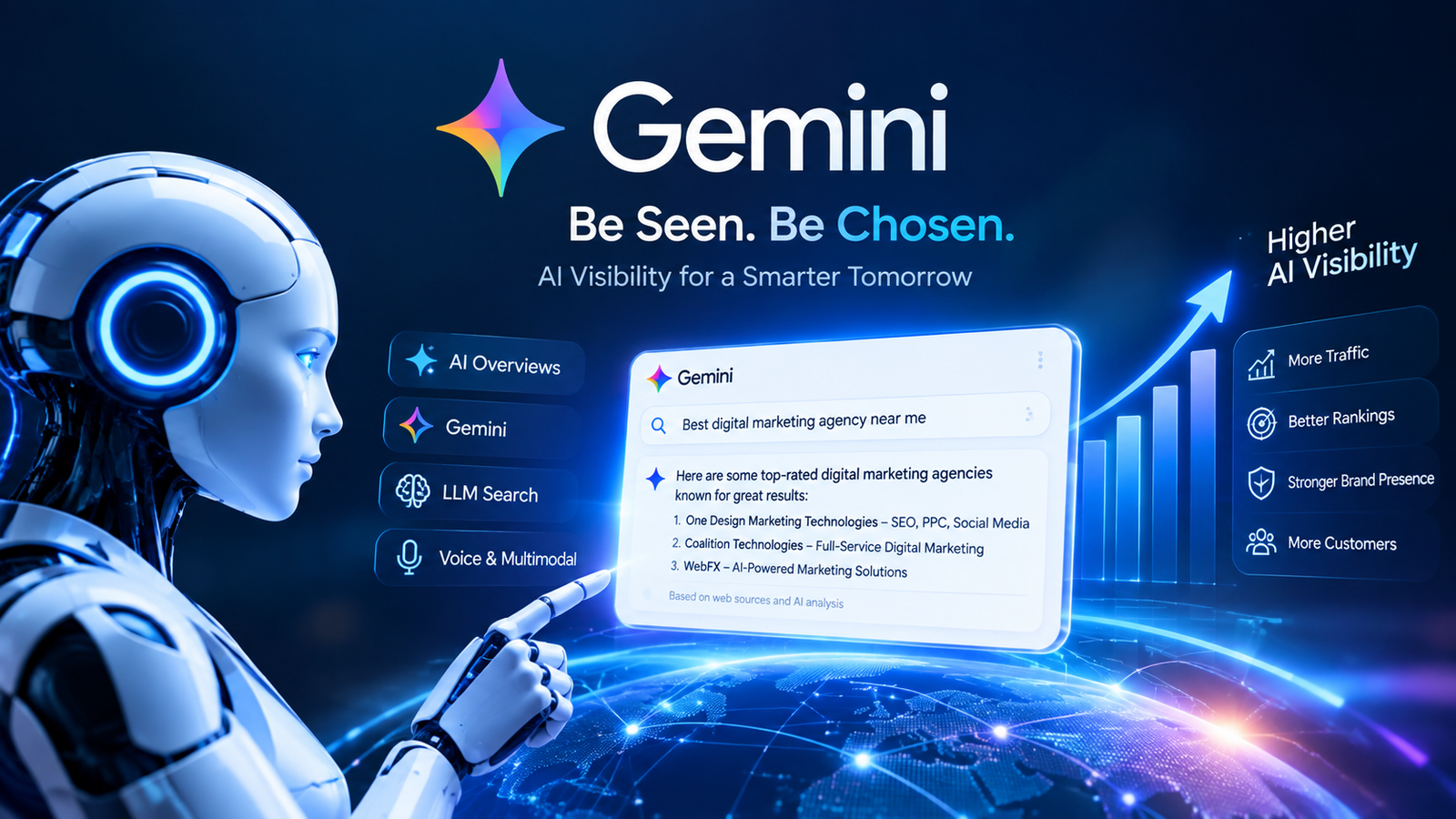
The Future of Gemini Visibility Measurement
Search engine optimization has been the only way of making brands visible online. It worked for clicks, ranking, sessions and conversions, all of it was kind of straightforward, until the digital era dropped and things changed a lot.
With AI platforms, and especially Gemini, customers found a way of personalization for their buying decisions. But this made the job of marketers harder than ever. Now, they have to take care of not just the traditional SEO, but also the AI responses that have become a popular approach to purchases.
For example, the other day I was looking for multivitamin tablets with Vitamin D and calcium that don’t create any side effects. Gemini replied to me with a product that’s vegetarian, and has a lot of good customer reviews. The brand name was unknown to me, but upon further search I found out that it might be a good one. So, this is how most searches work in Gemini and eventually it turns into a buying decision.
Based on such buying behavior businesses can start measuring their plans. Optimize your content, landing pages and headings to make sure Gemini will pick them whenever a customer searches for a relevant product.
As AI-powered search becomes a huge part of how customers research and make a buying decision, the earlier way of website ranking kind of stops being that important. However, it still offers value to the brands by making the brand rank at the top, so users find satisfaction in their choices.
That being said, this draws the conclusion to this informative guide, and if you’re considering adding Gemini to your marketing strategies, contact an SEO company such as One Design Marketing Technologies. Our Digital Marketing expert team can help with your brand visibility and more.
FAQ
Can I monitor competitor’s brand mentions in Gemini?
Yes, you can compare your competitor’s brand mentions in Gemini. This can be done by using AI visibility tools. It will also help you understand the competition in the market and create better strategies.
How AI-powered search engine optimization can work for my brand visibility?
It ensures that your webpage content is fresh, direct and properly optimized so the AI platforms pick them to display in the responses. A good AI SEO strategy can bring your brand to the front, so it gets cited and mentioned to your target customers.
What will my AI visibility score show?
The score mainly offers the number of times your brand was mentioned in Gemini. You will get information such as visibility, invisible, moderate, strong and leading.
Can I evaluate my brand position against my competitors?
Using the tracking tools, you can compare your brand with your competitors and understand the ways how to get improved mentions in Gemini responses.
How does Gemini determine which brand to mention?
It extracts information from real-time details, brand authority, content quality and how often it has been discussed in various forums like Reddit, Quora, etc.
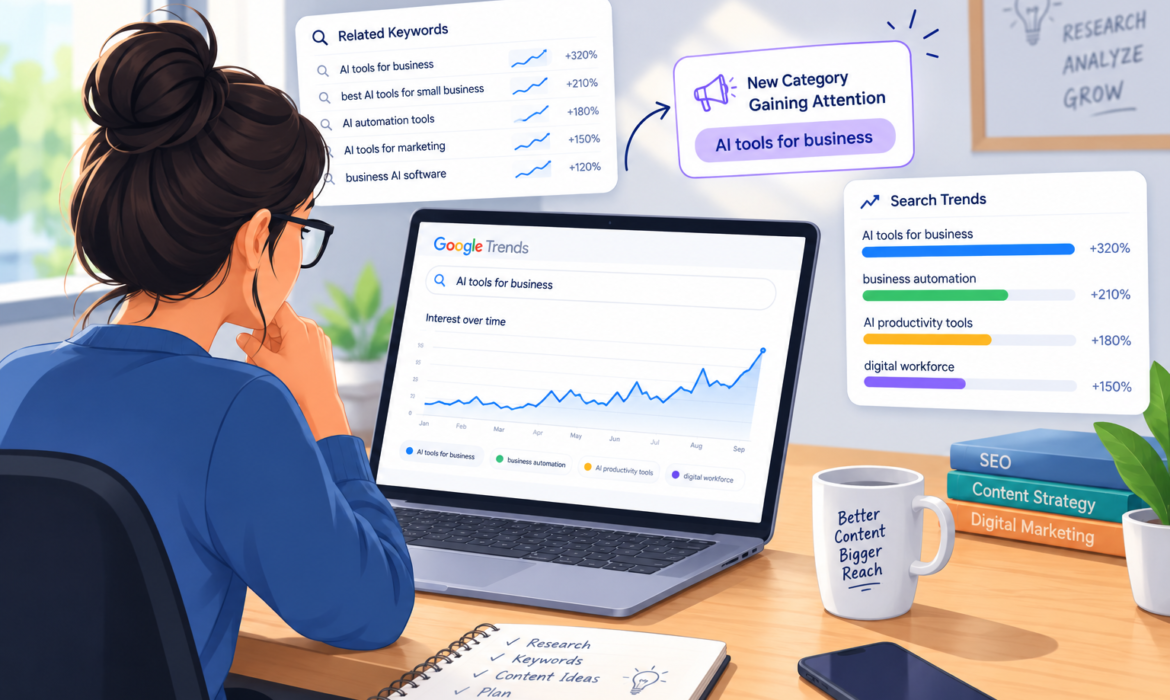
How to Spot an Emerging Category in Search Data
Search behavior changes more quickly than most businesses even realize. Search data is often the first to reveal new products, ideas, technologies and consumer interests before they become obvious market trends. This makes search data a good source for identifying opportunities early on.
By understanding the emerging categories in search data, businesses can understand what people are starting to care about, even if they are small interests. Marketers can use search signals to identify growing demand and prepare their content, products and campaigns accordingly, instead of sitting back and waiting for a trend to take hold.
Why Search Data Reveals Emerging Categories Early
Search engines capture what people want to know, compare, buy or understand. When many users simultaneously begin searching for related terms, those searches can send an early signal of a shift in interest. A keyword nobody looks at today can be a major search term months down the road.
This is why emerging categories in search data should not be judged only by current search volume. A new category might have low volume compared to others because people are still discovering it. What’s important is if searches are growing steadily and if related queries are popping up around the same topic.
For example, imagine searches for a new type of sustainable packaging start appearing alongside terms such as pricing, suppliers, benefits and alternatives. Each keyword may have modest volume individually, but together they suggest that a broader category is forming.

Look for Growth, Not Just High Volume
High search volume doesn’t mean a category is emerging. Topic has been established and can get millions of searches every month, but that doesn’t mean it’s a new opportunity. When you look at emerging categories in search data, look for acceleration. Look at search interest over several months or quarters and find topics that are consistently trending.
A good way to do this is to compare current search demand to past data. If a topic is consistently rising, not just spiking temporarily, it deserves closer attention. Seasonality should also be taken into account. There are natural times of year where there are more searches for gifts, holidays, travel or seasonality. A true emerging category generally grows broader and for a longer period of time.
Group Related Queries Together
A single keyword rarely tells the whole story. New categories tend to emerge when there are a number of related searches on the same topic. Suppose people start searching for “AI shopping assistant,” “AI product recommendations,” “personalized shopping A,” and “AI buying tools.” Individually, these terms may seem disconnected. Together, they could point to an increasing interest in a larger category.
Grouping related queries helps to identify emerging categories in search data. Look for common themes, repeated words and questions that tie together different keywords. You can group keywords into clusters based on products, problems, features, audiences or use cases. If more than one cluster is starting to grow on a particular subject, you might find a bigger market opportunity underneath.
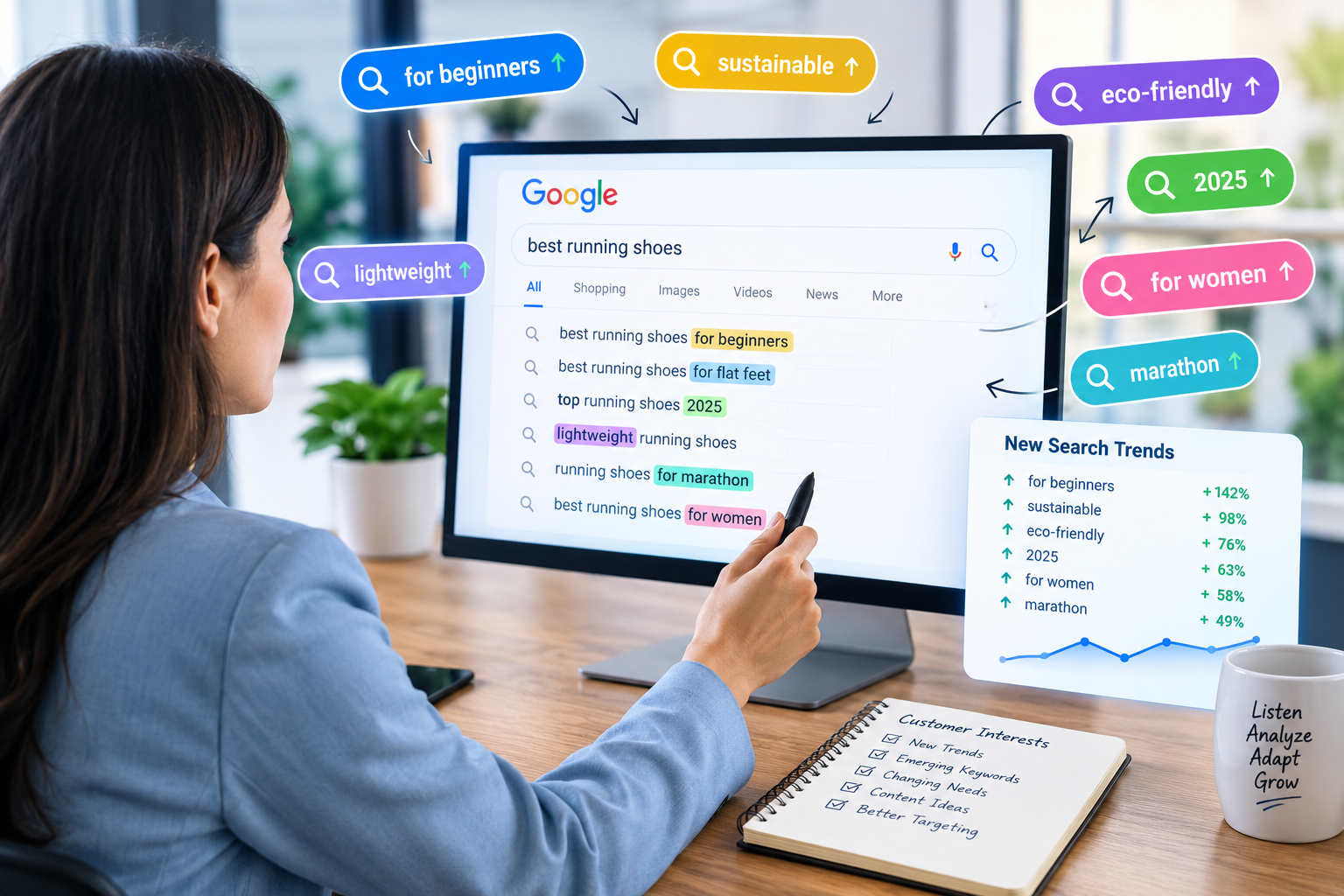
Watch for New Search Language
New categories tend to breed new words. People may start to use unfamiliar phrases because they have found a product, technology, behavior or concept that didn’t have a common name before. This means language change becomes an important signal to track while tracking emerging categories in search data. Look for new word combinations, new popular modifiers and phrases that keep popping up in recent searches.
For example, users might begin with generic keywords such as “AI content tools.” Later they may come to use more specific language like ‘AI content optimization,’ ‘AI search visibility’ or ‘generative search optimization.’ More specific search language could indicate that users are getting more comfortable with a category and are moving beyond the initial discovery phase.
Pay Attention to Questions
Questions can show demand before traditional product searches are strong. People keep asking how something works or if it is worth buying or how it stacks up against other options they could be moving into a new category.
Search for question patterns such as “what is,” “how does,” “best,” “alternative,” “vs,” “cost,” “near me.” Such searches reveal how users are navigating the discovery process. Question-based searches are particularly useful for emerging categories in search data because they reveal intent. There may be more informational searches that could turn into commercial searches when people become more familiar with the topic.
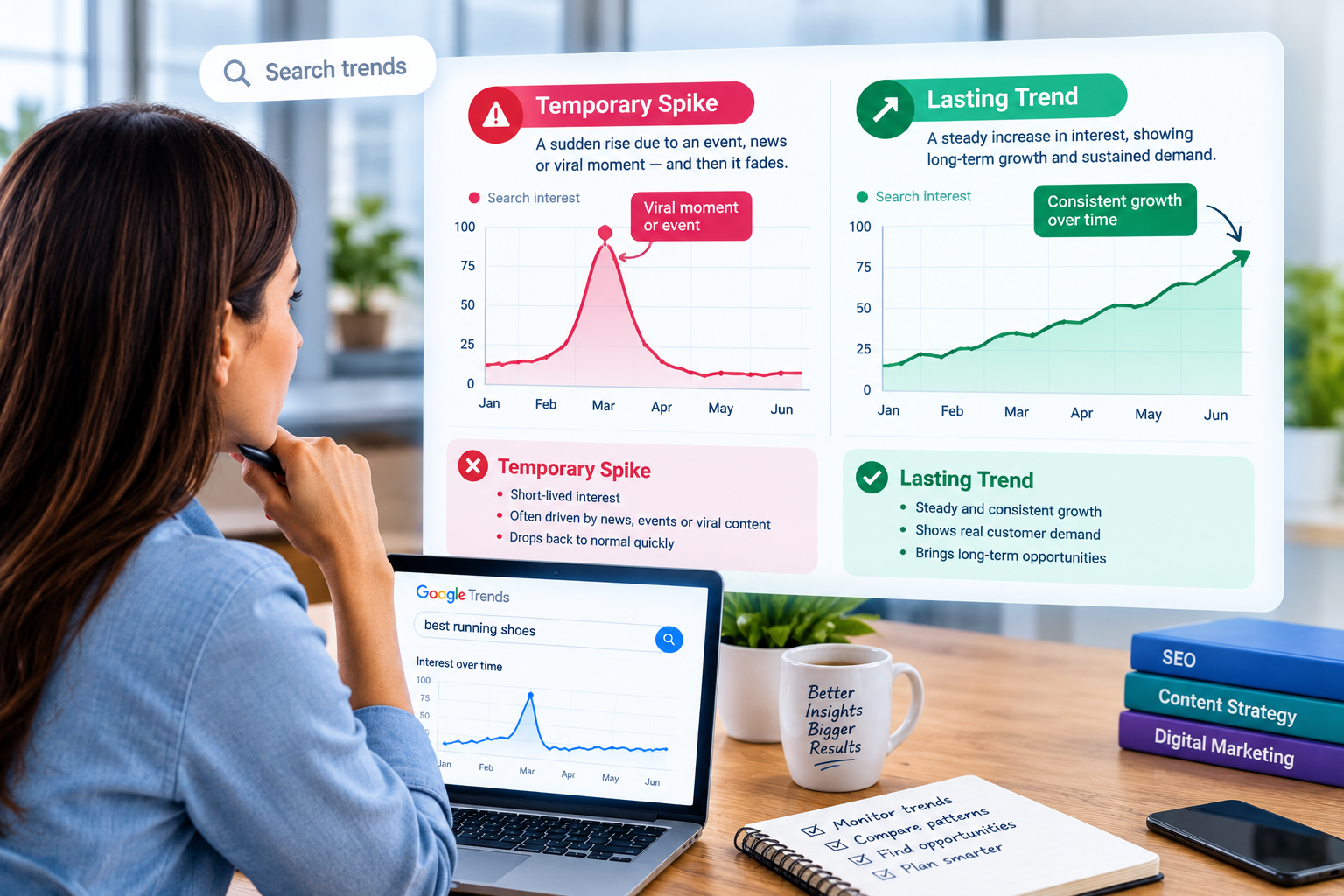
Separate Trends From Temporary Spikes
Not every spike in searches means a new category. News events, viral social media posts, celebrity mentions, product launches and controversies can all create dramatic but short-lived spikes. Don’t call something an emerging category until the interest in it spreads beyond the first event. Look at search patterns over a longer time period and compare with related queries.
You will often see several different kinds of searches on a real opportunity. From learning about the topic, people can jump to comparing products, checking prices, finding providers and searching for reviews. This progression provides marketers with better evidence that the emerging categories in search data are turning into established areas of interest rather than passing fads on the internet.
Connect Search Data With Business Context
Search data is more valuable when combined with information from other parts of the business. Customer questions, sales conversations, website activity, social media discussions and product feedback can help validate what search trends show. For example, search data may reveal greater interest in a particular product feature. If customer support teams are also getting questions on that feature, the signal is a lot stronger.
Therefore, businesses should avoid treating emerging categories in search data as isolated SEO opportunities. Search trends can expose shifts in customer needs that impact product development, positioning, content strategy and marketing campaigns.
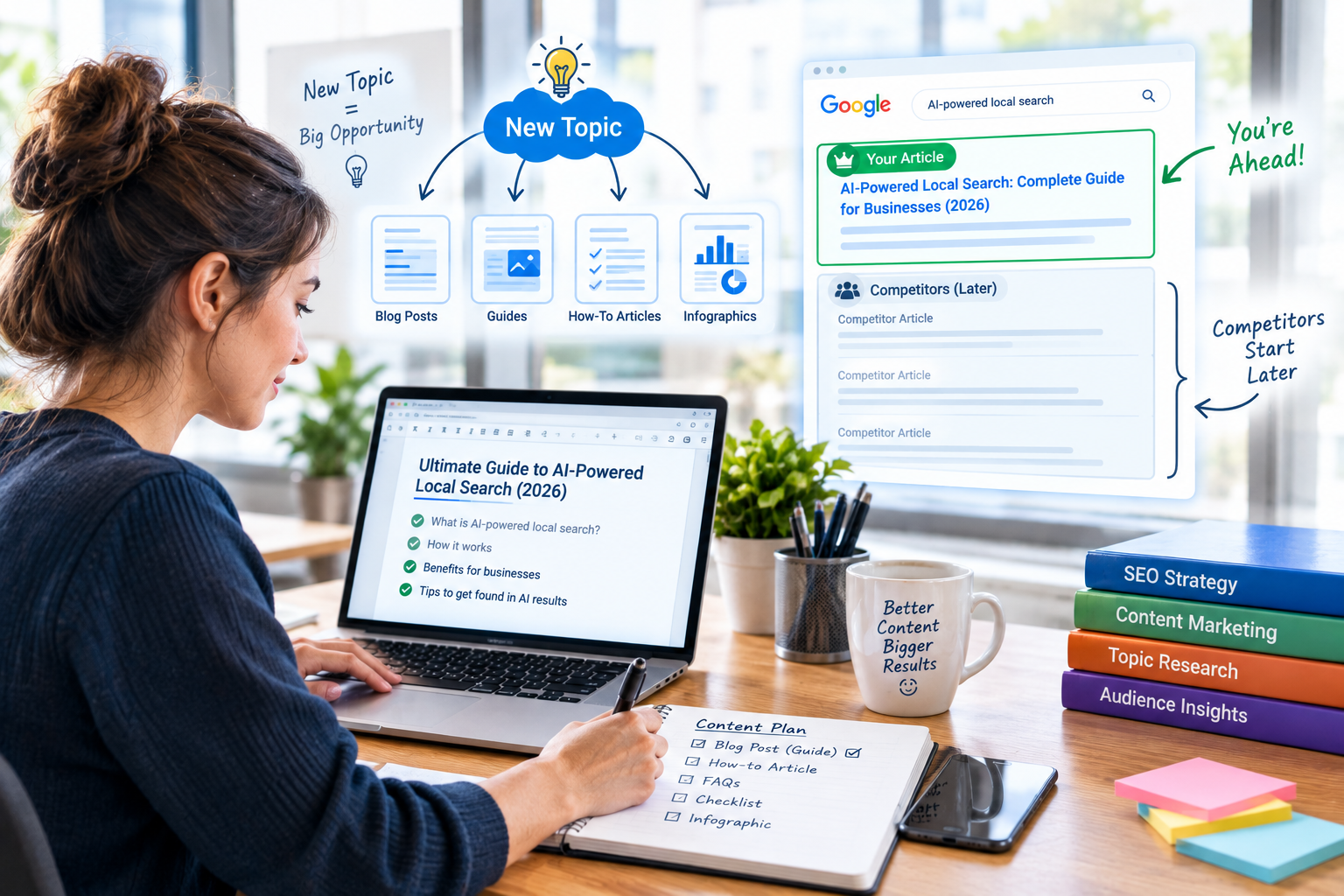
Create Content Before the Category Becomes Crowded
One of the key benefits of being a first-mover into a new category is the opportunity to build awareness in the market ahead of the competition. Once you have found a promising area, you can develop useful educational content around it. That may be guides, comparison pages, FAQs, product explainers, research articles, videos or landing pages.
Early content establishes topical relevance for the brand as the category matures. Instead of competing for highly competitive keywords straight away, marketers are able to target the questions and subtopics that are starting to show up. This is where emerging categories in search data can help gain a strategic advantage. All in all, businesses that act early may have more time to build authority before search demand peaks.
Measure the Category as It Develops
Finding a potential category is only the beginning. Continue monitoring its search behavior to determine whether the opportunity is actually growing. Track keyword volume, query variations, rankings, impressions, click-through rates and the appearance of new related terms. Also, monitor whether commercial intent is increasing.
A category that moves from informational searches to product comparisons and transactional searches may be approaching a more mature stage. This progression can help businesses decide when to increase investment. Regular monitoring makes it easier to identify emerging categories in search data before competitors notice them. Search behavior is constantly changing. Thus, category discovery should be treated as an ongoing process rather than a one-time research project.
Turning Search Signals Into Opportunities
Search data can tell businesses much more than which keywords to target. It can reveal what people are beginning to think about, what problems they are trying to solve and which ideas may become important in the future. The key is to look beyond individual keywords. Study growth patterns, connect related queries, examine changing language, evaluate search intent and separate lasting demand from temporary spikes.
By consistently analyzing emerging categories in search data, businesses can identify opportunities earlier. The brands that pay attention to these early signals are better positioned to create relevant content, develop useful offerings and become trusted sources as new categories take shape.
Search trends do not predict the future perfectly. However, when interpreted carefully, they provide one of the clearest real-time windows into changing customer interests. And that can be a powerful advantage for any business willing to look closely.
From identifying emerging areas of customers’ interest to optimizing existing content on your website, One Design Marketing Technologies covers the entire spectrum of content and SEO services. Give us a call for a free consultation.