SEO and Meta Descriptions: Everything You Need to Know in 2027
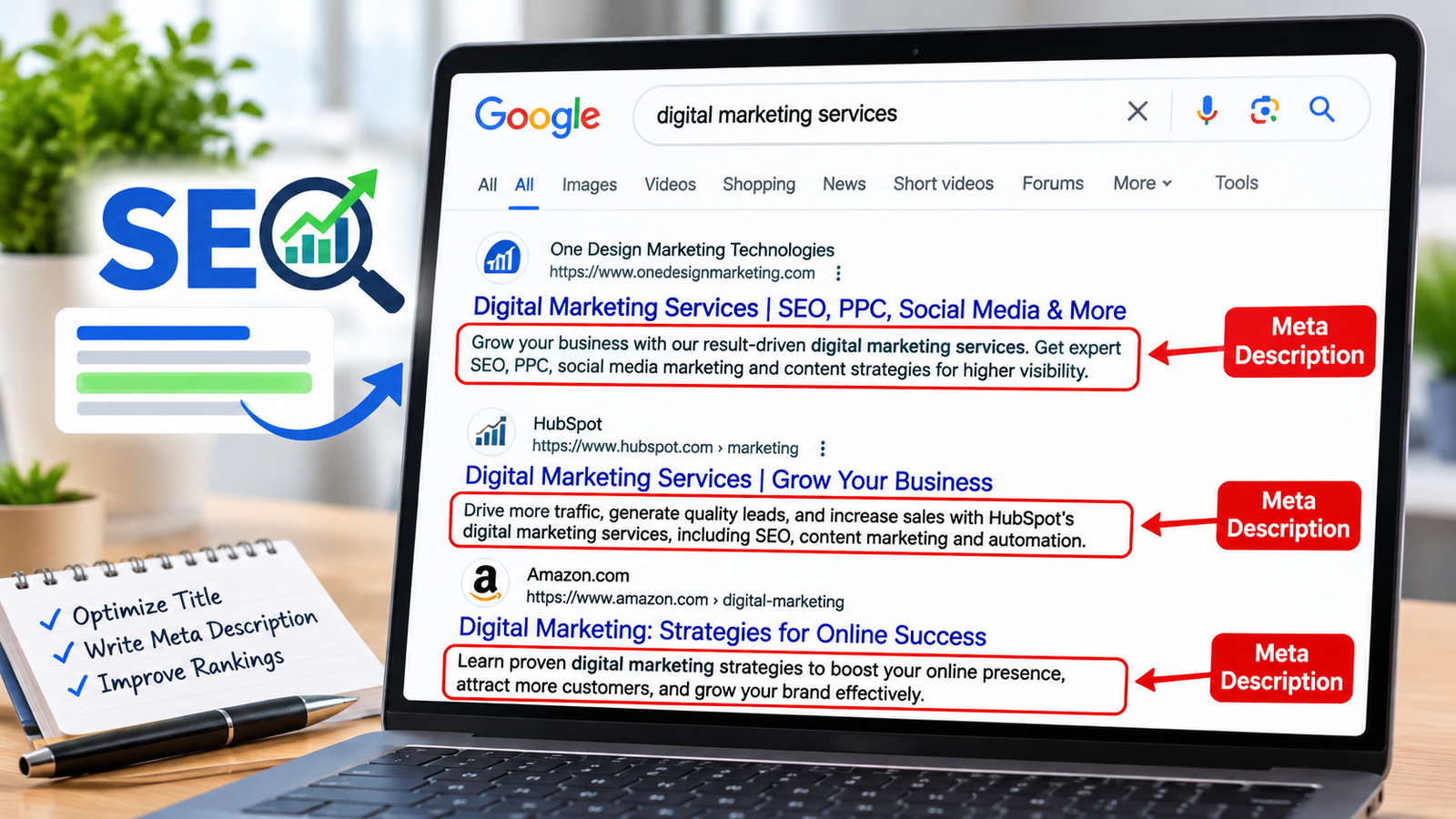
Search engine optimization remains a work in progress as Google provides new search experiences and people seek answers from AI-powered tools. However, some basics still matter, like how websites appear in search results.
The purpose of SEO meta descriptions is to provide an overview of web pages and give users a reason to visit them. Good descriptions won’t directly impact your Google ranking, but they can make your search listings more informative and attractive.
In 2027, brands need to think more than just adding keywords or fitting text in a character count. They need to be accurate, match search intent, convey value and align with what visitors find post-click.
What are SEO Meta Descriptions?
A meta description is an HTML tag that summarizes the content of a web page. It typically appears beneath the page title in search results to help users figure out which result best fits their search query.
For example, a digital marketing agency could provide a short overview of its SEO services, target customers and areas of expertise. In contrast, a blog post might describe the problem it solves and the practical advice it contains.
Here’s what a meta description looks like in HTML:
<meta name=”description” content=”Learn practical SEO strategies to improve website visibility, attract relevant traffic and strengthen your search performance.”>
This is the description that may be shown in search results. You are able to create different descriptions by editing the page’s text. Google selects content it considers most relevant to the individual search, so the final wording is not always under your control.

Why do SEO Meta Descriptions Matter in 2027?
Meta descriptions are still the talk of the town because they communicate what a page offers before someone visits it. They are not directly influencing rankings, but their value is in improving the search experience.
1. They Generate Relevant Clicks
A clear description will help users to identify relevant results and set their expectations. When people know what a page has to offer, they can make better choices about which listing deserves their attention. For instance, a description that provides actionable local SEO tips is more valuable than a vague statement on digital marketing. It’s the particular details that grab the readers who care about the subject.
2. They Support a Better User Experience
Good descriptions bridge the gap between expectation and reality. Misleading summaries might get you clicks, but they can frustrate visitors when the page doesn’t deliver. Businesses should see meta descriptions as a brief preview of their content and not an ad full of false promises.
3. They Provide Context for Search Results
Search engines generate snippets based on the page and query. A relevant meta description provides another useful summary for Google to consider when displaying a result. However, no such guarantee exists that the written description will be repeated word for word.
How to Write Effective Meta Descriptions in 2027
Writing good SEO meta descriptions is a balancing act of relevance, clarity and useful detail. The idea is to explain what a page delivers, not to pack keywords into every sentence.
Write Short and Informative Descriptions
There is no character limit for SEO meta descriptions in Google. Instead, snippets are truncated to fit whatever space is available, depending on the device and search result. A practical starting point is 140-160 characters, but this is a guideline, not a hard and fast rule. Put the most important information near the beginning, so that readers can understand the page even when the snippet is cut short.
Include the Primary Keyword Naturally
Using your main keyword helps in making the SEO meta description relevant to the page’s subject. However, repeating the same phrase over and over makes the summary awkward and less useful.
For instance, a page focused on “SEO services for small businesses” could explain how those services enhance local visibility, website performance and lead generation. The keyword should be included in the message naturally, not as the main point. Meta descriptions are not a direct ranking factor to keep in mind. Keyword placement should enhance clarity and relevance, rather than being the main goal.
Match Search Intent
Before writing a meta description, think about what users want to accomplish with their search. While someone looking for information needs a useful summary, a potential customer might want to know what services are offered or what benefits a product offers.
An informational blog could have a focus on the questions it answers. A service page may tell you who it’s for, what it does and why it’s special. A good description for the purpose of the page will attract more visitors to the page.
Make Every Description Unique
Every important page should contain a meta description of the content of that page. When the same summary is used on multiple pages, it is harder for users to tell similar results apart.
For sites with hundreds of product or service pages that can make use of page specific details, templates can be useful in creating unique descriptions. Regularly review those templates, so you don’t create repetitive, incomplete or inaccurate summaries.
Common SEO Meta Description Mistakes to Avoid
Even seasoned marketers can overlook small details when optimizing pages at scale. Steer clear of these common mistakes and your search listings will be better for it.
- Keyword stuffing: Repeating target phrases makes meta descriptions unnatural and difficult to read.
- Writing misleading summaries: Every claim you make must be supported by what’s on the page.
- Re-use of descriptions: Identical summaries do not explain what makes each page unique.
- Skipping important details: Leaving out a product’s key feature or a service’s target audience is a waste of a valuable space.
- Relying entirely on AI: Auto-generated descriptions may be well-written, but they often tend to be vague, repetitive and inaccurate.
AI tools can help with first drafts, particularly for big websites. Yet, human review is necessary to ensure accuracy, relevance and a consistent brand voice.
Final Thoughts
SEO meta descriptions are still a thing in 2027, as search experiences evolve. They tell users what a webpage is about, set the right expectations and give people a reason to click on a relevant result.
The best way to do this is simple: write unique descriptions, match the search intent, use keywords naturally and prioritize useful information over clever, vague language. Review performance regularly and update descriptions when the content or purpose of your page changes.
Ultimately, good meta descriptions won’t guarantee you better rankings or more clicks. However, they can help your website communicate better. Hence, they’re a useful part of an overall SEO strategy.