
The Future of Content is Beyond Writing, It’s Thinking
The value of SEO content is becoming cheaper every day. The shift towards the expertise, ideas, judgment and experience behind words isn’t drawing the attention of the industries.
There’s an ongoing trend in some GEO and SEO circles that demonize AI content. Most of the argument is self-serving. It also protects a dilapidated business model, but it confuses quality with production and misses just the point where the value of writing is shifting.
AI is the reason content production has been reduced to a cheaper way to do business; it has created a commercial issue for anyone whose ROI is based on those expensive words.
This changes the economics of content writing and a more important question emerges: What is the worth of content when words have become cheap?
How SEO Transformed Content into a Business Model
For a long time many SEO companies made their profits based on content production, and not true search engine optimization. Now, AI has shattered that business model. Real SEO was all based on organic traffic and return on investment, so brands had to pay less after PPC ads.
It also worked because human writing took time and agencies charged higher rates for it. What changed in the recent era is that AI took over, and words have little value anymore. So, parts of the negative thoughts regarding AI content comes from the decline of human written content and the monetary threats that comes with it, and it’s not only for quality concerns for that matter.
Want to Improve Your SEO & Content Strategy?
Talk to our SEO experts about building content that improves search visibility and supports business growth.
Was the AI Content Boom Worth It?
Whether it’s worth it or not, we don’t have a clear answer, but one thing we understand is that they became a popular source of ROI. Many companies adopted this version of content creation for more production. That’s one of the biggest things ever.
More and more AI content sites boomed, and they eventually crashed, even after getting more traffic and qualified visitors. The result was, industries commented “told you so!”
However, after all these crash and burn episodes, no one ever stopped to ask, whether it turned into good ROI or was it really worth it? After all, everything comes down to the business goal, was it met or not, if it did, it doesn’t matter who wrote it.
Content is a Weak Force
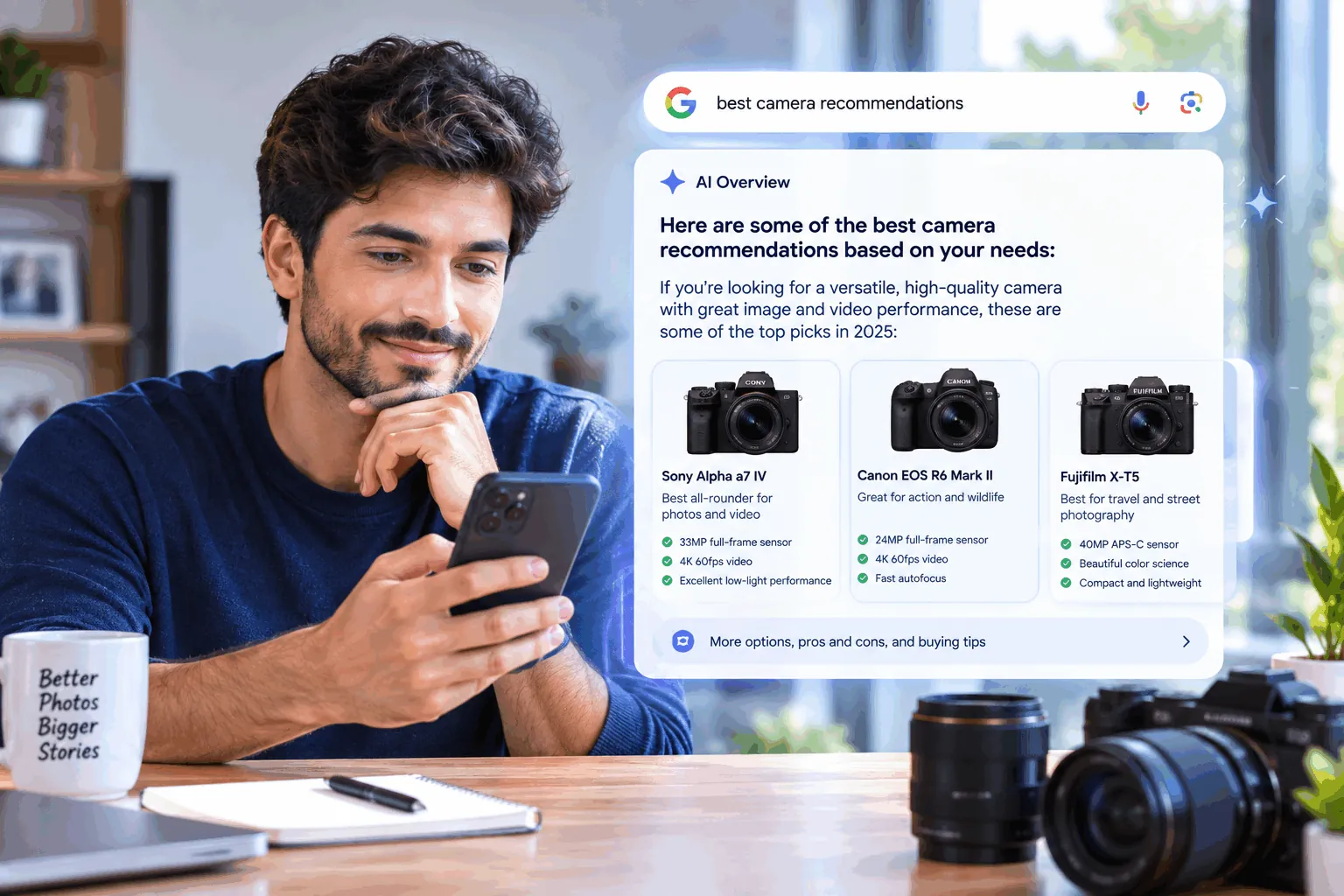
What do you see and understand when you look at an advertisement? For example, an ad for baby soap. The company is selling baby soap that’s good for the baby’s skin and a mother is shown talking about the benefits of the product while caring for her child.
The truth is, no one has the time to read an article or blog from the start to end. A short and compact ad is much more effective than reading a long article and then deciding on whether to buy the product or not.
Ready to Improve Your Search Visibility?
Discuss your SEO goals with our team and explore the right strategy for your business.
Most SEO content had a reputation of being boring before AI emerged. But that doesn’t mean writers should stop writing. It’s meaningful and useful, and works perfectly to nudge people’s interest towards services or products. The matter is here to choose what’s worth writing and the best way to present it.
Human Slop vs. AI Slop
Human writing isn’t always the best, it has flaws. When the payment is more, it usually takes more time, research and editing.
AI today does all of it within seconds, research, drafting and writing as well. The job might not be filled with human experiences or emotions, but it does a good enough job at a lower cost.
However, for the sake of originality and human excellence, if anyone says, “I don’t use AI,” that means it’s a slower and costly work.
The solution here is that writers can offer real ideas, and content must reveal more than words, because AI does the same and asks valuable questions.
Why Create Content After All?
AI Mode and Google AI Overviews are reducing old obstacles and producing answers with results with a single click. So, what’s the need of creating human content? Because it holds your voice and this is how your company provides information into the world.
You can explain what you believe in, such as what you disagree with, what you’ve learned, the expertise you possess, the ingredients you use, what your product does, etc.
Humans can read it and search index it, AI platforms can encounter it, journalists can take reference from it and finally, customers can share it. However, it will not guarantee distribution if you don’t respond at all, without your words the market will have very little to work on, and you remain invisible online until you communicate.
The Scarce Resource is Ideas
There’s another reason why AI writing is important. Writing is not everyone’s cup of tea. Plenty of people have extraordinary life experiences, ideas and expertise, but they simply can’t pen those things down or fail to express them in a polished manner. Others simply don’t have time for writing.
The resources are scarce, and there are words but no one perfect enough to express them in papers. AI diminishes that barrier. Words aren’t limited, good ideas are. This also doesn’t mean artificial intelligence will not create loads of crap, it will.

J.K. Rowling, Robert Galbraith, and Who Gets to Decide What is Good
Let’s take the example of J.K. Rowling. Harry Potter and the Philosopher’s Stone started with a tiny Bloomsbury hardback print of 500 copies, among which 300 went to schools and libraries. This little book made history with a worldwide fandom, movies, merchandise and what not.
Have a Question About SEO or Content?
Connect with One Design Marketing Technologies to discuss your SEO, content marketing and AI search requirements.
Contact Us
So, she’s a great writer, but publishing isn’t that easy. I’m saying this because when she submitted The Cuckoo’s Calling under the pseudonym Robert Galbraith, publishers rejected it, and even said that Galbraith needs a writing course.
Apparently the novel was published, but didn’t receive much reviews and generated modest sales. But when her name was revealed behind the pseudonym, the book climbed to no. 1.
This is the same book, same sentences, same ideas, but the context is different. That also doesn’t prove that quality is useless. It proves that it isn’t the main substance poured into a draft by a human writer.
The Value is in the Ideas
Readers finally decide what they value. Context, ideas, fame and distribution obviously matters. Hollywood spends millions of dollars on movies that eventually fail to make an impression. This signifies that a bad result isn’t all AI’s fault.
Getting ideas and writing with AI matters because it reduces the cost and turns ideas into quality writing. It will expose people with no ideas to offer and produce cheap content. But it will also empower the people who have exceptional ideas and previously struggled to communicate them.
That’s the point. And the question isn’t whether artificial intelligence wrote something, the question is whether it’s worth reading and writing.
We’re already reading a lot of AI content almost every day. The machine can help with the word production, but the human still needs to give a reason for them to exist. This is the ideal economy.
Looking for content marketing services that rank your website on Google search pages and ensure citations in AI responses? Get in touch with One Design Marketing Technologies. The best SEO company that doesn’t sell promises, but real-time results.
FAQ
Is human-written content always the best?
No. It includes slops that existed before even AI existed. The ideas are mostly good, but writing them in prose requires caliber that often human writers lack. But that doesn’t mean it’s bad, it’s beneficial to take help of AI to produce polished pieces that’s not only easy to read but also ranks on Google.
What’s the point of creating content when Google AI Mode or AI Overview gives the answer?
The point is if you remain silent the AI platform will have very little to depend on. Readers, journalists and AI search engines every part matters to get coherent answers from AI platforms. If you remain invisible, there will be less to work on.
Does AI help people who struggle with writing?
It does. But it needs the cooperation of humans. Without their ideas and intelligence AI is just a machine that does automated tasks.
What should I look for in an SEO company if I need content services?
Look for SEO services that have years of experience and have the expertise in AI SEO strategies. Ask for proof of their keyword rankings, ROI, etc. The best SEO services give you traffic, return on investment and quality leads, not just rankings.
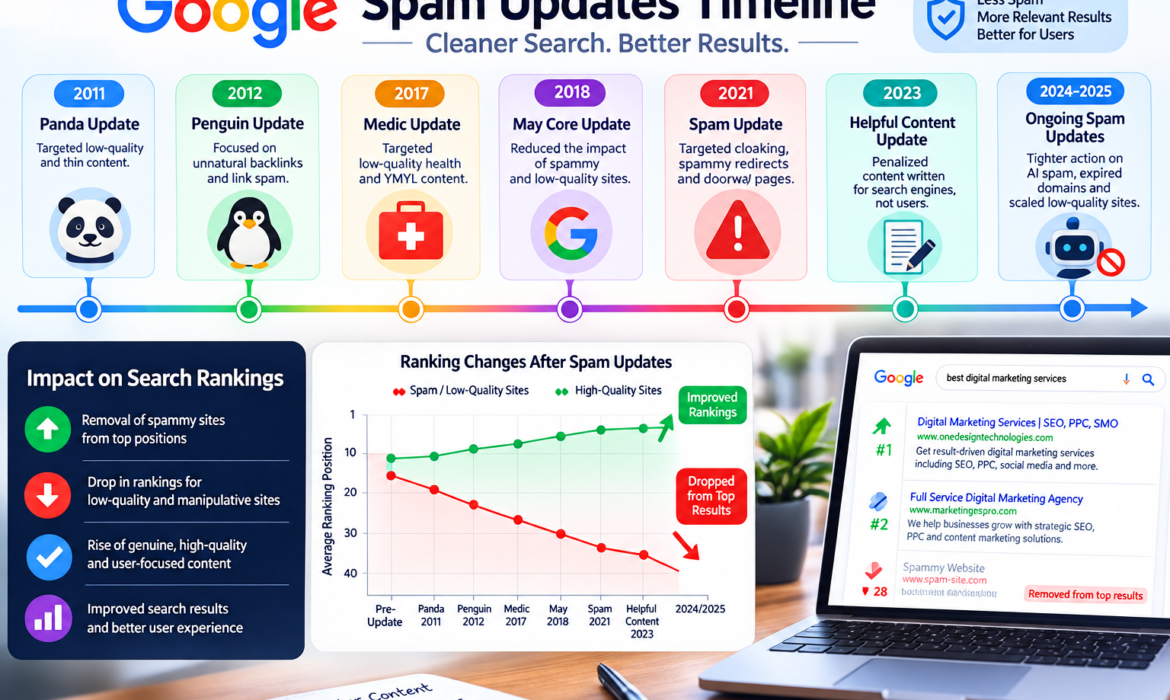
Google Search Spam Algorithm Updates
Google doesn’t have to announce every change it makes to search. Its spam-fighting systems are always looking for websites and tactics that try to game the rankings. However, when Google makes a major improvement to those systems, it might announce a Google Search Spam Algorithm Update. These updates can affect how spammy pages are identified, filtered or removed from search, and can sometimes result in large ranking or traffic changes for websites.
The important thing to realize is that a Google Spam Update is not the same as a regular core update. While spam updates are focused on improving Google’s ability to identify and deal with spam sites, core updates generally make broad adjustments to Google’s ranking systems. Let’s dive in to know more!
What Is a Google Spam Update?
A Google Spam Update is a significant enhancement to Google’s automated systems for identifying search spam. Google has systems that run in the background all the time, but a named update usually means that a major improvement has been made to the way those systems identify certain spam patterns or newer forms of manipulation. Depending on the update, these changes can be global or specific for certain languages and spam types.
That distinction matters because a rank drop during a spam update doesn’t automatically mean that Google suddenly decided a website is “bad.” A site can be impacted if its content, links or other signals were perceived to violate Google’s spam policies. In some cases, Google’s systems may also neutralize the benefit of any spammy links that helped a site rank in the past. Google specifically notes that once the link spam is dealt with, the ranking benefit that those links gave can’t just be gotten back by changing the links at a later time.
Latest updates show how Google’s approach has changed. For example, the March 2024 spam update came with new policies for expired domain abuse, scaled content abuse and site reputation abuse. The October 2023 spam update also increased Google’s spam detection coverage in many languages such as Hindi, Turkish, Vietnamese, Indonesian and Chinese. Meanwhile it targeted areas such as cloaking, hacked spam, auto-generated spam and scraped content.
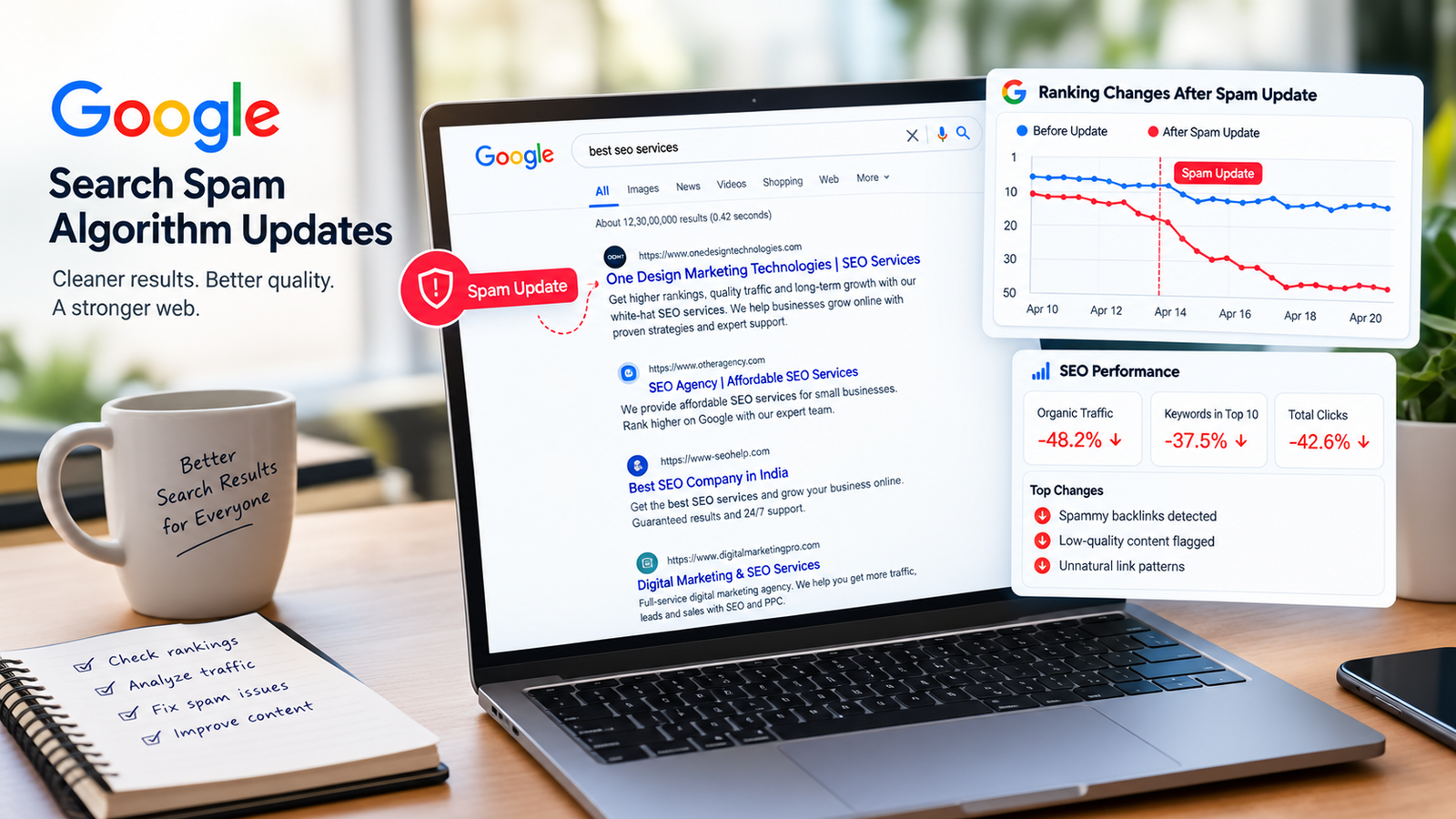
Google Spam Updates in Recent Years
| Spam Update | Date & Duration | Impact | Recommended Solution |
| September 2026 Spam Update | 24 Sep 2026
Rollout may take up to 2 weeks |
The update applies globally and across all languages, improving Google’s systems for identifying and handling search spam. | Review your site against Google’s spam policies, especially if you notice unexpected ranking or traffic changes during the rollout. |
| August 2026 Spam Update | 18 Aug 2026
2 days, 16 hours |
Google made another adjustment to its spam-detection systems as part of its ongoing effort to keep manipulative pages out of search. | Check for tactics that could violate Google’s spam policies and clean up low-quality or manipulative content rather than trying to recover rankings with more aggressive SEO. |
| June 2026 Spam Update | 24 Jun 2026
2 days, 1 hour |
Continued improvements to Google’s automated spam-fighting systems, with changes capable of affecting sites that rely on spammy tactics. | Keep content genuinely useful, avoid manipulative SEO practices and regularly review your site for policy violations. |
| March 2026 Spam Update | 24 Mar 2026
19 hours, 30 minutes |
Google updated its spam-detection systems, continuing its efforts to identify and neutralize search manipulation. | Focus on people-first content and check for issues such as keyword stuffing, link spam, scaled content or other practices covered by Google’s spam policies. |
| August 2025 Spam Update | 26 Aug 2025
26 days, 15 hours |
The update refined Google’s automated systems for detecting spam across search. Its long rollout meant some sites could see ranking fluctuations during the process. | If traffic drops, don’t immediately rewrite everything. First check Search Console and review your site against Google’s current spam policies. |
| December 2024 Spam Update | 19 Dec 2024
7 days, 2 hours |
Applied globally and across all languages, continuing Google’s work to improve its ability to detect search spam. | Review your website for spam-policy issues and remove or fix content and practices that could be seen as manipulative. Give Google time to reassess the changes. |
| June 2024 Spam Update | 20 Jun 2024
7 days, 1 hour |
Google continued improving its automated spam systems to identify pages using tactics that violate its Search policies. | Audit your content, links and technical setup for spam-related issues. Pay particular attention to unnatural links and low-value content. |
| March 2024 Spam Update | 5 Mar 2024
14 days, 21 hours |
Introduced alongside three new spam policies covering expired domain abuse, scaled content abuse and site reputation abuse. | Avoid publishing large amounts of low-value content simply to rank. Review expired domains, third-party sections and scaled content practices across your site. |
| October 2023 Spam Update | 4 Oct 2023
15 days, 12 hours |
Improved Google’s spam detection globally and expanded coverage in several languages, including Hindi, Turkish, Vietnamese, Indonesian and Chinese. | Make sure your content follows Google’s spam policies and avoid tactics such as keyword stuffing, cloaking, deceptive redirects and manipulative links. |
| October 2022 Spam Update | 19 Oct 2022
2 days |
Google made improvements to its automated spam-detection systems, continuing its effort to keep spammy pages out of search. | Follow Google Search Essentials and focus on useful, original content instead of tactics designed mainly to manipulate rankings. |
| November 2021 Spam Update | 3 Nov 2021
8 days, 1 hour |
Google continued strengthening its systems for identifying spam and preventing manipulative pages from appearing prominently in search. | Keep your site clear of obvious spam tactics and make sure links, content, and page functionality are designed for users rather than ranking manipulation. |
Conclusion
A Google Spam Update is about keeping manipulative search tactics from taking up valuable space in Search results. This means that for legitimate website owners, the goal shouldn’t be to predict every spam update or to create a new trick after every rollout. It should be to build a website that doesn’t rely on the tactics Google is trying to eliminate in the first place.
Keep your content valuable, don’t use shortcuts designed solely to manipulate rankings, keep an eye on your Search Console data and check Google’s spam policies regularly. And if rankings change during an update, give yourself time to figure out what really happened before making drastic changes. Search is always evolving, but the general principle has remained fairly consistent: build a useful experience for people first and make sure the SEO tactics behind it are clean enough to stand on their own.
Follow One Design Marketing Technologies on Fiverr, IndiaMART and YouTube.
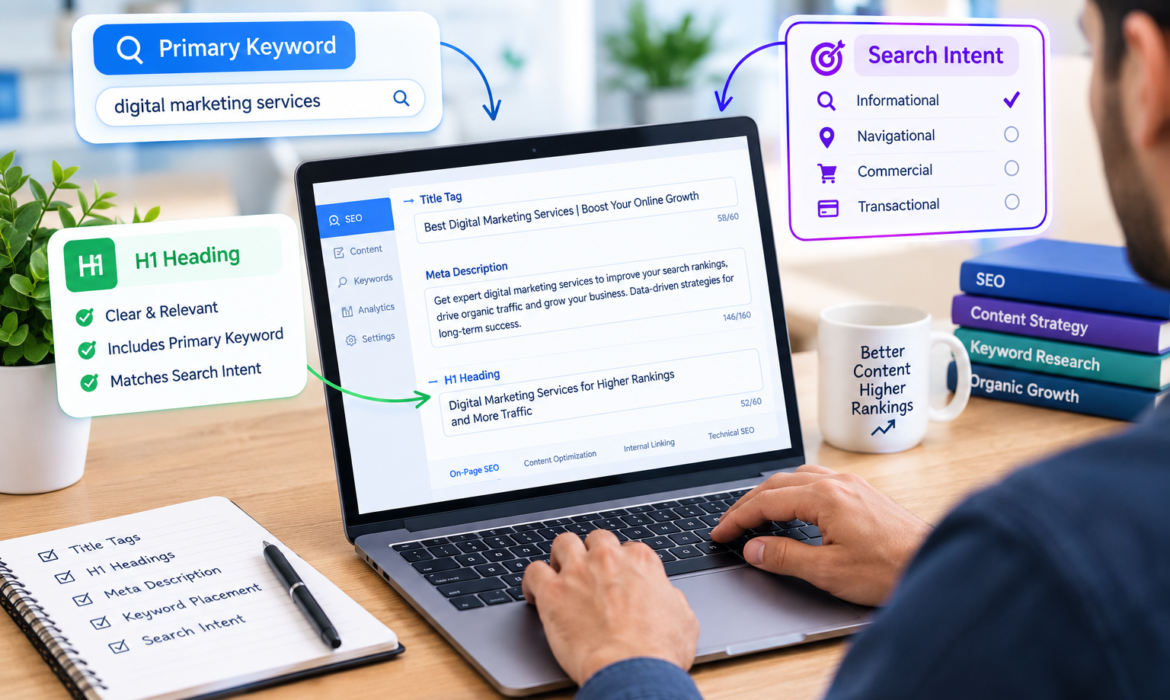
How to Create Strong Title Tags in SEO in 2027
A title tag is not just a heading; it’s an SEO fundamental that helps make your website content understandable to the search engines. Your page title tags should give your users a brief but clear description of the purpose of your webpage, blog, article or any other piece of content.
The smarter the title the easier it becomes for search engines to relate it to the user query and potentially improve its visibility in the search results. Moreover, creating a meaningful page title can improve your chances of attracting qualified leads and increasing sales. If you are also wondering how to make the most out of your title tag in 2027, this article is for you.
Understanding Title Tags
A title tag is actually an HTML element that can be found in browser tabs and search results. It defines the actual title of a webpage, specifying its purpose and target audience.
The title tag can influence a user’s decision to decide whether they should visit a page or not. A title’s job is to establish the actual purpose of the page rather than giving a generic label to it. For instance, a title such as “Digital Marketing Services” sounds more general than “Local SEO Services for Small Businesses”.
What Should be the Length of the Title in 2027?
While there is no fixed character limit, an ideal title character count is often kept between 50 to 60 characters. However, no matter how long the title is, search engines may truncate or rewrite it if necessary.
Hence, your focus should rather be on creating smart titles that clearly communicate the context of the content. Always remember to keep the most important detail near the beginning and make the title concise. An example could be: Ecommerce SEO for Enterprises.
Understanding Keyword Placement in Title Tags
Always place your primary keyword naturally near the beginning of your title tag for the best results. Also, ensure the keyword is not repeated unnecessarily, creating redundancy.
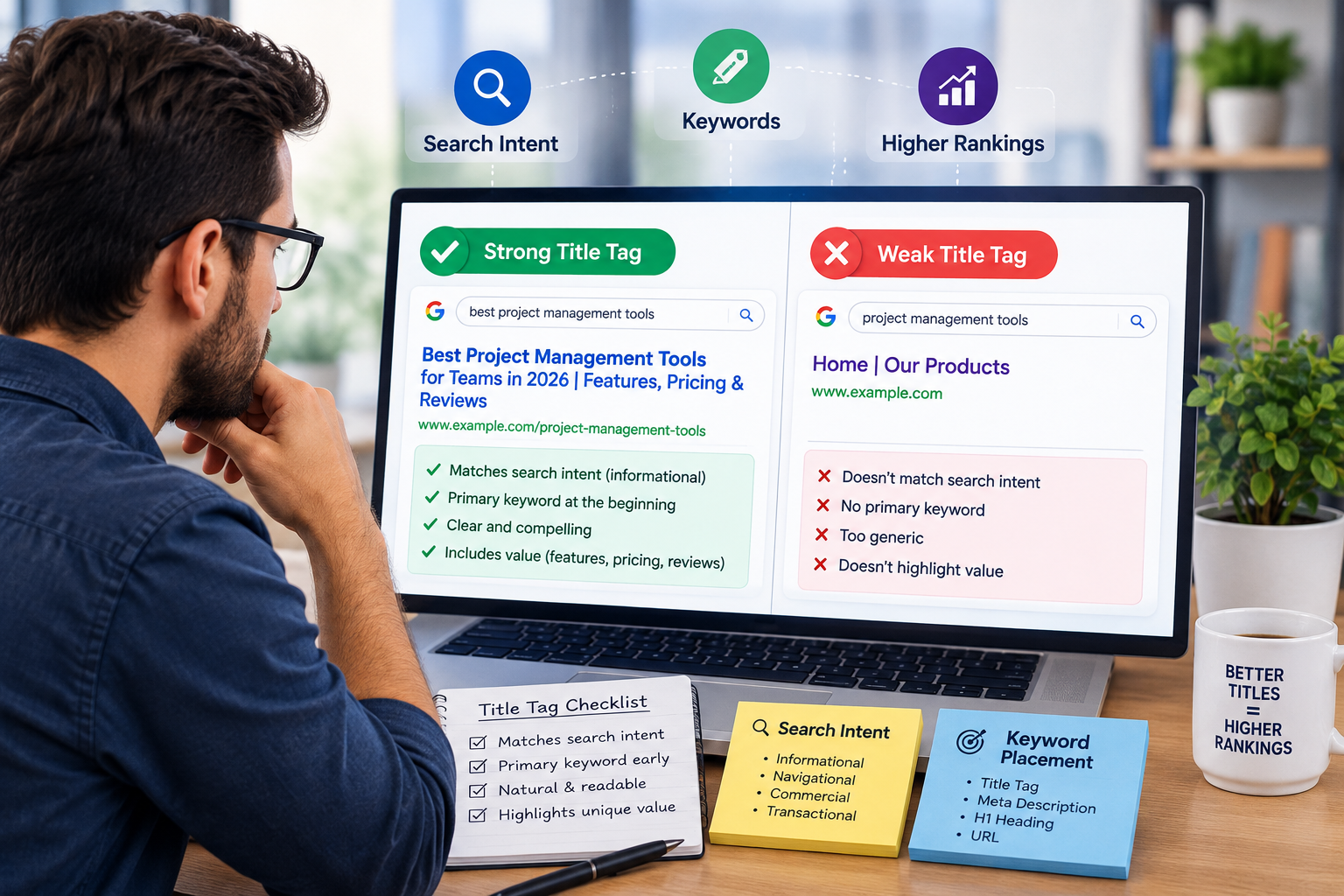
Let us understand with the help of an example:
Good Title: SEO Services for Small Businesses
Bad Title: Grow Your Small Businesses Online With Our Professional Digital Marketing Services
Good Title: SEO Services for Global Brands
Bad Title: International SEO Services for Global Brands
Should Title Tags Match Search Intent?
Absolutely yes. What’s the point of creating content if it does not fulfill the user query? And to ensure the user finds your content, you should give it a suitable title. However, a title tag shouldn’t be taken for granted. If you are giving your content a suitable title, it should accurately represent the information provided on the page.
Using clickbait titles can give your website quick clicks but can damage its reputation in the long run. Below are a few examples of how your title tags should look like:
Comparison Blog – Traditional SEO vs. AI SEO: Key Differences
Service Landing Page – SEO Services for Online Businesses | ODMT
Information Blog – What is Answer Engine Optimization (AEO)? A Complete Guide
Ecommerce Landing Page – Gaming Laptops – Premium Collection
Can Google Rewrite Your Title Tag?
Have you ever noticed search engines changing your landing page or blog title in the SERPs? Well, Google might alter your exact HTML title at times, creating a version that better represents your website content or aligns better with the user query.
Your SEO company must ensure the page title aligns well with the H1 heading and the actual content. For instance if your title says “Best AI SEO Services for Brands”. But the H1 and the content instead focus specifically on Social Media marketing, Google may use a different title to represent your page.
Title Tags in AI-Powered Search Environment
Modern AI SEO strategies not only assist brands with better content creation and digital marketing in conversational search environments but also help in creating meaningful title tags. Nowadays, user queries are not limited to keyword-based searches but are becoming more conversational and question-based.
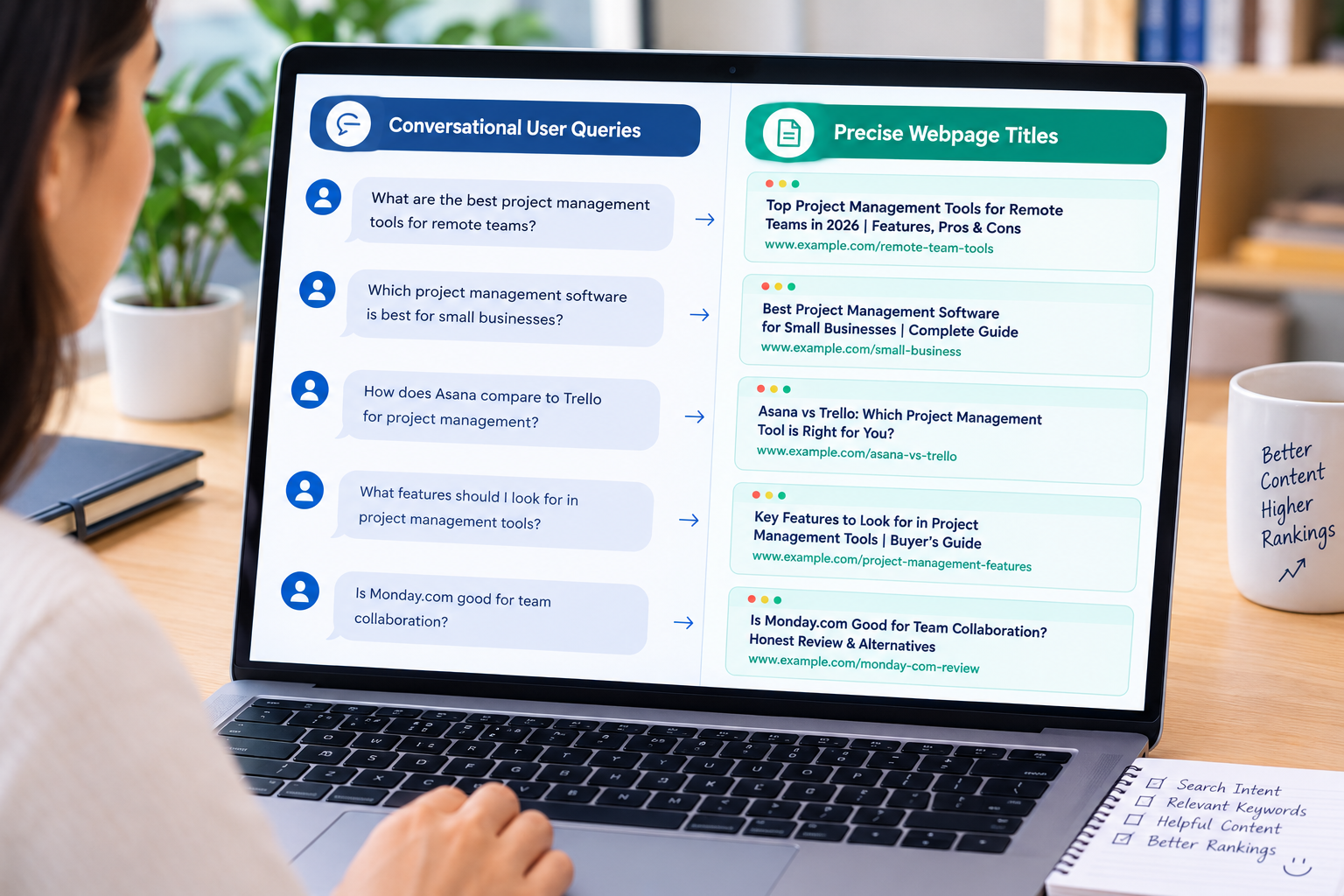
For instance, instead of searching for “Ecommerce AI SEO strategy”, users may search for “How to build an AI SEO strategy for ecommerce”. In this regard, a title with a clear topical context can naturally help attract more impressions and clicks.
Title Tag Optimization in 2027
Just like your website content needs optimization, so do your title tags. Here’s how you can optimize them in 2027:
- Identify the search intent and the primary topic for your landing page or blog.
- Create a short and relevant title that aligns with the subject, including the primary keyword naturally near the beginning.
- Ensure your title aligns with the H1 heading and the main content.
- Keep monitoring the page performance and update titles if required.
Are you struggling with handling title tags for your ecommerce or enterprise-level website? Our SEO experts at ODMT can help you audit existing titles for your business website. We identify title duplication, ensure the right keyword targeting and establish scalable title optimization rules.
Mistakes to Avoid With Title Tags
If you are an ecommerce brand or operate an international website, this is especially important for you. By avoiding the following common mistakes, you can make your title tags more engaging and aligned with your content:
- Generating misleading or ambiguous titles
- Ignoring the H1 when creating a title
- Repeating keywords without a clear need
- Making unnecessarily long titles
- Creating generic titles
- Ignoring search intent in titles
- Using the same titles across multiple pages or blogs
- Creating titles using automated templates without quality checks
Final Words
Gone are the days when title tags would just influence traditional search rankings for a brand. They can also contribute to business sales by bringing in more qualified leads and conversions. The key is to opt for a clear, search intent-driven title that aligns with the H1 heading, content and the overall website structure.
Want help with your title tags? ODMT helps your business website become search-ready by building a customized AI SEO solution and providing PPC services for your brand. Connect with us today by booking a virtual appointment and get started on your SEO journey toward SEO success.
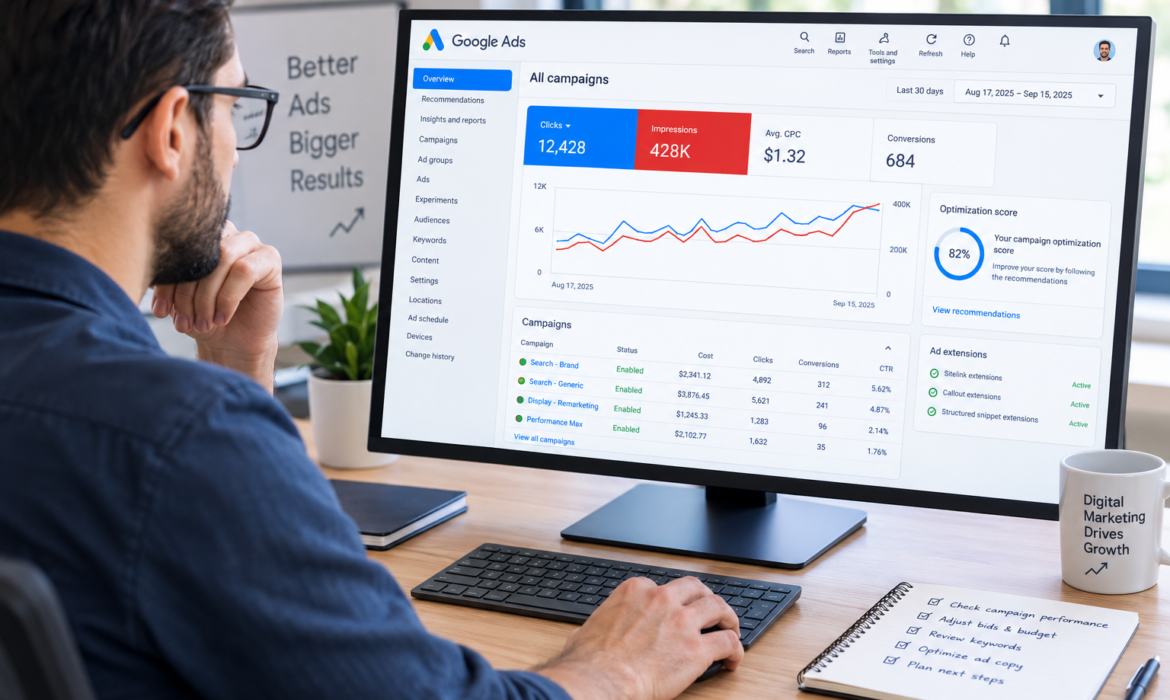
How to Tell Which Google Ads Controls Actually Control Anything
Google Ads can sometimes feel like sitting in a cockpit with 200 switches, most of which are named in a mysterious way. You change a setting, wait for results and wonder if anything even happened. Some controls directly affect who sees your ads and how much you pay.
Some only affect delivery in certain cases, and a few are more about reporting than actual campaign behavior. Understanding what Google ads controls are really worth it can save you money, time and a lot of troubleshooting that is unnecessary. In this guide, we will see how Google ads controls actually does its work. So, let’s dive in, shall we?
Start With the Question: What Are You Trying to Control?
Before making any changes, know what you want to change. Want to control spend, target a specific audience, improve clicks, grow conversions or filter out irrelevant traffic? Every setting has a reason, but not every setting has the same authority.
For instance, a daily budget has a direct relationship with spending, while an audience signal may influence who Google considers relevant without guaranteeing that only those people will see the ad. That distinction is important because many Google ads controls are about influencing a system, not dictating it.
The Controls With the Most Direct Impact
There are some fairly straightforward configurations. Your campaign budget is how much you are willing to spend over time. Bidding controls affect how Google competes for available ad opportunities. Location targeting is used to specify the geographical regions you want to reach. Language settings are used to define the users your campaign is intended for.
These are the settings you would look at first if performance suddenly changes. For example, if your spending is higher than expected, just looking at the creative quality won’t solve the problem. Most of the strongest Google ads controls tend to have a direct link to money, eligibility or delivery.
Targeting Is Not Always a Hard Boundary
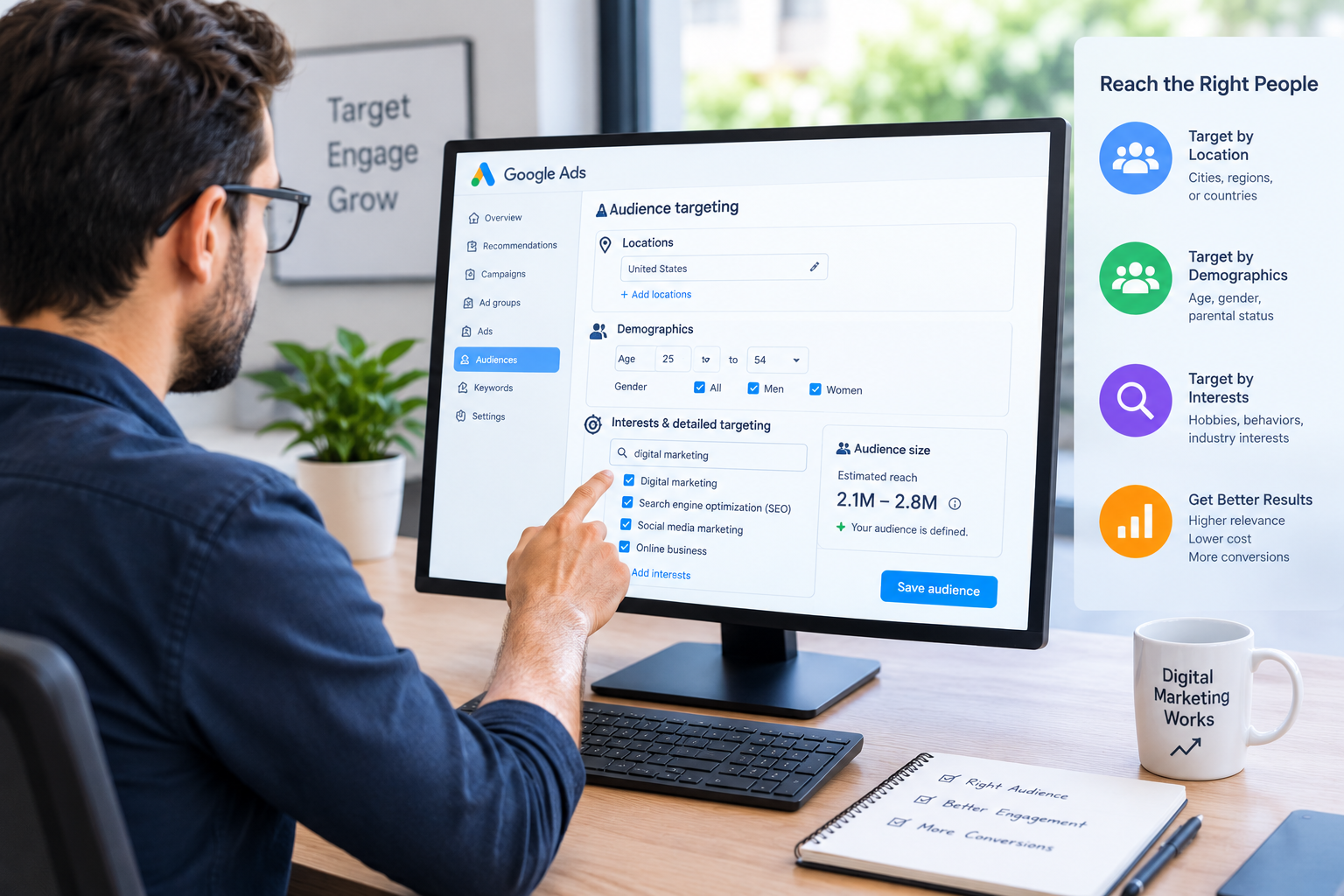
This is where Google ads get a little less intuitive. Advertisers often think that when they pick an audience, they’re telling Google to only show their ads to that audience. Some audience features are more signals to help Google understand who might be valuable. Others have tighter restrictions.
Same thing for keywords and search behavior. Just because you add a keyword doesn’t mean your ad will show up only when someone types in that exact phrase. One of the most useful lessons from Google ads controls is to understand the difference between a restriction and a signal. If you mistake a recommendation or signal for a hard rule, you may spend hours trying to fix a problem that the setting was never designed to solve.
Match Types: Helpful, but Not Magical
Search campaigns are another classic example. Keyword match types determine what searches can trigger ads, but should not be read as simple on/off switches. A keyword can match to searches related in meaning or intent, rather than just repeating the words you typed. That can expand your reach, but it can also bring up searches you didn’t expect. Search terms still matter because they give you a clue to what actually triggered your ads.
If traffic seems too broad, don’t automatically add dozens of negative keywords. First, know how your keyword strategy works with Google’s interpretation of intent. Keyword targeting is powerful among all the Google Ads controls because it works in conjunction with Google’s matching systems rather than in isolation.
Budget Does Not Guarantee Delivery
It’s easy to think of your budget as a simple spending limit: add an amount and expect Google to spend that exact amount each day. Actually, campaign spending and delivery can vary based on demand and the campaign’s settings. More conversions don’t automatically come from larger budgets. If you have a small number of opportunities that meet your targeting and bidding needs, then increasing the budget may not make the difference that you expect.
That’s why the budget should be considered in tandem with bidding, targeting, conversion goals and available search or audience demand. So, one of the most misunderstood Google ads controls is the budget itself: it controls spending capacity, not business results.
Bidding Settings Can Change the Game
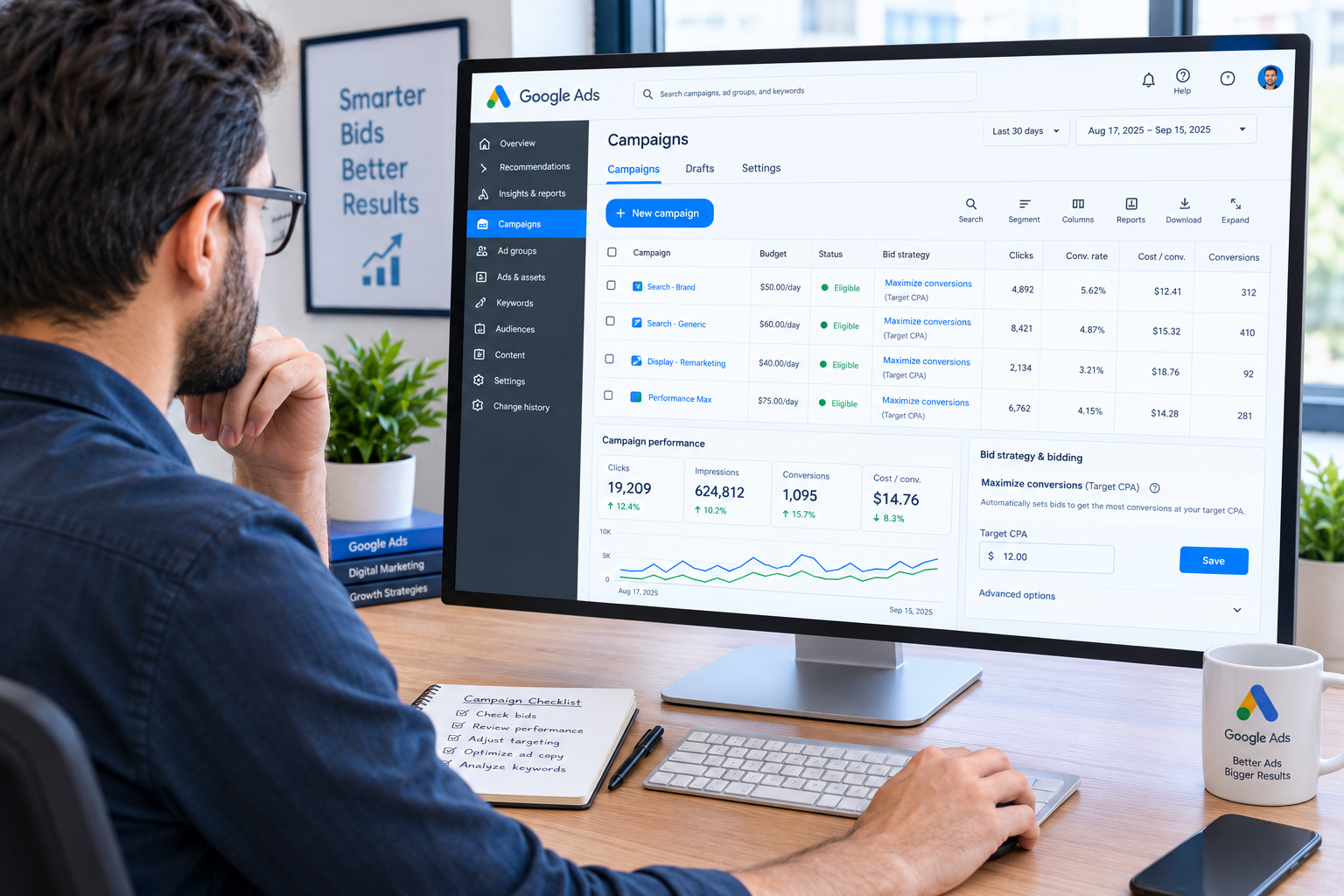
How Google will go about getting available ad opportunities is determined by bidding strategies. Depending on the strategy, the system can focus on clicks, conversions, conversion value, visibility or any other defined objective. Thus, changing a bidding strategy can have consequences beyond the bid amount itself. It can change what opportunities the system finds attractive, how hard it fights for them.
Make sure you have enough solid conversion data on your campaign and that the goal you picked is what you truly want before you change your strategy. There’s no magic wand to make conversion data appear out of nowhere. It can only optimize with what information and signals it has at its disposal. That makes bidding one of the most consequential Google ads controls to change thoughtfully.
Not Every Setting Deserves Immediate Attention
Google Ads has a lot of options, suggestions, experiments, reporting columns and advanced settings. The sheer number can make it seem as though every change should receive equal attention. Well, it doesn’t. Changing an insignificant display preference isn’t going to fix your campaign. If conversions are not being tracked properly, then reworking ad copy is not the first problem to solve.
Moreover, if your ads are showing up in the wrong places, changing the headline probably won’t fix the targeting issue. Imagine Google ads controls as layers. While some decide if an ad can be included in an auction, others decide what auction opportunities are attractive. And some tell you what happens after the click, others just help you understand the results.
Learn to Separate Cause From Correlation
The most common way to misunderstand Google ads is to change three settings at once. Performance improves, and suddenly you have no idea which change helped. Instead, make deliberate, meaningful changes and give the campaign enough time and data to produce a useful comparison when appropriate.
Note budget changes, targeting changes, bidding changes, landing-page changes and large creative changes. That makes your account something that you can actually learn from. You start to see which settings affect which results, rather than pulling Google ads controls at random like the levers of a slot machine.
Use the Account Like a System, Not a Dashboard
The most effective approach to Google ads is to cease considering each setting as an individual button. Campaigns are systems of inter-related elements. Budget drives available spend. Targeting influences to eligible traffic. Bidding affects participation in auctions. Conversion tracking influences optimization. The ad’s relevance is how well your message speaks to the people who are seeing it.
If something isn’t working, follow the chain, not change the most visible setting first. Ask: what’s different? Which part of the campaign does this setting actually affect? Is this a hard constraint, an optimization signal or simply a reporting preference?
Those questions can reveal whether a setting deserves your attention. Ultimately, understanding Google ads controls is less about memorizing every option inside the platform and more about knowing which levers have genuine influence. Once you can separate direct controls from signals, recommendations and reporting features, Google Ads becomes considerably less mysterious, and your optimization decisions become much more deliberate.
Looking to optimize your campaign or want to create a new one? One Design Marketing Technologies will bring the kind of expertise you want in your ad campaigns. Get in touch for a detailed roadmap.
Follow One Design Marketing Technologies on Built In, Google Maps and Trustpilot.
SEO Task Automation: 7 SEO Tasks You Can Automate Now
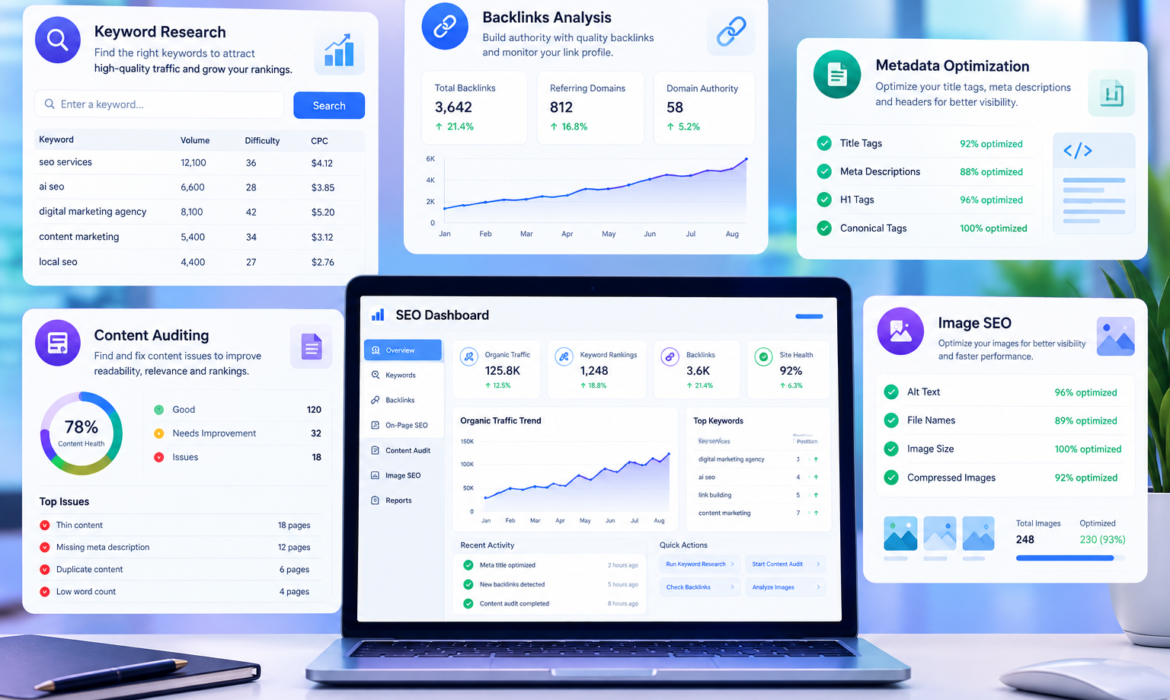
Managing SEO services, especially for large enterprises, can be a daunting task, consuming hours of your staff’s productivity. Thanks to AI automation, brands can now delegate several low-maintenance tasks to machines. SEO task automation uses AI tools, scripts, workflows or software to perform routine SEO tasks that require minimal human intervention.
It can help brands process larger datasets faster, handle extensive reporting, scale optimization and detect technical issues on your website. This helps executives save significant time and effort on performing mundane tasks and focus more on creativity and strategic decision-making.
Below is a list of SEO tasks that you can automate right away and make the best use of your AI SEO strategy.
Keyword Research & Search Query
One of the most important SEO tasks is conducting keyword research. The process requires brands to review thousands of keywords, search volumes and related queries along with competitor websites. An SEO task automation program can help brands collect primary keywords and variations based on the industry and niche.
The same program can also help generate prospective search queries and group related terms. Nonetheless, your SEO company would still require you to go through the list of keywords suggested by AI and match their search intent with your website before utilizing them.
Data Collection & SEO Reporting
Are you creating monthly reports by collecting data from multiple platforms? This extremely time-consuming task can be readily automated using an SEO task automation software for data reporting.
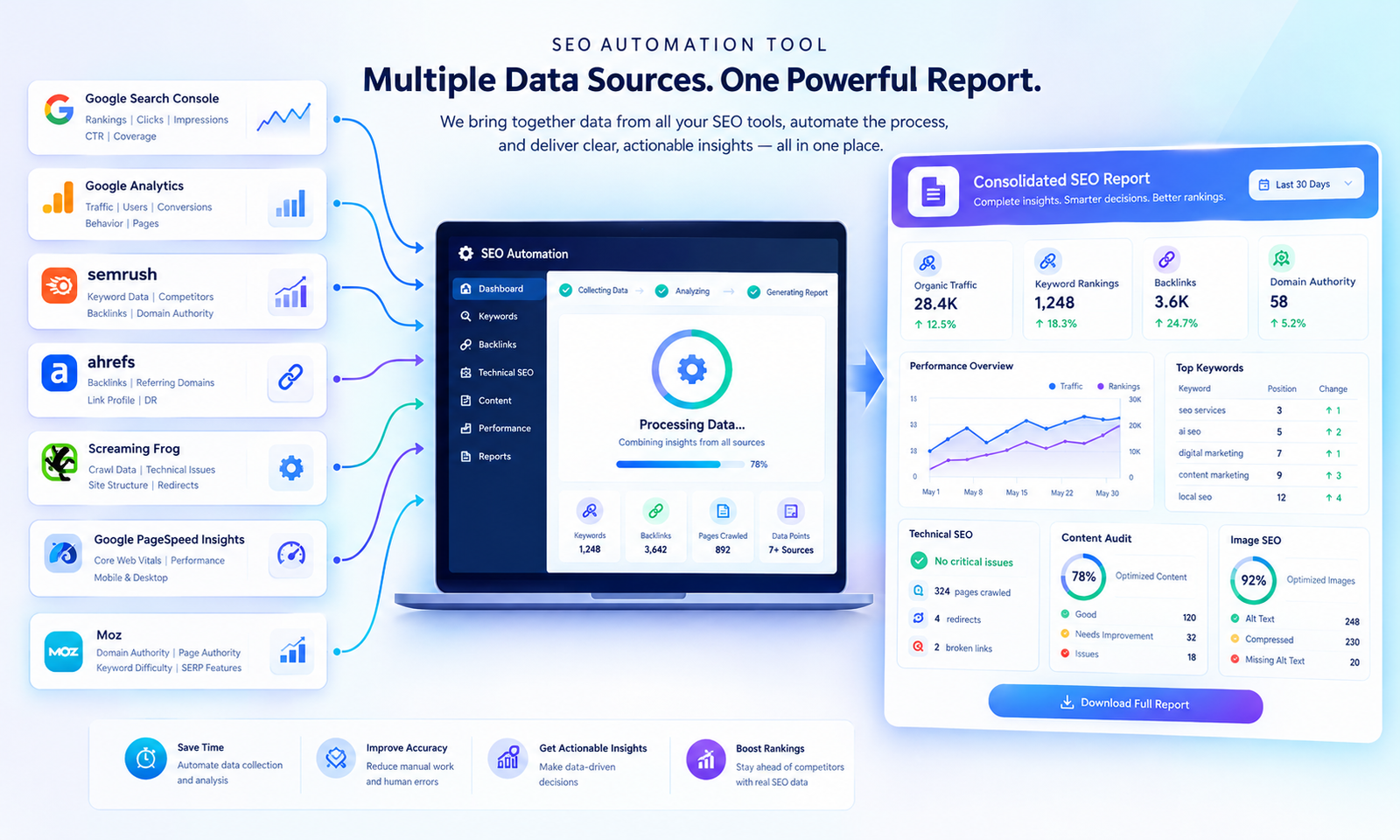
The tasks include collecting page performance, ranking data, backlink details, conversion metrics and organic traffic data. Now, instead of extracting this data from several sources and comparing it manually, you can focus on identifying the reasons behind low page performance and take necessary actions.
Internal Linking
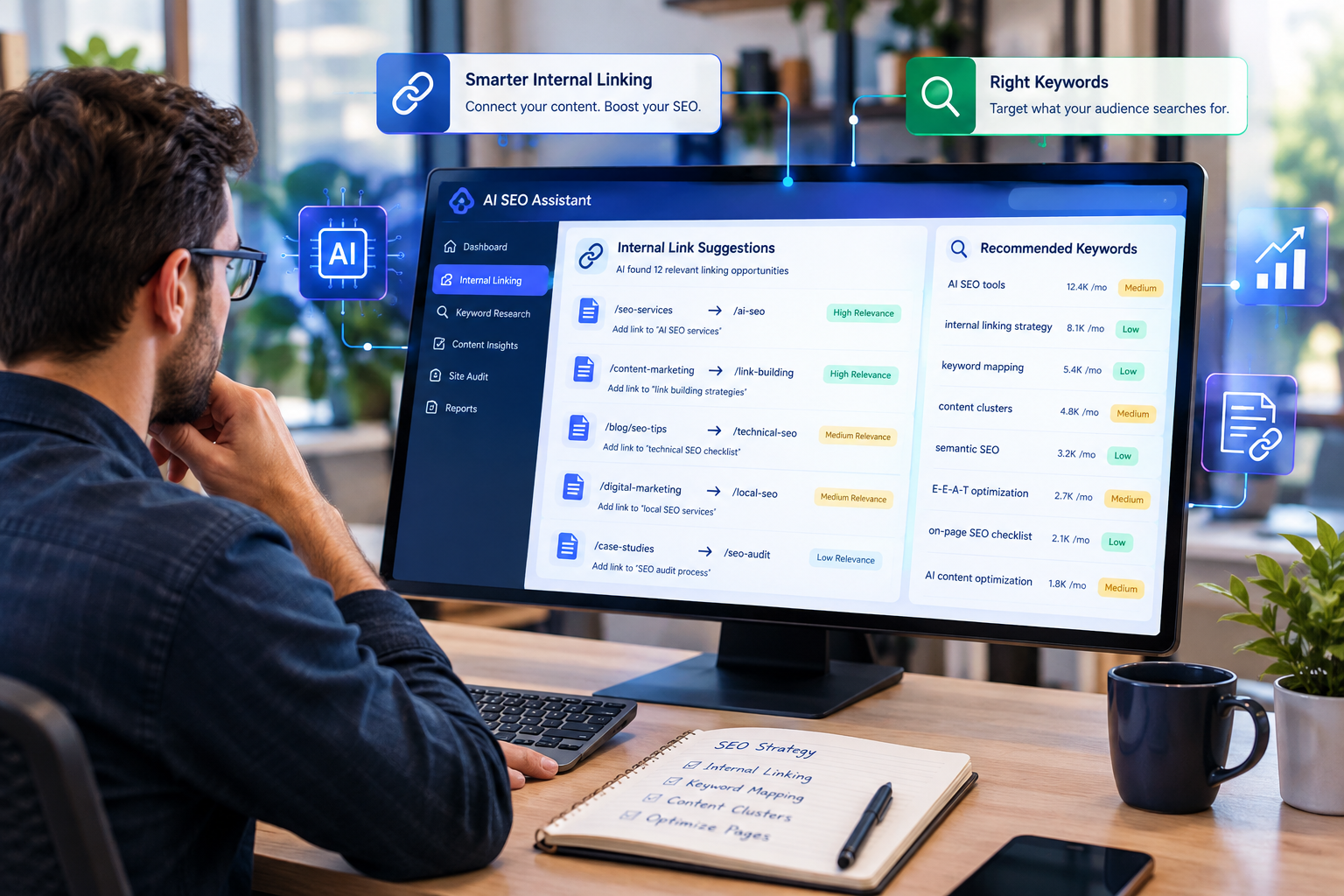
What if we tell you that an SEO task automation can help you identify webpages that can be linked together, creating a strong internal linking network? Yes, such automated software uses your sitemap and list of keywords to recommend the best internal links to every webpage on your website.
For instance, if you have a blog article on “AI SEO Services”, the AI automation tool can suggest linking it with your website pages on Generative Engine Optimization (GEO), Answer Engine Optimization (AEO) and Search Experience Optimization (SXO). However, while AI can suggest links, you would still require human editors to review their relevance and modify links, wherever necessary.
Content Auditing
Auditing the entire website and blogs for content optimization can take up a lot of your team’s valuable time. Again, AI automation can come to your rescue here. An SEO task automation for content auditing can help you compare pages for traffic, conversion, URLs, ranking and engagement.
You can also ask the automated system to identify pages that need to be updated with fresh content or optimized. Moreover, the system can also perform competitor analysis and identify content gaps for your website. Meanwhile, your SEO services experts can focus on improving the quality of their content and adding more value to it.
Metadata & Schema Generation
For enterprise-level or ecommerce websites involving hundreds of webpages, creating meta descriptions, title tags and other data involves a lot of repetitive work. An SEO task automation tool can generate metadata for webpages based on the appropriate character limits, page content and user queries.
Likewise, AI workflows can generate schema for pages using structured data templates. Now, before publishing these pages, make sure your SEO team validates the output for quality.
Backlink Analysis & Monitoring
A majority of websites have hundreds of outbound links; some are useful, while others become broken or lost over time. This requires SEO companies to regularly review backlinks, identify broken links and replace them where necessary. SEO task automation for backlink analysis can help brands automate continuous backlink monitoring.
Such an automated tool or application can then collect information on link status, referring domains and anchor text, among other metrics. Besides, the system can also send regular alerts when a backlink is lost or a new link is acquired for a page.
Image SEO Optimization
Creating and adding graphics to your blogs or landing pages is not enough. You must check for a number of other factors, such as oversized image files, alt texts, etc. Designing an AI workflow for the same can help identify images with incorrect file formats, missing alt text or slow-loading images.
AI, in this case, can suggest appropriate alt text for images, reduce image sizes using image compression tools and convert images into compatible file formats for your website.This way, image SEO task automation can help brands save time on manually checking every webpage and addressing common issues at scale.
Steps for Performing SEO Task Automation
Let us understand the process step-by-step, specifically for SEO-based tasks:
- Identify a repetitive SEO task.
- Analyze the current workflow of the task.
- Identify the inputs required and outputs generated.
- Pick the most appropriate AI automation tool for the job.
- Test the automated tool on a small set of inputs.
- Apply human quality checks, if required.
- Monitor the quality of the output.
Areas That Require Human Inference
Automation works on a predefined set of principles. Hence, not all SEO tasks can be automated, especially those concerning approval and quality checking. This is because AI-generated results are prone to errors or can miss out on important updates. Below are a few areas of work where human intervention is strictly recommended:
- Brand Positioning
- Strategic Planning
- Content Quality
- Technical SEO
- Data Migration
- Content Approval
- Determining Search intent
Parting Thoughts
SEO task automation can help brands transform their SEO journey by automating recurring SEO tasks, thus reducing manual work. It not only leads to faster processing but also frees up time for the SEO team to focus on strategy, analysis and decision-making. Combining SEO automation with AI capabilities can further help brands automate their SEO tasks with more precision and advanced optimization.
Are you looking forward to automating your SEO duties using AI? We are an SEO agency helping local as well as international businesses build customized AI SEO strategy. Get ready to gain higher visibility, qualified seo leads and conversions from both traditional and AI answer engine platforms. Book your appointment today to know more!
Follow One Design Marketing Technologies on ZoomInfo, Pinterest and DesignRush.
Google Search’s Core Algorithm Updates
Coming in the top Google search results is the dream of every brand. And for all the good reasons: it surely does attract sizable organic traffic besides cementing your place in your domain. Google keeps rolling out patches and core updates from time to time to deliver users the most relevant results. But have you ever wondered how these core updates affect websites and their search visibility?
Google Core Algorithm Updates refer to the broad changes introduced to Google’s search algorithms and systems each year to enhance the overall quality of the search results. These updates influence how Google evaluates and ranks your website and interprets your content. This article discusses major Google core updates issued from 2021 till date.
What Should You Do With a Google Core Update?
Generally, when a new update is released, it takes a few days to weeks to roll out. So, your first task is to have patience till the entire update is rolled out. Once completed, Google recommends waiting another full week before you compare your website performance for a comparable period before and after the rollout.
The next step is to identify the pages and queries affected by the update and whether or not the content and changes on those pages offer real value to your website. Ensure your website offers a good user experience and the content aligns with search intent while providing helpful and reliable information.
Impact of Google Core Updates on SEO
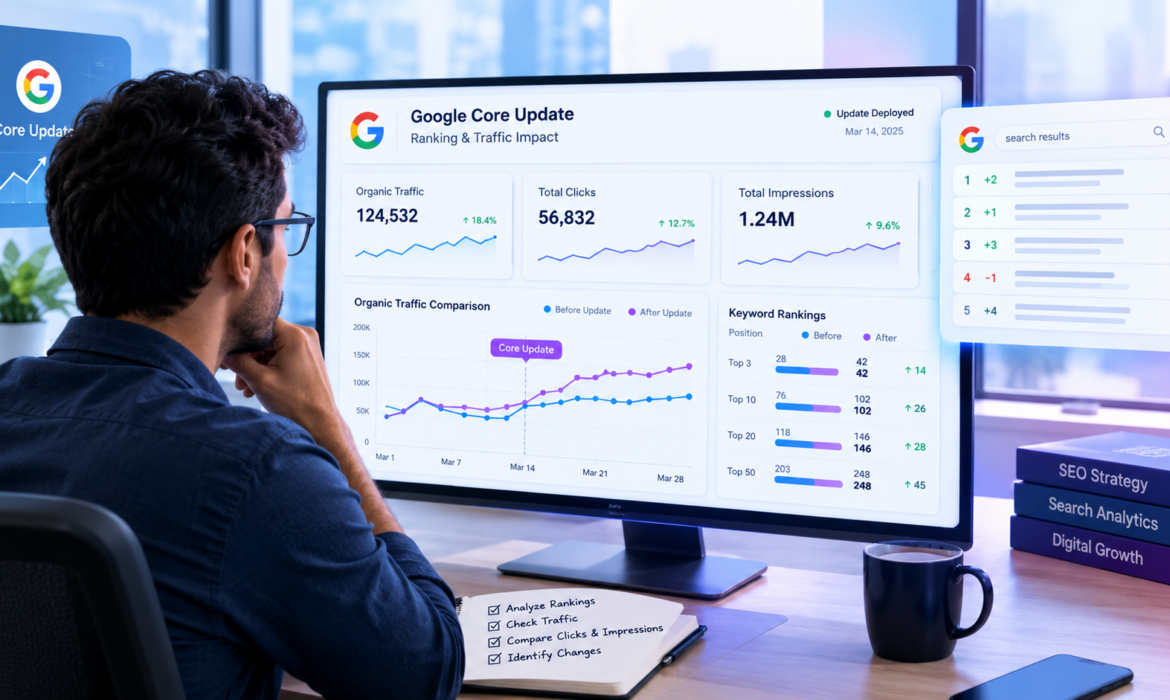
The results may vary from one website or query to another. Individual websites or web pages can experience fluctuations in visibility, rankings, clicks and impressions.
If any of the pages show drastic changes after an update, then your SEO company must address the situation by studying Search Console data along with other key metrics to identify the root cause instead of blaming it all on the update. Apart from this, brands must also analyze the affected content and make necessary changes to align it with user search intent.
Google Core Algorithm Updates in Recent Years
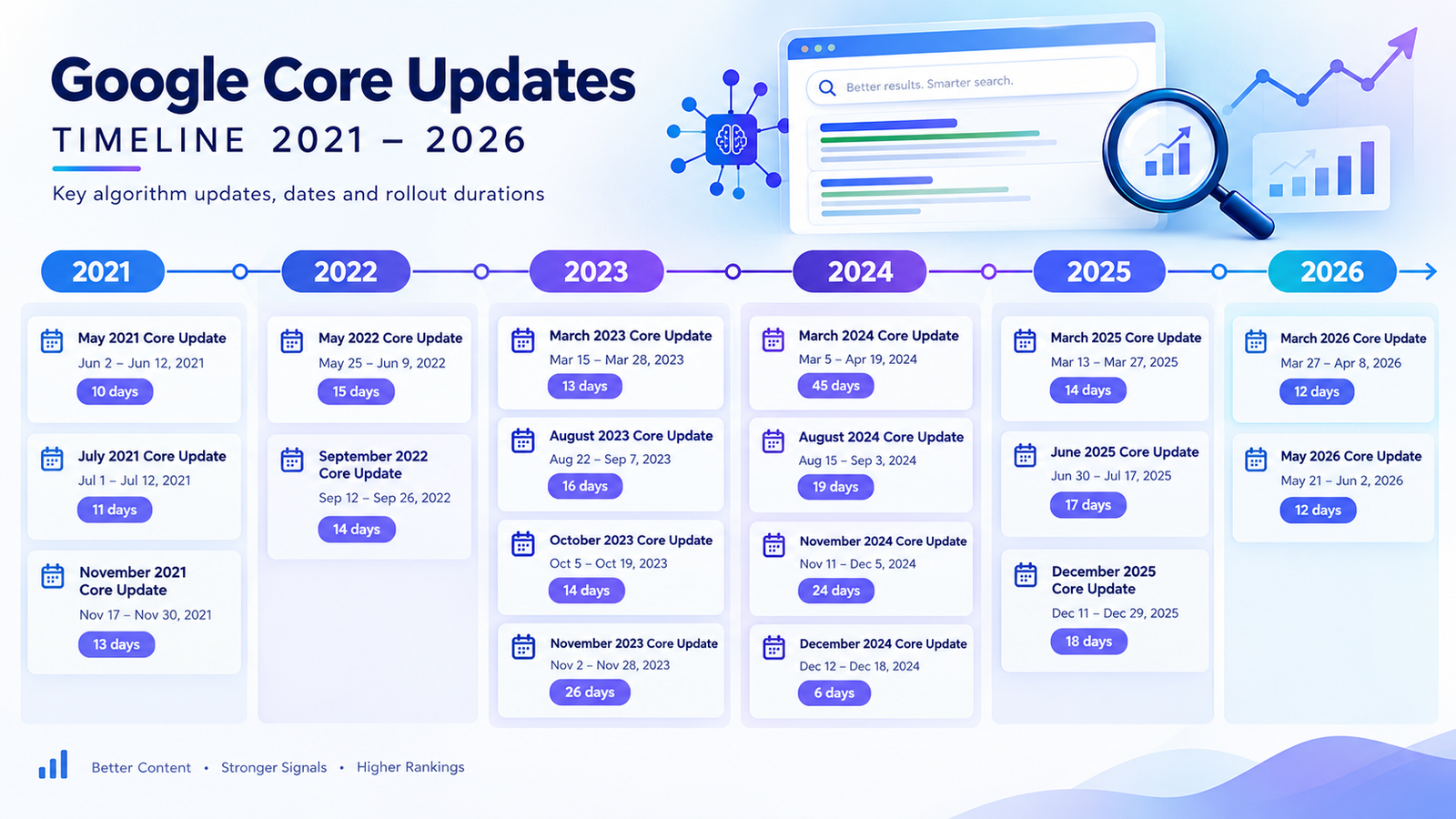
Google core updates are announced through Google’s Search Status Dashboard. Here’s a concise list of major Google core updates in the past few years with their rollout date and recommended solution.
| Core Update | Date & Duration | Impact | Recommended Solution |
|---|---|---|---|
| May 2026 Core Update | 21 May 2026, 11 days, 21 hours |
It focused on AI summary and content depth. | It recommended extensive topical coverage, user search intent and unique insights. |
| March 2026 Core Update | 27 Mar 2026, 12 days, 4 hours |
It devalued affiliate templates and AI content. | It added proprietary data, author details and original research in pages. |
| December 2025 Core Update | 11 Dec 2025, 18 days, 2 hours |
It expanded EEAT principles beyond YMYL (Your Money Your Life) | It makes sure that non-YMYL content is created by experts. |
| June 2025 Core Update | 30 June 2025, 16 days, 18 hours |
It penalized pages with keyword stuffing and integrated semantic systems. | It recommended websites to write structured content and create topic clusters for users. |
| March 2025 Core Update | 13 Mar 2025, 13 days, 21 hours |
It focused on increasing AI Overview in SERPs along with transactional queries. | It worked towards optimizing page speed, improving user experience and providing direct answers to transactional queries. |
| December 2024 Core Update | 12 Dec 2024, 6 days, 4 hours |
The impacted sites rapidly recovered without improving site structure and content quality. | It helped with performing site-wide content audits and updating low-performing or outdated pages. |
| November 2024 Core Update | 11 Nov 2024, 23 days, 13 hours |
It influenced retail and ecommerce search rankings just before the holiday season. | It helped with technical SEO, clear policies, customer reviews and enhanced page transparency. |
| August 2024 Core Update | 15 Aug 2024, 19 days, 4 hours |
It provided a platform to independent web creators and reduced low-value content. | It helped websites with establishing unique brand identity by focusing on first-hand experience and avoiding copied content. |
| March 2024 Core Update | 5 Mar 2024, 45 days |
It focused on targeting unoriginal content and controlling site reputation abuse. | It helped with removing third-party host content and deleting large volumes of auto-generated text. |
| November 2023 Core Update | 2 Nov 2023, 25 days, 21 hours |
It focused on the quality of pages and worked on refining ranking systems for content relevance. | It helped with conducting comprehensive quality evaluations. |
| October 2023 Core Update | 5 Oct 2023, 13 days, 23 hours |
It targeted low-value affiliate links and non-helpful content SERPs. | It ensured that the website content is strictly aligned to user intent by removing unwanted affiliated links. |
| August 2023 Core Update | 22 Aug 2023, 16 days, 3 hours |
It impacted ranking evaluations of websites from the informational sector. | It allowed websites to clear author bios and provided transparent sourcing and editorial guidelines. |
| March 2023 Core Update | 15 Mar 2023, 13 days, 7 hours |
It influenced content hubs and low-authority news. | It helped websites create well-informed content and topical authority. |
| September 2022 Core Update | 12 Sep 2022, 14 days |
Content relevance signals were refined. | It helped with auditing content for humans and not for search engines. |
| May 2022 Core Update | 25 May 2022, 15 days |
Major changes were introduced in image and video-based SERPs and snippet features to enhance content. | It was helpful in optimizing different forms of media and in structuring data while updating time-sensitive information. |
| November 2021 Core Update | 17 Nov 2021, 13 days |
The update proved to be highly volatile across e-commerce sites as it rolled out before Black Friday | It helped with technical core web vitals, improving page experience and providing transparent customer reviews for products |
| July 2021 Core Update | 1 July 2021, 12 days |
It was the second part of the two-stage core update focusing on site-wide authority signals. | It helped with managing small content sections and placement of ads, along with resolving issues related to site layout. |
| June 2021 Core Update | 2 June 2021, 10 days |
The first of the two-stage core updates focusing on global multi-niche rankings. | It helped with improving the domain quality and overall health of websites along with their mobile usability. |
Conclusion
Google core updates can significantly impact the SEO performance of your website, depending on the nature of the update and your website’s existing search performance. Nevertheless, brands must focus on creating high-quality content, maintaining the technical health of their website and monitoring its SEO performance regularly to adapt to changes in Google Search as and when the new ones roll out.
Are you struggling with the poor SEO health of your website? Connect with us at our official email or book an appointment today for an in-person or virtual meeting. Your free SEO audit is just a click away.
Claude for SEO: 5 Ways to Automate Repetitive Work
SEO is creative work, but not every part of it is exciting. Sorting keywords, reviewing meta data, creating content briefs, reviewing URLs and preparing reports can all take up hours each week. These are important tasks, but they don’t always require a human to do each step manually.
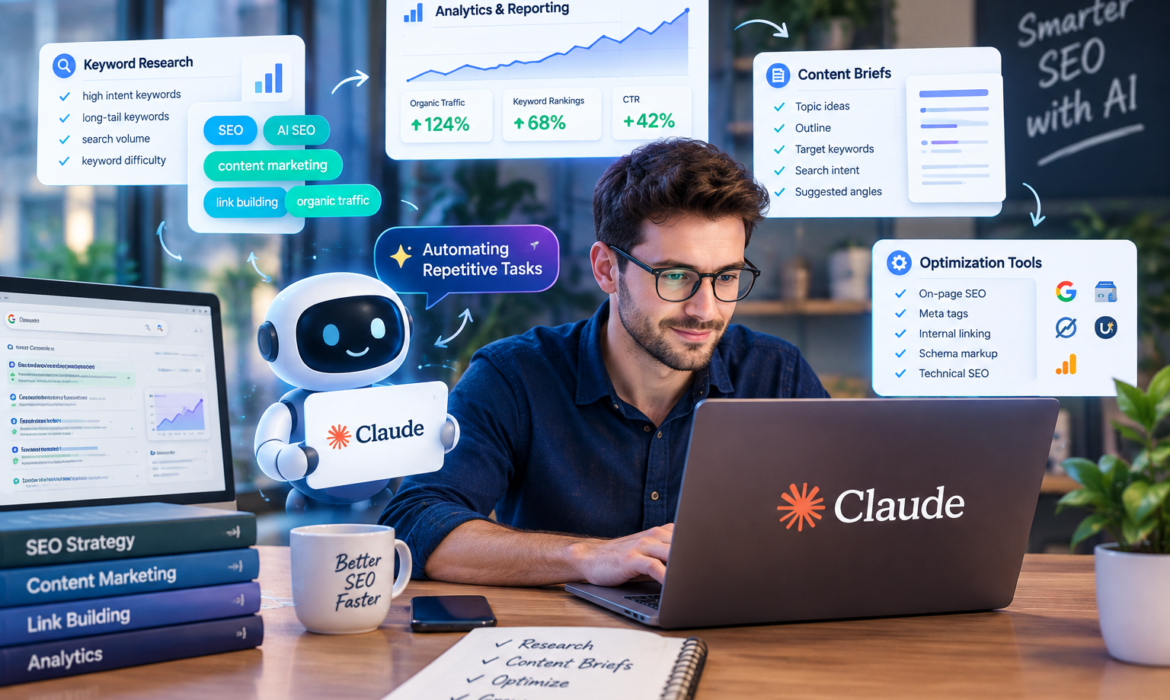
That’s where Claude for SEO can come in. Rather than only using AI to generate articles, SEO teams can use Claude to automate boring tasks, synthesize information and produce useful initial drafts. That means people have less busywork and more strategic work.
Why Use Claude for Repetitive SEO Tasks?
Automation works best if the task behaves in a predictable way. SEO has a lot of those. For example, a content manager might use the same brief template for every article, and an SEO specialist might check the same metadata elements on hundreds of pages.
With Claude for SEO, you can convert these recurring processes into structured workflows.
Claude can process information, recognize patterns, organize data and generate outputs based on instructions. That doesn’t mean you hand your whole SEO strategy over to AI. That’s why human review is still important, especially when it involves search intent, brand positioning, content quality or business priorities.
1. Organize Keywords to Make Useful Clusters
When you conduct keyword research, you often end up with massive spreadsheets filled with similar phrases. Manually looking for relationships between those terms can be time consuming.
Claude can also help sort keywords by topic and search intent. For example, keywords related to “email marketing” might be broken down into informational searches, software comparisons, how-to questions and service-specific terms.
If you use Claude for SEO, you can feed it a list of keywords and ask it to identify related clusters, possible primary keywords, supporting terms and content ideas. This makes the research more manageable. Your team gets a clearer structure that can support content planning instead of looking at hundreds of disconnected phrases. Ultimately, the decision should be left to an experienced SEO person who is familiar with the website, audience, competition and business goals.
2. Create Content Briefs Faster
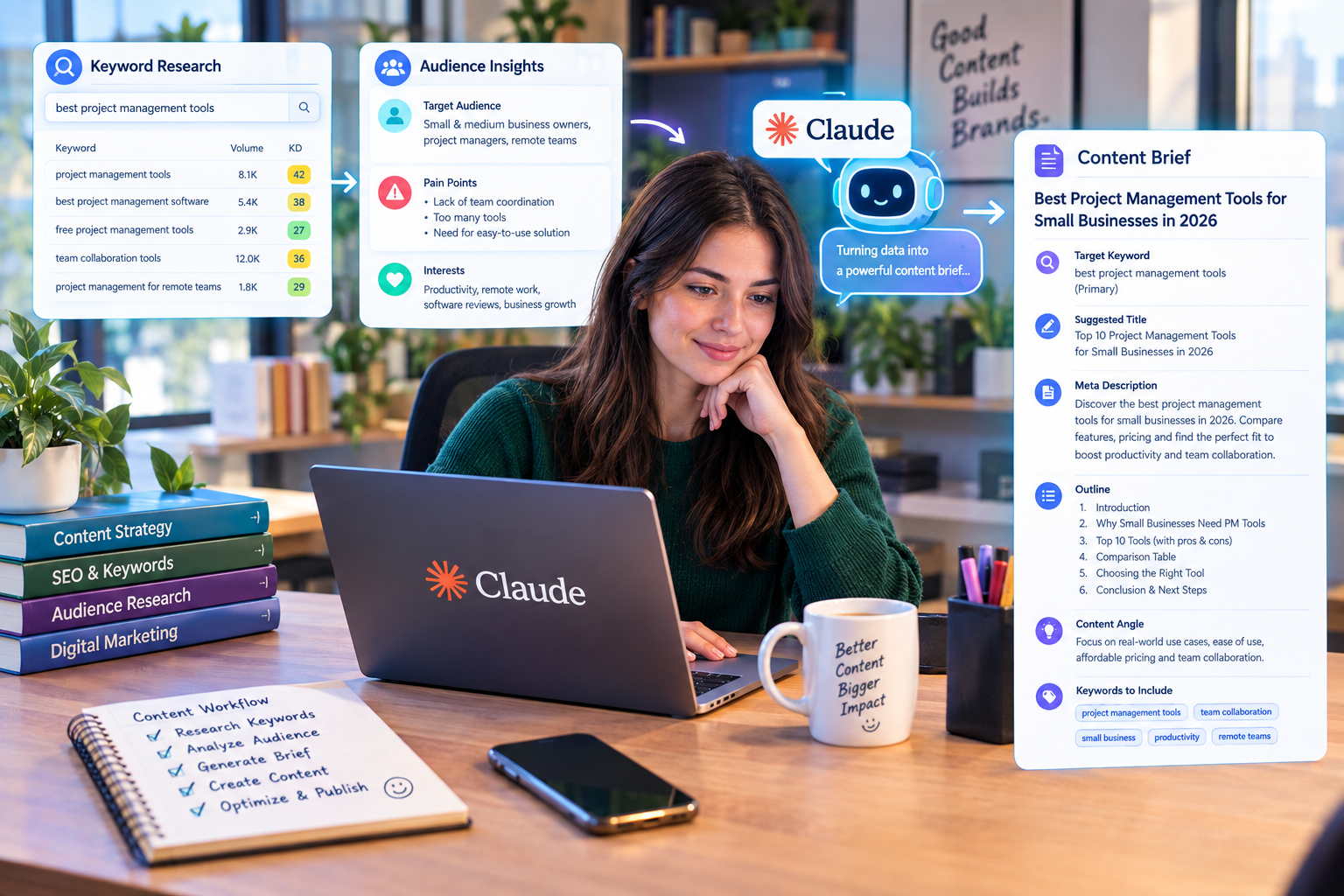
A good content brief provides direction for writers before they start writing. It may contain keywords, search intent, suggested headings, questions, audience information, internal links and important topics to cover. Doing those briefs over and over can take quite a bit of time. Claude for SEO can take research notes and turn them into a first-draft brief, using a consistent format.
You can provide the target keyword, supporting keywords, audience and research findings, then ask Claude to put them into sections. Also, it can highlight questions that the reader will expect the article to answer or point to topics which appear to be relevant to the main subject. The SEO team can then fine-tune the brief, add original research, cut out unnecessary suggestions and ensure that the suggested structure corresponds to the real search intent.
3. Check Titles and Meta Descriptions
Imagine having to go through 500 pages of metadata. That’s an important task, but it’s certainly not the best use of anyone’s afternoon to manually check every title and description. That’s where Claude for SEO can assist as a quality-control assistant. Just give Claude your metadata and clear rules, and it can find duplicate titles, inconsistent formats, missing descriptions or wording that needs attention.
Perhaps, you can make a standard checklist. For example, Claude can check if the important terms are included, titles are in your preferred format and descriptions clearly convey what the page is about. This is a quicker first layer of quality control, not a substitute for an SEO review.
4. Turn SEO Data Into Clear Reports
SEO reports are full of numbers, but don’t always have a lot of meaning. Clients and other stakeholders want to know what’s different, why it matters and what to do next. Claude is good at translating structured performance data into a more digestible synopsis. Teams can share ranking changes, traffic data, page-level performance or other relevant data with Claude for SEO and request that notable patterns be organized.
For example, it could break observations into categories such as traffic growth, pages in decline, ranking movements and content opportunities. The key is verification. Claude can summarize the information you provide, but it should not be trusted to invent explanations for why a metric changed. A human should review the data, confirm the findings and decide what actions make sense.

5. Find Internal Linking Opportunities
Another challenge that grows with a website is internal links. Hundreds of pages can take a lot of time to find relevant connections manually. Claude can help find potential links between pages via URLs, titles, summaries or relevant page content. With Claude for SEO, you can ask the model to recommend pages that could link to each other, suggest natural anchor-text ideas or find pages that look like they’re out of touch with the rest of the site’s content.
This can be especially helpful when doing content audits. Instead of going through every page from scratch, your team can start with a list of potential opportunities. But relevance is more than just finding two pages with the same keyword. Each suggested link should make sense to the reader.
Automation Should Handle Work, Not Strategy
The biggest mistake is believing that AI automation can replace SEO expertise. No, it can’t. Claude for SEO is most useful when it is doing predictable tasks and people are still responsible for decisions. You can automate keyword clustering but picking the right topic requires business context.
You can automatically check metadata, but it takes human judgment to determine how a brand needs to position itself. Think of Claude as a workflow assistant, and not a SEO manager. The more clearly you define the task, input and expected output, the more useful the automation becomes.
Start Small and Build the Workflow
You don’t need to automate everything right away. Instead choose a repetitive task that fills up your team’s time regularly. Create a prompt with clear instructions, input format and test the output on a small batch. In time, Claude for SEO can be integrated into a wider workflow for research, content planning, optimization, reporting and audits.
The real benefit is not doing more work because AI is able to do it faster. This enables SEO professionals to spend more time on the things that can’t be templatized: research, creative thinking, strategy, experimentation and understanding what an audience actually needs.
SEO Ranking Matters But Why Task Completion is a Must
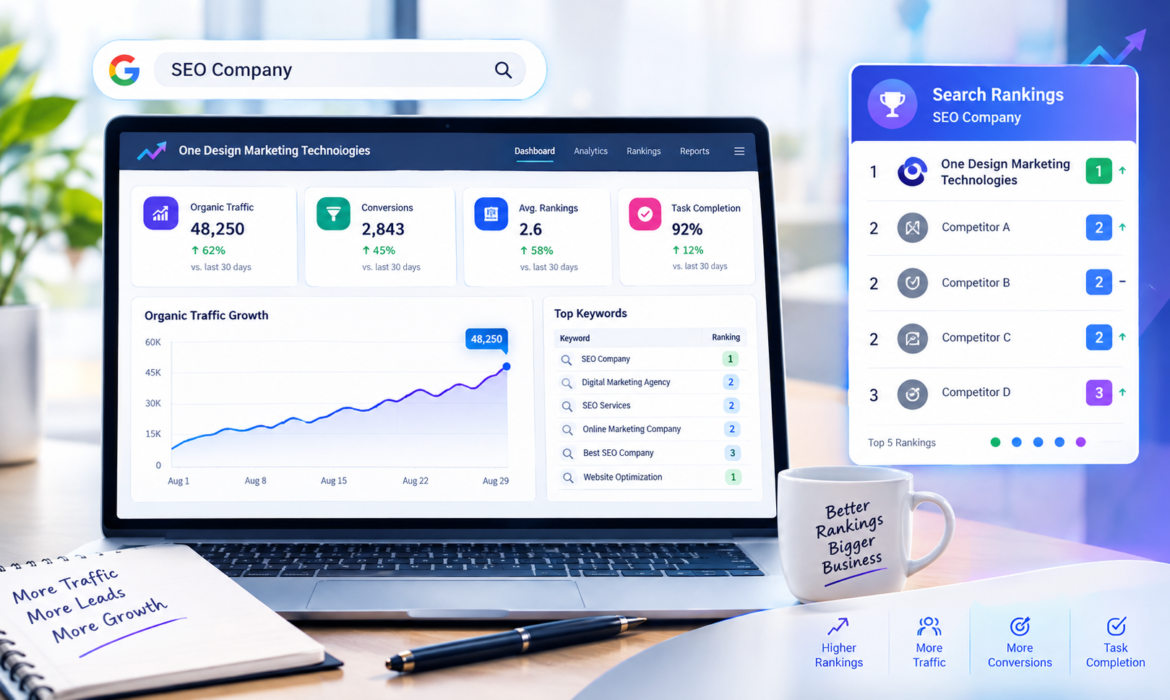
Who says an SEO ranking is all you need to get sales on your website? Well, an SEO website ranking first on the SERPs is definitely going to get more visitors and impressions. However, it definitely does not guarantee that the user will complete any task on the website. In fact, with AI overviews in the picture, websites are even struggling with clicks now.
What websites need is qualified lead generation translating into actual sales to gain a strong foothold in the industry and stay competitive. And to make this happen, brands need to shift from traditional SEO techniques to modern practices, ensuring both visibility and task completion in their deliverables. Because SEO is not just about achieving high rankings and organic traffic, it should also help users complete an action on your website with minimal inconvenience.
Define the Actual Task
Keyword targeting makes sense only when you understand the intent behind it. If you wish to attract users to your website, SEO ranking accounts for that. But for them to continue with task completion, you need to identify the purpose behind their search.
Once you define the task, the next step is to optimize the page by adding relevant content and CTAs or forms for a better user experience. This way, brands can focus more on user intent and business outcomes rather than just keyword targeting.
Understand User Journey From Search to Conversion
Now that you know what task you wish the user to perform, it’s time to ascertain how to make users complete that action. Let’s understand this with an example. Suppose a user searches for “shoes for running”, here’s what you their customer journey would be like:
- Searching for the right shoe type
- Comparing different shoe designs in the same category
- Looking for available shoe sizes and the best prices
- Checking customer reviews for better judgment
- Completing the purchase
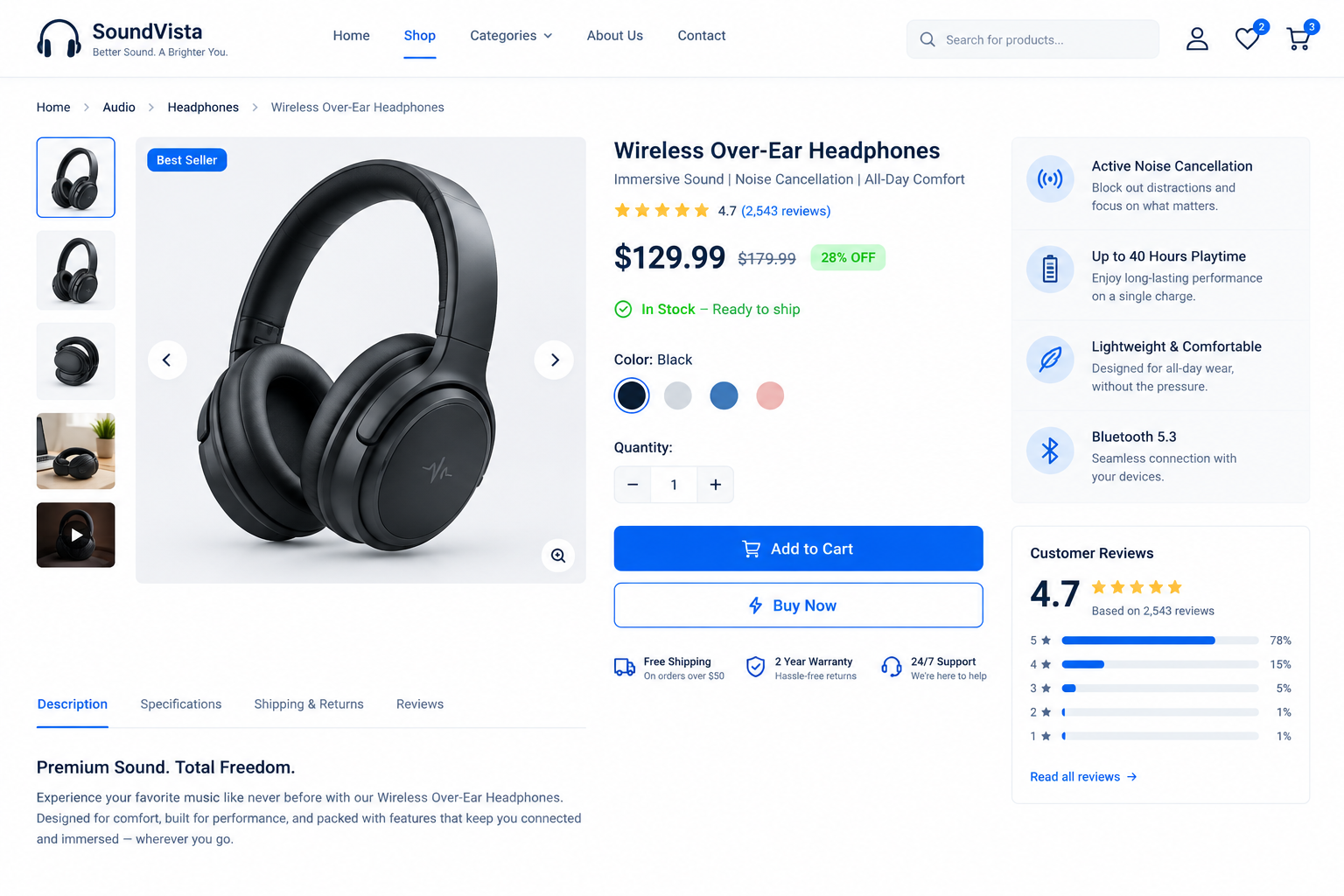
What an SEO company needs to ensure is that the user doesn’t feel confused during the process or they may abandon the journey. The team must identify gaps in the process, fix the content, target the right keywords and consider other technical factors.
Create Pages for Task Completion
What if your website tops the SEO rankings but the users are not taking action because they fail to understand the utility of the page? It means you need your pages to be more understandable to the users. Start by placing important information, such as product pricing, quality, availability and other specifications, at the top of the page.
Also, ensure the page loads and runs smoothly, offering easy navigation and high readability. Another essential step is to make sure a product page or a service page helps customers make a purchase or request a consultation. This is how Search Experience Optimization (SXO) can redefine the usability of your website.
Keep Track of Metrics Related to Task Completion
Your SEO company is already tracking your SEO rankings, organic traffic and impressions to ascertain your website performance. But what about metrics concerning task completion? Take into consideration user downloads, demo bookings, product or service purchases, checkout completion, registrations and engagement with other page elements.
Wondering why it matters? Let us understand with the help of an example. Say a page gets 10,000 visitors monthly but only 10 leads whereas another page gets 5,000 visitors with 50 leads. Which one would you consider to be more fruitful?
Combining Conventional SEO With AI SEO
Combining traditional SEO with AI capabilities ensures brand visibility across both conventional and AI-powered search engines. Keeping SEO rankings aside, optimizing content for AI can be helpful, especially when users search using conversational queries. AI-generated citations can be particularly valuable when users are willing to take an action, such as buying a product or booking an appointment.
For instance, you can use ChatGPT optimization to gain higher visibility in conversational settings. Likewise, LLM SEO is also a good option to make your content understandable to LLMs.
Compile SEO and PPC Data
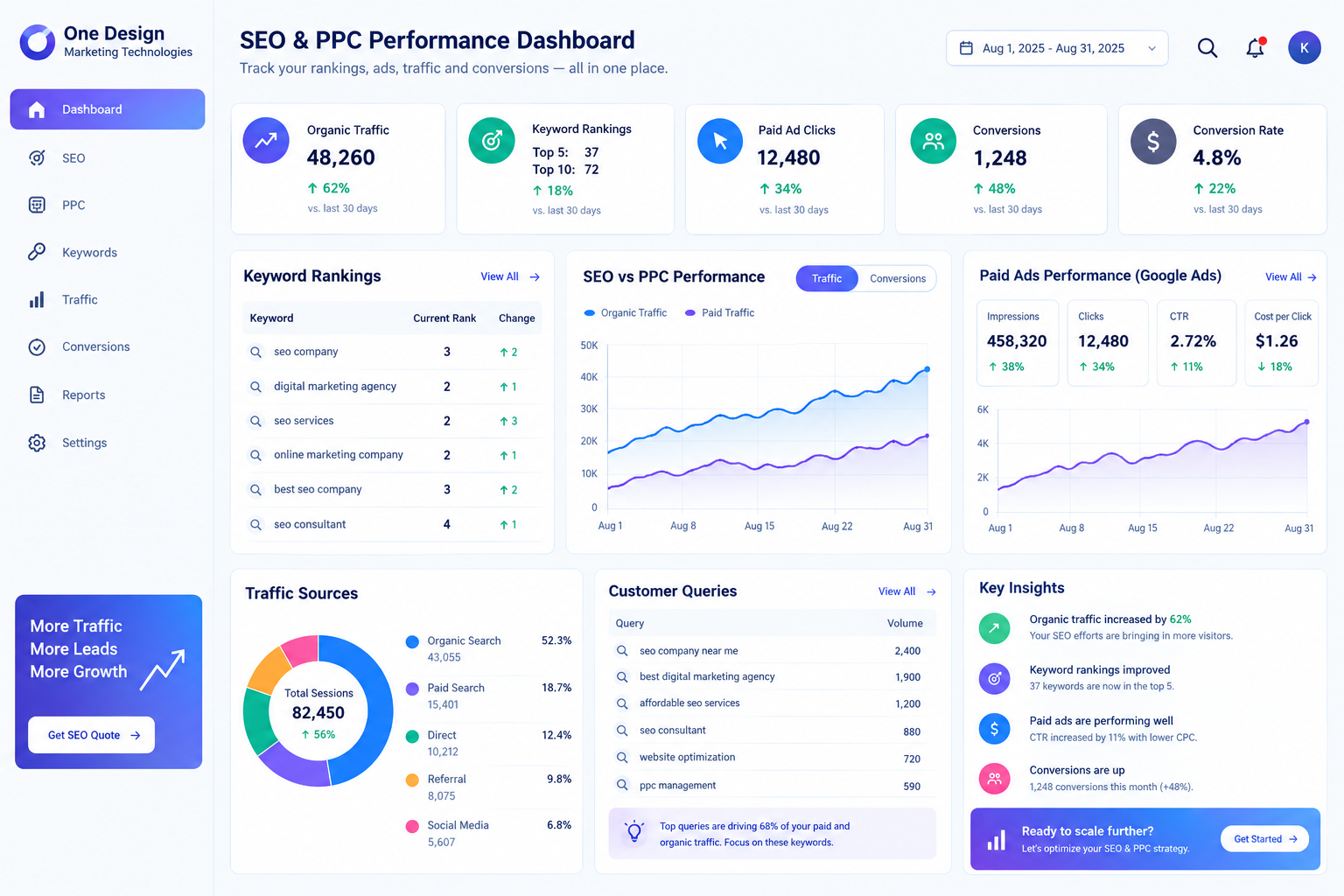
When evaluating challenges related to task completion, consolidate data from SEO as well as PPC services. While SEO rankings give insights into the organic customer journey, paid ads focus on conversion behavior, customer queries and brand messaging.
Brands can use information from both channels to identify when users are most likely to convert. Identify the pages that rank for the most searched keywords as well as the ones with the most actions taken on them. You can then give more attention to these pages.
Develop an AI SEO Strategy with Measurable Outcome
Want visitors to complete a task on your website? An SEO ranking is one thing, but you must work around user intent and your business objectives to encourage visitors to take some action on your page. Here’s a quick guide to make that happen:
- Identify the task users wish to complete.
- Determine all the steps from the search to the action.
- Check navigation, page speed, content, CTAs and any other functional elements that can hinder user action.
- Use AEO, LLM SEO, GEO, SXO and other AI-powered SEO techniques on your website.
- Use a tracking mechanism for task completion, rankings, conversions and traffic.
Final Words
Modern SEO shouldn’t just focus on SEO rankings; instead task completion should take priority. Brands must understand user intent, enhance search experience and simplify the customer journey. Also, combining AI with traditional SEO practices can help you reach users through AI-powered search engines and improve AI search visibility.
Looking for an SEO company that provides a combination of visibility, user experience and task completion? One Design Marketing Technologies (ODMT) brings you smart AI SEO services tailored to your business objectives and budget considerations. Book your appointment today and get a free website audit.
Is Availability Heuristic from Google Ads Influencing Your Marketing Decision?
Ever heard of the term availability heuristic? It’s when our mind automatically focuses on information that is readily available or easy to recall. The same goes for incidents that occur frequently or are of extreme degree, attracting wide attention. While this phenomenon might lead to efficient decision-making in most cases, it’s not necessarily the case for digital marketing, especially paid ads, or Google Ads, in our case.
SEO experts often assess paid campaign performance based on availability heuristic, using it to allocate budgets or optimize their campaigns. However, this short-term realization might not be the best solution in the long run. For instance, if a Google Ads campaign gains more clicks but still fails to convert them into qualified leads or sales figures, the high click rate would still be of no use.
If you are also stuck in differentiating between the right and wrong approaches to Google Ads, this article will help you resolve the dilemma.
Look Beyond Default Dashboard Metrics
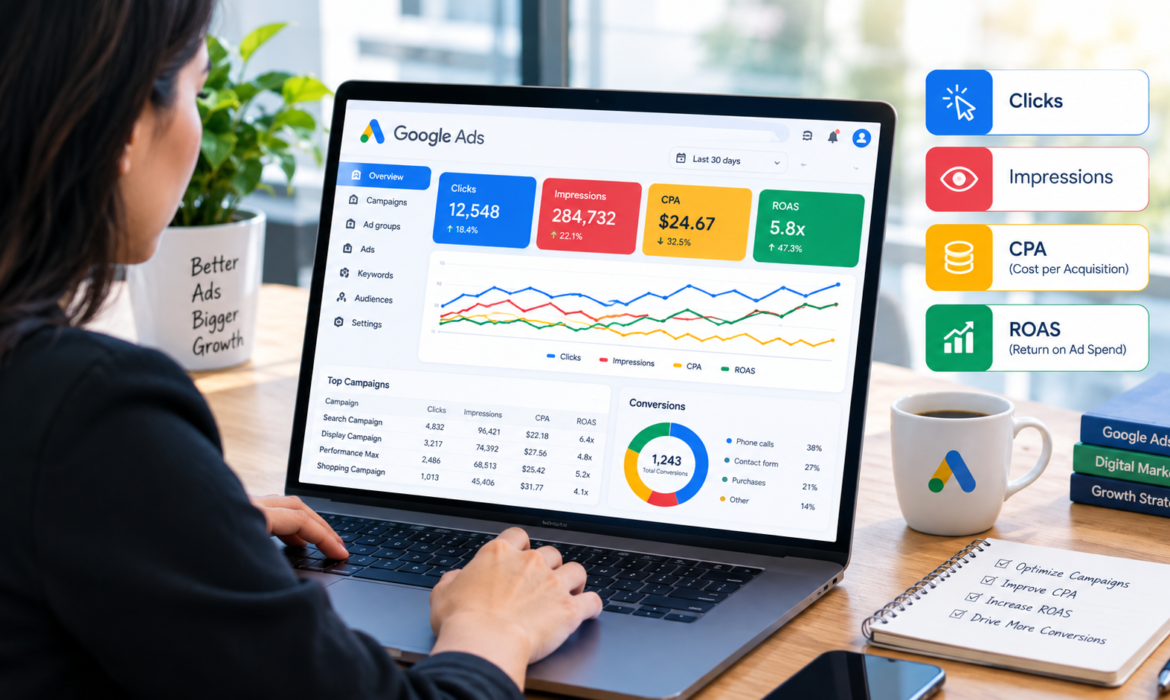
Your Google Ads dashboard points to high clicks and impressions while your revenue, conversion value, return on ad spend (ROAS) and cost per acquisition (CPA) remain hidden from your focus.
Would you naturally focus on positive metrics or take time to check out those of relevance? The better approach would be to create customized dashboards, focusing on all the metrics relevant to your business. This way, you would get all the essential data on one screen, easing the decision-making process.
Focus on Results and Not Campaign Names
Campaign names can give away a lot about what a campaign guarantees to its target audience. However, just because a Google Ad is named after automation, AI, SEO optimization doesn’t necessarily mean it offers all these perks.
So, let’s not use campaign labels as performance criteria for marketing. Rather, take them as meaningful descriptions that define the advertiser’s business objectives. Higher user expectations can bring more clicks but not necessarily result in relevant conversions.
Campaign-Level Data is Not Enough To Drive Decisions
Don’t just rely on campaign-level data to create the entire picture of your business performance. One Google Ad campaign’s success or failure shouldn’t decide your future course of action. Instead, you need a detailed analysis of the keywords used, search terms generated, audience preferences, ad groups and conversion actions performed through advertisements that may be causing significant change.
Conversion Numbers Should Yield Business Outcomes
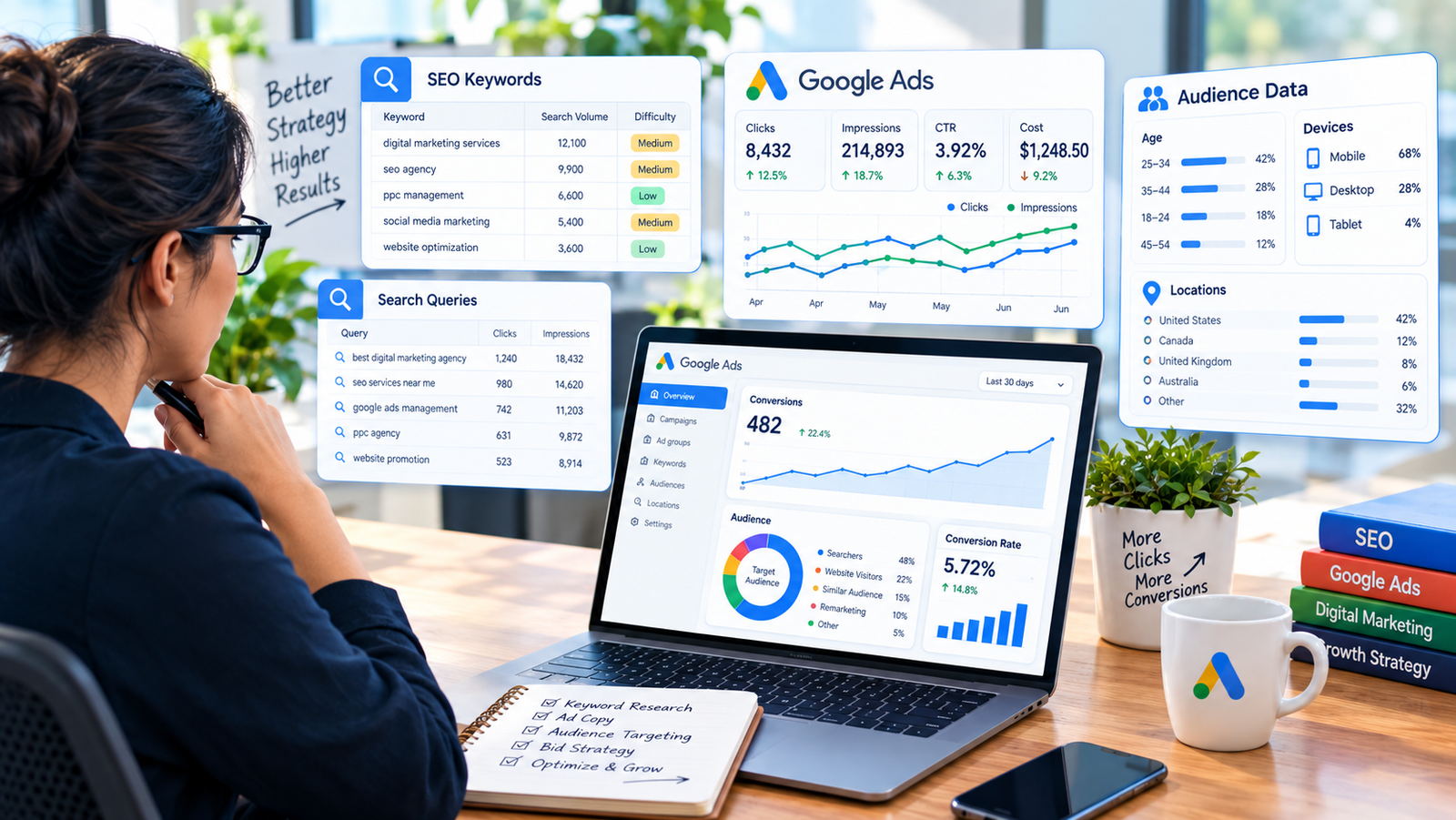
Advertising should lead to real business outcomes. Impressive Google ads conversion rates might blow your mind but here’s what you need to look for beyond the numbers.
Are these numbers coming from sales activities? How many were qualified leads? How many customers actually performed some meaningful action, such as filling out a contact form, subscribing to a newsletter or raising a business query? For instance, ten downloads of user manuals are not equivalent to ten consultation booking requests.
Too Many Metrics Can Be Confusing
Google Ads analytics surely provides a huge amount of data on conversion actions, number of ad clicks, cost per click, impressions and several other metrics. However, not all of these factors are of much importance when it comes to making marketing decisions. As such, tracking irrelevant metrics only wastes your time and effort, shifting your focus to less important factors.
Google Recommendations Aren’t Always Fruitful
Read Google & AI recommendations thoroughly but accept them thoughtfully because not every recommendation would work in your favor. Consider this situation: A platform recommends that you extend your audience base. But what if you are marketing a product that sells only in a particular region?
While increasing the target audience might bring you more clicks, none of those visitors would count as qualified leads. So, choose your Google Ads recommendations only after examining their impact on the rest of your marketing campaign. Ask yourself– what problem is the recommendation solving or what metric could it improve for your business.
Search Queries Are of Greater Value Than Keywords
Ever wondered what’s the basic difference between keywords and search queries? Keywords are specific phrases you target in any SEO-optimized content, including Google Ads. User queries, on the other hand, are actual questions or phrases that users enter into their search engines’ search bars.
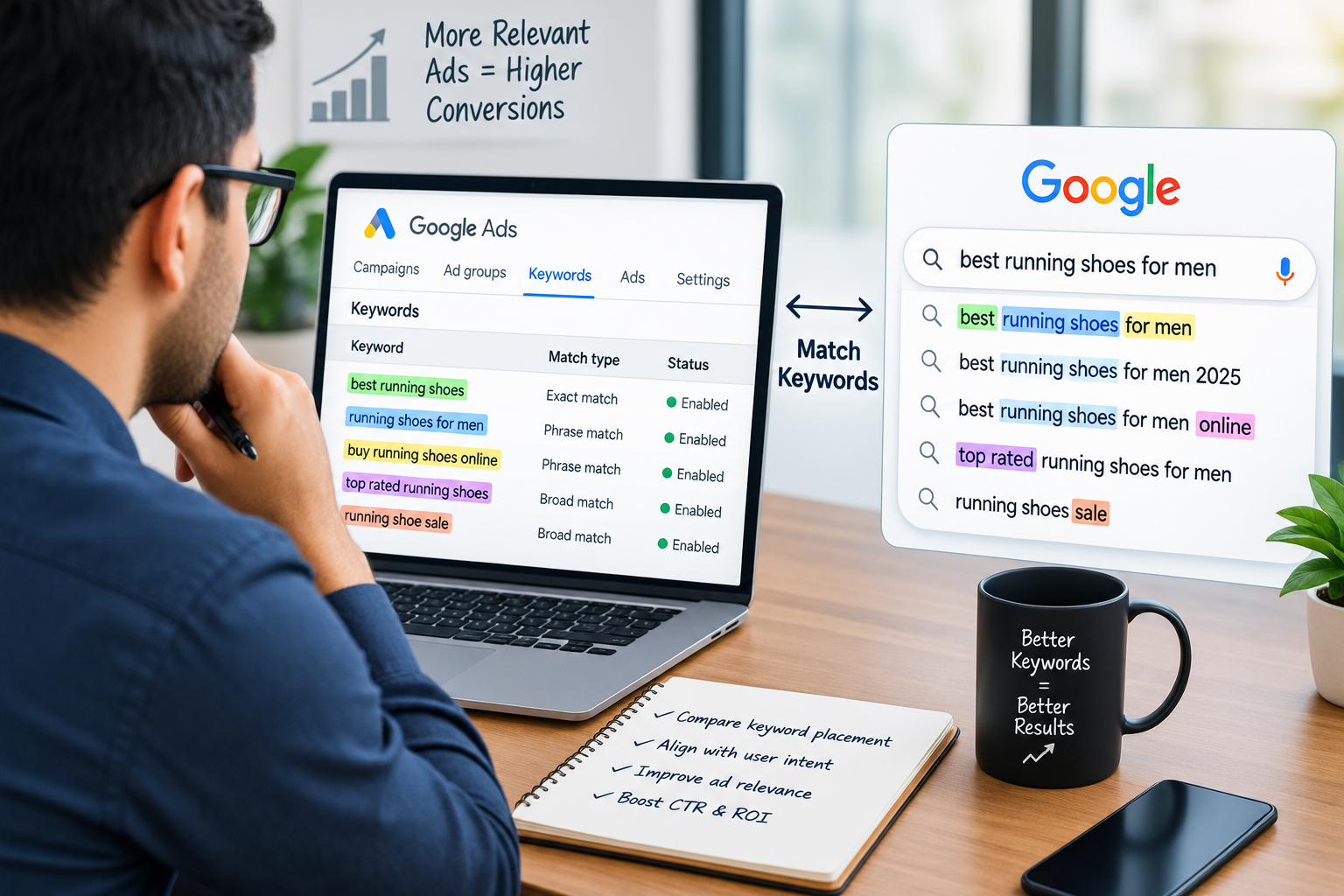
Targeting keywords is not always a good option especially if they don’t match user queries. Hence, what every SEO agency needs to do is review search queries related to the advertising campaign to filter out irrelevant traffic. Adding relevant negative keywords can also help in this direction. This way, you can attract only those queries that serve your commercial intent.
Final Thoughts
A quick Google Ads analysis does suffer from the availability heuristic, with campaign features, dashboard, metrics and recommendations taking the front seat.
However, your decisions shouldn’t be made entirely based on these factors. Rather, every SEO company must utilize these signals to provide better PPC services based on business objectives, customer satisfaction and conversion quality.
And that’s exactly what we do at One Design Marketing Technologies (ODMT). We provide PPC as well as SEO services to our clients, combined with the latest AI technologies to help businesses grow online.
So, next time you are making a marketing decision based on Google Ads, don’t just rely on the most visible metrics; look for proven strategies. Are you also looking for a quick marketing gig? Book your appointment with us today and get started with your PPC journey.
FAQs
How can the availability heuristic influence your Google Ads decision?
It can make advertisers focus only on the metrics that are clearly visible on the screen while ignoring other performance metrics.
What should advertisers look for in Google Ads?
Apart from clicks and impressions, advertisers should look for revenue, conversions, acquisition costs, qualified leads and return on advertising spend.
Why is a user search query important for Google Ads?
Reviewing search queries helps brands identify irrelevant ones and refine keywords to attract qualified search traffic.
How does SEO assists in Google Ads campaign?
SEO helps with content creation and marketing as well as identifying users’ search intent to create ad copy.
Do you provide PPC services at ODMT?
Yes, we offer paid advertising services to our clients, combined with AI-powered search engine optimization services for businesses of all types and sizes.

5 Steps to Create Reddit Authority for ChatGPT and Google Visibility
Reddit Authority: Reddit can show you why people choose, reject or question a product or service. Turn those valuable insights into better AI and organic search.
As a regular Reddit user, I see queries come at subs regarding various products and services, and users reply to them with varied opinions. For example, on a beauty subreddit, someone asked, “Girlies help me with your favorite sunscreen recommendations.” This is a direct question and many answered, some were paid ones too, but the one product that everyone praised, definitely created brand authority among users.
However, this isn’t the proof of a shortcut you can use to get cited by AI. These are just simple opinions from genuine users. Also, I have noticed, people who have claimed in long paras that one specific product has helped them with severe skin issues, were immediately questioned whether it was a paid service or not. Therefore, it’s apparent that customers don’t always look for items that are advertised on Reddit, it’s the brand authority that speaks volumes.
The same thing happens when you voluntarily post something on Reddit and wait for Gemini, Google AI Overviews or ChatGPT to notice and mention them. It will not work. The communities on Reddit will sniff them out and reject such corporate messaging that provides little to no value.
Thus, in this blog we’re going to talk about the 5 steps to create Reddit authority for AI platform visibility. Let’s get started shall we?
Steps to Create Reddit Authority for Google and ChatGPT Visibility
Your brand at first doesn’t need Reddit paid services, but requires expertise, consistency and credibility, so it can add value to the conversations. Here’s how you can do it:
Define Your Territory of Authority
Begin by understanding the subject on which your brand has a legitimate reason to be heard. Your territory of authority isn’t every topic related to your products or services. As a business owner, take care of the queries such as what your potential customers need help comprehending, what your company knows through direct experience and what your products or services specialists can credibly address.
Turn this section into a specific question. For a software company, it could be, “how small businesses can compare to customer relationship management platforms?”
For an education concern, the question can be, “what should parents consider when selecting a supplementary learning program?”
These types of questions give your team a filter, which also shows which discussion to join, which resources to create and where the brand doesn’t have enough expertise to something valuable.
It’s simply to understand that your brand doesn’t need to join every related discussion on Reddit. It only needs to join the ones where you know you’re an expert at.
Establish Your Baseline
Before you publish anything or reply to a comment, understand how the brand is currently represented there. Start with four key areas:
- AI Visibility: test a fixed set of strategic prompts in ChatGPT and other AI platforms. Monitor and record whether your brand appears, the way it’s described and which alternatives are recommended.
- Google Visibility: Search for important topics, comparison terms and branded queries. Find the Reddit third-party discussions, reviews, threads and forums appearing in the results.
- Owned Content: Understand whether your site answers the real-world questions or relies on product messaging.
- Community Perception: Review the questions, positive experiences and complaints already associated with the brand.
A foundation helps you find out the authority. A brand can have strong awareness without being clearly understood. People may know the name but remain unsure who it serves. Look beyond the number of mentions. Record questions, sentiment, cited sources and descriptions. When there’s no starting point, it’s easy to confuse more activity with better visibility.
Create a Connected Authority System
Reddit doesn’t have to perform separately from your SEO, content and AI SEO strategies. Each section offers a unique signal. Keywords reveal what someone wants to solve. Community discussions add criteria; context and experience users utilize to make a decision.
Use these signals together. A highly engaged discussion might reveal the language customers use to describe a problem that your company explains in technical terms. Turn these findings into improved guides, FAQs, support content, videos and comparison pages.
The objective isn’t to make every platform repeat the same context. It’s to make them reinforce the same area of expertise.
Focus on the Right Reddit Communities
Being present regularly on Reddit will not give you brand authority. Try not to post about your products on every subreddit you find that relates to your category. Prioritize the communities where users actively discuss their needs, look for alternatives and share real-time experiences.
Assess each potential community using the questions, such as can we add value without turning every response into a promotion? Is the community active enough to support continued participation? Are the conversations relevant to our territory of authority?
Different Reddit sections play different roles. An official profile will give your brand a transparent identity. Avoid entering the spaces to correct the negative opinions. Join them to comprehend the discussion and contribute only when your expertise becomes useful.
Engage in Discussions and Monitor the Complete Journey
Native Reddit participation starts with the user’s queries, not the brand’s message. Give a direct answer, acknowledge trade-offs and limitations. Avoid corporate language, link only when the resources add useful information.
A solid response can mention that a product isn’t suitable for all situations. This kind of honesty may feel uncomfortable, but it makes the rest of the answers more trustworthy. The same thing applies to Reddit criticism.
Negative conversations are a part of Reddit community discussions, but the point is to take them as a learning opportunity. You will read about issues like the product isn’t good enough for someone, the customer support isn’t efficient or any other poor experiences. To these, you need to respond clearly and positively that won’t eliminate objections, but it can provide accountability and provide useful context for future readers.
Track what happens within the particular community:
- Are members correcting misconceptions or going against the positive experiences?
- Is the brand being mentioned without prompting?
- Are your posts receiving meaningful engagement?
- Are users responding to each other and returning to join?
After this, monitor the wider search journey. Repeat your AI prompts and Google searches. Look for changes in descriptions, visibility and recommended content. Check if community discussions are appearing in search results and if the brand’s own content is replying to the same queries.
It’s best to not expect a direct relationship between one ChatGPT citation and one Reddit post. You can build Reddit authority with consistency. And you will get visibility for the useful content, brand expertise and relevant participation.
Final Thoughts
Brands can’t completely control what people say about their products and services on ChatGPT, Reddit or Google. They can become useful in meaningful conversations. Define the subject you have legitimate expertise in. Understand how your company is currently represented. Get in touch with community insight with strong content. Join indirectly and track the entire journey.
The objective isn’t to bring citations, it’s to build enough brand authority that gets discovered, recommended and discussed so it becomes a natural thing.
If you’re looking to build such authority in Reddit and want your brand to be cited in AI-generated answers, get in touch with One Design Marketing Technologies. We are the top-rated SEO company and provide the best SEO services, so you get improved traffic and revenue you’ve always dreamed of.
FAQ
Do you offer SEO services to differently sized companies?
Yes. We are a GEO company and offer comprehensive digital marketing services to companies of all sizes. From small businesses to large enterprises, our clientele is diverse.
Will I get customized SEO services?
Yes. At One Design Marketing Technologies, we offer tailored search engine optimization services to all our clients. We understand that your business objectives are different from others; therefore we provide customized services only.
Do you offer traditional SEO with AI SEO services?
Of course! We provide a comprehensive search engine optimization service that includes PPC services, content marketing services, LLM SEO and more.
What’s the cost of SEO packages at One Design Marketing Technologies?
The cost depends on your business size and website requirements. However, we offer affordable rates only for all clients, because we believe SEO should be available to all businesses who want to grow and build brand authority.
Will you monitor my competitors?
Yes, that’s one of the parts of our SEO company services. We monitor the competitors, the keywords and strategies they are using and create digital marketing plans accordingly, so you can stand out in the marketplace competition.