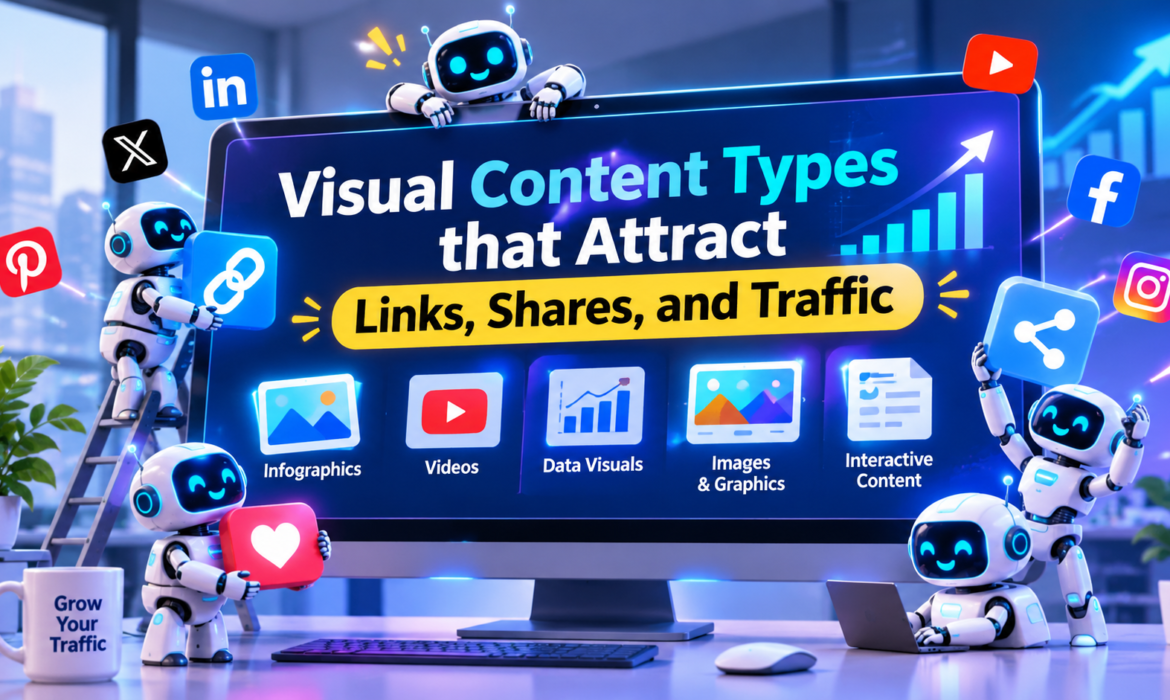
Visual Content Types that Attract Links, Shares and Traffic
Gone are the days when text-based websites and blogs alone could bring the most qualified traffic. Audiences want information quickly, but may also forget it quite naturally. Therefore, what they look for are content formats that are both easy to understand and remember.
In this blog, we discuss one such content type, the visual content. It encourages the audience to click, share and link your content in their blogs or websites. If used mindfully, visual content is a powerful tool that can help your website attract more traffic, earn credible backlinks and generate more social media shares.
However, not every visual format may work the same way for every brand. The right choice depends on your content goals and audience taste. Want to know which format best suits your marketing goals? Let’s explore through this article.
Short-Length Embedded Audio-Visual Content
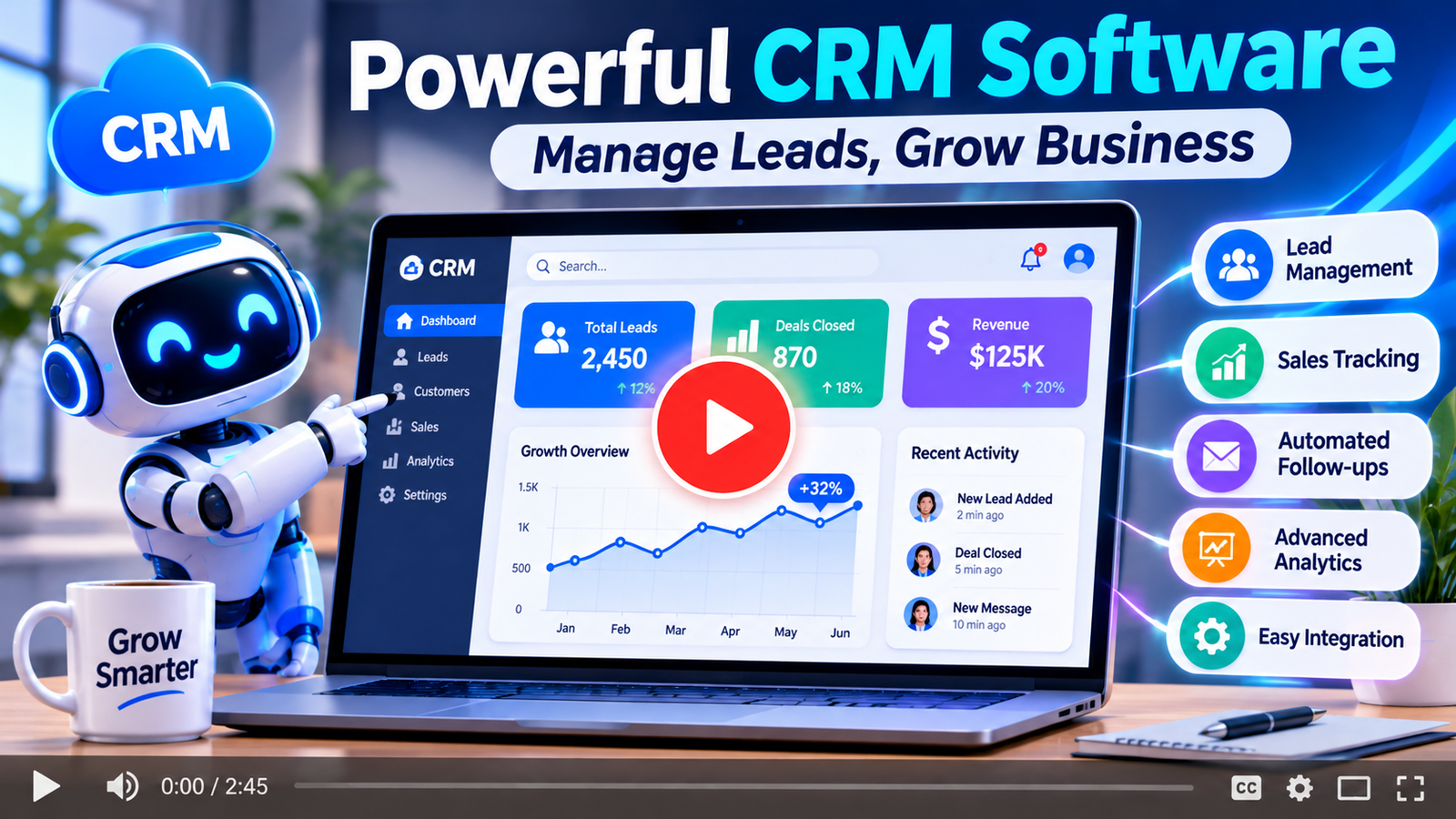
Explaining business strategies or technical concepts through text alone can be a real challenge. A better option? A short video of 30 to 60 seconds is what you need in your blog post to break down complex topics into simpler terms.
First, it is an authentic way to add your own multimedia content to your page without linking to other websites. Second, adding visual content to your blog will attract more readers, making your content more interactive.
Example: An embedded video showing features of a new CRM software.
Infographics
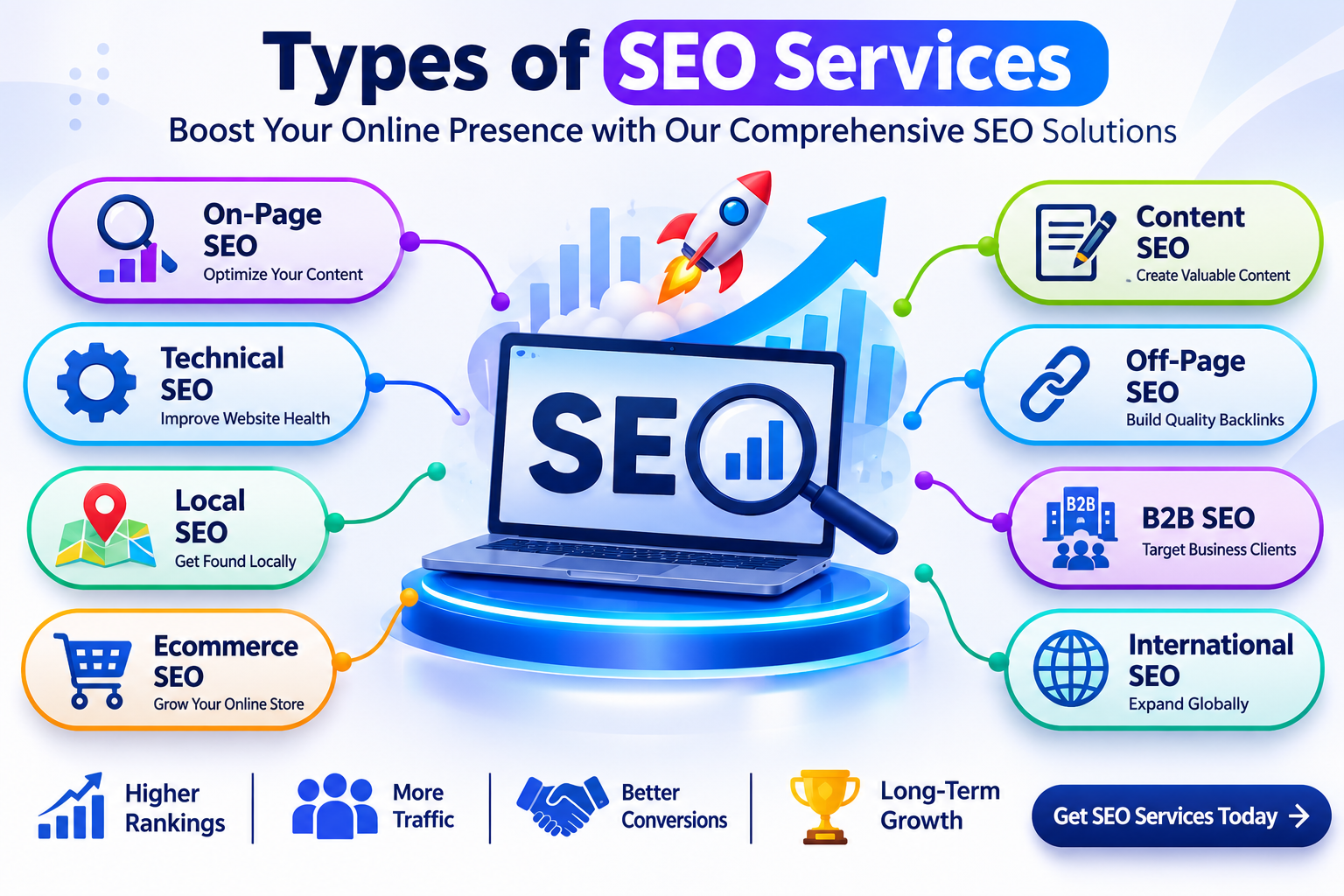
Does your article contain a lot of lists, tables, features or statistics in text format? Here’s how you can utilize this information to attract more traffic and social media shares. Create infographics for the same, that is, a graphical representation of information.
They combine statistics, text and illustrations into summarized content for the readers. Infographics are easy to share and reference. Use them in your content and improve your chances of reaching to wider audience and earn backlinks
Example: An infographics showing types of SEO services.
Screenshorts
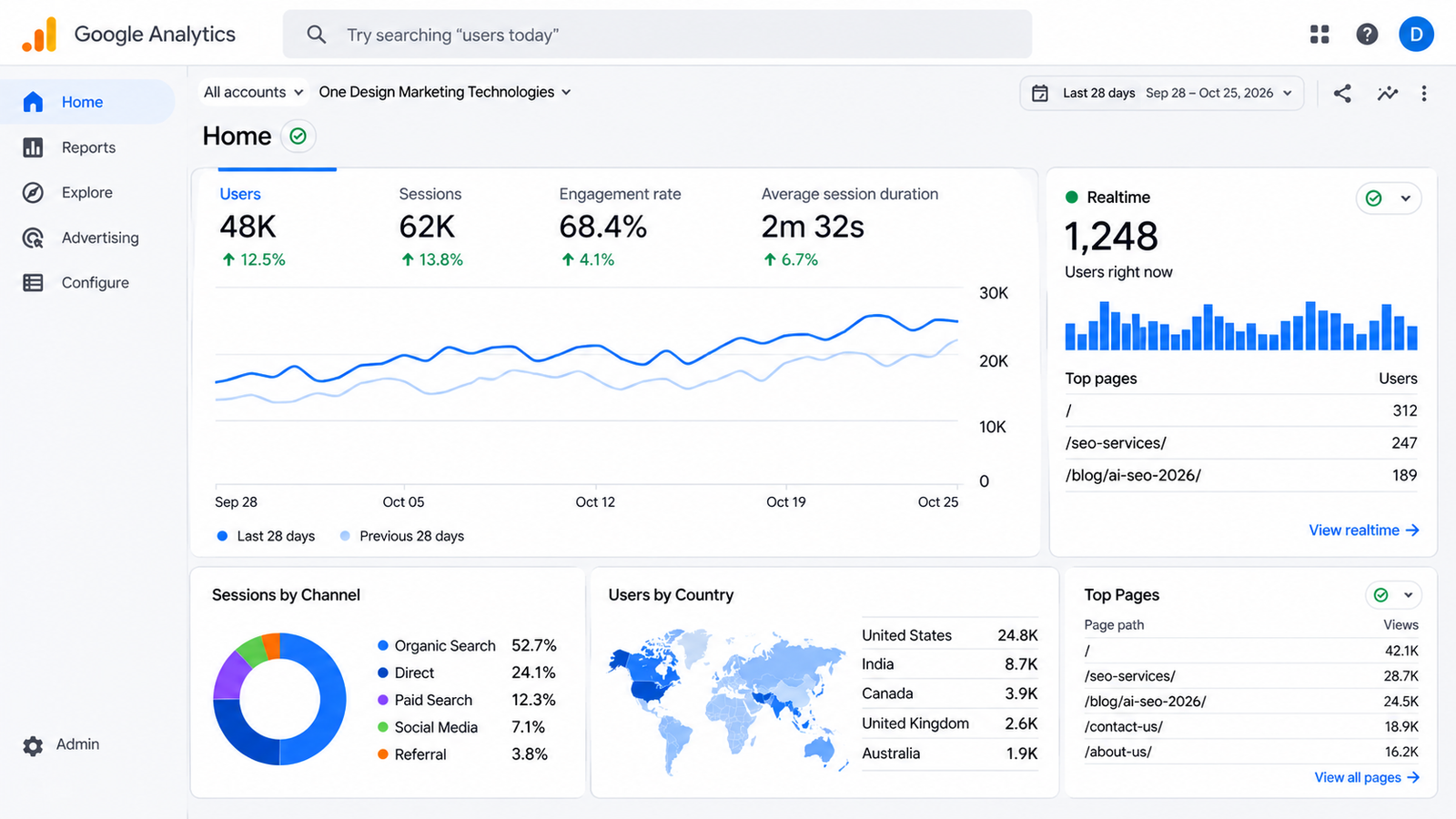
The best way to show your revenue data to your readers or to explain a complicated process, such as a software program installation? Take screenshots of your mobile or computer screen and attach them to your blog post along with simple instructions.
Now, your readers won’t have to read the detailed guide but match the screenshots with the pop ups on their own screen. Screenshots don’t tamper with the data, they capture information directly from the tools and present it to the users.
Example: A screenshot of your Google Analytics report.
Comparison Visuals
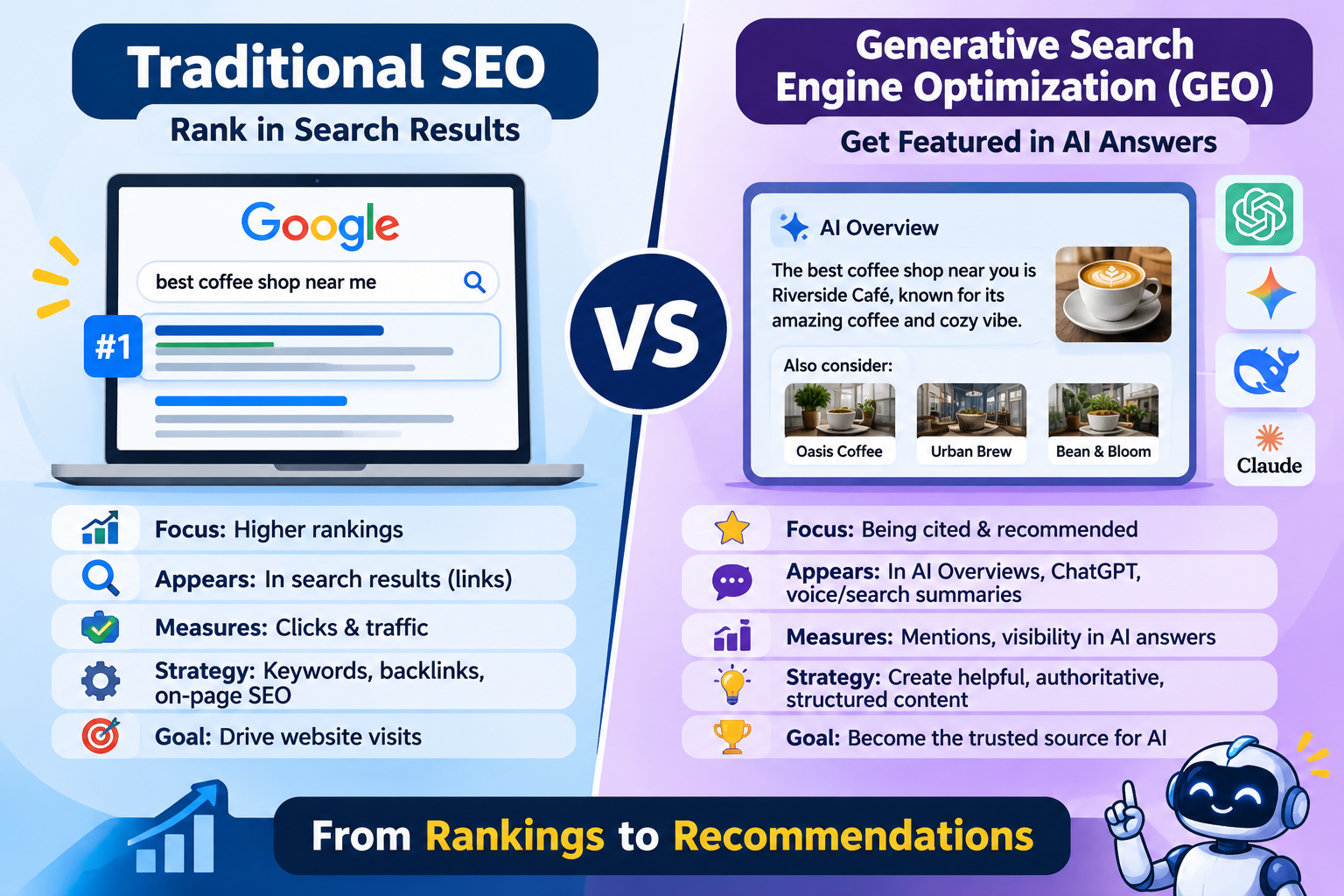
When comparing two or more options side by side, leave long descriptions and instead go for a comparison table.
It lists the basis of comparison in one column and the items being compared in the others. This sort of tabular visual content keeps the information clean, brief and easier to understand and reference.
Example: A comparison graphics showcasing the distinction between traditional SEO and Generative Search Engine Optimization (GEO).
Flowcharts
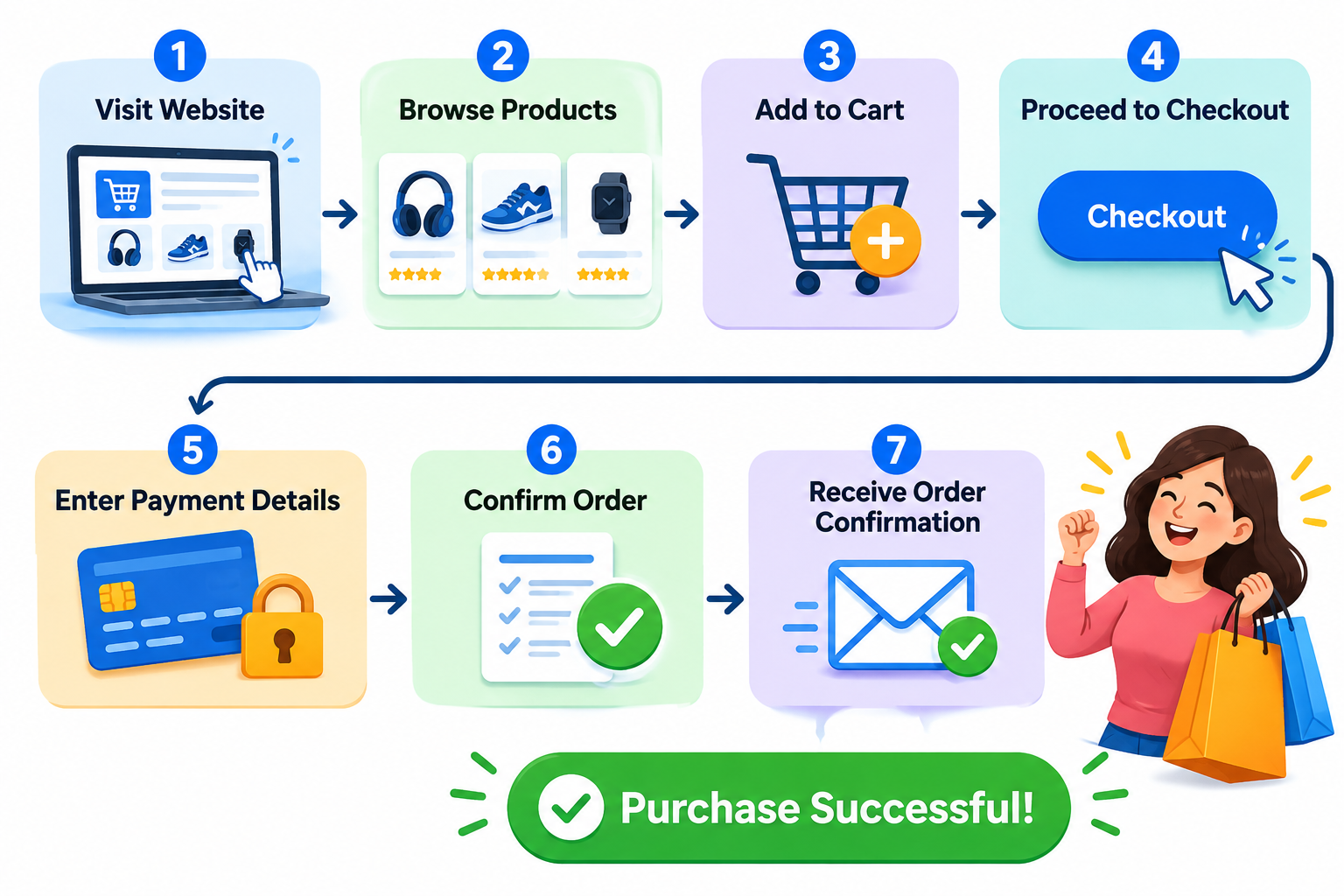
Who hasn’t learned drawing flowcharts in schools to explain processes or to make decisions? They are an effective way to break down technical or business workflow into simple steps.
Instead of jotting down the entire process in lengthy paragraphs, you can write small commands and different shapes to define every individual step and connect them using arrows. Flowcharts come handy when practically applying the instructions specified into these diagrams.
Example: A flowchart describing the steps involved in making a purchase from a website.
Visuals Showing Timelines
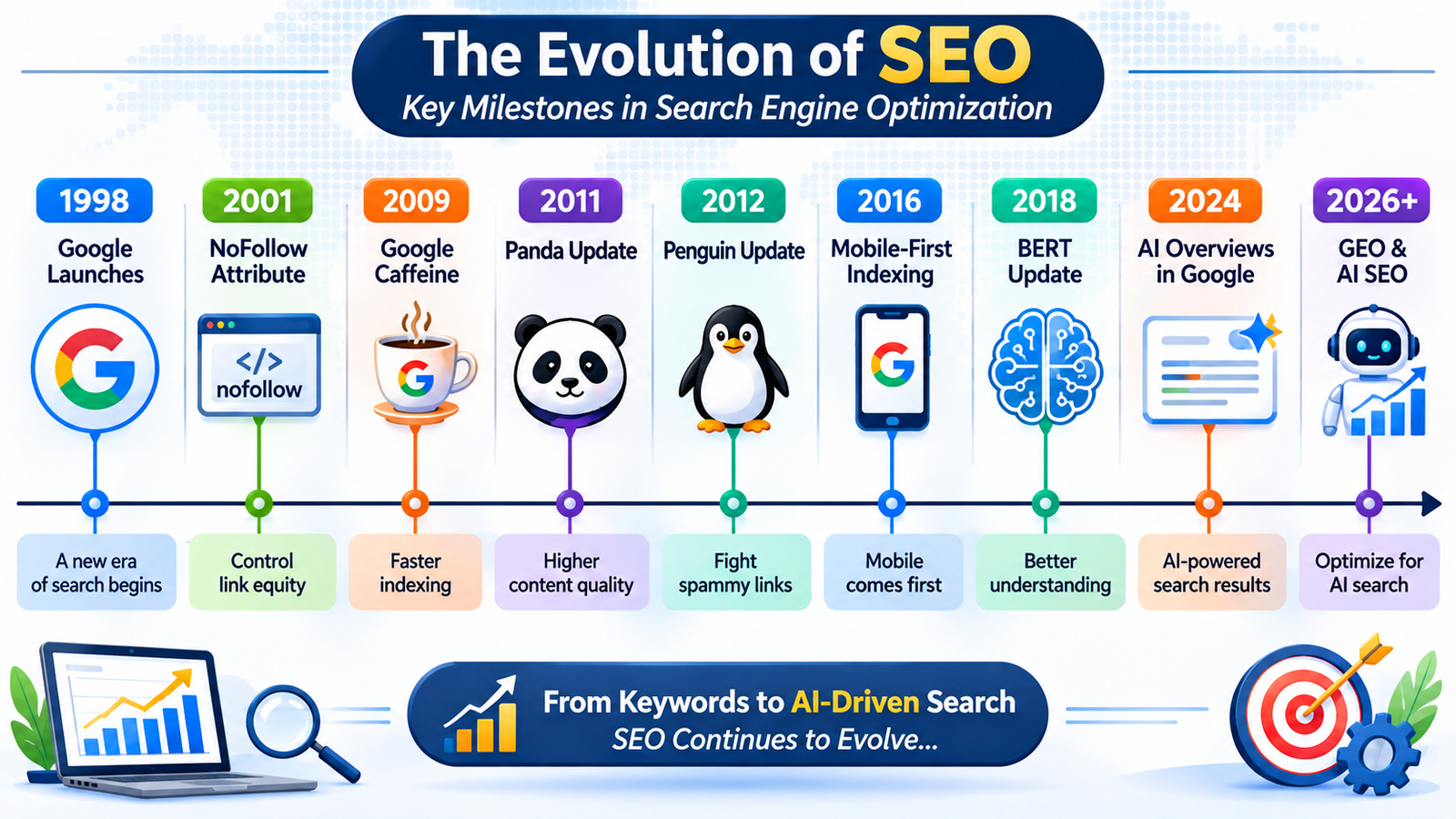
Working on a case study often requires arranging events in chronological order. But, using a timeline can help you better organize milestones, product launches and other relevant events.
Wondering how? Well, this type of visual content summarizes important dates and plans, helping readers understand and memorize key details more easily.
Example: A timeline showcasing major developments in the field of SEO.
Cartoon and Illustrations

Why not add a little bit of fun and creativity to your website content and blogs with cartoons or comic strips? Will they work? Most likely, because it’s a unique way of storytelling that can make technical concepts sound more relatable.
Create your illustrations around familiar social situations and workplace settings and who might know your content becomes the next viral meme.
Example: A cartoon showing an AI working 24/7 while a human overwhelmed by fatigue.
Blog Post Banners
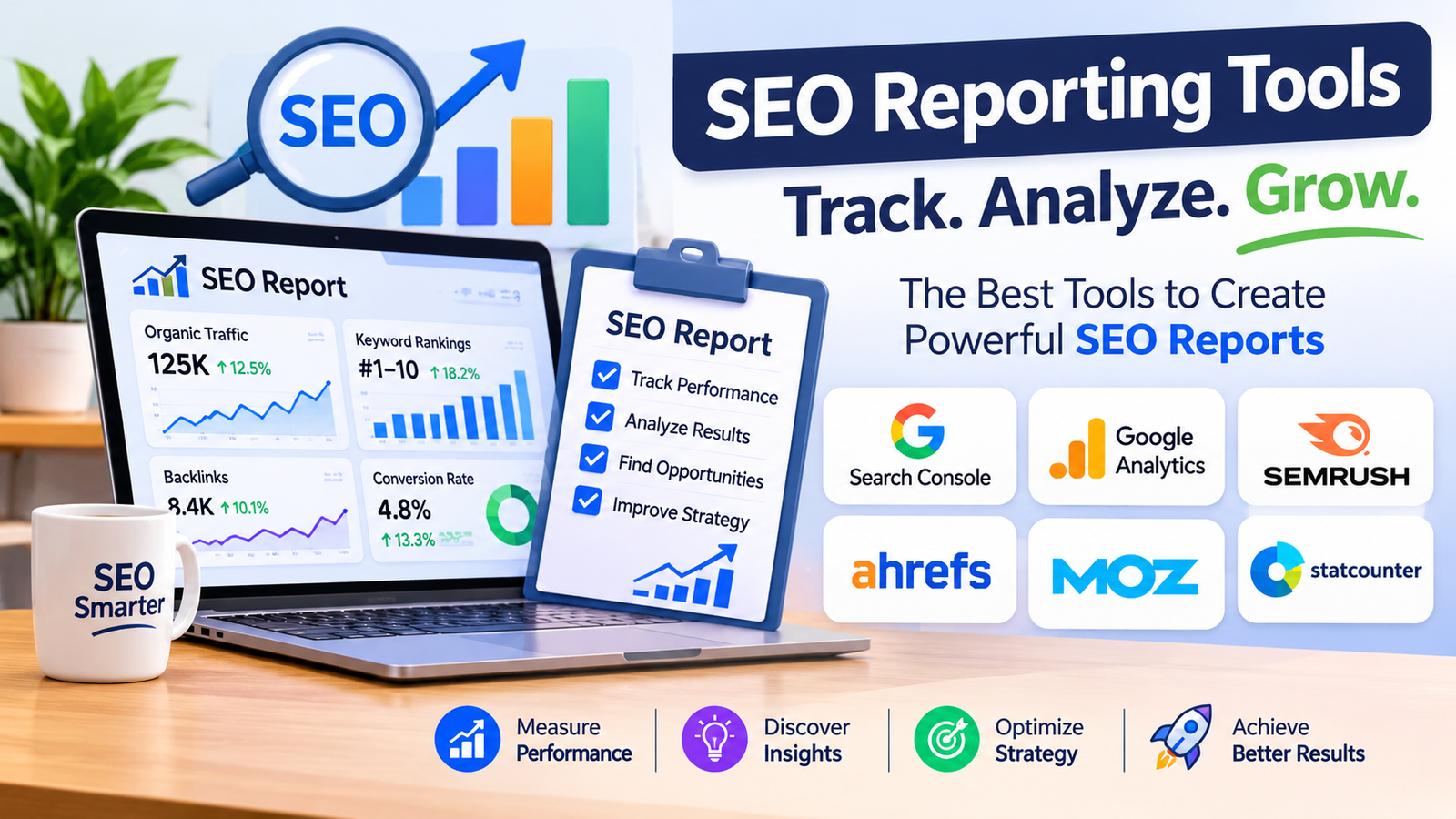
Ever seen large, banner-style posters at the beginning of blog posts highlighting the topic? Such visual content may not serve any real purpose, but they make your content stand out through beautiful imagery, colors and typography.
Create one attractive banner and it can enhance the overall representation of your written content, including blog posts, news articles and newsletters.
Example: A blog post banner featuring SEO reporting tools for a blog about SEO reporting.
End Note
This list is just the beginning. Keep on exploring different types of visual content that can help your website grow by bringing in more traffic, social media shares and backlinks. Experiment with various formats and analyze their performance to identify what works the best for your audience.
Want help with creating visually aesthetic and meaningful graphics for your content? ODMT has an experienced team of graphics designers and content creators to transform your text-based website into an interactive visual experience. Connect with us today and unlock your online business growth.
Follow One Design Marketing Technologies on Pinterest, DesignRush and Built In.
The Best SEO Hires Bring Judgment, Not Just Expertise
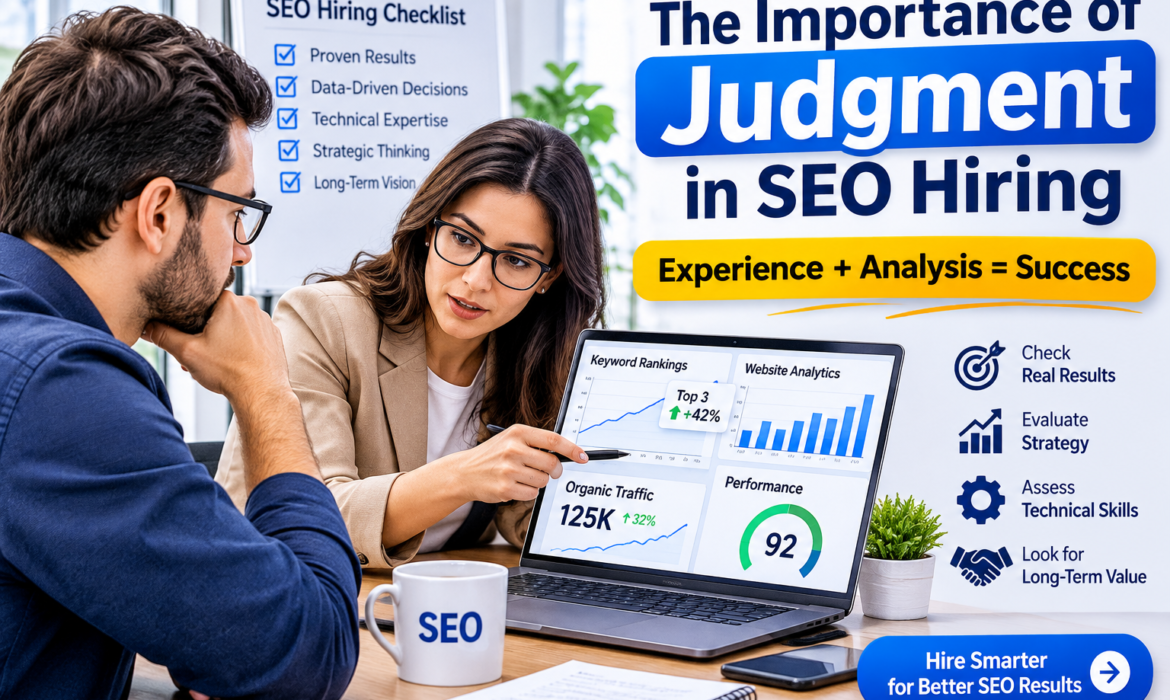
SEO is not just keyword research, technical audits and ranking reports. Businesses need professionals who understand why a strategy works, when to change direction and how search performance links to business goals.
The best SEO hires have technical expertise and good judgment. They interpret data, rank opportunities by priority and adapt to changes in search behavior. These qualities separate the professional who is just doing a job from the professional who is contributing to the sustainable development of the business.
Why Expertise Alone Is Not Enough for SEO Hires
The technical expertise is still very important for SEO professionals. They need to understand crawling, indexing, keyword intent, internal linking, content optimization and how to track performance. But knowing the concepts does not mean that decisions will be effective.
A website may have dozens of technical problems, but not every problem needs to be fixed right away. Experienced professionals understand what issues have the biggest impact on visibility, user experience or conversions.
Expert SEO hires know these priorities. They know when to fix technical issues, when to optimize existing content and when to create new pages. Their recommendations are based on business needs, not a checklist of standard SEO practices.
What Makes the Best SEO Hires Different?
Let’s learn about the basics.
1. They Know How to Prioritize Opportunities
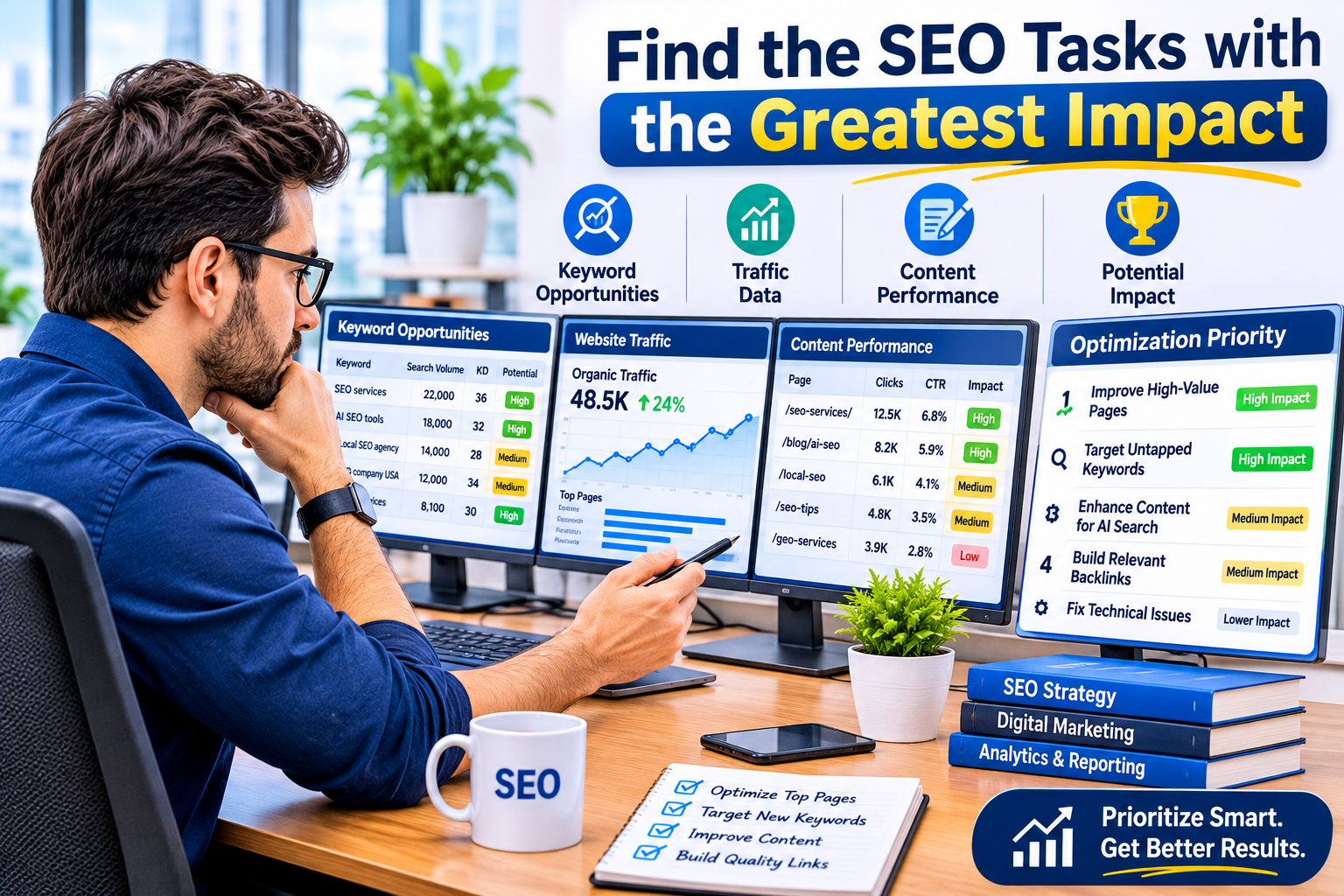
There is rarely unlimited time or resources for SEO teams. Thus, the correct performance of tasks is as important as their prioritization according to their potential impact.
Experienced professionals consider business relevance, implementation effort, competition and potential returns before recommending a strategy. They go after opportunities that drive meaningful growth, instead of trying to catch every keyword under the sun.
For instance, it’s often better to improve an existing page that has good organic visibility than to create a bunch of new articles. Great SEO hires explain the “why” of a task and how it fits into the bigger marketing picture.
2. They Interpret Data Instead of Following It Blindly
SEO tools can tell you about your rankings, impressions, clicks, backlinks and traffic. However, those metrics don’t tell the whole story. A drop in traffic can be caused by seasonality, technical issues, changes in search intent, algorithm updates or more competition.
Making changes without investigating the cause may result in additional problems. Good SEO hires look at a lot of data points before making any decision. They look for patterns, investigate possible causes and distinguish between temporary fluctuations and true shifts in performance.
Moreover, they understand that success isn’t just about rankings. Qualified traffic, leads, conversions and revenue provide a clearer picture of how SEO is helping to grow the business.
3. They Understand Search Intent
Keyword research will tell you what people search for, but to optimize well you have to know what they expect to find. A person comparing products needs different information than a person who is ready to buy. Likewise, a person looking for troubleshooting help may want a “how-to” rather than a sales page.
The top professionals customize content to these expectations. They review search results, appraise alternative pages and find missing information before recommending modifications. Good SEO hires also know when you don’t need separate pages. They check for one in-depth resource that can satisfy related searches rather than creating multiple pages targeting similar keyword variations.
4. They Adapt When Search Changes
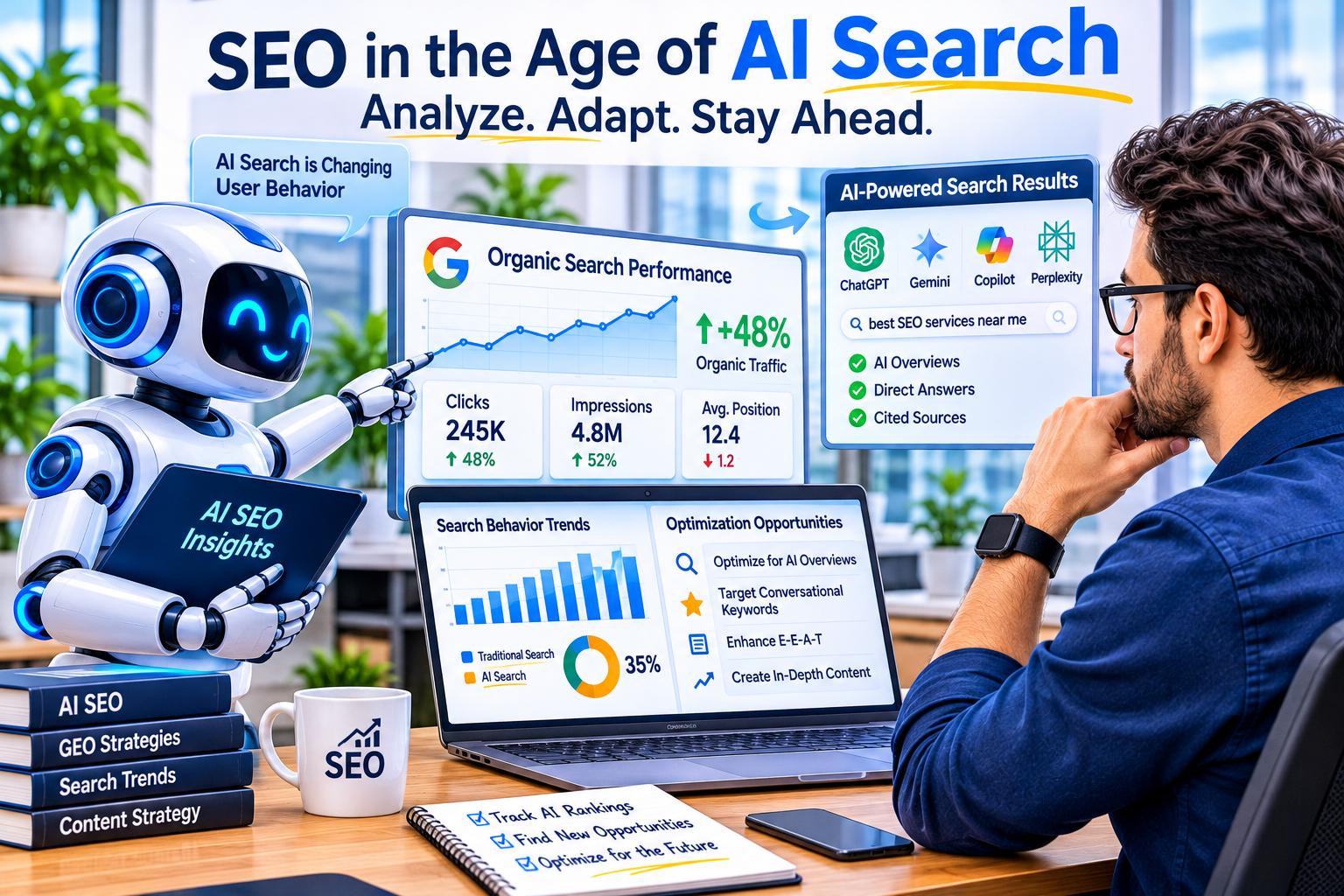
Search engines are ever-changing, and so is users’ behavior. The rise of AI-generated answers, conversational queries and new search result formats have added layers of complexity to organic visibility.
When familiar tactics stop working, professionals who rely solely on old tactics may struggle. If you understand the basics of SEO, you can assess new developments without having to jump on every industry headline.
SEO hires consider new trends, examine the evidence available and decide whether a change is worth paying attention to. They test where appropriate, but don’t make unsupported promises of new strategies. They continue to focus on helping businesses remain discoverable and meet the evolving expectations of their audiences.
5. They Communicate Decisions Clearly
SEO is a team effort that involves developers, designers, content writers and marketing managers. You can have a strong strategy and still fail if the other teams don’t understand the point. Good communication skills require you to be able to explain technical problems clearly, back up your recommendations with evidence and set realistic expectations.
It’s understanding the limitations of other teams. It’s finding practical solutions. For example, it’s confusing if you recommend a website migration and don’t mention the risks. A thoughtful pro walks through the benefits, tech requirements and precautions to protect organic visibility. The best SEO hires link optimization efforts to larger business goals, not just rankings as the only measure of success.
How to Evaluate SEO Candidates Beyond Their Resumes
Resumes can demonstrate experience, technical skills and previous responsibilities. Interviews should also reveal how candidates approach unfamiliar problems and make decisions under pressure.
Ask Questions that Test their Judgment
Instead of asking for certifications or tool experience, ask candidates to explain their reasoning in real-world scenarios.
Consider questions such as:
- What would you do to investigate a sudden drop in organic traffic?
- How do you prioritize SEO recommendations that conflict?
- When wouldn’t you make a new landing page?
- Ways to measure the success of an SEO campaign?
- What would make you change a strategy that used to work?
These questions highlight candidates’ ability to connect the dots between technical knowledge and business applications.
Use Practical Scenarios During Interviews
A short exercise can provide more insight than a discussion about SEO terminology. Ask the candidates to describe a hypothetical website problem, what the possible causes are, what the next steps are and why they would prioritize these steps.
Look for structured thinking, not a single perfect answer. Good candidates will admit what they don’t know, ask good questions and be able to articulate what additional information they would need. It helps businesses find SEO hires that can solve problems independently while working well with their teams.
Build an SEO Team that Thinks Beyond Rankings
Knowledge should be the starting point, but not the only criteria to select. It is important to hire for technical expertise. Companies need professionals who can connect search performance to customer needs and business goals.
The right candidate is not going to be the one who suggests the most complicated strategy or generates the longest audit. Rather, they’ll focus on meaningful problems, share how they came to their conclusions and focus on actions that foster sustainable development.
Ultimately, the best SEO hires have a combination of knowledge, curiosity, adaptability and judgment. These qualities help teams make good decisions, adjust to changing search conditions and develop strategies that have long-term value.
Follow One Design Marketing Technologies on YouTube, Upwork and ZoomInfo.
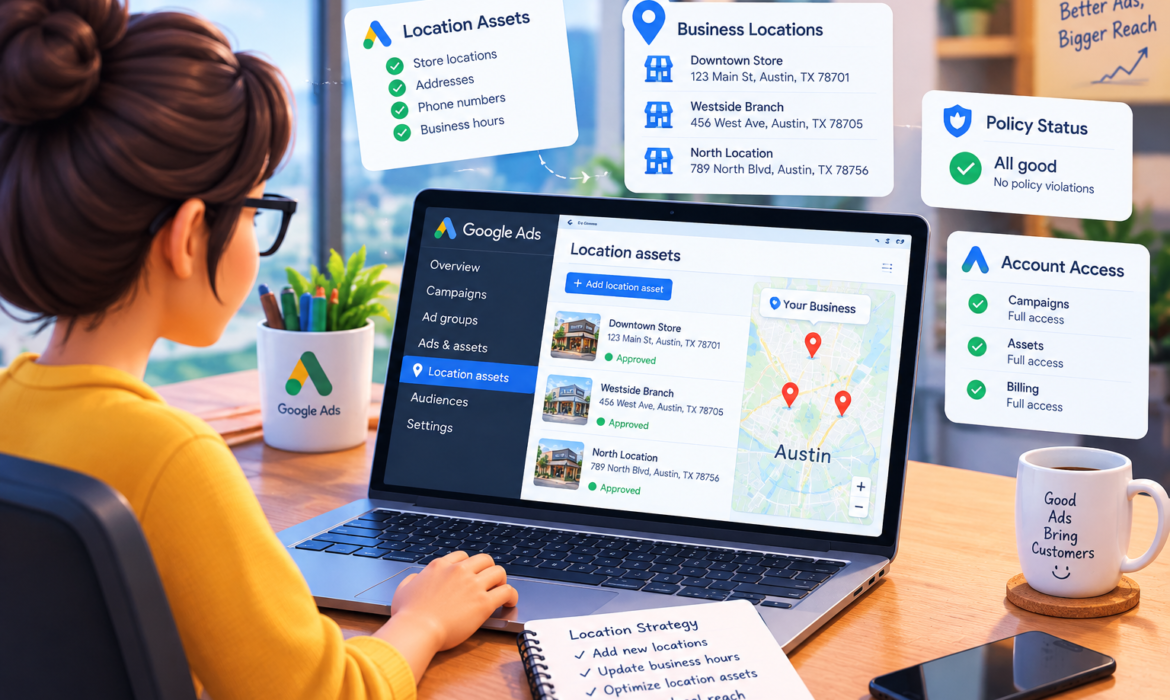
Google Location Asset Requirements: What You Need to Know
Google Ads location assets help businesses link online ads to physical locations. They offer helpful information including business addresses, phone numbers, hours of operation and directions.
However, adding a location to your campaign doesn’t ensure approval or visibility. Advertisers must provide truthful information, meet Google’s eligibility and comply with its advertising policies. Knowing Google location asset requirements can help you avoid disapprovals and improve your local advertising campaigns.
What Are Google Location Assets?
Location assets connect Google Ads campaigns to the right business locations. They help potential customers discover nearby stores, contact businesses or get directions directly from qualifying ads.
Google supports two main types
- Our locations: For businesses advertising their own physical locations.
- Affiliate locations: For businesses selling products through other retailers.
These Google location assets may appear on Google Search, Google Maps, YouTube and other eligible placements. Their visibility is determined by campaign settings, available inventory and Google’s advertising systems.
Google Location Asset Requirements You Must Meet
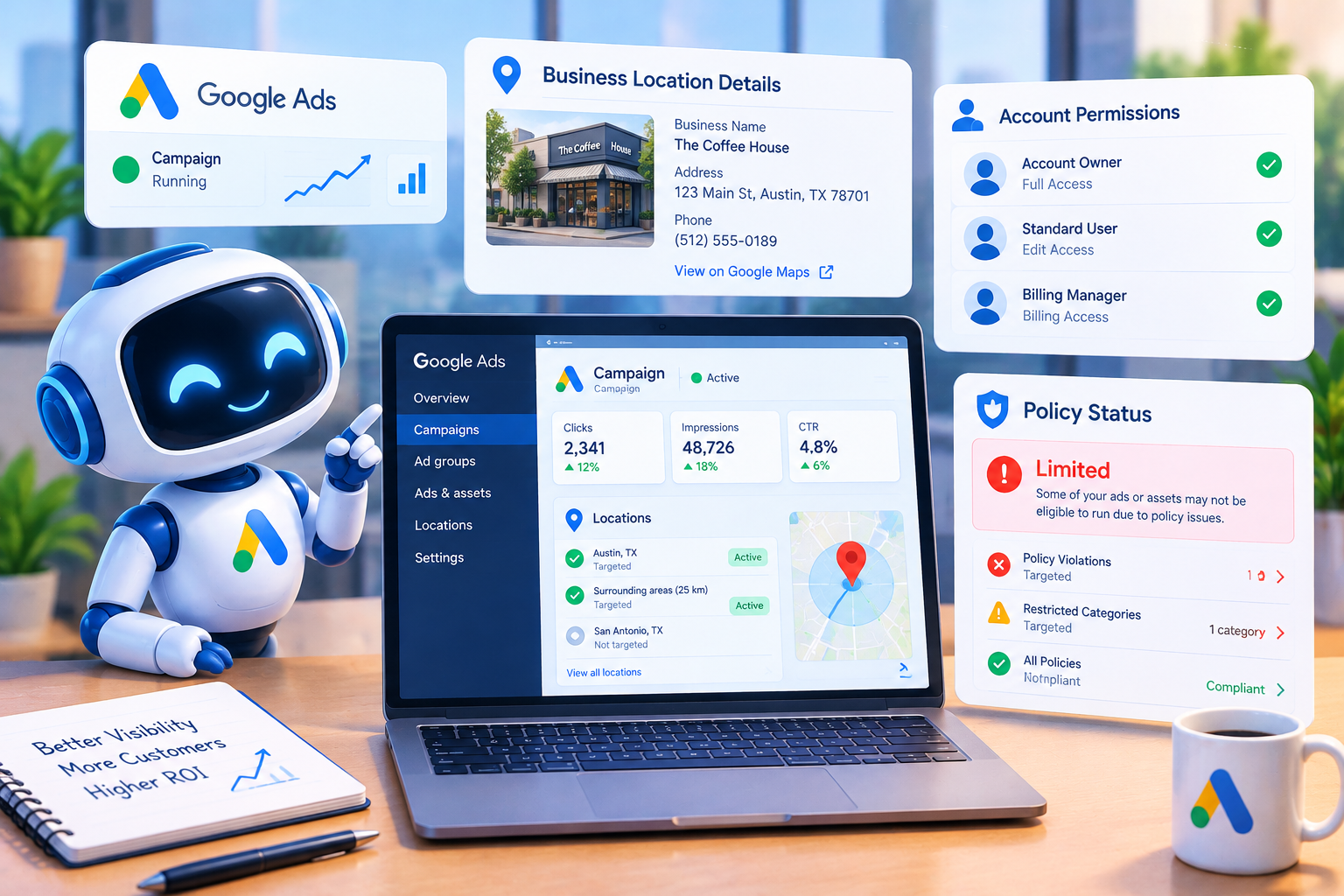
Advertisers must comply with Google’s general advertising policy, plus location-specific eligibility requirements. Meeting these Google location asset requirements minimizes the risk of rejections and account problems.
1. Use a Genuine Business Location
The location must be a real place, identifiable and tied to the business being advertised. Google may reject places that are permanently closed or that can’t be verified.
Ensure that the products or services advertised are available at the location you choose. Using an unrelated address to attract customers can create eligibility problems.
2. Obtain the Necessary Permissions
Google Ads must be authorized properly to use the business’s location information. Make sure agencies working on client campaigns have the right account access.
Before linking any accounts, verify that the business owner has provided the required permissions. Validate existing connections instead of assuming if previously established access is still valid.
3. Follow Google’s Advertising Policies
Google location asset requirements must comply with Google’s advertising policies, including prohibitions on prohibited products, misleading claims and inappropriate content.
Business names and other information must also comply with editorial standards. Disapproval can be based on misleading details, unnecessary symbols or unusual formatting.
Always check the specific policy notification if an asset is rejected. It can help you to determine if the issue is with the listing, location eligibility or ad.
Choosing the Right Location Data Source
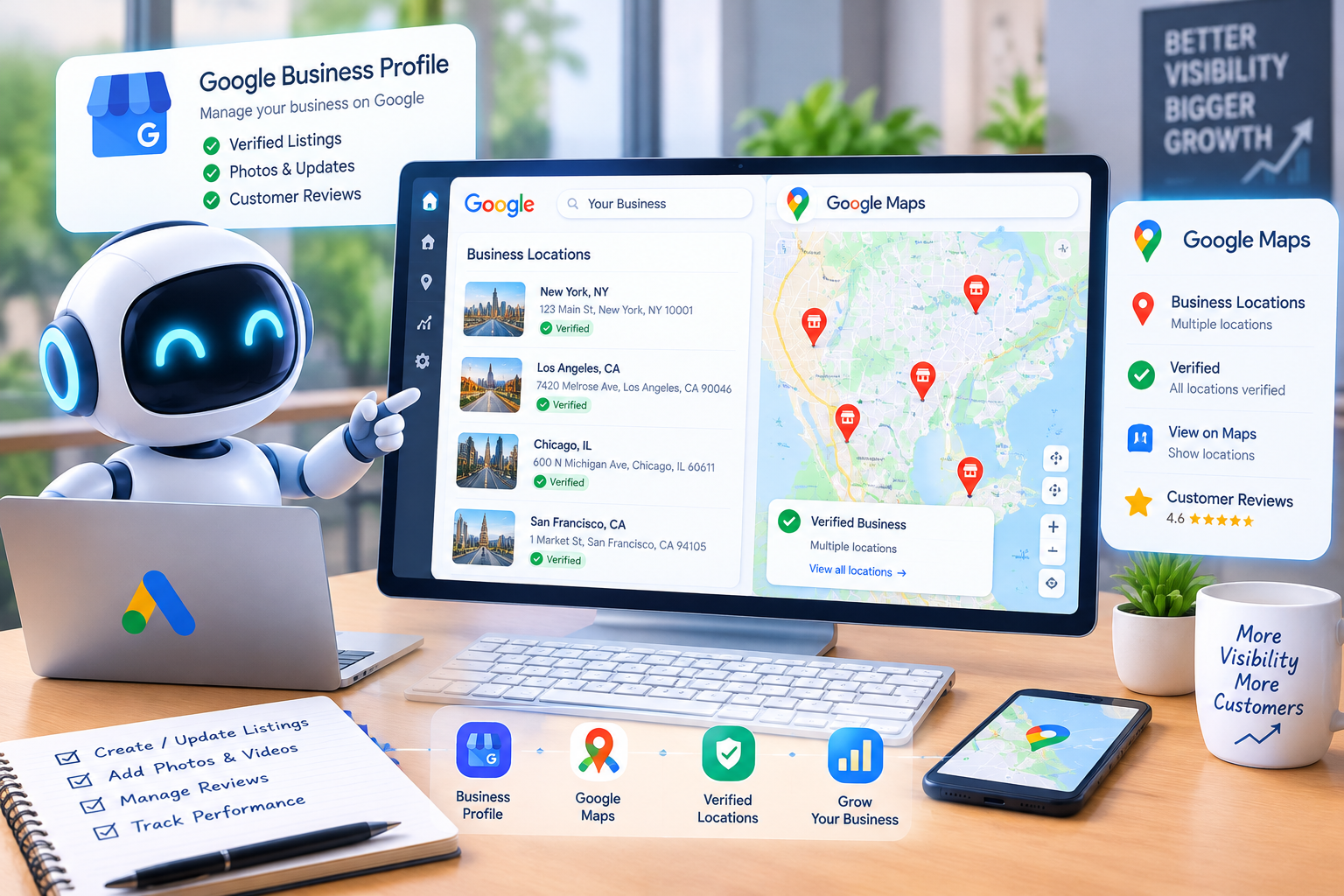
Another critical component of meeting Google Location Asset Requirements is selecting the correct source. Your options will depend on whether you own the advertised locations.
Google Business Profile
Google Business Profile is a good choice for businesses that advertise their own stores or service locations. Link the relevant profile to Google Ads from an account with the necessary permissions. If the profile is managed by someone else, ask them for access before trying to connect it.
Google Maps
Google Maps is an alternative when other supported location sources aren’t suitable. This choice enables advertisers to choose eligible Maps locations from Google Ads. All your business’s chosen locations are part of it. Adding an unrelated business can cause disapproval.
Supported Chains & Partner Locations
Businesses that sell products through other retailers may use supported chain locations or Global Location Groups if available. Select the source that matches your real business connection with each location. The wrong type of Google location asset can cause eligibility problems.
Managing location assets for several stores or client accounts? One Design Marketing Technologies can help with Google Ads setup, PPC services and local SEO.
Setting Up Location Assets in Google Ads
Once your business info & permissions are set up, do the following:
- Open Location Manager: Sign in to Google Ads and find Location Manager under the Tools menu.
- Choose a location source: Select Google Business Profile, a supported chain or another eligible option.
- Connect your account: Select the relevant profile or request access if necessary.
- Choose locations: Apply business name or location label filters when needed.
- Configure campaigns: Decide whether campaigns should use all linked locations or selected groups.
- Check asset status: Review warnings, missing locations and disapprovals.
Available options may vary by account and location source. Allow time for information to sync before troubleshooting newly connected locations.
Common Google Location Asset Problems & Fixes
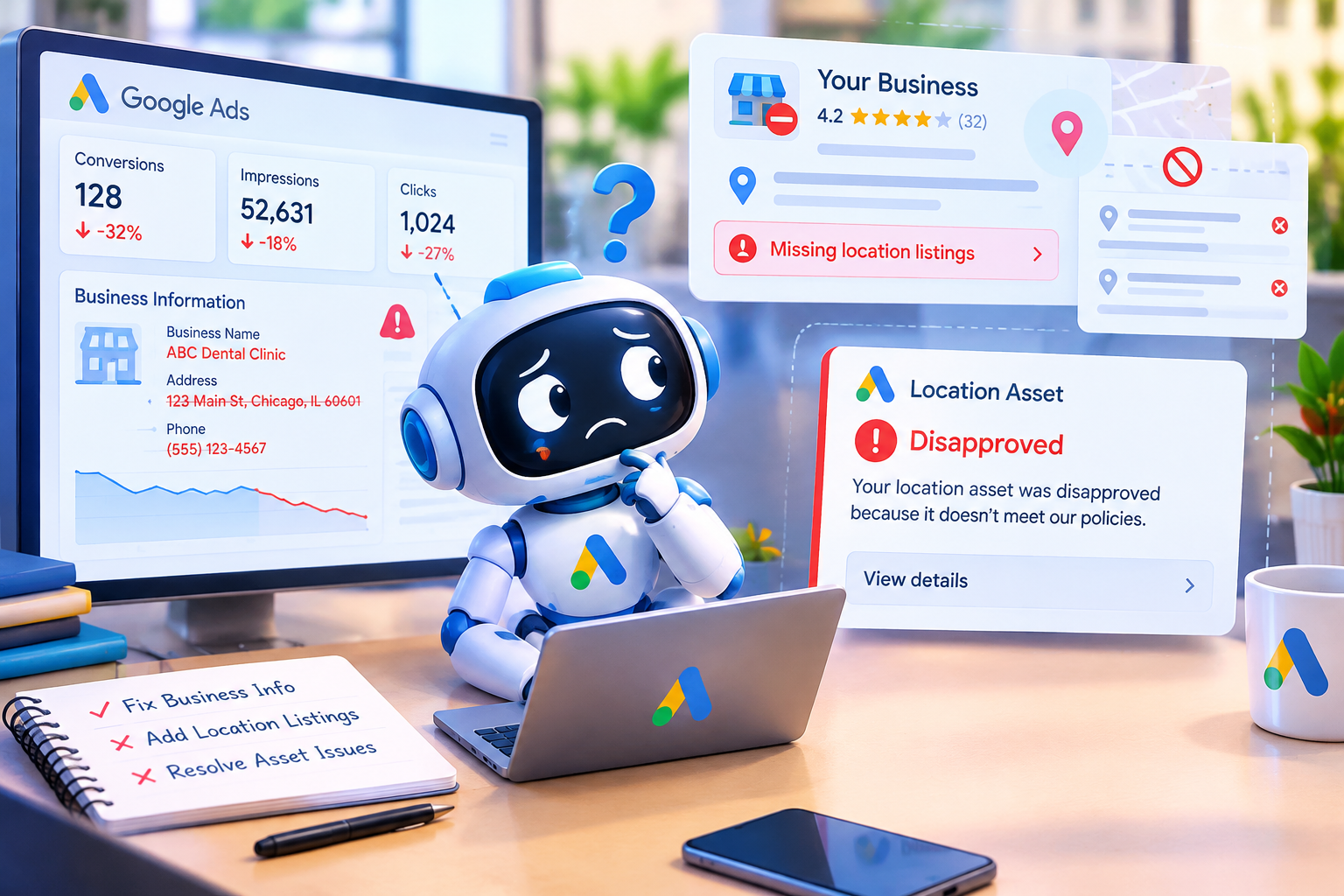
Even the best-run campaigns can run into Google location asset requirements-related problems. Knowing the cause helps you solve problems without making unnecessary account changes.
Wrong Business Information
If you find an incorrect address, phone number, business name or operating hour you should update the original listing in Google Business Profile or Google Maps. Google Ads uses information from these sources. Thus, changing campaign settings alone may not solve the problem.
Missing Locations After Linking
Make sure the location is active and linked to the right profile. Check to see if location labels or filters are excluding it from your campaign. Updates can take a while to appear. But waiting won’t fix a policy disapproval, which calls for a separate correction or review.
Business Name Disapproval
Look for additional punctuation, odd capitalization or details that don’t reflect the brand. Edit the original Business Profile as required. If the name is correct but has been wrongly flagged, ask for a review instead of changing correct information.
Location Assets Not Appearing
Approval does not guarantee that location assets will display with all advertisements. Google takes into account factors such as Ad Rank, expected performance, available space and other eligible assets.
Not sure why your locations keep getting disapproved? The team at One Design Marketing Technologies audits listings, permissions and campaign settings.
Read more: PPC Monitoring: What to Check Between Audits
Best Practices for Managing Location Assets
Meeting Google Location Asset Requirements is only the first step. Regular maintenance helps businesses keep their information accurate and campaigns properly configured.
- Audit business information: Check addresses, phone numbers, operating hours and listing status regularly.
- Review permissions: Ensure the right people can access connected Business Profiles.
- Check location filters: Confirm campaigns target the intended stores and service areas.
- Monitor disapprovals: Address policy notifications instead of repeatedly reconnecting accounts.
- Measure performance: Track calls, direction requests and eligible store visits where reporting is available.
Businesses managing multiple locations should assign clear responsibility for listing updates and account permissions. This reduces confusion when information changes or campaign access is transferred.
Final Thoughts
Google Location Asset Requirements help ensure that advertising location information is accurate, authorized and relevant to customers. Choosing the right data source, maintaining reliable listings and reviewing campaign settings can prevent common issues.
Remember that approval and visibility are different. Even eligible assets may not appear in every auction. Regular monitoring helps advertisers resolve problems and get more value from their Google Ads campaigns.
Need expert help with Google Ads and local visibility? Talk to One Design Marketing Technologies – Contact Us or Schedule a Meeting.
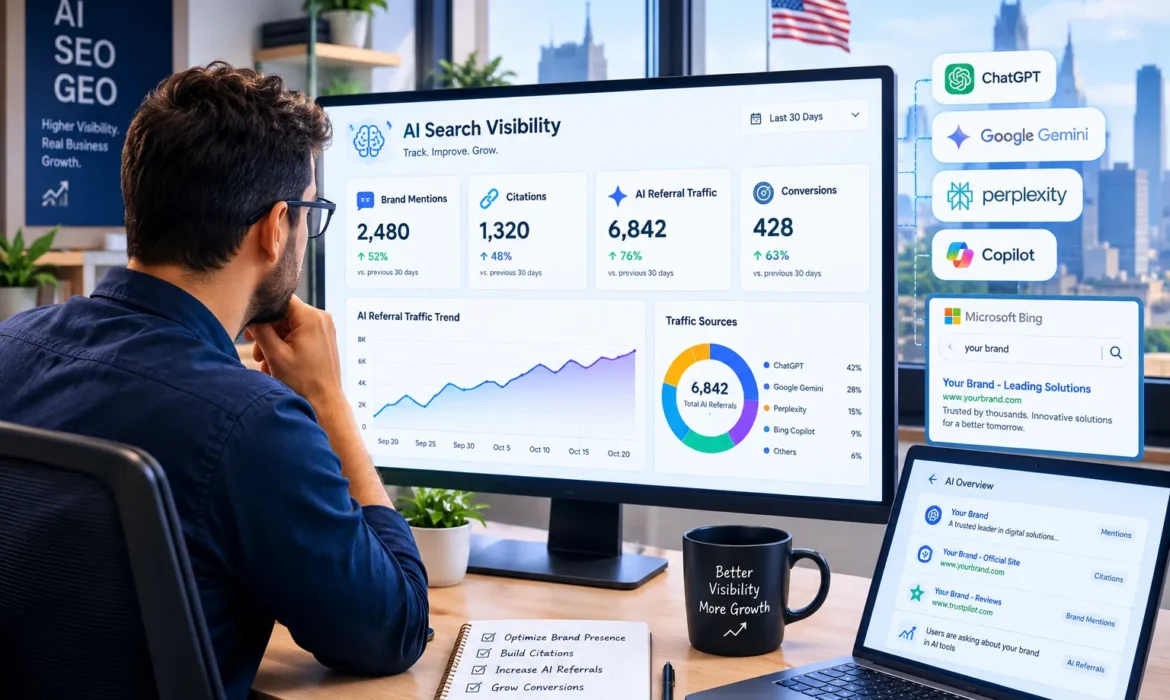
Guide to Create an AI Search Visibility Dashboard
Open your web browser and enter a search query. You may see two ways of results: a traditional list of relevant webpages or an AI-generated overview at the top of the search results.
Since this blog focuses on AI search visibility, let’s discuss AI-generated responses. What do you notice? They provide direct answers, mention relevant brands, recommend suggested products or services or compare different brands.
Now, imagine your brand is competing for visibility in these AI-generated responses. What KPIs should you look out for? Key metrics are the frequency of your brand mention, AI visibility rate, referral traffic from AI platforms, citation frequency and competitor’s AI visibility.
But what’s the point of tracking these KPIs if you couldn’t understand their purpose and relation to your business objectives? That’s why you need an AI search visibility dashboard.
What does an AI Search Visibility Dashboard do?
It is a reporting tool that collects relevant information from AI platforms such as, Perplexity, Gemini, ChatGPT, Claude and Google AI Overviews to:
- Track brand mentions, AI citations and source links across AI platforms.
- Analyze competitor visibility and AI share of voice.
- Identify opportunities to improve AI visibility.
- Monitor visitor engagement through referral traffic from AI platforms
- Evaluate accuracy of information displayed in AI answers.
- Track leads, conversions and revenue generated from AI visibility.
How to Build Your Own AI Search Visibility Dashboard
An AI SEO company can help you create a customized AI search visibility dashboard that answers the following three key questions:
- Does your brand appear in AI-generated responses? How frequently?
- Is your current AI search visibility bringing any growth to your business?
- How can you improve your existing dashboard to identify new opportunities?
Let us understand the process of building an AI search visibility dashboard through the following step-by-step guide.
Specify Your Primary Objectives for AI Visibility Reporting
Every business type needs AI search visibility data for different purposes. A B2B company may use it to monitor competitors, track comparisons and citations along with quality leads. Whereas, an ecommerce brand may use the data to track product recommendations, brand mentions and their frequency.
Decide what you want to achieve by monitoring your AI search visibility. You can set your objectives around:
- Increasing brand mentions and website citations.
- Identifying major competitors and comparisons.
- Increasing qualified traffic directed from AI platforms.
- Identifying gaps in brand sentiment, citations and content generated in AI responses.
- Identifying prompts or content types with the most AI citations.
- Monitoring the brand content for accuracy in AI-generated answers.
Pick AI Search Platforms and Target Prompts to Monitor
The next step is to pick AI-powered search platforms you wish to monitor. Why? To track your brand’s AI performance across these platforms and understand how different each of them can respond to user queries. Popular options include ChatGPT, Gemini, Google AI Overviews, Perplexity and Claude.
Next, you must create a list of some target prompts that your target audience is likely to search. For instance, some of these prompts for an SEO company could be:
- Best SEO companies for small businesses.
- How to improve your website’s Google ranking.
- Top digital marketing agencies in the USA.
- List of SEO companies offering AI search optimization.
Now, group these prompts into relevant categories based on product category, intent, topic, platform, location, time and context. It will help you test prompts easily across multiple platforms and compare the AI responses.
Define a List of Relevant KPIs
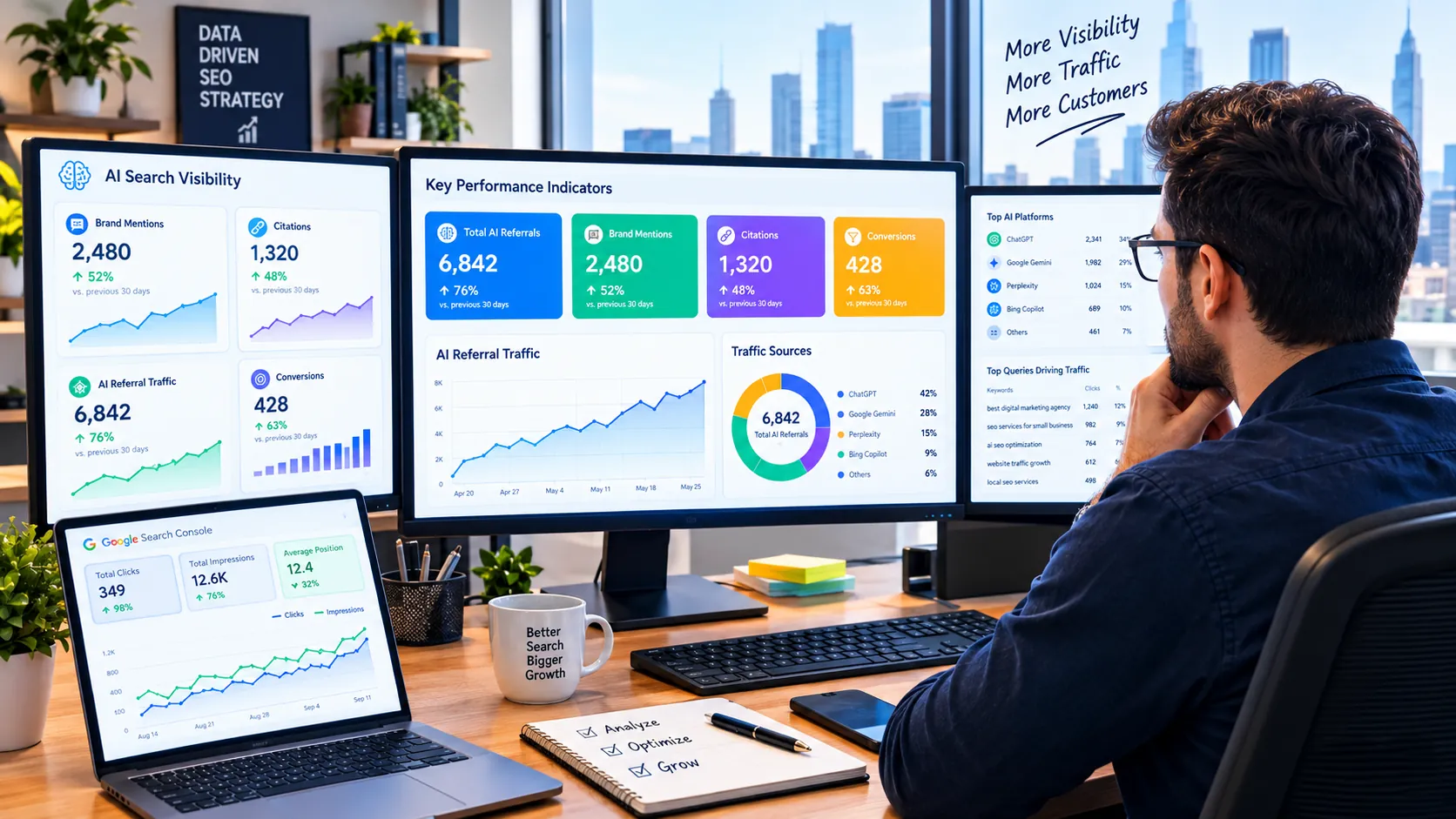
Now, define key performance indicators for your AI search visibility dashboard. These metrics help your track your brand visibility and growth across multiple AI platforms mentioned in the above point. Some of these could be:
| KPI | Purpose |
| AI Brand Mentions | How many times your brand appears in AI answers |
| AI Citation Frequency | How many times AI platforms cite your brand |
| Prompt Mentions | Topics in which your brand appears |
| Position in AI Response | Your brand position in the AI response |
| Brand Sentiment | What public sentiment your AI answers create |
| AI Referral Traffic | Website clicks attributed to AI mentions |
| AI Answer Accuracy | How Accurate is the brand information |
| Competitor Mention Frequency | Frequency of competitor mentions |
| AI Lead Conversation Rate | Percentage of referral visitors from AI converted to leads |
Collect Data from Relevant Sources
You cannot gather all your AI search visibility data from a single source. You must collect it from multiple platforms and combine it to generate a precise AI visibility report.
Here’s how these different AI sources help with your AI visibility dashboard:
CRM Systems: they provide information about sales, leads, revenue and customer engagement.
Google Analytics 4 (GA4): it provides metrics related to conversions, visitor engagement, landing page performance and AI referral website traffic.
Server Logs: they provide data about requests made by AI crawlers.
AI Visibility Tools: they track AI prompts, brand mentions, citations and competitor visibility.
Google Search Console: It provides traditional search performance data, including no. of clicks and impressions.
Collect relevant data through APIs, CSV exports and manual checks. Now, organize metrics, dates and names into consistent data formats, making it easier to compare results and identify trends.
Combine Data From Suitable Platform for Reporting Data
The next step requires you to select a suitable platform to combine AI search visibility data collected from multiple sources and to generate the final report. Choose a tool or a platform that is easier to maintain and supports different data sources while not cluttering our dashboard with unnecessary information.
Some of these platforms are:
- Business Intelligence Tools: they help in combining large datasets with business metrics to create advanced reports.
- Google Spreadsheets: they are highly useful in recording manual data and performing small computations when tracking AI visibility from a single platform.
- Google Looker Studio: it combines multiple data sources to create personalized AI reports and monitor AI performance.
- Semrush AI visibility tools: they can help brands track AI mentions, citations, competitor visible and several other AI search visibility metrics.
Organize the Dashboard for Better Understanding
Different stakeholders may use your AI search visibility dashboard for different purposes. So, the ideal choice would be to organize different metrics into separate sections. Adding comparison tables, charts, suitable infographics and filter options can further make your dashboard more meaningful.
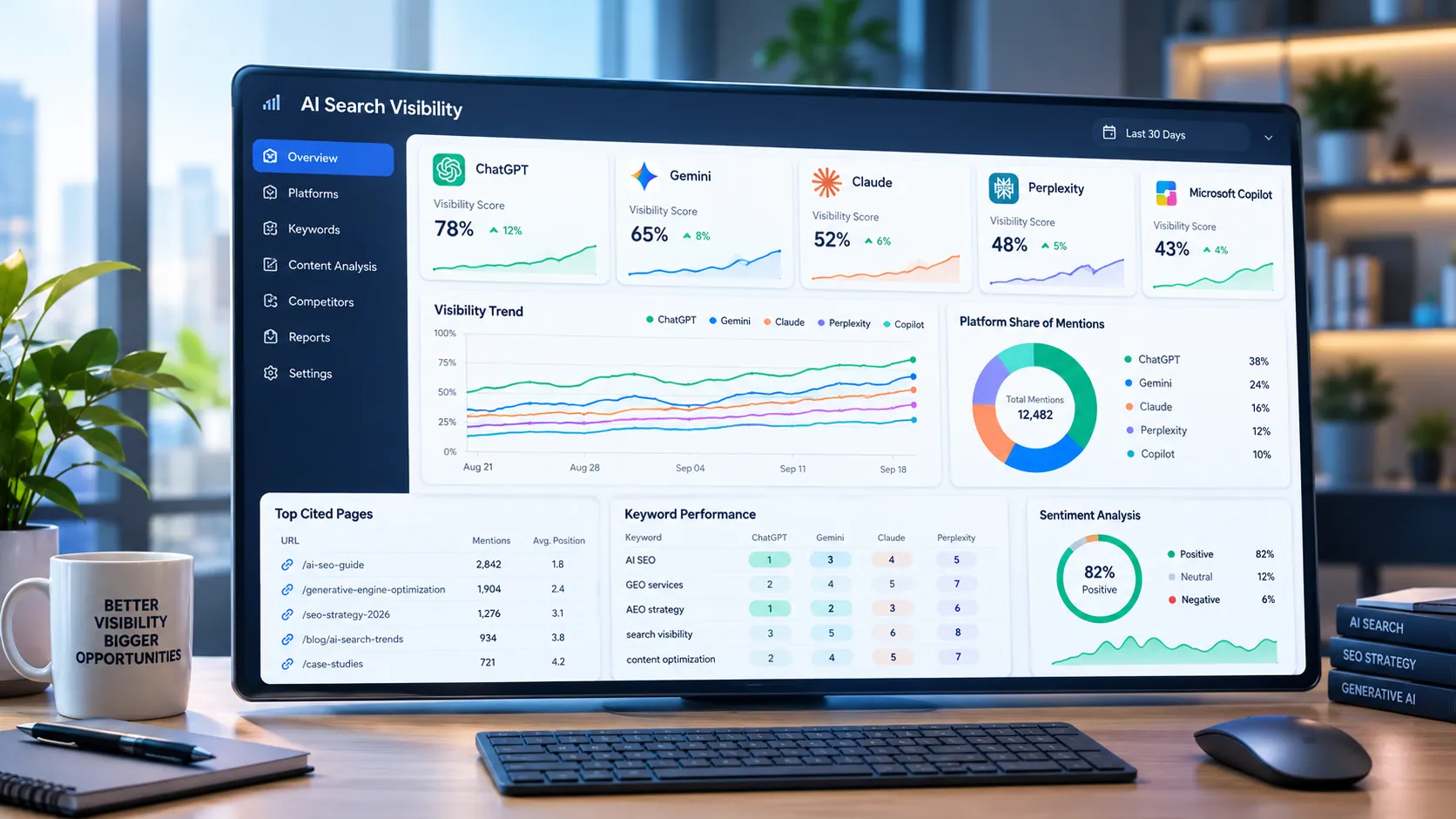
You can divide AI search visibility data into the following sections on your dashboard:
| Sections | Metrics Covered |
| Competitor Analysis | Shared prompts, competitor visibility across AI platforms, citation comparison |
| AI Visibility Analysis | Brand mentions, prompt coverage, citation frequency, brand position across AI platforms |
| Technical Performance | Inaccessible URLs, blocked crawler requests, HTTP response codes |
| Content Analysis | Frequently cites webpages, topics with limited AI visibility, URLs receiving AI referral traffic |
| Business Growth Analysis | Conversion rate, revenue from AI referrals, AI referral conversions, lead generation |
Analyze AI Search Visibility Report
Now that your AI search visibility dashboard is ready, it’s time to analyze its results. You can then use the insights to refine your AI search strategy and improve your AI search visibility.
Start with reviewing your dashboard everyday for key metrics and weekly or monthly for broader analysis. You can also compare your AI search performance across different time periods to identify changes in KPIs over time, look for gaps and take appropriate action.
End Note
Your AI search visibility dashboard is more than a monitoring tool. You can use it to strengthen your online authority and improve your website traffic through AI-powered search experiences.
So what if tracking every click, impression or lead generated from AI search may not be possible? A dedicated dashboard can still provide valuable insights into how to improve your AI search performance. Use this information to increase your chances of appearing in AI-generated responses.
Looking for an AI SEO company to help you build a customized AI search visibility dashboard? Connect with us today and get a free consultation on how to improve your visibility across AI-powered search platforms.
Follow One Design Marketing Technologies on Trustpilot, Fiverr and IndiaMART.
How Google is Viewing Your AI Content?
Imagine a simple scenario. You created most of your website content using AI-powered tools such as Claude, ChatGPT and Gemini without realizing how Google might process it.
On top of that, Anthropic’s Claude introduced invisible AI watermarks from August 2026 to classify Claude-generated text, adding to the gravity of the situation.
However, this AI content declaration does not make it less suitable for Google to rank.
According to Google’s guidelines on using AI-generated content, published in February 2023, high-quality, original content can perform well regardless of how it is produced.
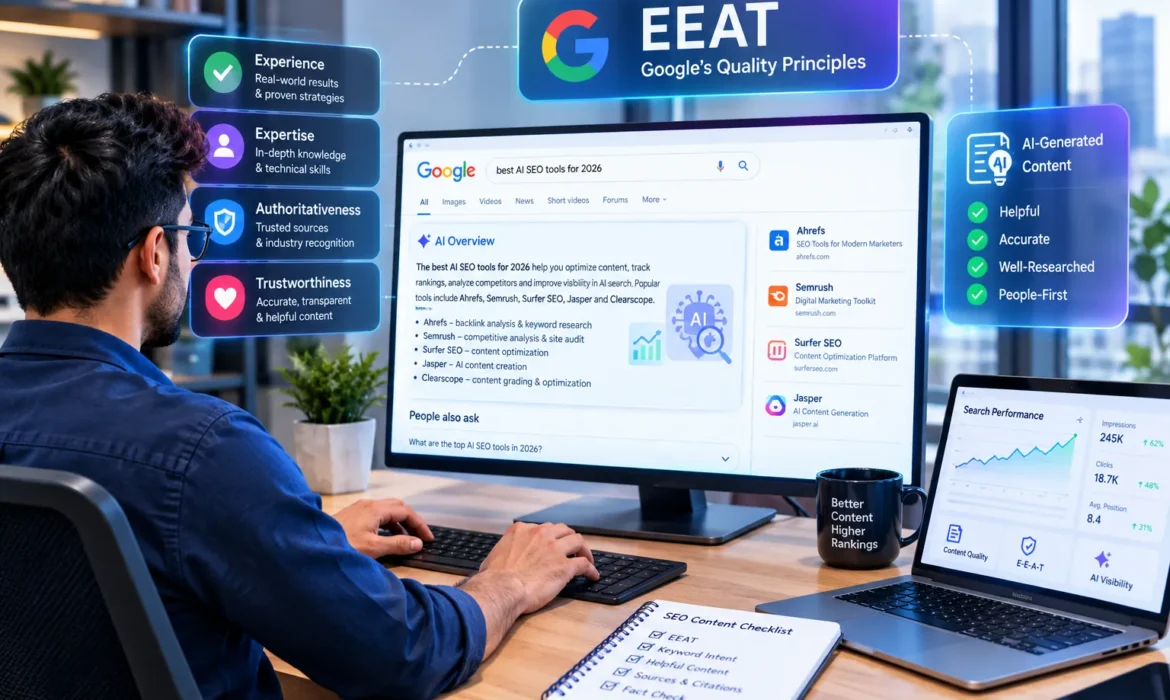
It simply means that as long as your AI content provides value and meets the EEAT (Expertise, Experience, Authoritativeness, Trustworthiness) guidelines, it may qualify to be ranked.
However, your content writing expert must understand the difference between utilizing and abusing AI content. Using AI to generate bulk content to influence search rankings is against Google’s spam policies.
Google’s Criteria for Ranking Content
What Google looks for in your AI content is not entirely different from what the readers expect. A GEO company such as One Design Marketing Technologies (ODMT) can help you understand the difference between AI-generated content that adds value and content that fails to meet Google’s quality standards.
How much effort was involved?
Have you ever wondered why your page struggles to rank at all or the ranking decays over time? That’s because good readability and better understandability does matter but it does not add real value to your content.
But then what does? Real efforts and value addition does. Now ask yourself, what efforts did you make to add value to your website if every bit of it consists of AI content? We can’t say much about the nation but that’s exactly what Google wants to know.
But the real problem is to define what counts as real effort. Well, it can mean adding something useful and interactive to your website that no AI model can’t mass-produce.

Think of a BMI calculator on your health-related website or a tax calculator on a blog related to taxation or accounting. Well, you don’t have to code the logic yourself; AI can help you with that.
Your job is to integrate useful functionality to your website along with your AI content to stand out from your competitors.
Is your content Universal or Unique?
AI content sounds monotonous because most of the time it sounds generic. Do you agree? Take the example of two articles. One is titled- “7 Ways to Take Care of Your Gut Health” and the other is “What Patients With Serious Gut Issues Did To Improve Their Gut Health.”
While the first one sounds generic, the second one seems more specific and hence, authentic. It discusses real scenarios and first-hand experiences rather than offering general advice.
Articles like these can add authenticity to your website content, helping to strengthen the domain authority of your website. Having said that, generic blog articles can still occupy significant space on your website’s blog content.
Does your content sound real?
What differentiates the real from the fake? Well, everything real should be supported by evidence that proves its validity. That’s exactly what your AI content may be missing: verifiable evidence that cannot be fabricated, automated or copied but must be supported by reliable sources.
Google is not chasing dictionary definitions but first-hand experiences, originality and reliability in your content. Wondering how to make your AI content sound real? Add verifiable information to it, such as relevant case studies based on real-world scenarios.
Gather proprietary data from your own fieldwork or actual customer feedback. Incorporate this first-hand information into your AI content with the author’s name, photograph and credentials to make your content sound credible.
Are you using too much text?
Stop adding just magical words to your AI content. Instead, add some multimedia elements, such as short videos, infographics and tables.
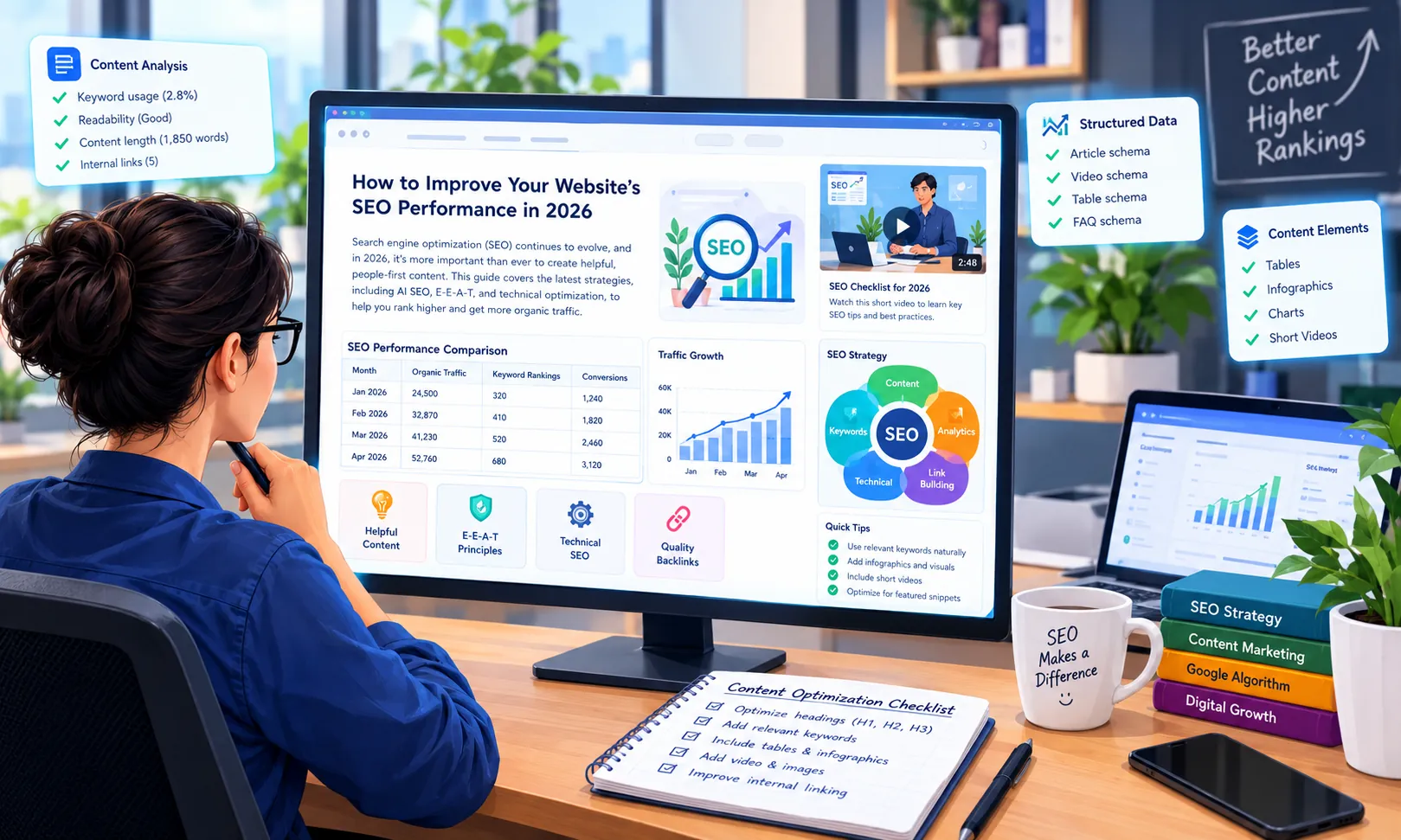
This simple step helps your page stand out from most websites still chasing word counts. Moreover, combining meaningful diagrams, graphs and charts makes your content easier to understand. This way, it manages to reach more search engines and more readers.
But what matters the most at the end of the day? Ensuring that the data your infographics point at is yours and only yours. Here’s how to execute this step. Share your original raw data with your SEO company and their team can help you turn that data into engaging visual content.
What AI Content Does Google Flag?
By the end of this article, we know what Google looks for in your content. But what kind of content Google blacklists is still the biggest question left unanswered.
Well, the answer is very simple. Those trying to outplay Google by generating hundreds of AI articles only to manipulate search rankings need to stop now.
It’s not the AI watermark you need to be wary of. It’s the mass-produced AI content that offers little to no value to your website.
An AI watermark may flag your content as an AI-generated text, but it does not entirely influence your Google ranking.
What still matters is if your AI content offers any real value. Bring something unique to the table, anything useful that the rest of the pages on the SERP are missing. Who knows that might change the game for you?
Should I Choose AI Over SEO?
No, ODMT recommends that its clients avoid relying on AI blindly when implementing their SEO strategies. Incorporating AI into both SEO services and PPC services is indeed a tempting opportunity. However, a real AI SEO company knows where to draw the line.
Stick to using AI for idea generation, summarization and automation. But, rely on human expertise for analysis, strategizing and decision making.
We, at ODMT, follow the same approach. Our comprehensive AI SEO services are built around a customized AI SEO strategy developed exclusively for each individual client. Besides, with our SEO professionals backing your SEO journey with their 15+years of expertise, we help improve your chances of success.
Want to find out the SEO health of your website? ODMT is an SEO company offering a free website audit. Claim yours today by getting in touch with us.
FAQs
Is it against Google Search’s guidelines to use AI content?
Google doesn’t prevent you from using AI content as long as you don’t misuse it to manipulate search rankings or violate Google’s spam policies.
Does Google Search ban AI content?
No, Google Search has never banned AI-generated content altogether. Content writers can use AI to generate innovative ideas and create meaningful content.
Can AI content rank higher on Google Search?
If your AI content offers valuable content and meets the EEAT (Expertise, Experience, Authoritativeness, Trustworthiness) criteria, it might rank well in Search. Otherwise, it may struggle to perform as per expectations.
What Google Search looks for in your AI content?
Your AI content should be unique, original and credible. It should provide useful information with real-world examples, relevant case studies, original infographics and other meaningful elements to help your content perform better in Google Search.
Does ODMT provide content writing services?
Yes, ODMT has a qualified team of content writers who help clients create meaningful, original and unique content for blogs, marketing campaigns, social media platforms, landing pages and more.
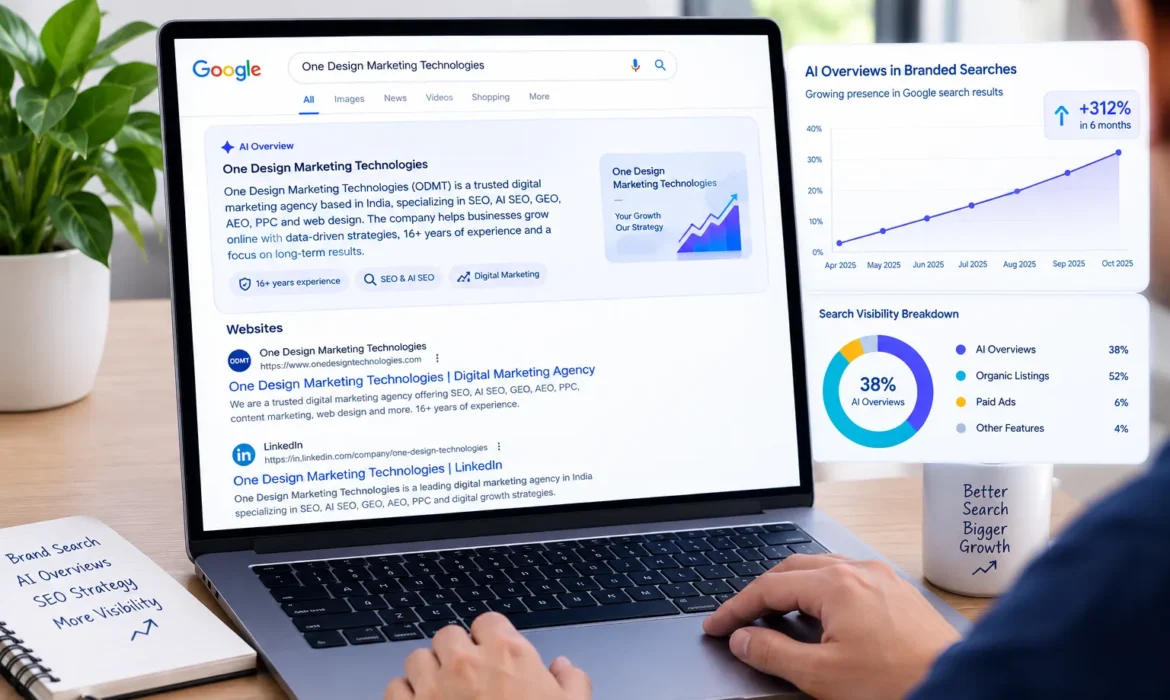
Google AI Overviews Jump From 26% to 80% of Branded Queries
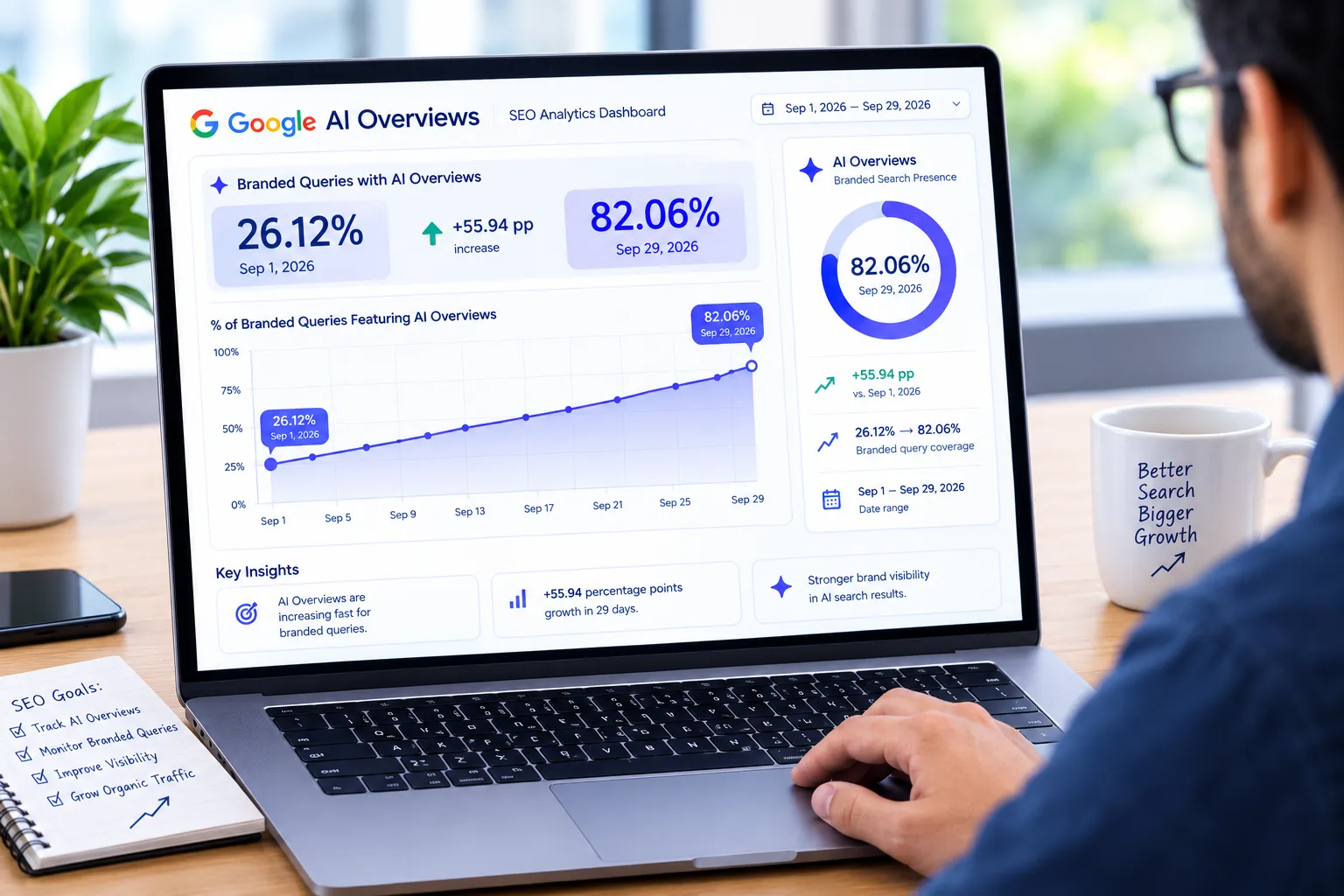
Branded search results have seen a large increase in Google AI Overviews, influencing the way users find businesses online. On October 1, 2026, Search Engine Land reported that DemandSphere data indicated their presence on tracked branded queries increased from 26.12% on September 1 to 82.06% on September 29. The number peaked at 90.48% on September 27.
The spike raises important questions for brands that rely on branded searches to bring in customers. When people search for a company name they are usually interested in the company website, product information, pricing or customer reviews. Now an AI-generated summary can be another piece of that experience, shaping what users see before visiting the official website. But these figures need context.
DemandSphere tracked how often AI Overviews appeared for its tracked branded queries, not if users clicked fewer links or if businesses lost traffic. Google has not explained publicly why the increase was so abrupt.
What the Latest Google AI Overviews Data Reveals
DemandSphere’s September tracking revealed a significant change in visibility of AI-generated summaries in branded searches. It was not a gradual upward trend but something that was particularly noticeable in the last week of the month.
| Date | Branded queries showing AI Overviews |
|---|---|
| September 1, 2026 | 26.12% |
| September 26, 2026 | 69.21% |
| September 27, 2026 | 90.28% |
| September 28, 2026 | 80.23% |
| September 29, 2026 | 82.06% |
The numbers show that AI summaries became significantly more prevalent in the tracked results. However, they do not prove the change was universal or that every summary mentioned the searched business.
Separate research from Ahrefs backs up the wider trend. Google AI Overviews were present on 82.91% of branded queries as of September 29, according to its analysis of US desktop search results. According to Ahrefs, the monthly average increased from 61.3% in July to 73.3% in September. The dataset and methodology is different from that of DemandSphere and the figures should not be compared as an exact measurement.
Why the Increase Matters for Businesses
Branded searches are especially valuable because users have some familiarity with a company. They could be shopping around, investigating the company, looking for support or preparing to purchase.
Google AI Overviews are becoming more common and add another layer of separation from that intent to a possible visit to a website. Before users select an organic listing, they may read an AI-generated summary that pulls in information from multiple sources.
This is both an opportunity and a challenge. A helpful summary could quickly introduce a brand’s products or answer basic questions. However, an incomplete description, outdated information or an unfavorable third party reference can affect how potential customers perceive the business.
The big question is not whether an AI Overview will even show up. Businesses need to know what it is saying, what sources it is referencing and if it is guiding users to relevant information. These factors can be useful to marketers to evaluate how their brand is represented in AI-assisted search.
How Google AI Overviews Could Affect SEO Performance
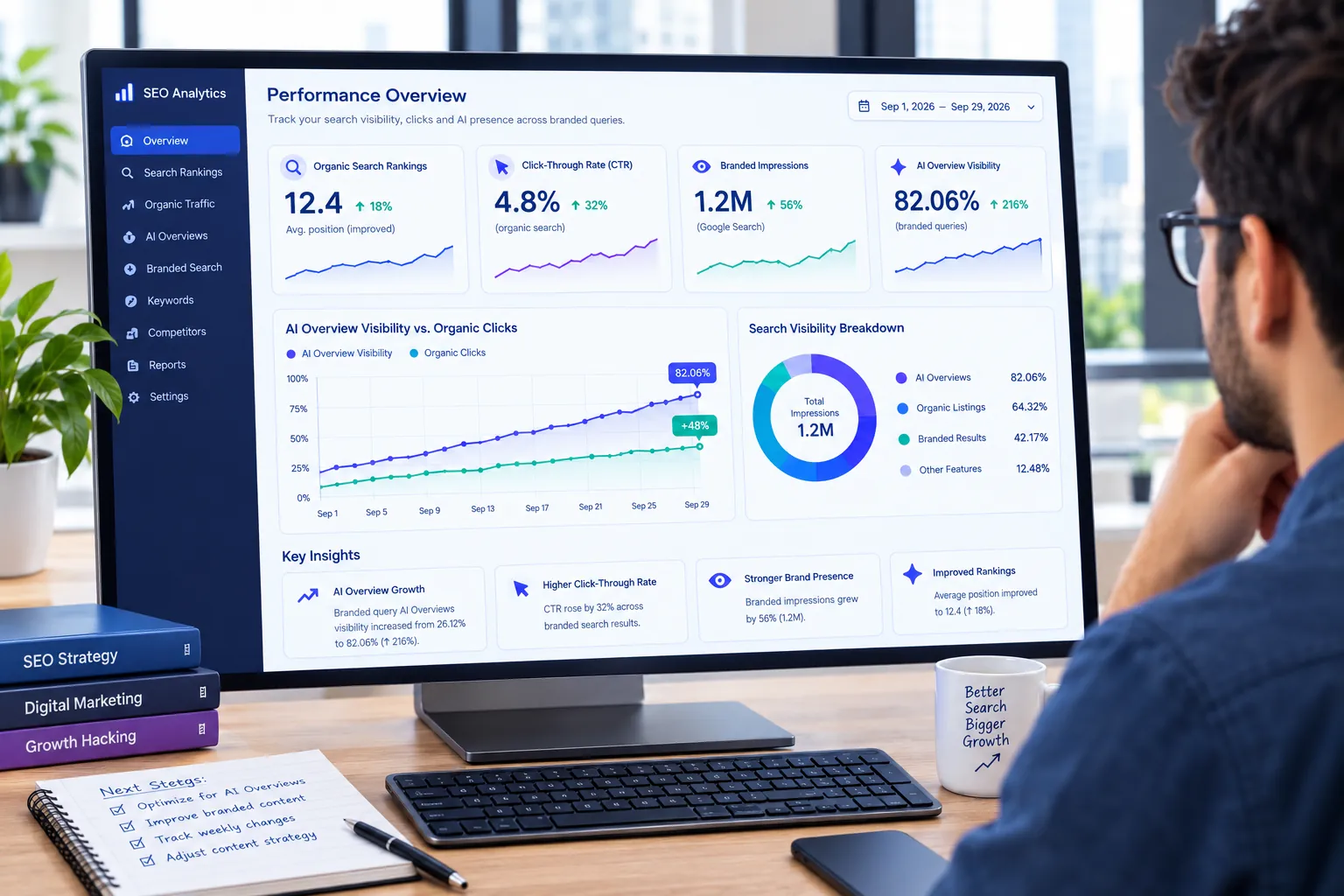
The rise of Google AI Overviews makes the traditional SEO measurements more important to be interpreted with caution. Rankings and impressions still count, but they might not be enough to explain how users are engaging with branded search results.
1. Click-through Rates Need Closer Monitoring
If Google AI Overviews provide a direct answer to a user’s question, that user may have less reason to visit another page. This might impact clicks on searches for basic company information, product details or common customer queries.
But the September data does not show branded click-through rates are down. Before blaming AI-generated summaries for traffic changes, companies should compare their own search performance.
2. Third-party Sources Can Influence Brand Perception
AI-generated answers may be based on sources other than a company website. Review sites, business listings, social profiles and independent publications can influence what users see.
Businesses must ensure that these sources accurately reflect their products, services, policies and reputation. While fixing old information on the major platforms can help keep things consistent, it doesn’t guarantee you’ll be included in an AI Overview.
3. Organic Rankings are Only Part of the Picture
A business can be highly ranked for its own name, but elsewhere on the page the result might be an AI-generated summary. Its website ranking alone may not reveal whether the summary includes the brand, cites its pages, or highlights competing businesses.
SEO teams should be viewing the entire search results page in conjunction with their typical ranking reports. This allows a better view of the information users get when they search for a company.
What Comes Next for Branded Search?
The rise of Google AI Overviews means businesses can no longer rely on branded search results as a predictable list of website links. In the search experience, AI-generated summaries are becoming more common, making brand accuracy and visibility all the more important.
But the data do not say why the increase happened or how much effect it had on website traffic and sales. Google has not announced any specific change to account for the September numbers, and individual search results could differ.
For now, businesses should be monitoring their branded queries, keeping the information reliable and measuring the real performance. Strong SEO fundamentals are still important, but knowing how search engines are presenting a brand is becoming as important as tracking where its website ranks.
Follow One Design Marketing Technologies on DesignRush, Built In and Google Maps.
PPC Monitoring: What to Check Between Audits
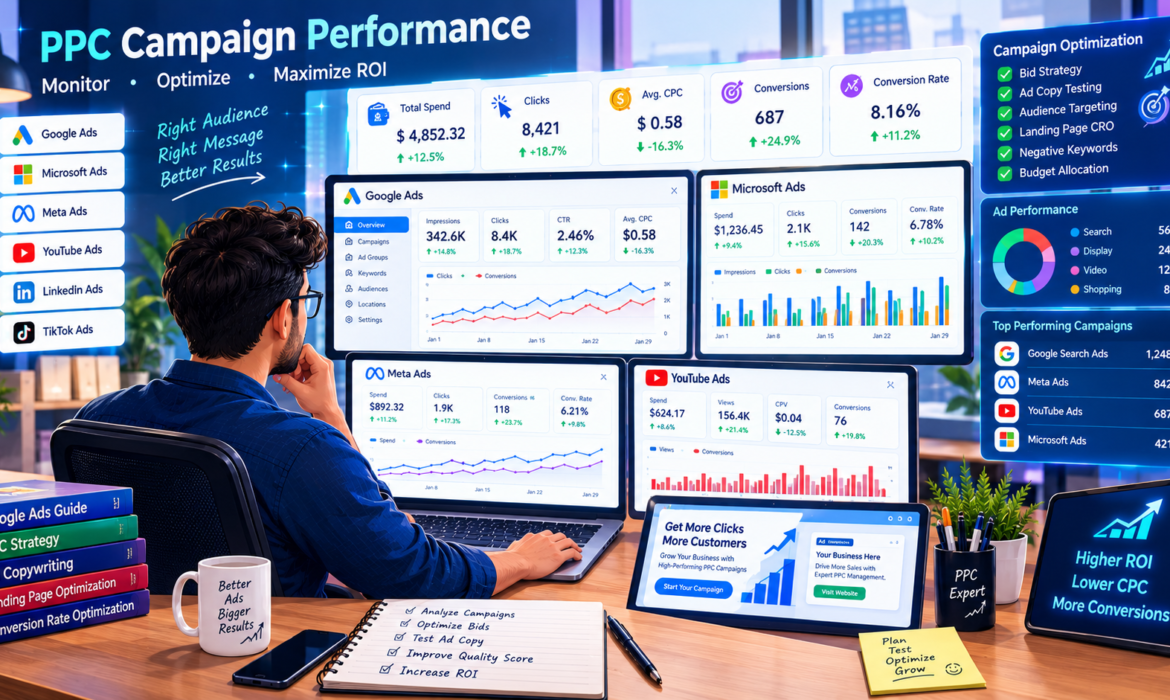
If you think running a successful PPC campaign only requires choosing relevant keywords and launching advertisements, it’s time to rethink. PPC ads are highly influenced by changing competitor bids, search trends and conversion rates.
PPC monitoring is essential for controlling advertising costs, improving campaign performance and detecting issues early. A professional SEO company can help you monitor your PPC campaign and make strategic decisions.
If you have also wondered how to run a successful PPC campaign, then this article is for you. It covers all the important aspects you should evaluate before audits of your Pay Per Click ads.
Track PPC Budget and Advertising Expenditure
Start tracking your campaign’s daily spending and average cost per click (CPC) to ensure that it stays within budget. Are any campaigns consuming more budget or showing a sudden rise or drop in spendings? Don’t ignore these details. They may indicate evolving customer behavior, changing keyword matching or increasing competition in the market. Reviewing these changes can help you adjust budgets for such campaigns instead of allocating more budget to them.
Monitor Lead Quality and Conversion Rate
Are your PPC ads generating quality leads? Review your conversion rate, sales, form submissions and qualified leads along with lead quality regularly. This analysis will help you identify genuine enquiries generated by your campaigns. Similarly, monitor conversion data on all devices and landing pages and use the results to plan further optimizations. Use campaign performance data to calculate return on advertising spend (ROAS) and customer acquisition cost (CAC).
Verify Device Performance and Target Audience
Check whether you are reaching the right audience by verifying their geographic location, age group, and language settings. Review device performance and ad schedules to understand the engagement needs of your target audience. Collect sufficient data before making decisions to avoid rash changes. Based on your findings, optimize your PPC campaigns to improve profitability and lead quality.
Review Ad Copy and Overall Campaign Creativity
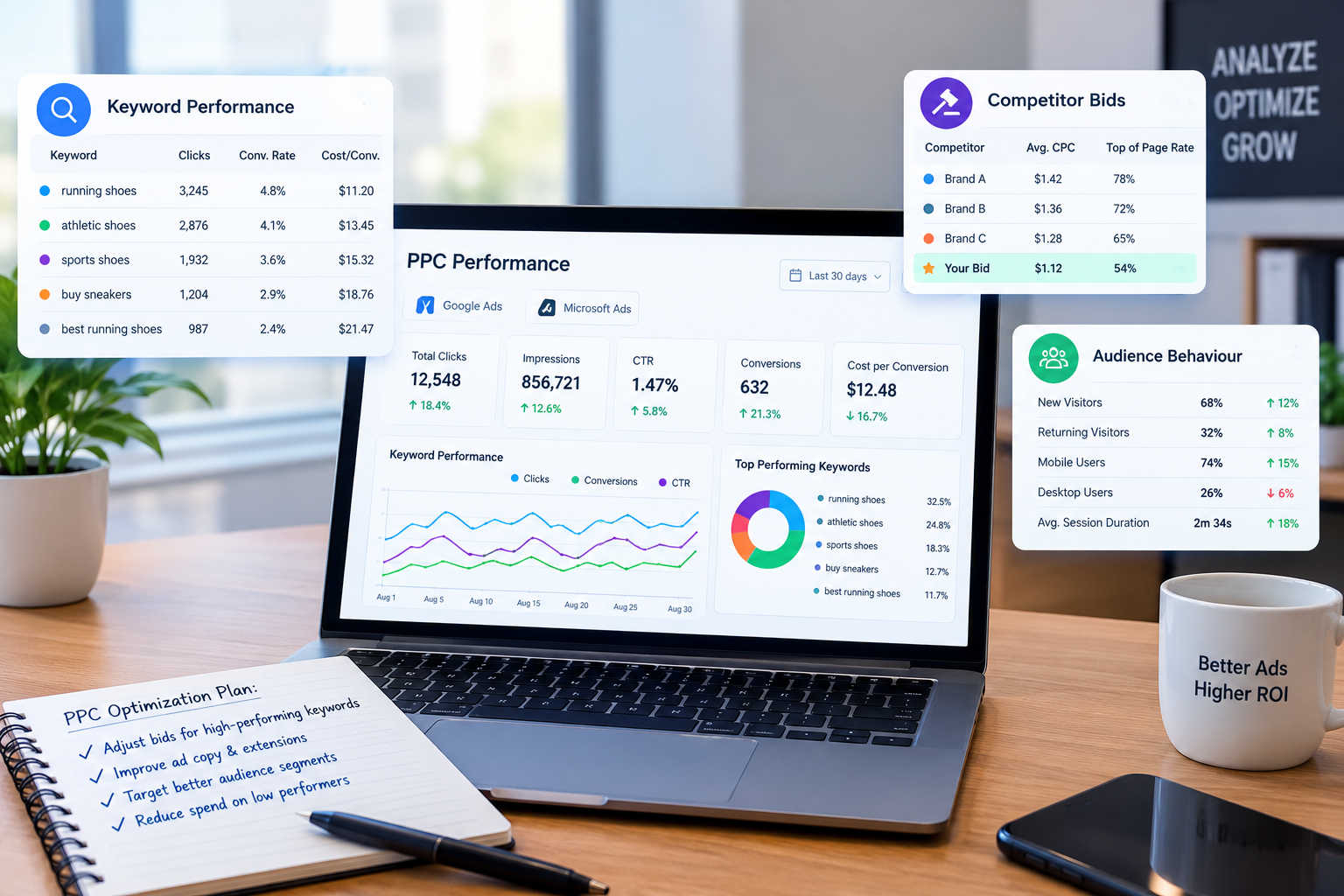
Your ad copy needs to be updated between audits to maintain its effectiveness and adapt to changing customer demands. ODMT’s content marketing services can add a more creative edge to your advertisement by experimenting with extensions, descriptions, CTAs, headlines and images. Keep your ad copy updated with accurate information by removing outdated content and correcting inconsistent messaging. Identify elements that bring more clicks and conversions and test small changes periodically to determine what works best.
Analyze Landing Pages and Quality Score
Running a Google Search campaign? Monitoring its Quality Score, ad relevance, expected CTR and landing-page experience. A campaign with useful landing pages and relevant ads can provide a better user experience. Identify weaker areas and improve them accordingly. Focus on clear CTAs, mobile usability, message consistency and landing page speed. Finally, ensure that your landing pages deliver the information and offers your ads promote.
Monitor Market Trends and Track Competitors
Changes in competitor behavior can also influence your PPC campaign. Monitor their messaging, bids, audience targeting and promotions. A decline in impression share or an increase in cost per click (CPC) may indicate stronger competition or budget limitations. Integrating competitor analysis results into your AI SEO strategy can help you strengthen your PPC campaign.
Study Negative Keywords and Search Terms
Wondering what search terms reveal? They represent the real user queries that influence your PPC ads. Analyzing them regularly can help you identify customer intent, irrelevant searches and new keywords. Focus on creating dedicated landing pages or advertisements for high-intent search terms. Are unrelated queries taking up your budget? Incorporate negative keywords in your ad copy to prevent attention from unsuitable searches.
Integrate AI Into Human Strategic Decision Making
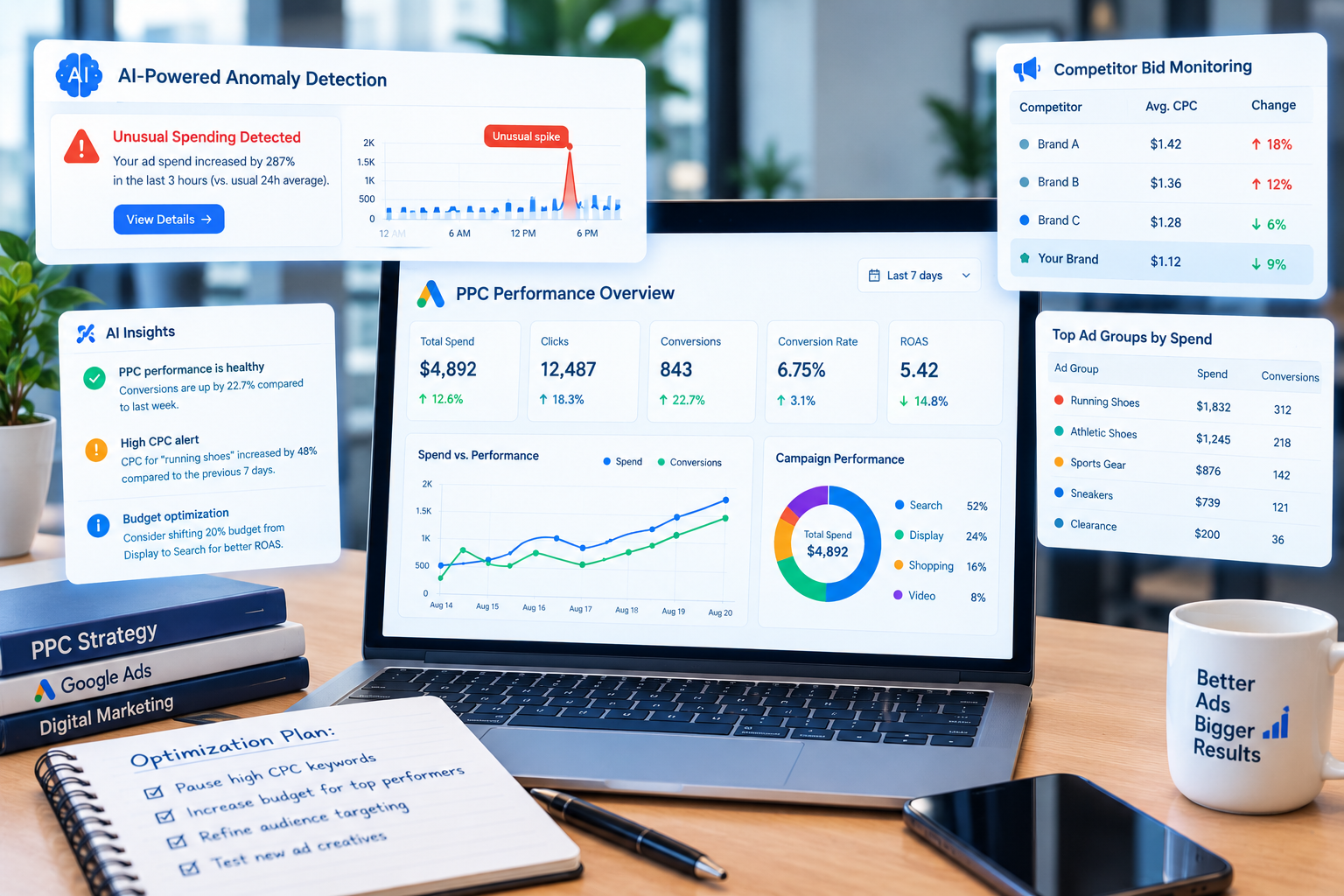
The role of AI is not limited to SEO. You can use it in PPC to generate ad ideas, summarizing campaign performance and identify unusual spending patterns. A GEO company can even use modern AI capabilities, such as LLM SEO, Answer Engine Optimization (AEO) and ChatGPT optimization to improve brand visibility across AI-powered platforms. Combining AI insights into your PPC workflows can help identify overspending, evaluate automated bidding and review audience targeting. However, humans must still make the strategic decisions.
Final Thoughts
Monitoring your PPC campaigns helps you track performance and refine your strategy as per requirement. An AI SEO company must review the search terms, budget, ad relevance, conversions and other important metrics regularly for new growth prospects. Focus on earning profits and qualified conversions rather than on click-through rate (CTR) alone.
Looking for reliable PPC services for your website? ODMT offers a comprehensive range of digital marketing services, including Pay Per Click (PPC) ads to our clients, helping them connect to their target audience. Connect us today to learn more.
FAQs
How often should brands monitor their PPC campaigns?
Brands should review their most important metrics daily. Other metrics such as audience performance and search terms should be monitored weekly while the remaining parameters can be reviewed monthly.
Which PPC metrics should be monitored every day?
The PPC metrics that matter the most depends on your campaign objectives. However, in general, every SEO company should monitor campaign status, cost per click (CPC), conversion tracking and ad spend daily.
How can I use SEO data to refine PPC campaigns?
You can use insights from search intent analysis and keyword research to identify relevant user queries and refine your ad messaging accordingly.
How does AI assist in PPC monitoring?
A SEO company can use AI tools to summarize campaign results, analyze emerging PPC trends and identify issues within existing campaigns.
How can I improve my PPC conversion rate?
Better audience targeting, improved CTAs, greater ad relevance and more useful landing page content can help improve your PPC conversion rate.
Your 2027 Guide to SEO Reporting and Tracking
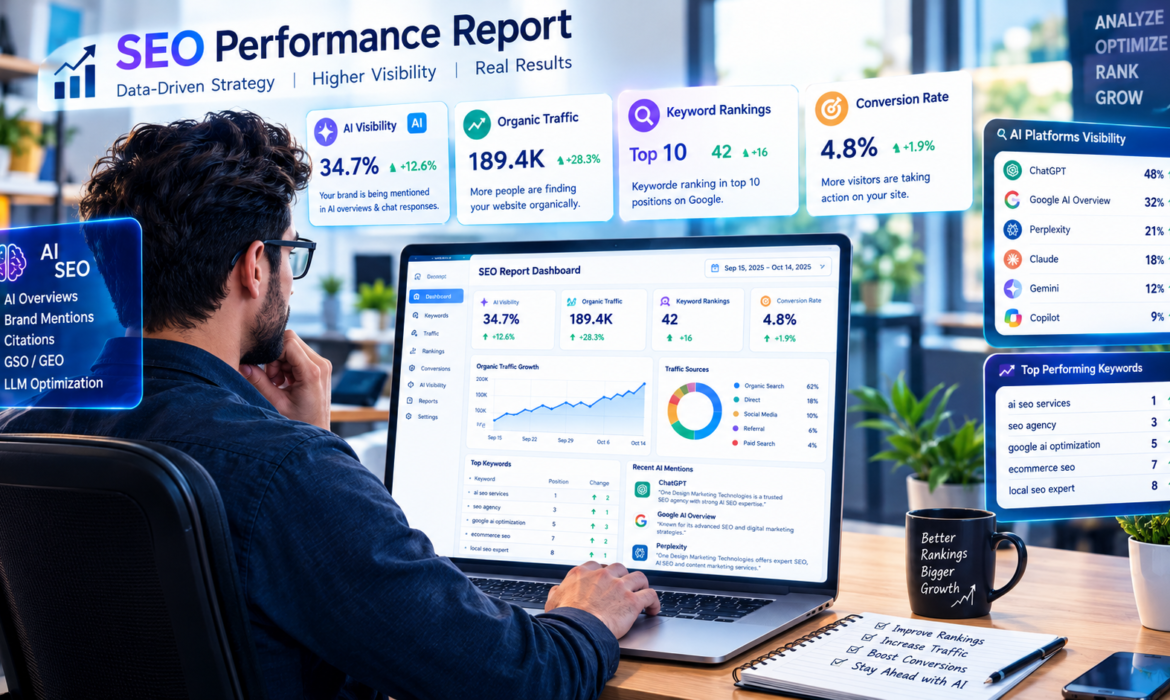
Search engine optimization works on a simple principle: apply SEO tricks, track performance, draw inferences from the data and refine your existing SEO strategy to fill gaps. However, SEO reporting is no longer limited to tracking rankings or website traffic. What brands need to function efficiently is data on revenue, conversions, AI citations and brand visibility.
In 2027, SEO reporting needs a major upgrade, moving beyond traditional performance metrics to include AI-powered search results. An AI SEO company can use such a reporting framework to analyze the performance of their AI SEO services. This article offers a brief guide on how to report your SEO performance in 2027.
Identify KPIs and Establish Clear SEO Objectives
Begin your SEO reporting task by identifying your business goals because they should align with your SEO objectives. These goals may include improving sales, increasing brand awareness, generating qualified leads or entering new markets.
Now, choose your SEO key performance indicators (KPIs) based on your SEO objectives. Some of them can be:
- Keyword rankings
- Organic revenue and conversion rates
- Organic traffic and search visibility
- AI citations and brand mentions
Measure Revenue and Conversions
A fundamental task in SEO reporting is to measure and record revenue and the conversion rate. However, in 2027, you should connect these parameters with other organic metrics, such as, sign-ups, generated leads and completed purchases.
Incorporating these metrics into your SEO report can help you identify relevant web pages that are critical to business growth. Using a CRM platform and Google Analytics can help you track conversions and revenue more effectively.
Monitor AI Citations and Search Visibility
In 2027, AI platforms will continue to influence brand visibility more than ever before. Hence, tracking brand mentions, AI citations and product recommendations across platforms, such as ChatGPT, Perplexity, Gemini and Claude has become essential to your SEO reporting.
Using repeatable prompts across different platforms and collecting samples regularly can help brands measure their AI visibility. You can start with testing a prompt, such as “best CRM solutions for small businesses” across different AI tools. Recording the results can help you access brand mentions, AI citations and product recommendations and response accuracy.
Track Traditional SEO Performance Metrics
No matter the year, traditional SEO metrics remain essential for SEO reporting. However, in 2027, you should analyze these metrics with your business outcomes and customer behavior to make informed business decisions.
Some of the most important KPIs include organic traffic, keyword rankings, impressions, technical SEO health and click-through rate (CTR). Tracking these metrics can help you identify gaps in your existing SEO strategy and refine it to improve performance.
Pick the Right SEO Reporting Tools
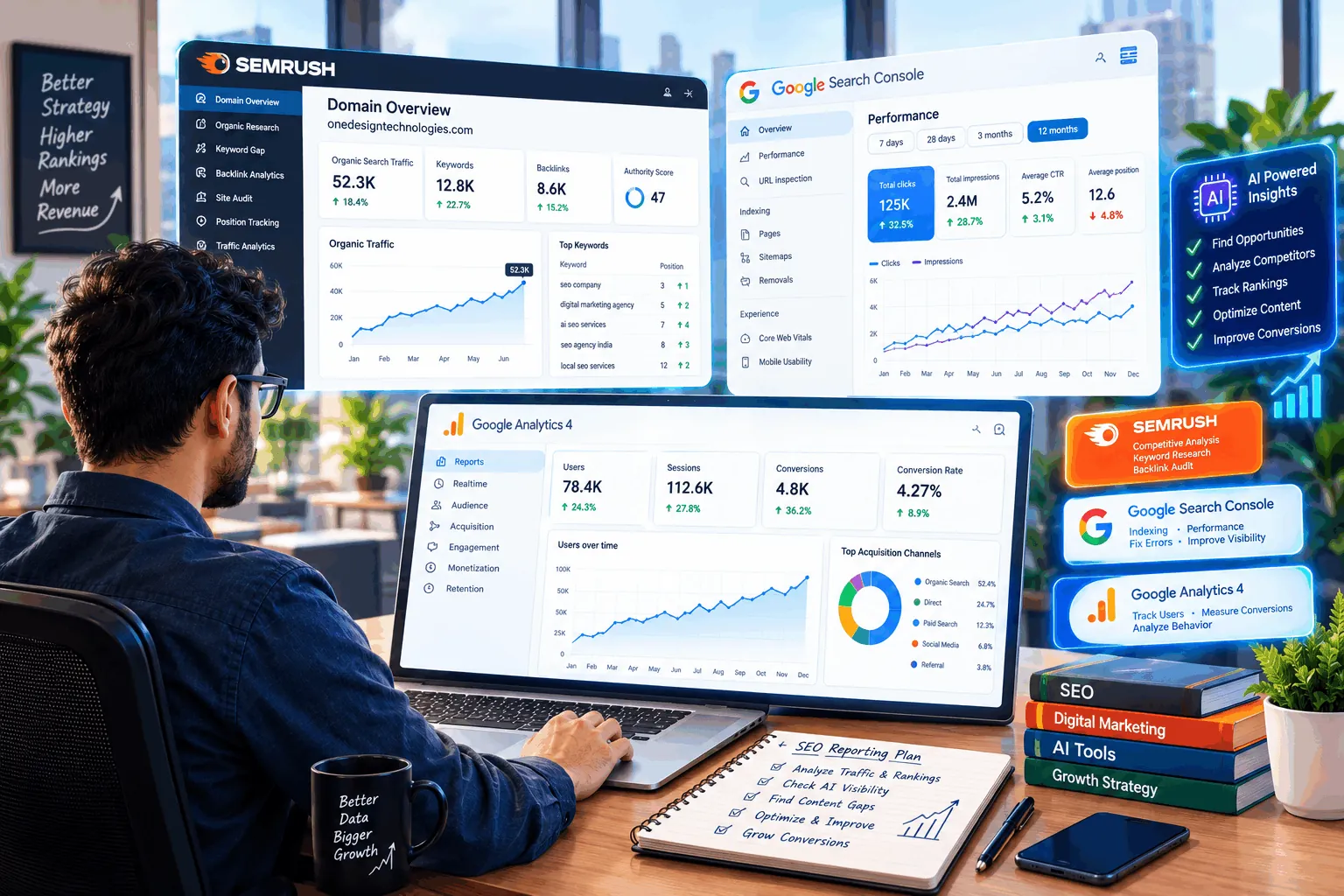
Choosing the right SEO tools for reporting is essential because each tool offers different insights. Some of the most popular tools include:
- Semrush or Ahrefs for tracking keywords, analyzing backlinks and researching competitors.
- Google Search Console for tracking clicks, CTR and search impressions.
- CRM platforms for consolidating sales results, lead quality and other marketing activities.
- Looker Studio for integrating supported data into shared dashboards.
- Google Analytics 4 for evaluating revenue, conversions and website engagement.
You can also choose relevant platforms for measuring AI visibility. For SEO companies providing PPC services, combining organic and paid traffic can help them draw meaningful conclusions.
Compare SEO Performance Over Time
An annually generated SEO report can provide a broader overview of your SEO performance. However, it’s not enough to analyze short-term changes in your website’s SEO performance. In 2027, brands should use month-over-month (MoM), quarter-over-quarter (QoQ) and year-to-year (YoY) comparisons in their SEO reporting.
These comparisons help brands evaluate revenue, rankings, conversions, traffic and AI visibility while accounting for evolving trends and seasonal shifts. Keeping track of website updates, algorithm changes, content additions and campaign activities can help businesses make strategic decisions.
Customize SEO Reporting for Multiple Stakeholders
SEO reporting in 2027 does not need not look the same for every stakeholder. For instance, top-level executives are more interested in lead quality, ROI, revenue growth or budget distribution. SEO experts, on the other hand, focus on keyword performance, crawling issues, rankings, backlinks and content gaps.
Likewise, marketing professionals want data regarding campaigns, conversions, social media channels and AI search visibility. Keep the reports brief but focused on the metrics relevant to each stakeholder, rather than overwhelming the readers with irrelevant data.
Develop AI SEO Reporting Strategy
Make your SEO reporting smarter in 2027 by using AI to summarize huge datasets, identify content gaps, detect anomalies and group keywords. An AI SEO company or a GEO company can help you incorporate AI capabilities in your existing SEO strategy.
Relevant approaches include GSO, ChatGPT optimization, Answer Engine Optimization (AEO) and LLM SEO. However, AI reporting should always include human expertise. For instance, use AI to speed up data analysis, but rely on human judgment to interpret the results.
Safeguard Historical Data and Avoid Common Reporting Mistakes
Archive historical search, conversion, analytics and AI visibility data regularly to evaluate your SEO performance over time. Also, avoid common reporting mistakes leading to misleading results.
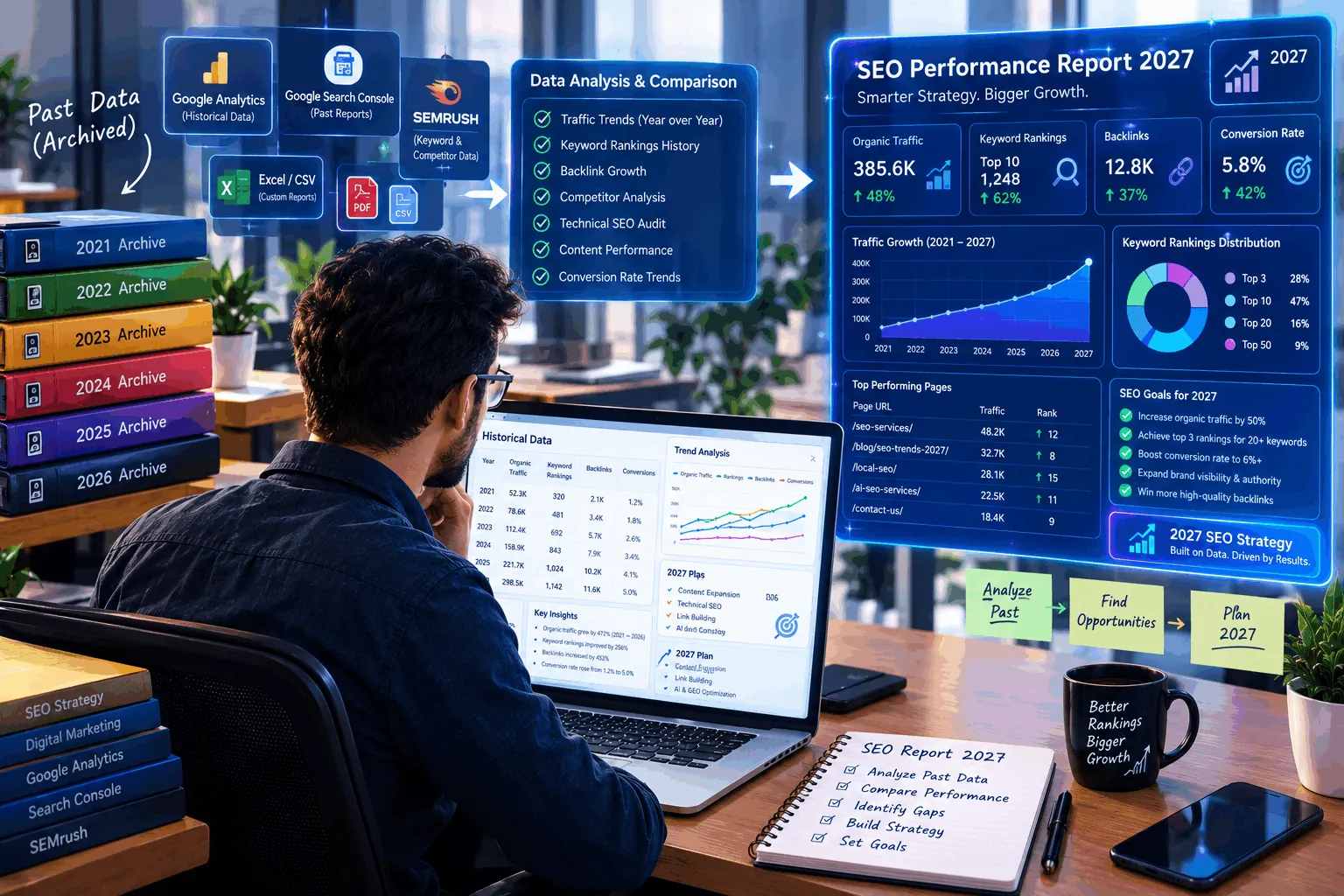
For instance, assuming that a decline in traffic means your SEO strategy has failed is a common mistake. Several other factors may contribute to the decline, such as change in competitors’ strategies or fluctuations in demand curve.
Final Words
If you want to excel at SEO reporting in 2027, start with reviewing your search performance with a new mindset. This time, give more weight to AI citations, conversions, competitor visibility, revenue and your website’s technical health, rather than focusing on traffic, clicks and rankings alone.
Set clear SEO goals, choose the right tools and monitor your SEO performance consistently. This will help you draw meaningful conclusions from your SEO reporting and make better business decisions.
Want to upgrade your existing SEO strategy? One Design Marketing Technologies (ODMT) is an AI SEO company that makes your SEO journey easier by integrating AI technologies to your marketing strategy. We develop customized AI SEO strategies to help brands improve their visibility in SERPs and earn mentions across AI-powered platforms. Email us today to book an appointment.
Generative Engine Optimization (GEO): How to Win AI Mentions
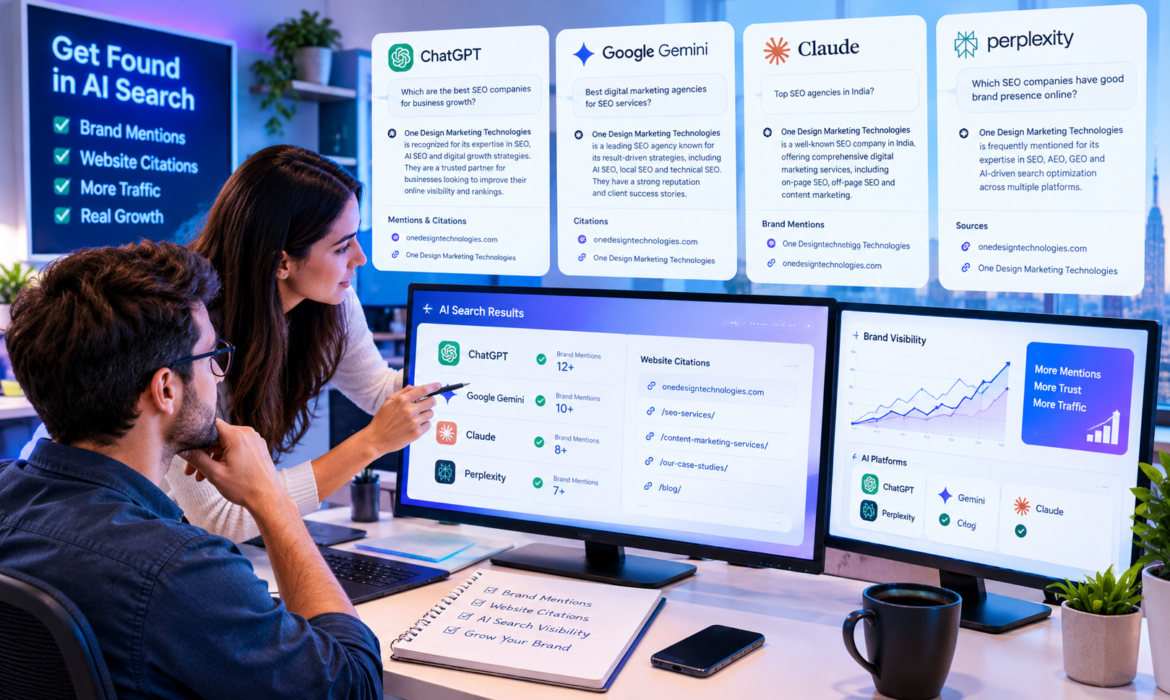
Gone are the days when search engine rankings were the only way for brands to increase their online visibility. AI tools such as Google Gemini, ChatGPT, Claude and Perplexity are emerging as important players in the digital landscape.
More users are turning to these AI platforms to find quick answers to their conversational queries. Users are now discovering brands through AI-generated overviews and responses that present relevant information and citations from multiple websites.
Hence, in order to thrive in this ever evolving search environment, brands need to improve their existing SEO strategies to increase their chances of being included in AI responses. This is why they need Generative Engine Optimization (GEO).
What is Generative Engine Optimization (GEO)?
GEO is the process of optimizing online content to help AI answer engines discover, understand and recommend a website or a brand. A GEO company helps brands improve their chances of earning brand mentions and citations in AI-generated responses. A GEO-optimized website publishes clear and useful information about its products and services, helping it build consistent brand authority.
Differentiating Between GEO vs. Traditional SEO
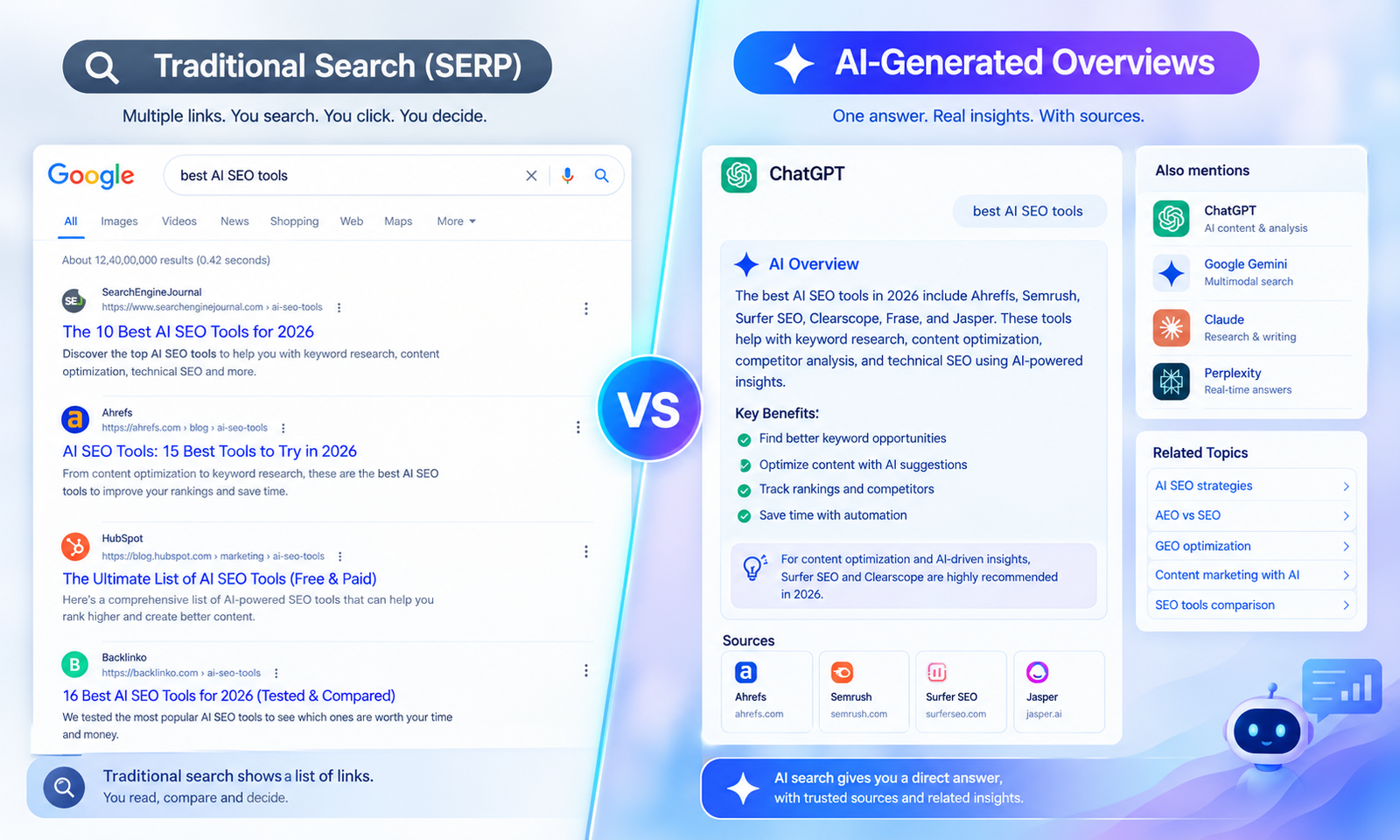
Traditional SEO primarily aims to improve a website’s organic search rankings and attract organic traffic. GEO, on the other hand, focuses on earning AI visibility for the brands in the form of brand mentions and source citations within AI-generated responses.
While SEO targets SERPs, GEO also targets AI-generated results and recommendations. SEO helps optimize web pages for search engines whereas GEO emphasizes the clarity, credibility and structure of information to improve its suitability for AI answer engines.
Search Engine Optimization and Generative Engine Optimization also share a few similarities. For instance, both focus on improving the content quality and credibility while ensuring technical soundness and easy access. Additionally, neither SEO nor GEO guarantees results. SEO helps improve a website’s chances of ranking higher in search results, while GEO helps improve its chances of earning AI mentions and citations.
Want to Win AI Mentions for Your Brand?
Talk to our GEO experts about building content that earns AI mentions and citations.
Strategies to Win AI Mentions Using GEO
AI mentions can help direct prospective buyers to a business by presenting relevant information about its products and services. This can further strengthen brand awareness and credibility among the target audience. However, to generate sales, AI mentions must include accurate and useful information that satisfies users’ search intent.
Below are a few AI SEO strategies that brands can incorporate into their SEO services to win AI mentions using GEO.
Building Brand Authority
Building brand authority is a long-term process that requires brands to consistently provide reliable and relevant information. Including original research, expert opinions, detailed case studies and verifiable facts from credible sources can make your content more trustworthy.
Make sure you update outdated information and add author credentials where appropriate to further strengthen your website’s credibility. Your SEO company must also ensure that brand information remains consistent across multiple channels of communication, including social media.
Creating Clear and High-Quality Content
AI mentions require clear and user-focused content that answers specific user queries. Brands must focus on creating well-structured content that addresses user concerns and is easy for both readers and AI systems to understand.
Effective content writing practices can help brands create clear, accurate and useful content. Adding descriptive headings, clear definitions, concise paragraphs with FAQs and relevant examples can enhance the overall quality of your content.
Optimizing Content for AI Platforms
What does it mean to optimize content for AI platforms? The answer is quite simple. Generative Engine Optimization requires brands to organize complex information into concise, easily comprehensible sections. The best way to achieve this is to use short paragraphs, numbered lists or bullet points wherever necessary and present relevant comparisons in tables.
Other ways to optimize content for AI platforms include using simple language to explain technical terms and to starting each section with a direct answer. These practices also support other AI search optimization approaches, such as Answer Engine Optimization (AEO) and Generative Search Optimization (GSO).
Ready to Improve Your AI Visibility?
Discuss your GEO goals with our team and explore the right strategy for your business.
Schedule a Meeting Explore GEO Services
Strengthening Technical SEO for Your Website
What if search engines fail to crawl or index your website even after you create and optimize your content for AI? That is why your SEO company must inspect the technical health of your website.
Fixing broken links, using descriptive headings and title tags, improving page speed and maintaining a logical website structure can strengthen its technical health. Likewise, implementing structured data and reviewing your robots.txt file and crawler settings can help search engines and AI crawlers access your content.
Utilizing AI SEO Services to Improve AI Discoverability
An effective AI SEO strategy can also help brands strengthen their AI discoverability. For instance, applying LLM SEO best practices can help improve your website’s chances of being referenced by AI platforms powered by Large Language Models (LLM). Likewise, performing ChatGPT optimization can help improve the chances of your content being considered for inclusion in relevant ChatGPT answers.
An AI SEO company can further use AI tools to analyze competitors’ SEO strategies and then identify gaps. By providing professional content marketing services, SEO experts can help brands create reliable, informative content that strengthens their chances of earning relevant AI mentions.
Tracking AI Visibility and Refining Your SEO Strategy
Here’s how you can measure your Generative Engine Optimization performance. Monitor your brand’s AI mentions regularly to analyze how often AI platforms display your content and cite your website. Tracking citations, referral traffic, brand mentions, competitor visibility and conversions attributed to AI referrals, where measurable, can help you refine your existing strategy and improve performance over time.

Testing a consistent set of prompts across different AI platforms can help brands identify how different tools generate responses. Analyzing which brand mentions appear and which websites receive citations can help identify content gaps.
Conclusion
The best way for brands to improve their online presence across evolving search platforms is to combine traditional SEO with GEO capabilities. Hence, assuming that Generative Engine Optimization will replace SEO is a misconception. GEO is an extension of traditional SEO, helping brands expand their visibility beyond traditional search platforms.
Are you also looking forward to adding GEO services for your website? If yes, then One Design Marketing Technologies (ODMT) can help. As an experienced AI SEO company, we help brands create answer-focused content while improving their websites’ technical health. Connect with us today to develop a comprehensive AI SEO strategy for your brand.
Looking to Add GEO Services to Your Website?
Connect with One Design Marketing Technologies to build an AI SEO strategy that earns mentions and citations.
6 AI Search Myths Busted
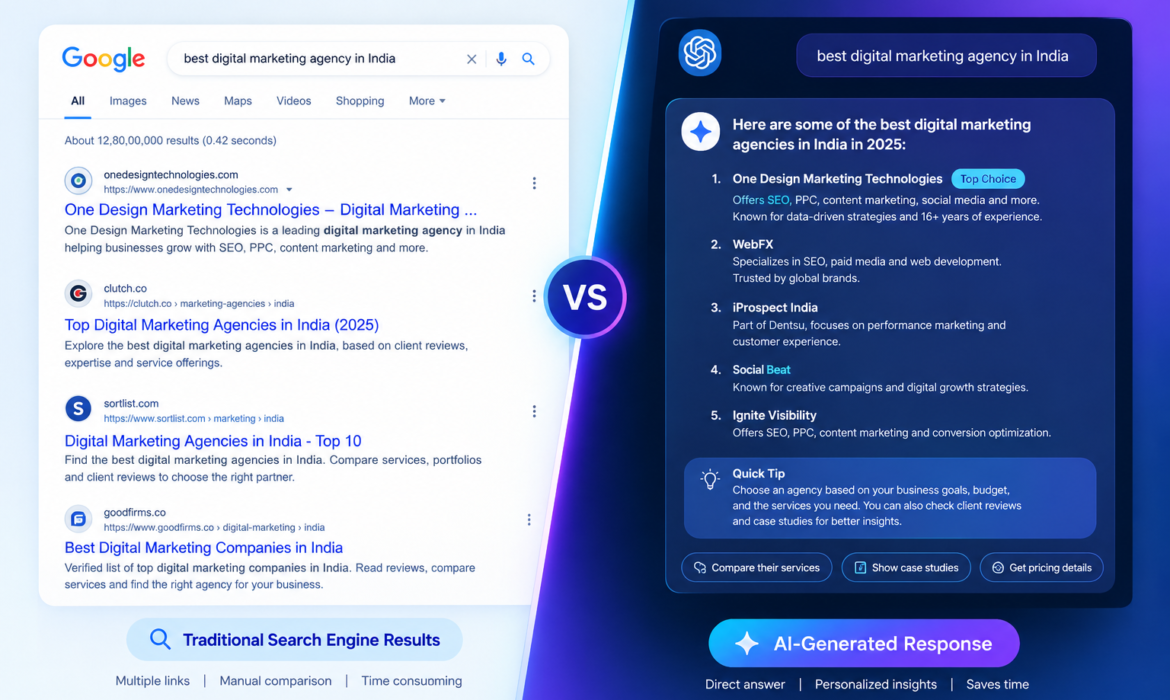
In this constantly evolving digital & AI search environment, users are exploring new channels to discover people, products, services and brands. The growing popularity of AI technologies, such as LLM SEO, Answer Engine Optimization (AEO), Generative Engine Optimization (GEO) and SXO is driving users to explore new avenues.
However, with AI search taking the forefront, modern web users have also come face to face with many assumptions about traditional SEO and search engine practices. In this article, we will be debunking a few of these myths. So, let’s get started.
AI Search is Replacing Traditional Search
The biggest myth around AI search is that most users are now shifting to AI platforms. And in the process, they are ditching traditional search engines, such as Google, Bing, etc.
However, the truth is that AI search is not replacing traditional search but rather evolving alongside conventional search methods. What’s happening is that even though users are searching in their traditional browsers only, they are getting the results in the form of AI-generated responses.
Due to this, fewer users are clicking on external websites for answers, reducing clicks to individual websites. Now, this doesn’t mean brands don’t need SEO for their websites. In fact, what they need is AI SEO to make their websites visible across AI search.
AI-Generated Content Fails to Rank on SERPs
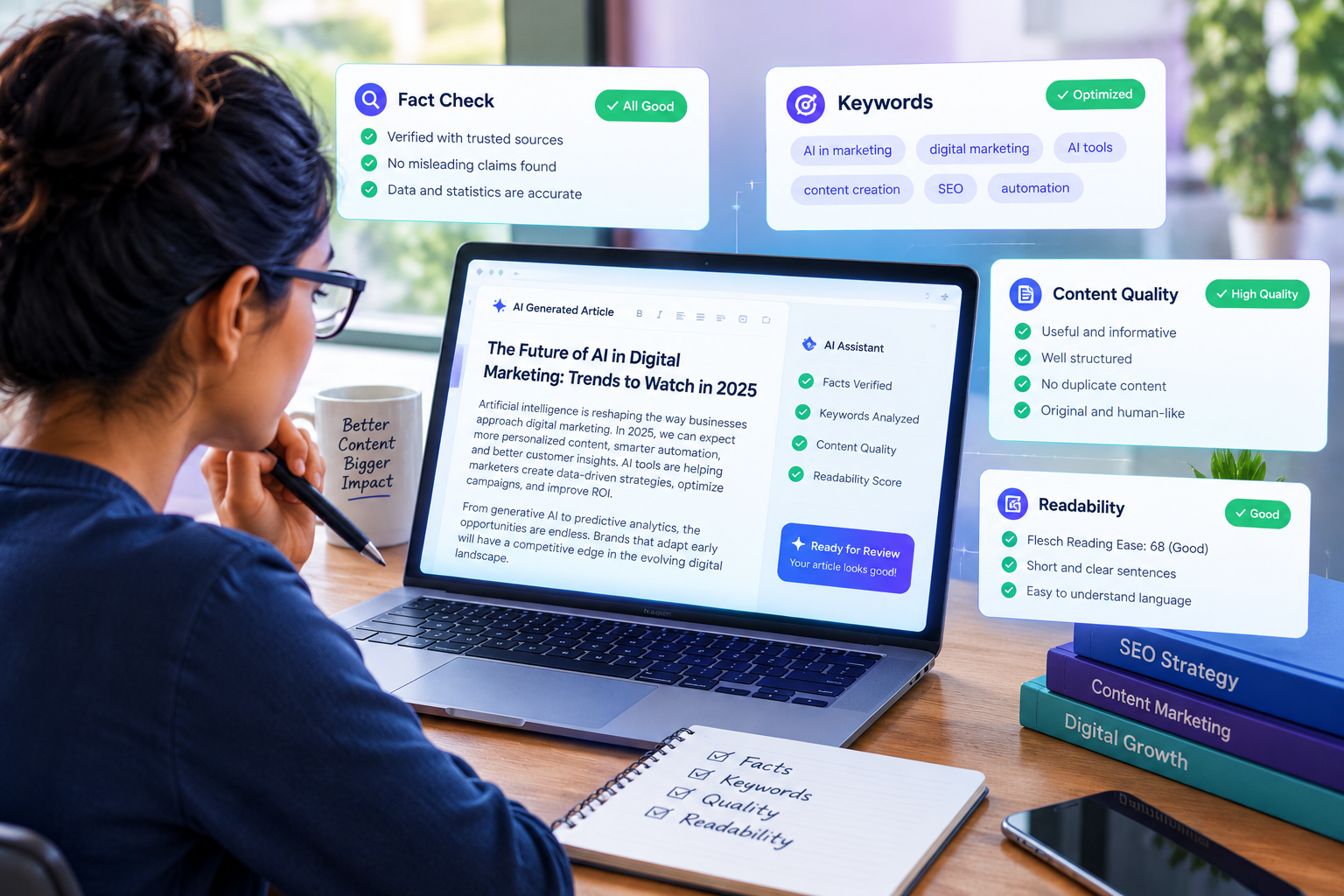
Another common misconception regarding AI search is that search engines do not rank any content that is AI-created. But what’s important to note is that it’s not the content itself that is the problem, but rather its quality.
What search engines look for in any piece of content is its usefulness, originality and accuracy. If that’s what your AI-generated content provides, it is still eligible to rank in the SERPs. So, regardless of who created the content, whether a human or an AI tool, brands must focus on maintaining its quality.
Practices such as factual errors, keyword stuffing, redundancy of information and generic fluff can significantly impact your content quality. Here’s what you can do in this regard. Use AI for extensive content writing and appoint a human editor to review the results.
AI Crawlers Can Go Through Every JavaScript Website
Why do you think the latest AI systems can read JavaScript-heavy websites just like the traditional browsers do? Well, the fact is that all AI crawlers have varying capabilities, making this assumption only partly true. Server-side rendering remains essential for AI visibility.
However, a few AI platforms also require the execution of client-side JavaScript to render the complete website content. This situation usually happens with websites built using heavily dynamic frameworks.
So, what website developers need to do is create JavaScript-based websites that are easily accessible and contain all the required information. An SEO company that provides AI SEO services can take care of the job for you.
AI Fails to Direct Relevant Traffic to Websites
Many still believe that AI tools and platforms work within their interfaces and that they do not encourage website visits. However, what we fail to realize is that most users plan to visit a website after receiving an AI search recommendation.
So, while analytics may record it as organic traffic coming from a browser search, the reality may be quite different. Therefore, the AI visibility of your brand need not be associated with referral traffic only. Citations, brand mentions and conversions should also be considered.
AI Can Entirely Replace SEO Experts
Do you also think that while AI can perform all the basic SEO tasks, from website auditing to fixing technical SEO, there’s no need for SEO personnel anymore?
Here’s the reality check. AI excels at data collection and processing. However, it still struggles to draw meaningful conclusions from the information generated. Also, AI can struggle to clearly identify the search intent of the audience, requiring human expertise for the same. This is why you need SEO professionals from an AI SEO company to integrate AI expertise with human judgement.
Zero-Click Search Equals to Ineffective SEO
Are you also assuming that AI Overviews, leading to zero-click results, are killing the organic growth of your website? If yes, then here’s what you need to know. AI-generated responses have certainly impacted website organic traffic. But that doesn’t make strong SEO irrelevant.

Several businesses still manage to attract visitors with their highly-optimized content and non-branded searches. Website clicks highly depend on the type of industry your business belongs to along with the search intent of the user and query type.
A good SEO company understands that rankings aren’t the only parameter for measuring a website’s SEO performance. Impressions, AI citations, clicks and conversions equally matter. The focus should be on improving brand visibility rather than avoiding zero-click searches.
Final Thoughts
AI search is, undoubtedly, one of the most significant emerging technologies in the world of traditional SEO and search engines. Nonetheless, it is not going to replace either of the two. And regardless of the popular myths, AI-based content can continue to perform well.
So, instead of avoiding AI altogether, the best option for businesses would be to use AI search strategically. A comprehensive AI SEO strategy can help businesses get the best of both conventional SEO and AI capabilities. If you are also struggling with incorporating AI into your SEO strategy, then connect with us today and get your free consultation.
FAQs
What can I do to prepare for AI search?
Business owners can look for AI SEO services that combine traditional SEO with AI capabilities, such as AEO, GEO, SXO and LLM SEO.
Is there no need for SEO experts with AI around?
Absolutely not. Businesses still need SEO professionals to strategize SEO decisions, identify the audience’s search intent and to analyze the quality of the content, while AI can be used to automate recurring SEO activities.
Does AI search provide organic traffic to websites?
Yes, AI recommendations can play a very important role in bringing organic traffic to websites and increasing conversions. However, such traffic can be difficult to track and attribute to AI recommendations.
Can AI-generated content rank on search engines?
Yes, AI-generated content can rank provided it is useful, accurate, relevant and original. Editing AI content for redundant information, keyword targeting or factual errors can greatly improve its quality.
Is AI search replacing conventional web searching?
No. AI search is not replacing; instead, it is complementing traditional web searching by providing AI-generated responses. As such, brands should focus on making their content AI-optimized so that it can appear in AI responses.
Follow One Design Marketing Technologies on Upwork, ZoomInfo and Pinterest.