The Role of AI-driven Local SEO in Assisting USA Businesses to Win Google SGE
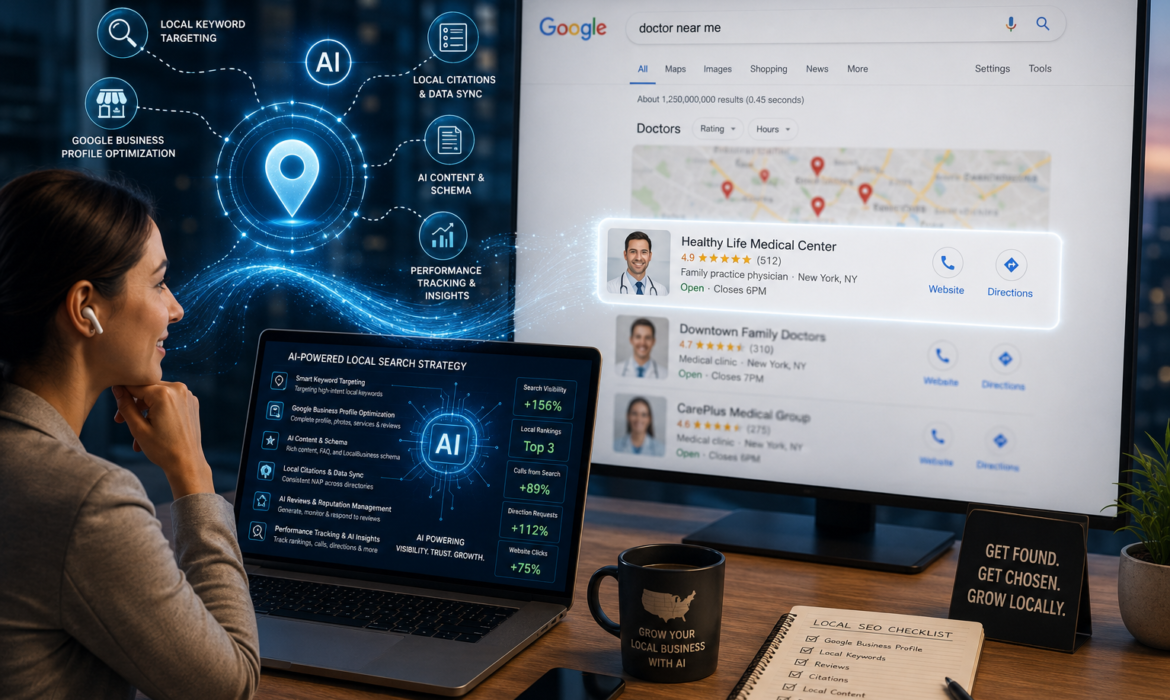
Google search is undergoing a dramatic shift as artificial intelligence is becoming a bigger part of how people discover local businesses. In the past, a location based query would mainly return traditional blue link results for the user. Today, Google’s AI-enhanced search experiences can summarize what’s out there, compare options and give direct recommendations.
Google initially called this experience Search Generative Experience (SGE). However, technology has now grown into Google’s wider AI search and AI Overviews experience. For USA companies, this change opens up a new opportunity to be seen by users even before they click on traditional search results. AI-driven local SEO helps businesses understand search intent, improve local relevance, organize information and create useful content that AI is able to reliably interpret.
The Shift From Traditional Local Search to AI Search
Traditional local SEO was about rankings, keywords, backlinks, Google Business Profile optimization and proximity. These factors still matter, but AI search adds a whole new level of complexity to the mix. Search engines are increasingly being asked to know what a business does, where it does it, who it serves and why it should be recommended.
AI-driven local SEO addresses this broader need with a combination of classic optimization, structured data, semantic relevance, customer behavior and content quality. Instead of just optimizing only for phrases such as “best dentist in Chicago,” businesses need content that answers related questions organically. What do the services do? Which neighborhoods are included? What makes us unique? All in all, clear answers provide artificial intelligence systems with more robust signals to evaluate local businesses.
Using AI to Understand Local Search Intent
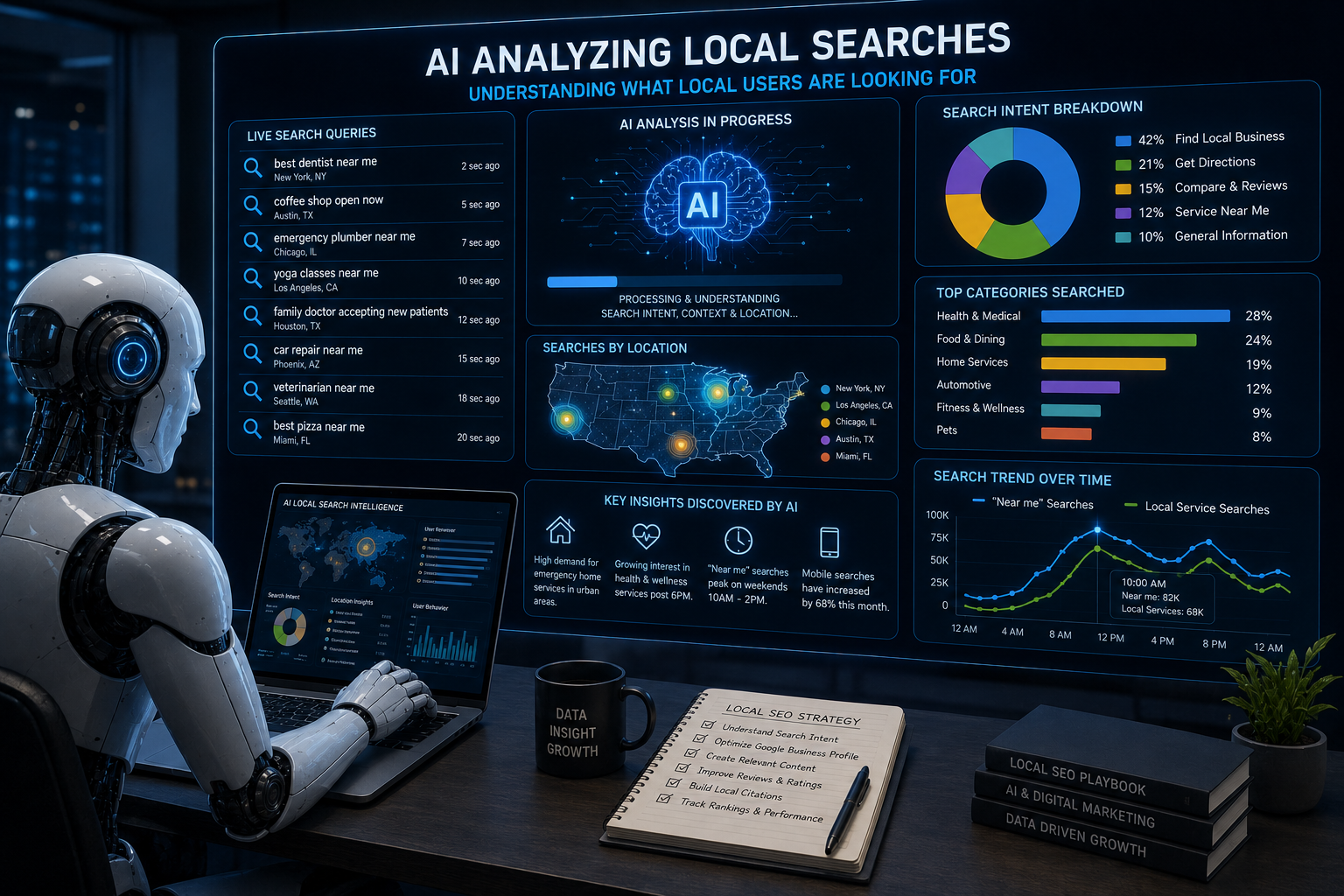
One of the biggest benefits of AI-driven local SEO lies in its ability to analyze search intent beyond exact keyword matches. Someone searching for “how much does plumbing repair cost in Texas?” has a different need than someone searching for “emergency plumber near me.” Both searches involve the word “plumbing,” yet their expectations are completely different.
AI is able to detect relationships between search queries, questions from customers, competitor content and local trends. These insights can help businesses develop content that actually meets customer needs, rather than just regurgitating the same keywords over and over again. Also, this approach supports conversational searches, which are becoming more important as users ask longer, more specific questions and expect direct, useful answers.
Strengthening Google Business Profile Signals With AI
The significance of a well-optimized Google Business Profile still stands for businesses seeking to reach customers in specific American cities, towns and neighborhoods. But maintaining up-to-date information takes a little more than just adding a business description and a few photographs. AI-driven local SEO is helpful for businesses in identifying gaps in their profile, keeping an eye on customer reviews, monitoring common questions and finding ways to better improve their profile.
Business categories, service descriptions, hours of operation, locations, attributes and frequently asked questions should be consistent across key platforms. Reviews deserve special attention, since they show how customers tell about real experiences. Knowing these patterns can help companies craft their offerings and create content that speaks with a real customer voice.
Creating Content that AI Search Can Understand & Trust
For visibility in AI-powered search, you need content that is genuinely useful, not just content built to appease an algorithm. AI-driven local SEO encourages businesses to build clear, specific and trustworthy resources that answer the questions customers are asking. For example, a roofing company could publish content on storm damage inspections, local roofing regulations, seasonal maintenance and repair timelines.
These topics provide useful context around its core services while naturally demonstrating local expertise. Content should also include relevant locations, service areas, supporting facts and clear explanations without unnecessary keyword repetition. When information is organized logically, AI systems can understand relationships between topics, services, locations and businesses more effectively.

Strong Local Entities and Consistent Business Information
AI search relies heavily on understanding entities and how they relate to one another. A business should never have a single name on the internet. Google Business Profile, directories, review sites, social profiles and other mentions should be saying the same thing on its website. AI-driven local SEO helps make these connections by keeping business names, addresses, phone numbers, services, locations and descriptions accurate across relevant sources.
Search engines can use local schema markup to understand business data in a structured way and provide more context. The goal is to make it easier for search engines to understand precisely who the business is, what it does, where it does business and who it does business with.
Using Customer Reviews as AI Search Signals
Customer reviews can be a useful source of information for potential buyers and for AI-powered search systems. Reviews naturally include descriptions of service, location, experience, staff interaction and particular customer needs. AI-driven local SEO can evaluate these conversations to help businesses identify common themes and understand how customers perceive their brand.
Frequent references to “same-day service” or “friendly staff” could indicate strengths to focus on in website content and business profiles. Never write fake reviews or try to influence feedback from customers. Instead, they should be consistent in delivering good experiences, encouraging genuine reviews, responding professionally and using legitimate feedback to improve not only their customer service but also their digital presence.

AI Search Visibility Beyond Traditional Rankings
Traditional keyword rankings might not be enough to get the full picture of local search performance any longer. A business may rank well across multiple keywords but have limited visibility in AI-generated answers or recommendations. Therefore, AI-driven local SEO requires more comprehensive measurement.
Moreover, businesses should track branded searches, local organic traffic, Google Business Profile activity, calls, directions requests, review growth, feature visibility and conversions. They can see which questions are driving traffic to their website and whether their content is answering those questions well. Over time, these insights show if optimization efforts are helping real visibility. Ultimately, the aim shouldn’t be to chase rankings, but to become a reliable, recognizable and useful local resource.
Prepare Your Business for the Future of Local Search
Google’s AI-powered search environment is reshaping the way people discover and vet businesses across the USA. For businesses that rely on a local customer base, these developments can’t be dismissed as some far-off trend. AI-driven local SEO is a practical way to adapt by combining good local foundations with valuable content, structured data, customer insights and consistent business signals.
This is not about impacting results created by AI. The business must be one that search engines understand and that customers trust. As AI continues to influence search experiences, businesses that build real local authority now will be best placed to gain visibility, attract qualified customers and compete in a more intelligent search environment.
Explore Our Digital Marketing Services
Our Core Services
AI SEO Services
SEO by Location
SEO by Industry
Law Firm SEO Services
Healthcare SEO Services
Real Estate SEO Service
Dental SEO Services
Chiropractic SEO Services
HVAC SEO Services
Car Dealer SEO Services
Catering SEO Services
Fitness SEO Services
Gym Trainer SEO Services
Jewelry SEO Services
Limousine SEO Services
SEO for Luxury Travel
Insurance Agents SEO Services
Junk Removal SEO Services
Small Business SEO Services
Yoga Studio SEO Services