
How to Spot an Emerging Category in Search Data

Search behavior changes more quickly than most businesses even realize. Search data is often the first to reveal new products, ideas, technologies and consumer interests before they become obvious market trends. This makes search data a good source for identifying opportunities early on.
By understanding the emerging categories in search data, businesses can understand what people are starting to care about, even if they are small interests. Marketers can use search signals to identify growing demand and prepare their content, products and campaigns accordingly, instead of sitting back and waiting for a trend to take hold.
Why Search Data Reveals Emerging Categories Early
Search engines capture what people want to know, compare, buy or understand. When many users simultaneously begin searching for related terms, those searches can send an early signal of a shift in interest. A keyword nobody looks at today can be a major search term months down the road.
This is why emerging categories in search data should not be judged only by current search volume. A new category might have low volume compared to others because people are still discovering it. What’s important is if searches are growing steadily and if related queries are popping up around the same topic.
For example, imagine searches for a new type of sustainable packaging start appearing alongside terms such as pricing, suppliers, benefits and alternatives. Each keyword may have modest volume individually, but together they suggest that a broader category is forming.
Look for Growth, Not Just High Volume
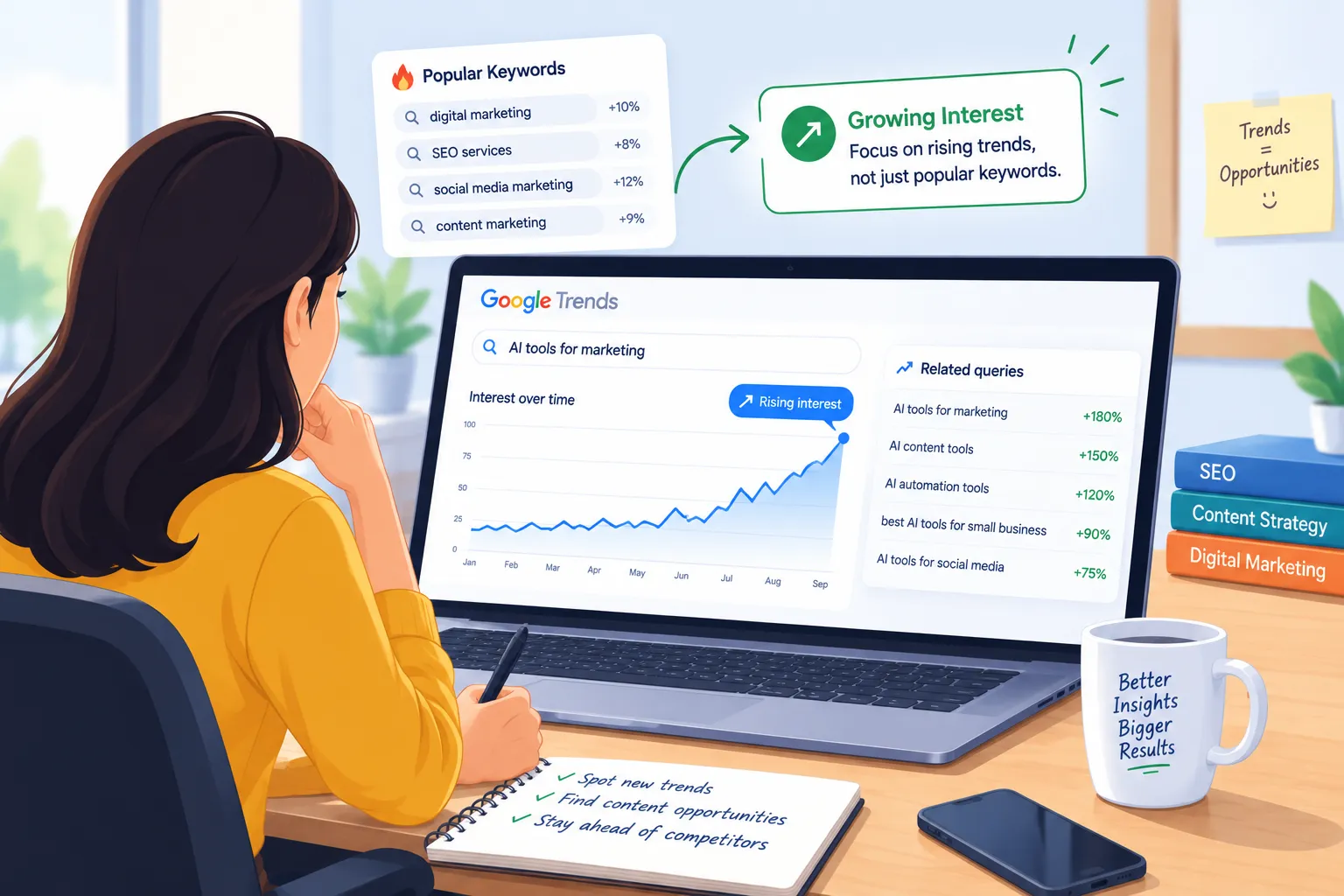
High search volume doesn’t mean a category is emerging. Topic has been established and can get millions of searches every month, but that doesn’t mean it’s a new opportunity. When you look at emerging categories in search data, look for acceleration. Look at search interest over several months or quarters and find topics that are consistently trending.
A good way to do this is to compare current search demand to past data. If a topic is consistently rising, not just spiking temporarily, it deserves closer attention. Seasonality should also be taken into account. There are natural times of year where there are more searches for gifts, holidays, travel or seasonality. A true emerging category generally grows broader and for a longer period of time.
Group Related Queries Together
A single keyword rarely tells the whole story. New categories tend to emerge when there are a number of related searches on the same topic. Suppose people start searching for “AI shopping assistant,” “AI product recommendations,” “personalized shopping A,” and “AI buying tools.” Individually, these terms may seem disconnected. Together, they could point to an increasing interest in a larger category.
Grouping related queries helps to identify emerging categories in search data. Look for common themes, repeated words and questions that tie together different keywords. You can group keywords into clusters based on products, problems, features, audiences or use cases. If more than one cluster is starting to grow on a particular subject, you might find a bigger market opportunity underneath.

Watch for New Search Language
New categories tend to breed new words. People may start to use unfamiliar phrases because they have found a product, technology, behavior or concept that didn’t have a common name before. This means language change becomes an important signal to track while tracking emerging categories in search data. Look for new word combinations, new popular modifiers and phrases that keep popping up in recent searches.
For example, users might begin with generic keywords such as “AI content tools.” Later they may come to use more specific language like ‘AI content optimization,’ ‘AI search visibility’ or ‘generative search optimization.’ More specific search language could indicate that users are getting more comfortable with a category and are moving beyond the initial discovery phase.
Pay Attention to Questions
Questions can show demand before traditional product searches are strong. People keep asking how something works or if it is worth buying or how it stacks up against other options they could be moving into a new category.
Search for question patterns such as “what is,” “how does,” “best,” “alternative,” “vs,” “cost,” “near me.” Such searches reveal how users are navigating the discovery process. Question-based searches are particularly useful for emerging categories in search data because they reveal intent. There may be more informational searches that could turn into commercial searches when people become more familiar with the topic.
Separate Trends From Temporary Spikes
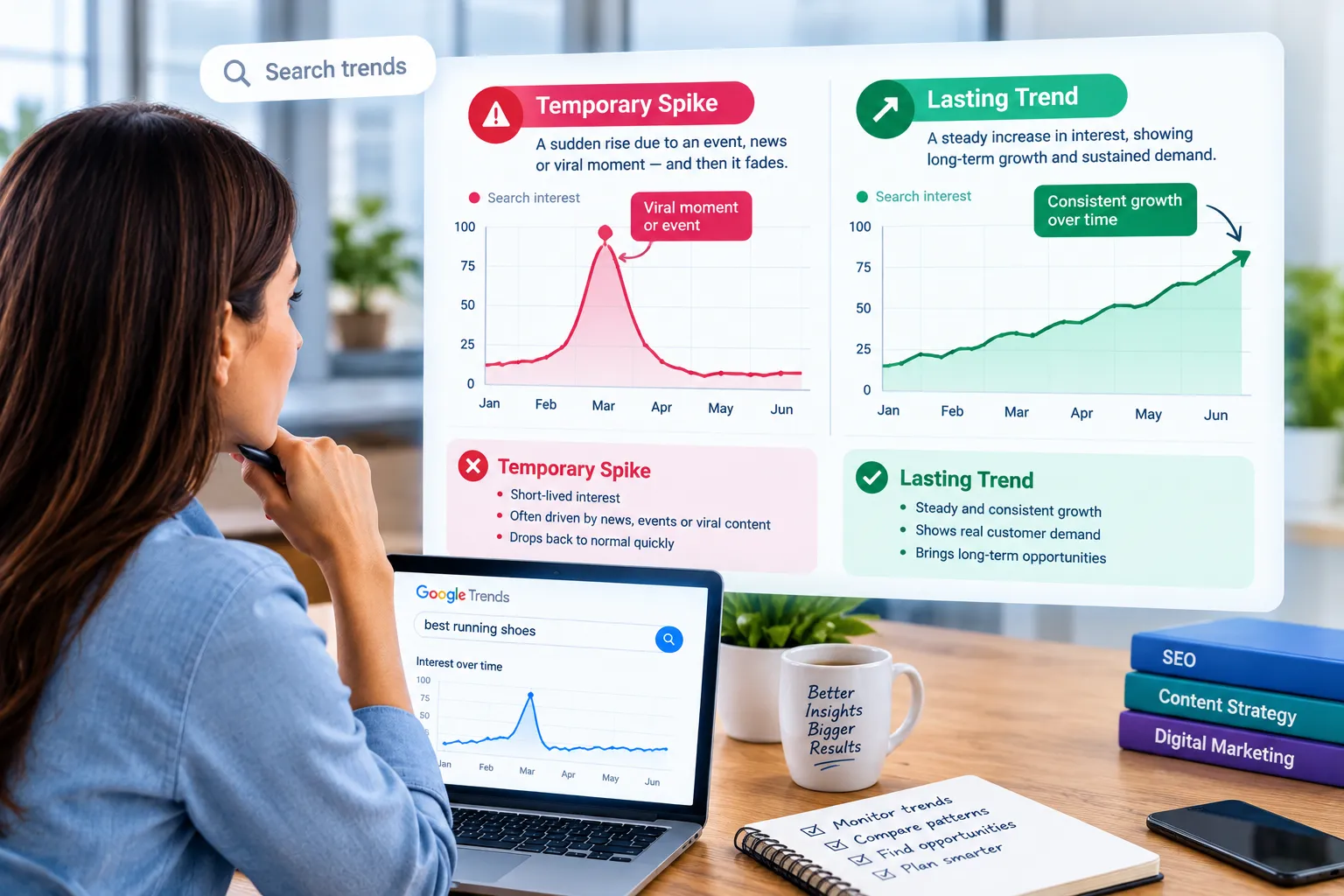
Not every spike in searches means a new category. News events, viral social media posts, celebrity mentions, product launches and controversies can all create dramatic but short-lived spikes. Don’t call something an emerging category until the interest in it spreads beyond the first event. Look at search patterns over a longer time period and compare with related queries.
You will often see several different kinds of searches on a real opportunity. From learning about the topic, people can jump to comparing products, checking prices, finding providers and searching for reviews. This progression provides marketers with better evidence that the emerging categories in search data are turning into established areas of interest rather than passing fads on the internet.
Connect Search Data With Business Context
Search data is more valuable when combined with information from other parts of the business. Customer questions, sales conversations, website activity, social media discussions and product feedback can help validate what search trends show. For example, search data may reveal greater interest in a particular product feature. If customer support teams are also getting questions on that feature, the signal is a lot stronger.
Therefore, businesses should avoid treating emerging categories in search data as isolated SEO opportunities. Search trends can expose shifts in customer needs that impact product development, positioning, content strategy and marketing campaigns.

Create Content Before the Category Becomes Crowded
One of the key benefits of being a first-mover into a new category is the opportunity to build awareness in the market ahead of the competition. Once you have found a promising area, you can develop useful educational content around it. That may be guides, comparison pages, FAQs, product explainers, research articles, videos or landing pages.
Early content establishes topical relevance for the brand as the category matures. Instead of competing for highly competitive keywords straight away, marketers are able to target the questions and subtopics that are starting to show up. This is where emerging categories in search data can help gain a strategic advantage. All in all, businesses that act early may have more time to build authority before search demand peaks.
Measure the Category as It Develops
Finding a potential category is only the beginning. Continue monitoring its search behavior to determine whether the opportunity is actually growing. Track keyword volume, query variations, rankings, impressions, click-through rates and the appearance of new related terms. Also, monitor whether commercial intent is increasing.
A category that moves from informational searches to product comparisons and transactional searches may be approaching a more mature stage. This progression can help businesses decide when to increase investment. Regular monitoring makes it easier to identify emerging categories in search data before competitors notice them. Search behavior is constantly changing. Thus, category discovery should be treated as an ongoing process rather than a one-time research project.
Turning Search Signals Into Opportunities
Search data can tell businesses much more than which keywords to target. It can reveal what people are beginning to think about, what problems they are trying to solve and which ideas may become important in the future. The key is to look beyond individual keywords. Study growth patterns, connect related queries, examine changing language, evaluate search intent and separate lasting demand from temporary spikes.
By consistently analyzing emerging categories in search data, businesses can identify opportunities earlier. The brands that pay attention to these early signals are better positioned to create relevant content, develop useful offerings and become trusted sources as new categories take shape.
Search trends do not predict the future perfectly. However, when interpreted carefully, they provide one of the clearest real-time windows into changing customer interests. And that can be a powerful advantage for any business willing to look closely.
From identifying emerging areas of customers’ interest to optimizing existing content on your website, One Design Marketing Technologies covers the entire spectrum of content and SEO services. Give us a call for a free consultation.