Early SEO Warning Signs of an Organic Traffic Decline
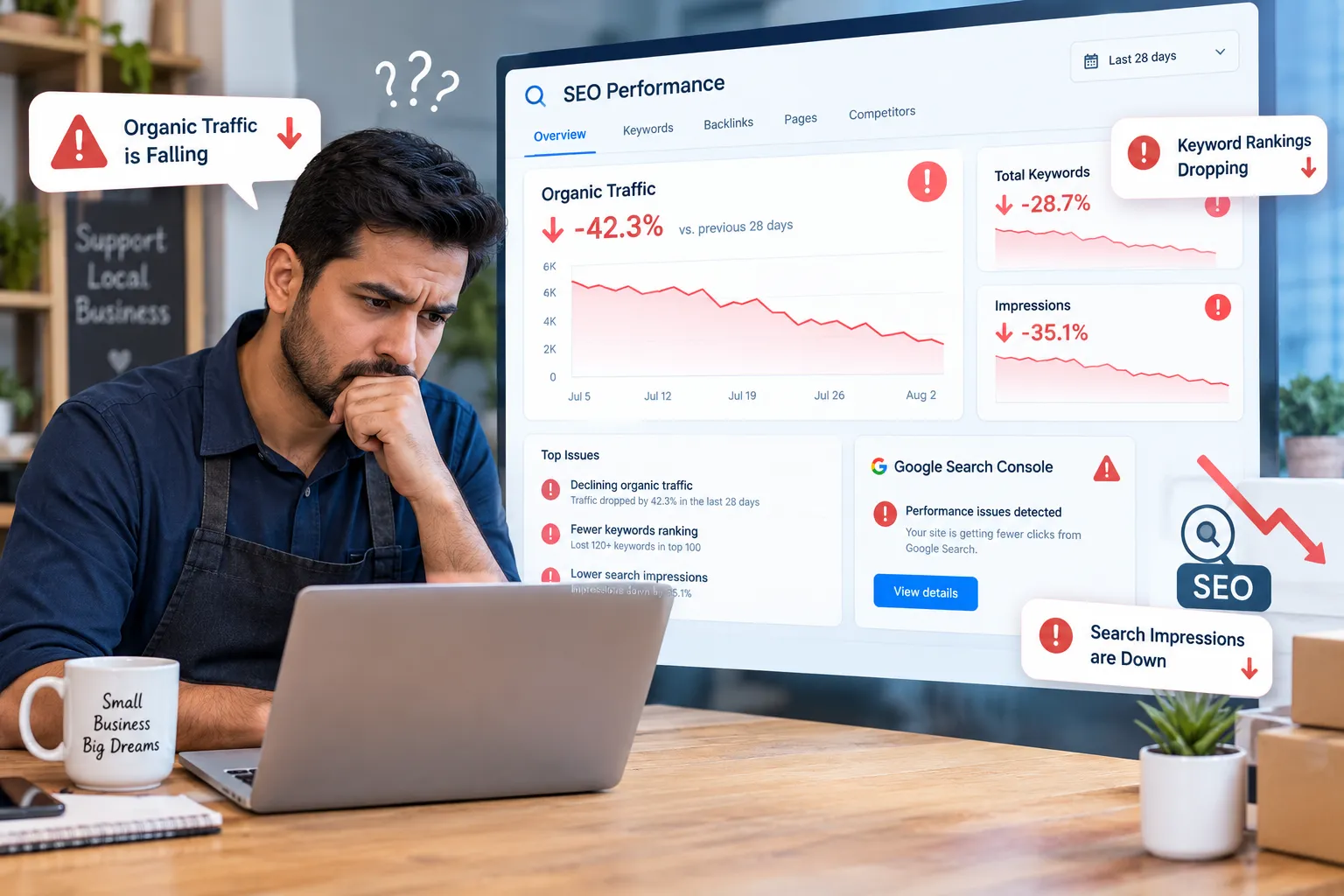
Your website impressions are surely rising but the CTR remains flat. Your organic traffic is rising but qualified leads are declining. Ever wondered why?
While it might not entirely be your fault, there’s no escape from declining organic traffic for more than one reason. Changing search engine guidelines and user search behavior along with competitors’ improving content strategies, can affect your online visibility.
But your SEO performance doesn’t drop overnight. Every website gives off some warning signs weeks or months before losing its footing. And what’s more alarming is that these signs mostly remain undetected in SEO performance reports, making early detection difficult.
Did you actually wait for the traffic data to show the decline while the warning signs actually existed much earlier? If yes, then this article will help you identify the early warning signs of an organic traffic fall.
Declining Rank of Primary Keywords
Moving one or two positions down for a focus keyword might not affect your business. But what if you have dropped four to five positions for a high-intent keyword? That’s where the problem arises.
What you can do is track the most important keywords every week. Start with keywords related to products, locations, services, transactional queries and then move on to high-performance long-tail keywords.
Falling Click-Through Rate
My website has gained 40% more impressions this month but received only 5% more clicks. Is this a positive result? Well, certainly not if the gap between visibility and organic traffic is so wide. Start by identifying the search queries leading to impression growth and then look for possible reasons behind lower clicks.
Some of these could be poor meta descriptions, weak title tags, increased competition or AI-generated responses directly answering the queries. You can also utilize Search Console data to compare impressions with clicks and other metrics.
Declining Actual Business Results
What if I see higher impressions, increased total traffic, more indexed pages and more ranking keywords in my SEO report but my business still struggles with lower sales, reduced conversion rates and fewer leads?
If that’s the case, then your SEO company is likely misguiding you. It’s time you looked for a reliable SEO services provider that offers customized SEO strategy with credible and measurable outcomes.
Ignoring the Content Decay
Did you notice any decline in visibility or rankings for your previously successful content? If yes, then your website is suffering from content decay, a warning sign that your individual pages or the entire website are losing organic traffic.
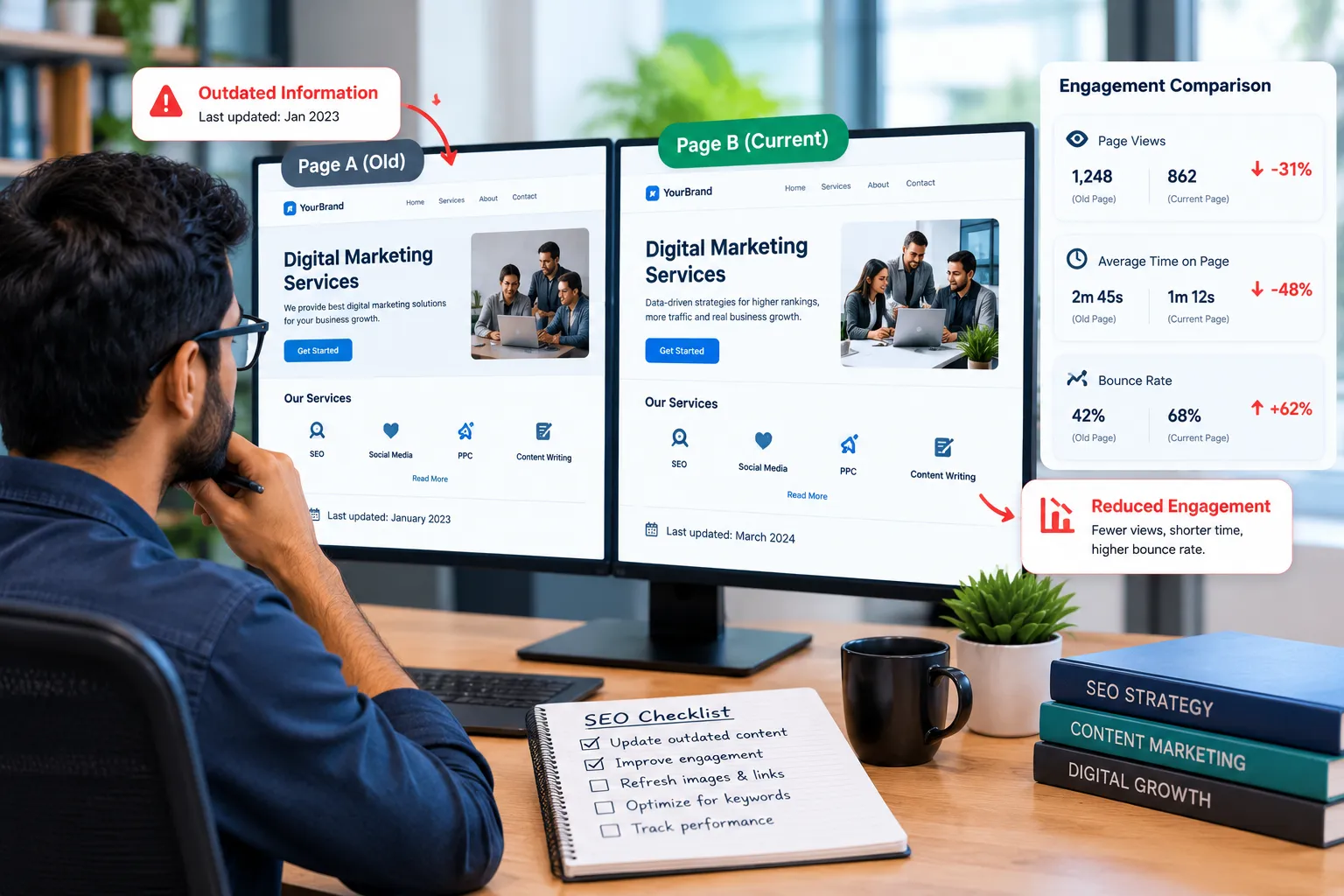
Content decay happens when your existing content contains outdated information, broken links and older examples, leading to falling clicks, reduced engagement and declining impressions. What’s the solution? You can refresh your website content, add new pages, improve internal linking or redirect pages for better performance.
Irrelevant Internal Linking
Most of the time, a strong internal linking network helps brands generate huge indirect organic traffic for other important pages. Check if your priority pages are getting more internal links from important commercial pages.
Look out for weak anchor text, orphan pages or competing pages with similar topics. Are there any blogs not linked to your product or service pages? Or, are there excessive links targeting low-value pages? If yes, then fix them first for better results.
Falling Search Experience
What if the users once visited your page but found it irrelevant? Would they return? Never, proving that user experience matters.
This is because poor navigation, low readability, slow page speed and poor content structure can dramatically reduce organic traffic in the long run. Search Experience Optimization (SXO) ensures that your website offers seamless user interface (UI) and user experience (UX).
Evolving Search Intent
Are your once informational keywords now showing product pages, videos, guides or forums? If yes, then it simply means these keywords are no longer aligned with their original search intent. It might lead to reduced SERP rankings and, in turn, a decline in your organic traffic.
Here’s what you can do. Review the search results for the focus keywords on a regular basis. Look out for increasing competition, more visual or transactional results and AI-generated responses.
Landing Pages Losing Visibility
Have you stopped updating your landing pages just because they have ranked well all this time? That’s one major reason why search engines may give an advantage to your competitors as they constantly evolve their websites for better content.
Review your existing product and service pages to find content gaps. You are likely to attract more organic traffic if you add customer reviews, original case studies, product demos, expert advice and FAQs to your pages, providing first-hand experience to your visitors.
Reduced Organic Leads
What if my organic traffic is growing but the qualified leads are actually declining? Is it a good sign? Certainly not! What’s the point of getting more visitors if only a small percentage of them are converting into customers?
Here, you first need to identify which landing pages are actually attracting more traffic and which are attracting less. For instance, are you getting more visitors to blogs but fewer product or service-page clicks? If yes, then start separating commercial traffic from informational traffic and then compare their performance metrics.
Ignoring AI-Powered Search
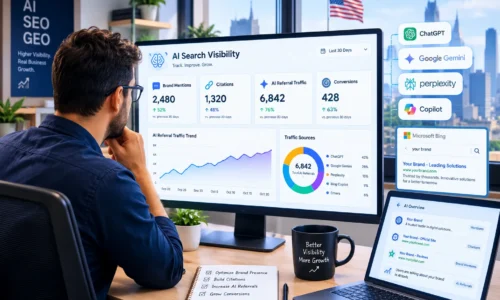
With AI-powered responses becoming more prominent alongside traditional search results, your website is likely to lose visibility if it fails to adapt to AI search.
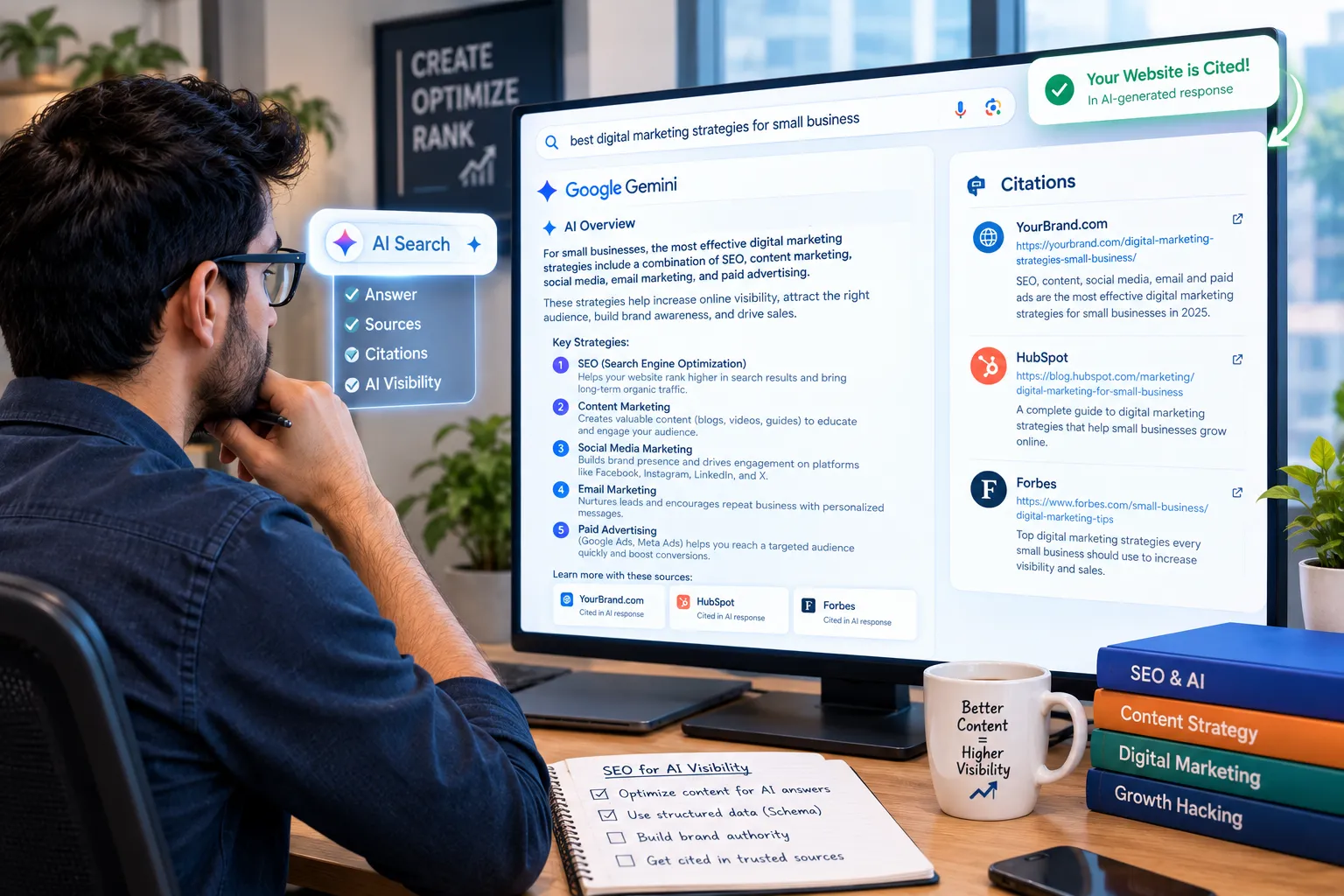
What you should do is optimize your website content for AI systems to make it more useful, credible and easier to understand. Besides, your website must incorporate modern-day AI strategies, such as GSO, LLM SEO, AEO, GEO and ChatGPT optimization to further improve its online visibility.
How Can I Identify the Warning Signs in Time?
You can do so easily by monitoring your website for the following indicators on a weekly, monthly and quarterly basis:
- Ranking URLs
- Impressions
- Organic clicks
- High-value landing pages
- Primary keyword positions
- Organic leads
- Competitor pages
- Conversion rates
- Content structure and quality
- Technical SEO
- AI search visibility
- Internal linking
- Search intent
Spotted a Warning Sign? Here’s What to Do Next
If you have already spotted one of the warning signs mentioned above, here’s what you should do.
- Identify what possibly led to reduced organic traffic. Find which pages or queries led to the change.
- Use PPC services, if necessary, to identify keywords that drive conversions, high-value landing pages or messages that boost engagement. This is another way to boost organic traffic
Conclusion
There could be many reasons behind declining organic traffic. The key to finding the right one at the right time is to look out for the warning signs. Don’t just get tempted by more impressions and higher rankings.
Regularly monitor competitor pages and change search behavior. Also, refresh landing pages from time to time and stick to relevant internal linking for improved organic traffic.
If you are also clueless about your website’s actual SEO health then we are here to help you. One Design Marketing Technologies (ODMT) offers customized SEO solutions to businesses of all types and sizes.
Our AI-powered SEO services and monitoring system help businesses stay competitive in today’s highly competitive digital environment. Book an appointment today for a free quotation.