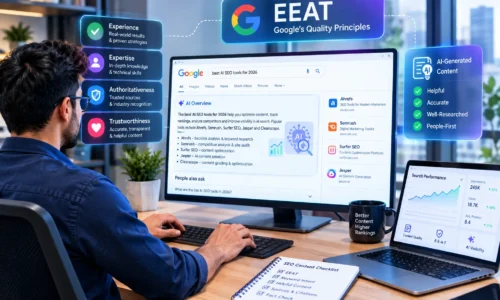
Step-by-Step AI SEO Guide for Growing AI Citations And Visibility in 2026
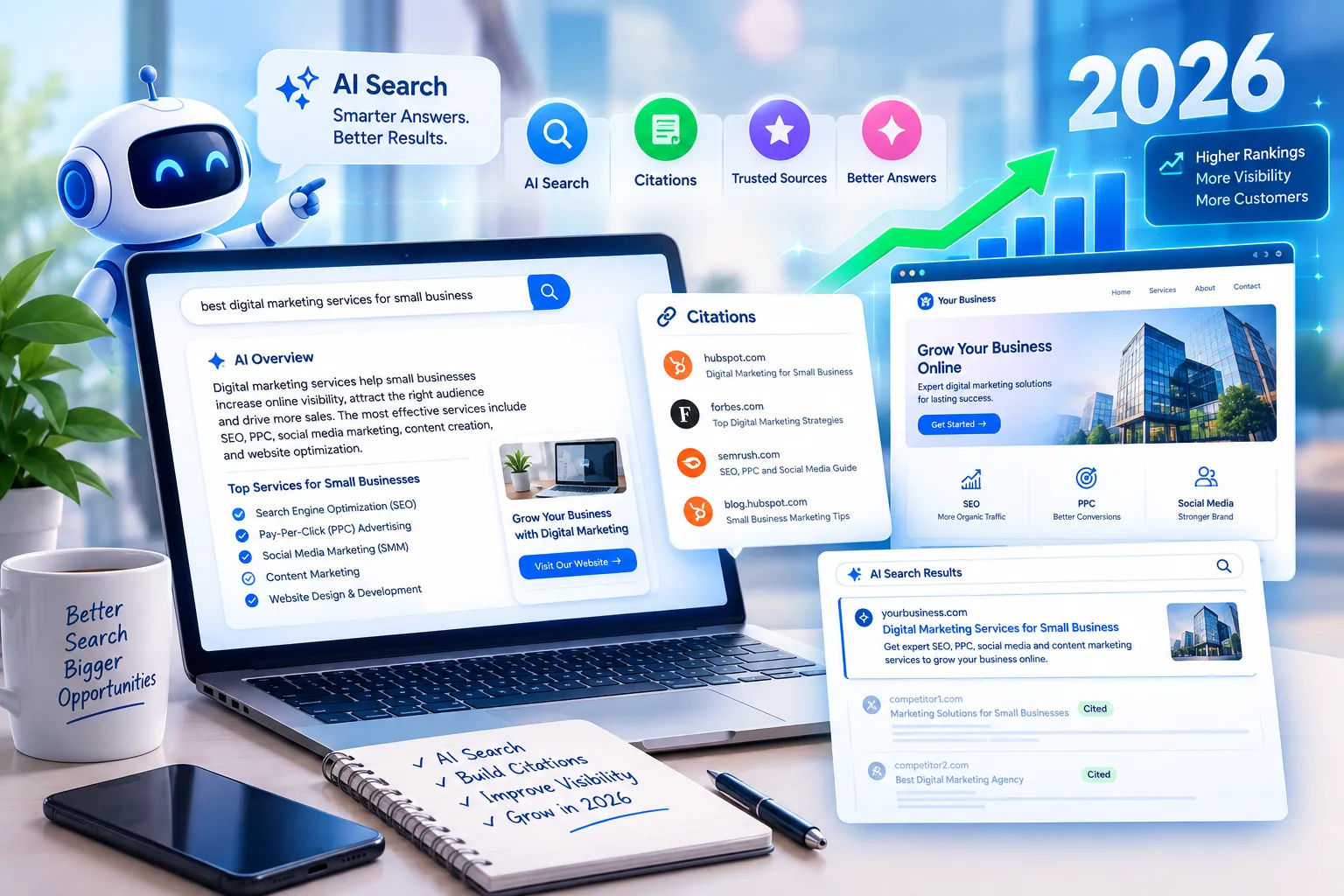
Search is not limited to traditional search engines. By 2026, people are increasingly using ChatGPT, Google AI Overviews, Perplexity and other AI-based platforms to get answers, recommendations and research. This makes AI SEO a key component of modern search strategy.
Now businesses need to optimize for AI citations, brand mentions and visibility in generated answers, as well as rankings. In this guide, we will walk you through practical steps for improving your AI search optimization, strengthening your digital authority and increainge your chances of being referenced by AI platforms. So, let’s get started, shall we?
What Is AI SEO?
AI SEO is the process of optimizing a website, content ecosystem and brand presence to be better understood and potentially referenced by AI-powered search and answer engines. The classic SEO approach focuses on improving your ranking for a given query. AI SEO takes a broader approach. Instead of asking only, “How can this page rank?”, marketers also need to ask:
- Is this content understandable to artificial intelligence systems?
- Is the brand knowledgeable about the subject?
- Are important facts easy to find?
- Can I rely on the information on the website?
- Is the business consistently represented on the web?
- Does the brand have references or validation from authoritative sources?
AI-generated responses often combine information from multiple sources. Therefore, being visible in this environment requires more than inserting keywords into an article. The objective is to create a strong information ecosystem that makes your brand easier for AI systems to interpret and associate with relevant topics.

Why AI Visibility Matters in 2026
The way people search for information is changing with AI. There is no need for users to check multiple websites and compare the answers; they can get a summarized answer from an AI platform. This creates another visibility opportunity for business. A brand can be discovered through an AI-generated answer even when the user does not see it among the traditional top-ranking results.
If an AI system considers a business a relevant and credible source, that business may earn a citation, mention, recommendation or inclusion in an answer. Thus, AI SEO is a vital extension of the modern search strategy. Plus, it should not be viewed as a substitute for traditional SEO. Good technical fundamentals, helpful content, links from other sites, user experience and search rankings can still help a website be more discoverable overall.
Step 1: Identify the Queries Your Audience Asks AI
The first step to an effective AI SEO is to understand how your audience searches for information. Prompting is the act of issuing conversational prompts to AI. People often use conversational prompts when interacting with AI. Instead of searching for “best CRM software“, they may ask “what CRM software is best for a small B2B sales team with a limited budget?” These longer questions reveal context, preferences, problems and comparisons.
Start by making a list of:
- Informational questions
- Product comparison queries
- “Best” and “top” queries
- Problem-solving questions
- Industry-specific questions
- Questions about products
- Local and service type queries
- Questions with competitors
- Pricing, Features & Alternatives Questions
Group these questions by customer journey stages.
Build Question-based Topic Clusters
Create groups of articles around major topics, instead of isolated articles. For example, a cybersecurity company might have a central topic on “cloud security” and answer questions about cloud security risks, compliance requirements, cloud security tools, how to implement cloud security and common mistakes. This provides AI with a larger body of related information to comprehend.

Step 2: Build Strong Topical Authority
To generate useful answers, AI systems must have trustworthy information. Writing one article on a niche subject is rarely enough for you to be seen as an authority on the subject. Create detailed topic clusters that encompass the key areas of your industry. A good topical structure could include:
- Pillar page: A comprehensive resource on the main topic.
- Supporting articles: Answer specific questions on the pillar topic.
- Comparison content: Explains differences between solutions, methods or products.
- Expert Content: Offers original insights, opinions, research or professional perspectives.
- Practical resources: Includes guides, checklists, templates, examples, tutorials.
Connect these pages through contextual internal links. This helps users navigate the website while giving search engines and AI systems additional context about relationships between topics.
Step 3: Create Content That AI Can Easily Understand
Good writing isn’t just about writing long articles anymore. Content should be clear, organized, specific and useful. Use descriptive headings, short paragraphs, lists, tables where appropriate and simple explanations. Answer important questions without making readers dig through paragraphs to find basic info.
Write for Meaning, Not Keyword Density
Keyword stuffing is not very helpful in today’s search. Rather, focus on ideas and connections that orbit your main topic. For example, an article on “enterprise cybersecurity” would naturally discuss:
- Threat Detection
- Zero-trust Architecture
- Endpoint Protection
- Data Security
- Security Monitoring
- Compliance
- Incident Response
- Risk Management
This semantic depth provides AI systems with more context about what the content is actually about.

Step 4: Strengthen E-E-A-T Signals
Experience, expertise, authoritativeness and trustworthiness still matter when creating content for AI SEO. Make your content more credible by showing who created it and why they are qualified to discuss the subject.
Consider adding:
- About the author(s)
- Professional qualifications
- Editorial Quality Standards
- Research Article
- Expert Interviews
- Case Studies
- First Hand Experiences
- Reliable Sources
- New Publication Dates
- Transparent company information
Don’t make unsupported claims. When you discuss statistics, research, regulations or industry developments, use appropriate evidence. The more credible your information ecosystem is, the more valuable your content becomes to readers, and automated systems alike.
Step 5: Optimize Your Brand as an Entity
One of the major differences between traditional SEO and modern AI SEO is the importance of entity understanding. An entity is a clearly identifiable person, organization, product, location or concept. AI systems need to know more than what your website says, they need to know who your brand is, what it does, where it does it and what topics it’s associated with.
Keep your brand information consistent across:
- Web Pages
- Directories of Businesses
- Social Profiles
- Trade Publications
- Review Sites
- Affiliated Websites
- Media Coverage
- Author Biographies
Make sure important information such as business name, services, locations, areas of expertise, etc are kept consistent. A consistent digital footprint reinforces the connections between your brand and related topics.
Step 6: Implement Structured Data
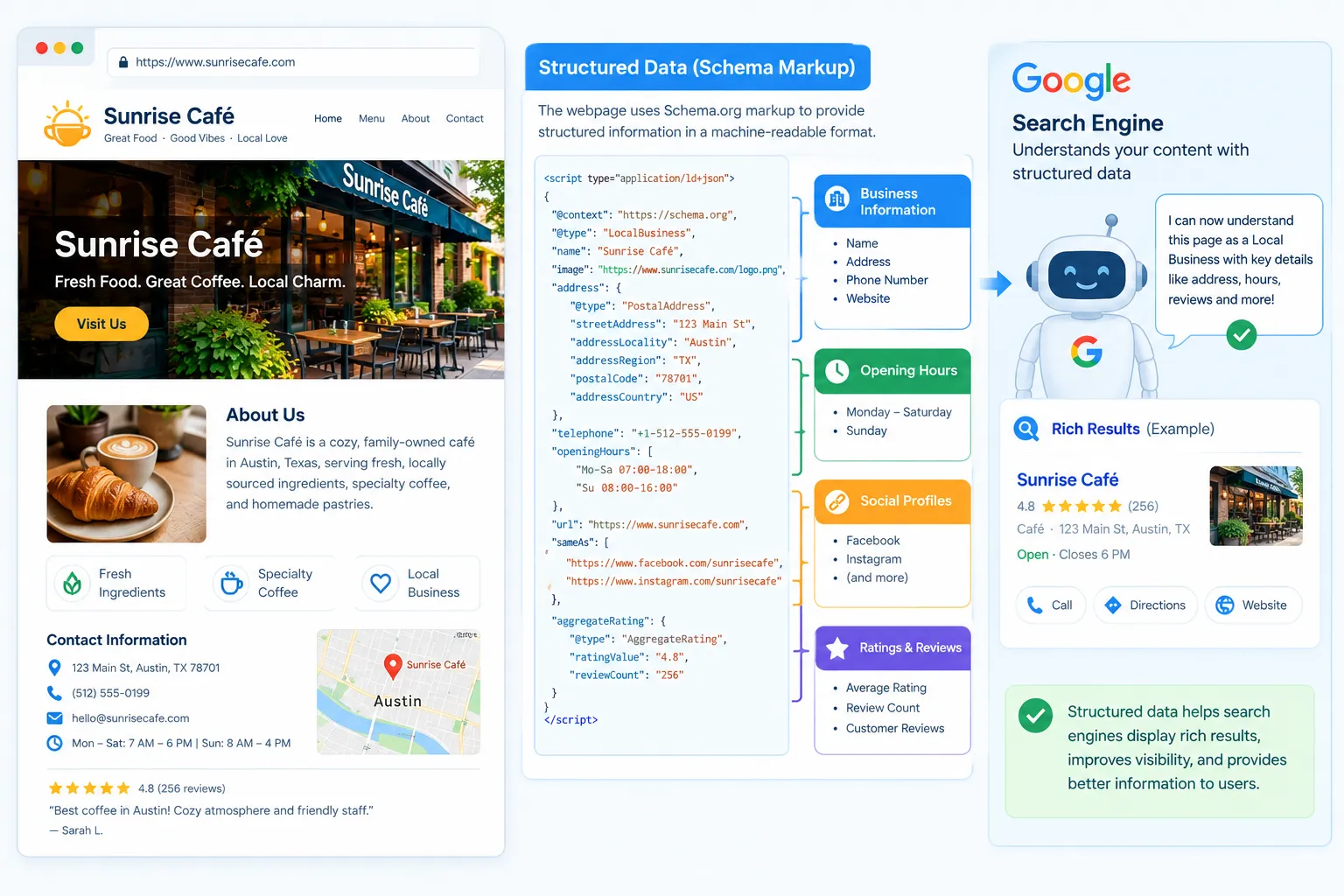
Structured data allows search engines to better understand the content on a webpage. Schema markup won’t guarantee you an AI citation, but it can help machines understand your website better. Relevant schema types may include, depending on the page:
- Organization
- Person
- Article
- Product
- Service
- FAQ
- Breadcrumb
- Local Business
- Review
Use structured data correctly and ensure the markup is for information that is truly visible and supported on the page. All in all, schema should be an addition to your content, not a replacement.
Step 7: Improve Content for AI Citations
An AI citation occurs when a response produced by an AI mentions or credits a source with information. You can’t guarantee that a particular AI platform is going to cite your website. However, you can make your content more citation-friendly. Begin with simple, factual statements.
For example, instead of writing a vague introduction about a technology, provide a direct definition followed by supporting details. Use the original information wherever possible. Thanks to research, proprietary data, expert observations, case studies, surveys and unique examples, AI systems have something valuable to draw upon.
Make Important Information Easy to Extract
Use clearly defined sections for:
- Definitions
- Processes
- Benefits
- Statistics
- Comparisons
- Features
- FAQs
- Expert explanations
When information is presented clearly, both human readers and automated systems can identify the important points more efficiently.
Step 8: Develop a Strong Off-Page Presence
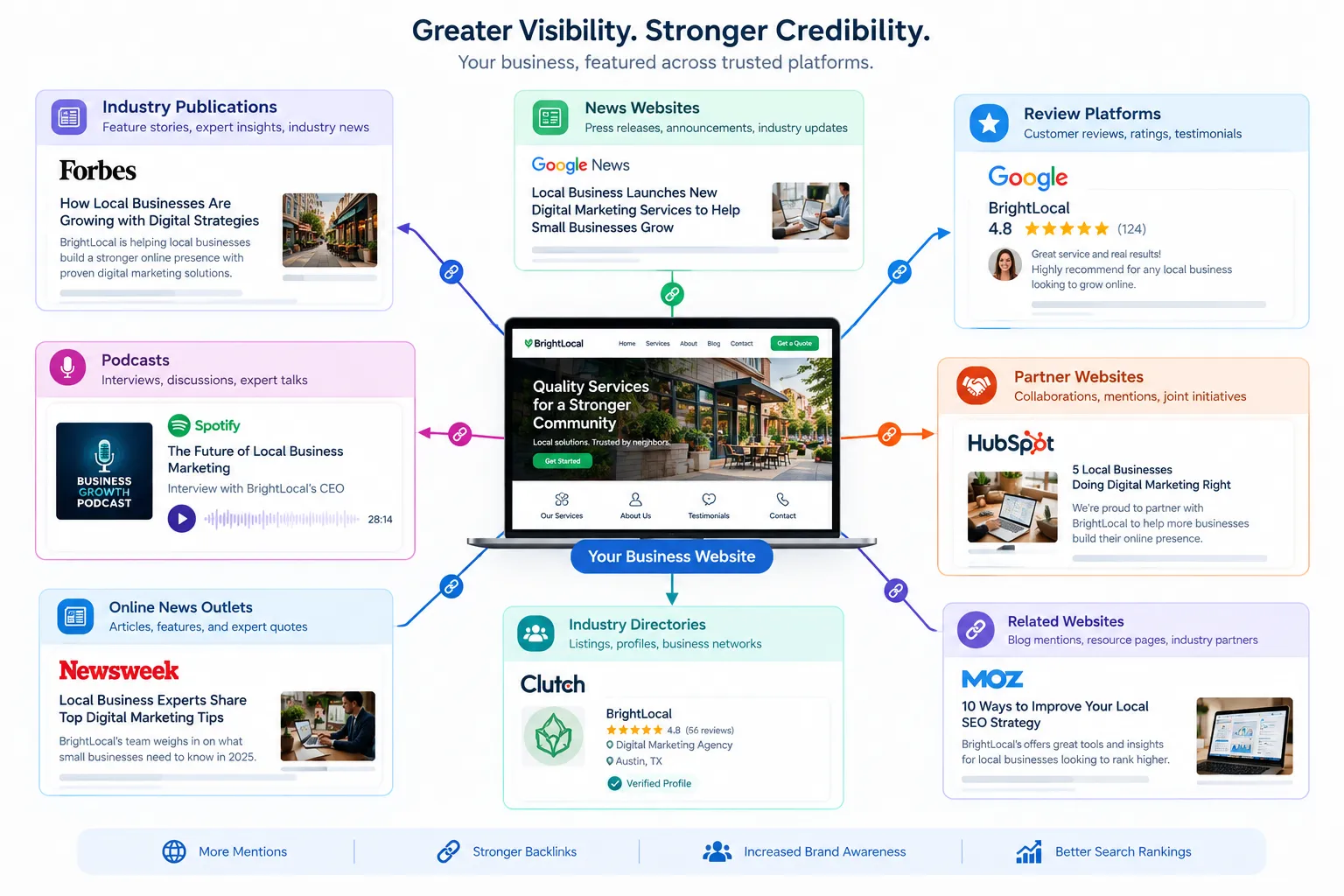
Your website is a part of your digital identity. AI systems can encounter information about your brand across many sources. This makes off-page visibility more and more important for Generative Engine Optimization (GEO). Work toward earning legitimate mentions from relevant and trustworthy sources. These may include:
- Trade Publications
- News Outlets
- Industry Organizations
- Review Sites.
- Podcasts
- Interviews with Experts
- Affiliated Sites
- Research Papers
- Related Communities
It’s not about the number of mentions you can get, but about how relevant and credible those mentions are. A strong digital reputation can help provide context around your organization and expertise.
Step 9: Optimize for Conversational Search
AI platforms are built to understand natural language. So, your content has to be written the way people actually ask questions. Don’t make separate pages for slight variations of keywords. Create comprehensive resources that answer related questions naturally.
Use conversational headings like:
- How Does This Process Work?
- What Are the Main Benefits?
- Which Option Is Best for Small Businesses?
- What Should You Consider Before Choosing a Solution?
- How Much Does It Usually Cost?
These questions can help your content match longer, conversational searches.
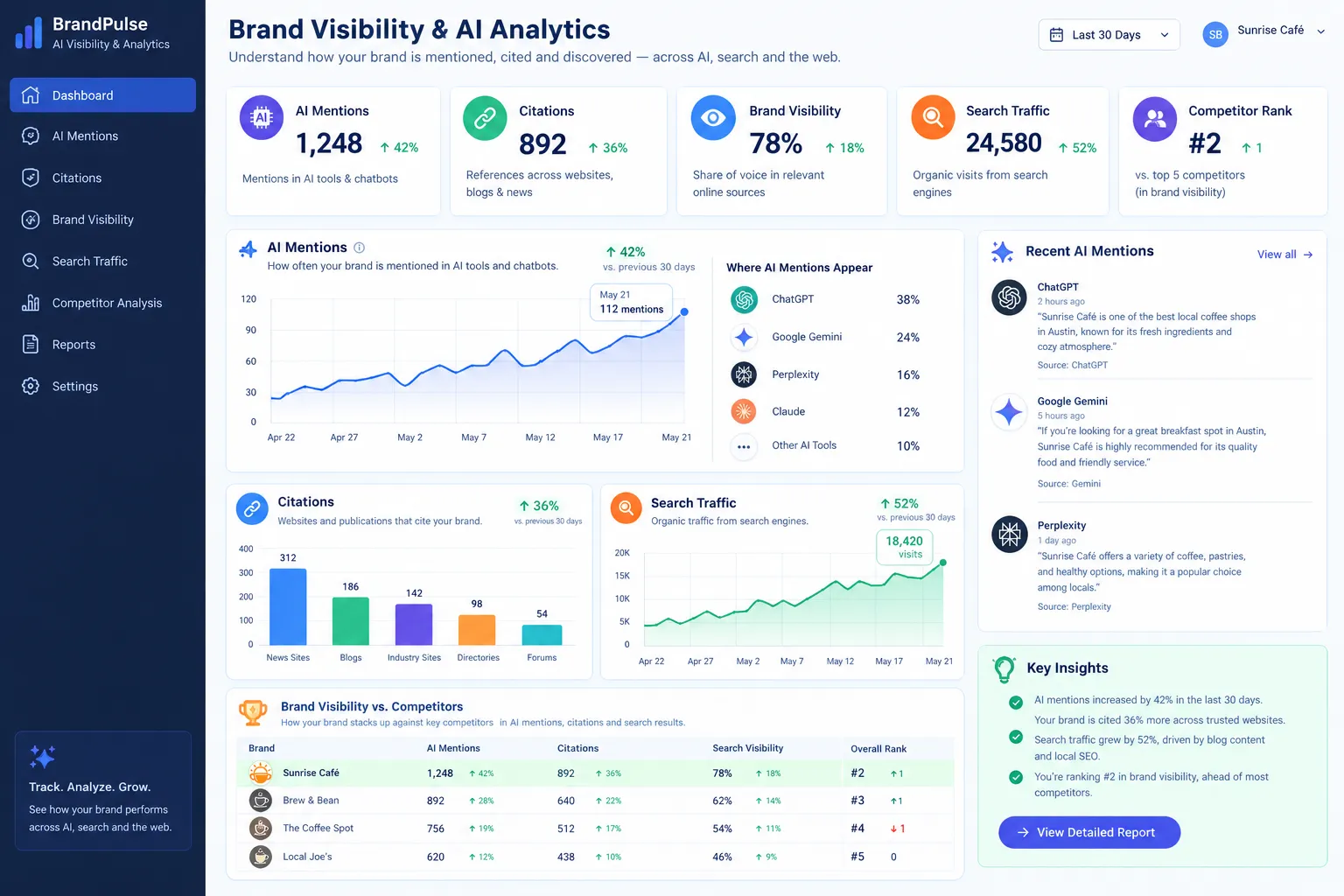
Step 10: Track Your AI Visibility
You cannot improve what you do not measure. Traditional SEO metrics such as rankings, organic traffic, impressions, clicks, conversions, and backlinks should continue to be monitored.
For AI search optimization, also monitor:
- Brand mentions in AI answers
- AI-generated citations
- Frequently cited competitors
- Questions where your brand appears
- Questions where competitors are mentioned instead
- Accuracy of AI-generated brand information
- Referral traffic from AI platforms
- Changes in branded search demand
Create a recurring prompt set based on your target customers and industry. Run the same questions periodically across relevant AI platforms & record which brands and sources appear. This can reveal visibility gaps and emerging opportunities.
The Future of AI Search Visibility
The search in AI will keep on evolving. New platforms, interfaces, retrieval systems and ranking mechanisms will appear and it will be hard to rely on one fixed optimization formula. The businesses that adapt best will likely be those that invest in something more fundamental: being genuinely useful and easy to understand. That means publishing accurate information, demonstrating expertise, developing recognizable entities, gaining credible mentions and developing content which directly meets customer needs.
Ultimately, AI SEO is not about finding a shortcut into AI generated answers; it is about building a digital presence that is strong enough to become a go-to resource when machines and people are looking for reliable information.
For businesses preparing their search strategy for 2026 and beyond, One Design Marketing Technologies can help build an integrated approach to AI SEO, GEO, content optimization, entity signals, and broader search visibility.