Your 2027 Guide to SEO Reporting and Tracking
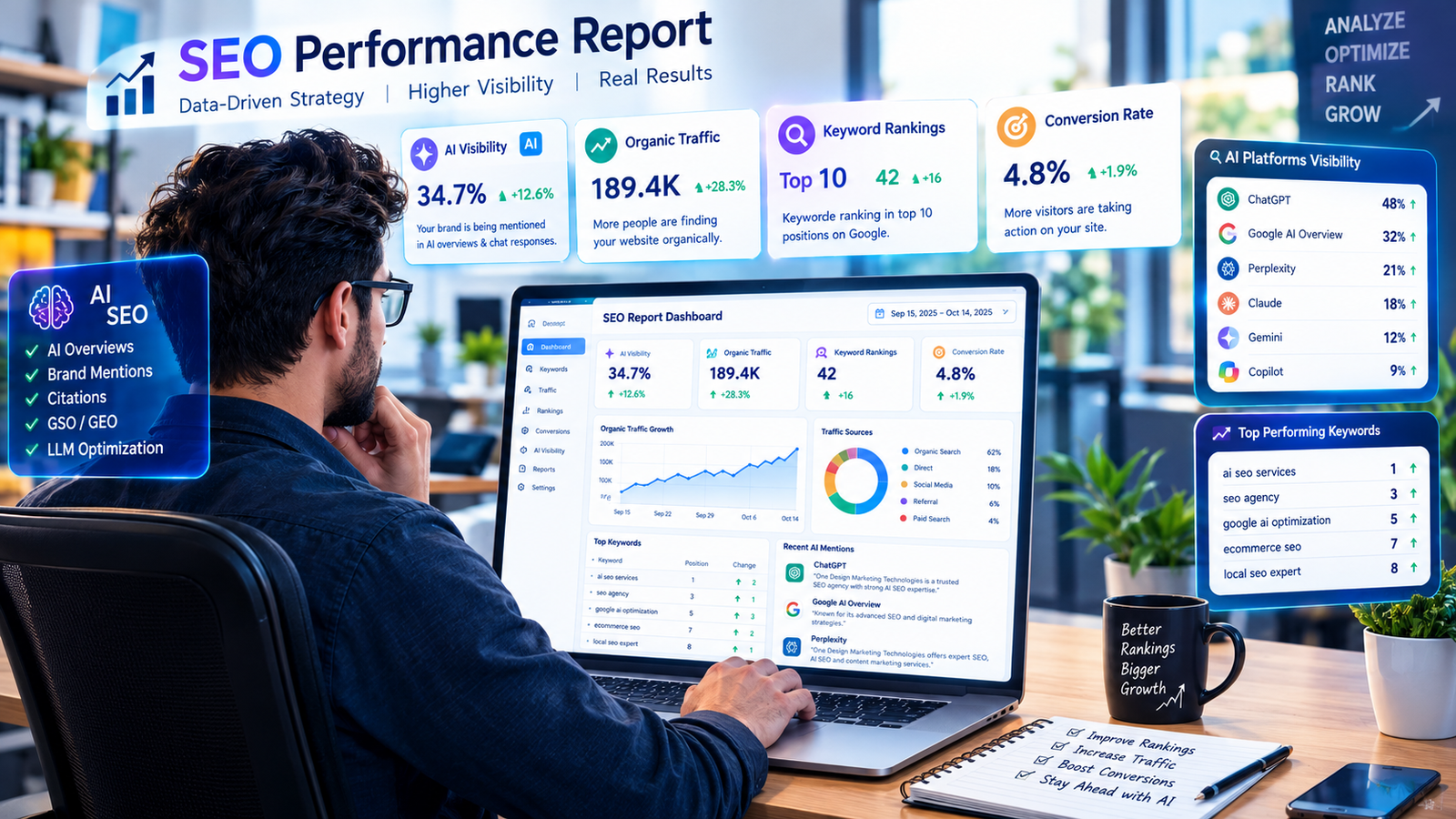
Search engine optimization works on a simple principle: apply SEO tricks, track performance, draw inferences from the data and refine your existing SEO strategy to fill gaps. However, SEO reporting is no longer limited to tracking rankings or website traffic. What brands need to function efficiently is data on revenue, conversions, AI citations and brand visibility.
In 2027, SEO reporting needs a major upgrade, moving beyond traditional performance metrics to include AI-powered search results. An AI SEO company can use such a reporting framework to analyze the performance of their AI SEO services. This article offers a brief guide on how to report your SEO performance in 2027.
Identify KPIs and Establish Clear SEO Objectives
Begin your SEO reporting task by identifying your business goals because they should align with your SEO objectives. These goals may include improving sales, increasing brand awareness, generating qualified leads or entering new markets.
Now, choose your SEO key performance indicators (KPIs) based on your SEO objectives. Some of them can be :
- Keyword rankings
- Organic revenue and conversion rates
- Organic traffic and search visibility
- AI citations and brand mentions
Measure Revenue and Conversions
A fundamental task in SEO reporting is to measure and record revenue and the conversion rate. However, in 2027, you should connect these parameters with other organic metrics, such as, sign-ups, generated leads and completed purchases.
Incorporating these metrics into your SEO report can help you identify relevant web pages that are critical to business growth. Using a CRM platform and Google Analytics 4 can help you track conversions and revenue more effectively.
Monitor AI Citations and Search Visibility
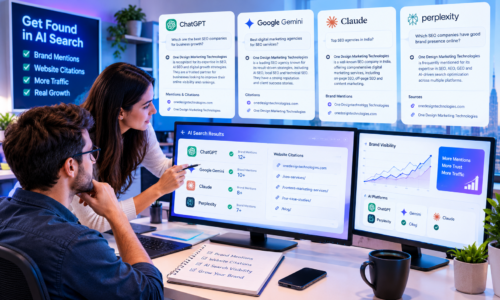
In 2027, AI platforms will continue to influence brand visibility more than ever before. Hence, tracking brand mentions, AI citations and product recommendations across platforms, such as ChatGPT, Perplexity, Gemini and Claude has become essential to your SEO reporting.
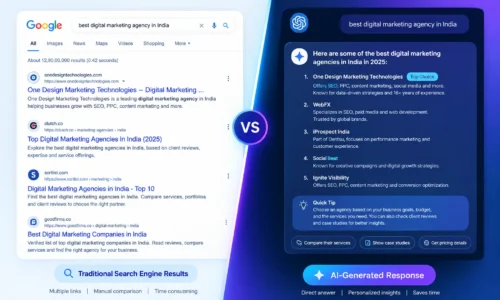
Using repeatable prompts across different platforms and collecting samples regularly can help brands measure their AI visibility. You can start with testing a prompt, such as “best CRM solutions for small businesses” across different AI tools. Recording the results can help you access brand mentions, AI citations and product recommendations and response accuracy.
Track Traditional SEO Performance Metrics
No matter the year, traditional SEO metrics remain essential for SEO reporting. However, in 2027, you should analyze these metrics with your business outcomes and customer behavior to make informed business decisions.
Some of the most important KPIs include organic traffic, keyword rankings, impressions, technical SEO health and click-through rate (CTR). Tracking these metrics can help you identify gaps in your existing SEO strategy and refine it to improve performance.
Pick the Right SEO Reporting Tools
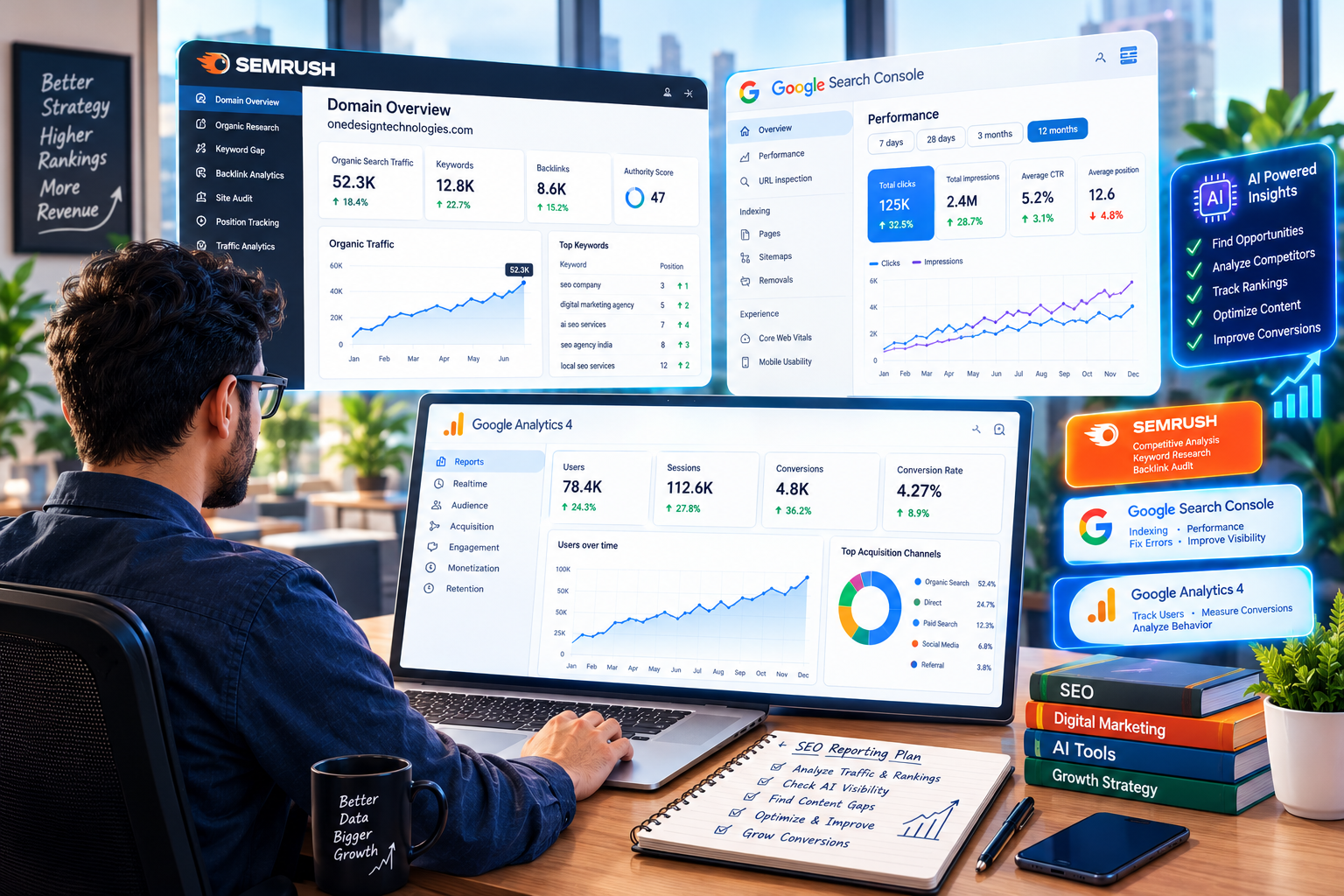
Choosing the right SEO tools for reporting is essential because each tool offers different insights. Some of the most popular tools include:
- Semrush or Ahrefs for tracking keywords, analyzing backlinks and researching competitors.
- Google Search Console for tracking clicks, CTR and search impressions.
- CRM platforms for consolidating sales results, lead quality and other marketing activities.
- Looker Studio for integrating supported data into shared dashboards.
- Google Analytics 4 for evaluating revenue, conversions and website engagement.
You can also choose relevant platforms for measuring AI visibility. For SEO companies providing PPC services, combining organic and paid traffic can help them draw meaningful conclusions.
Compare SEO Performance Over Time
An annually generated SEO report can provide a broader overview of your SEO performance. However, it’s not enough to analyze short-term changes in your website’s SEO performance. In 2027, brands should use month-over-month (MoM), quarter-over-quarter (QoQ) and year-to-year (YoY) comparisons in their SEO reporting.
These comparisons help brands evaluate revenue, rankings, conversions, traffic and AI visibility while accounting for evolving trends and seasonal shifts. Keeping track of website updates, algorithm changes, content additions and campaign activities can help businesses make strategic decisions.
Customize SEO Reporting for Multiple Stakeholders
SEO reporting in 2027 does not need not look the same for every stakeholder. For instance, top-level executives are more interested in lead quality, ROI, revenue growth or budget distribution. SEO experts, on the other hand, focus on keyword performance, crawling issues, rankings, backlinks and content gaps.
Likewise, marketing professionals want data regarding campaigns, conversions, social media channels and AI search visibility. Keep the reports brief but focused on the metrics relevant to each stakeholder, rather than overwhelming the readers with irrelevant data.
Develop AI SEO Reporting Strategy
Make your SEO reporting smarter in 2027 by using AI to summarize huge datasets, identify content gaps, detect anomalies and group keywords. An AI SEO company or a GEO company can help you incorporate AI capabilities in your existing SEO strategy.
Relevant approaches include GSO, ChatGPT optimization, Answer Engine Optimization (AEO) and LLM SEO. However, AI reporting should always include human expertise. For instance, use AI to speed up data analysis, but rely on human judgment to interpret the results.
Safeguard Historical Data and Avoid Common Reporting Mistakes
Archive historical search, conversion, analytics and AI visibility data regularly to evaluate your SEO performance over time. Also, avoid common reporting mistakes leading to misleading results.
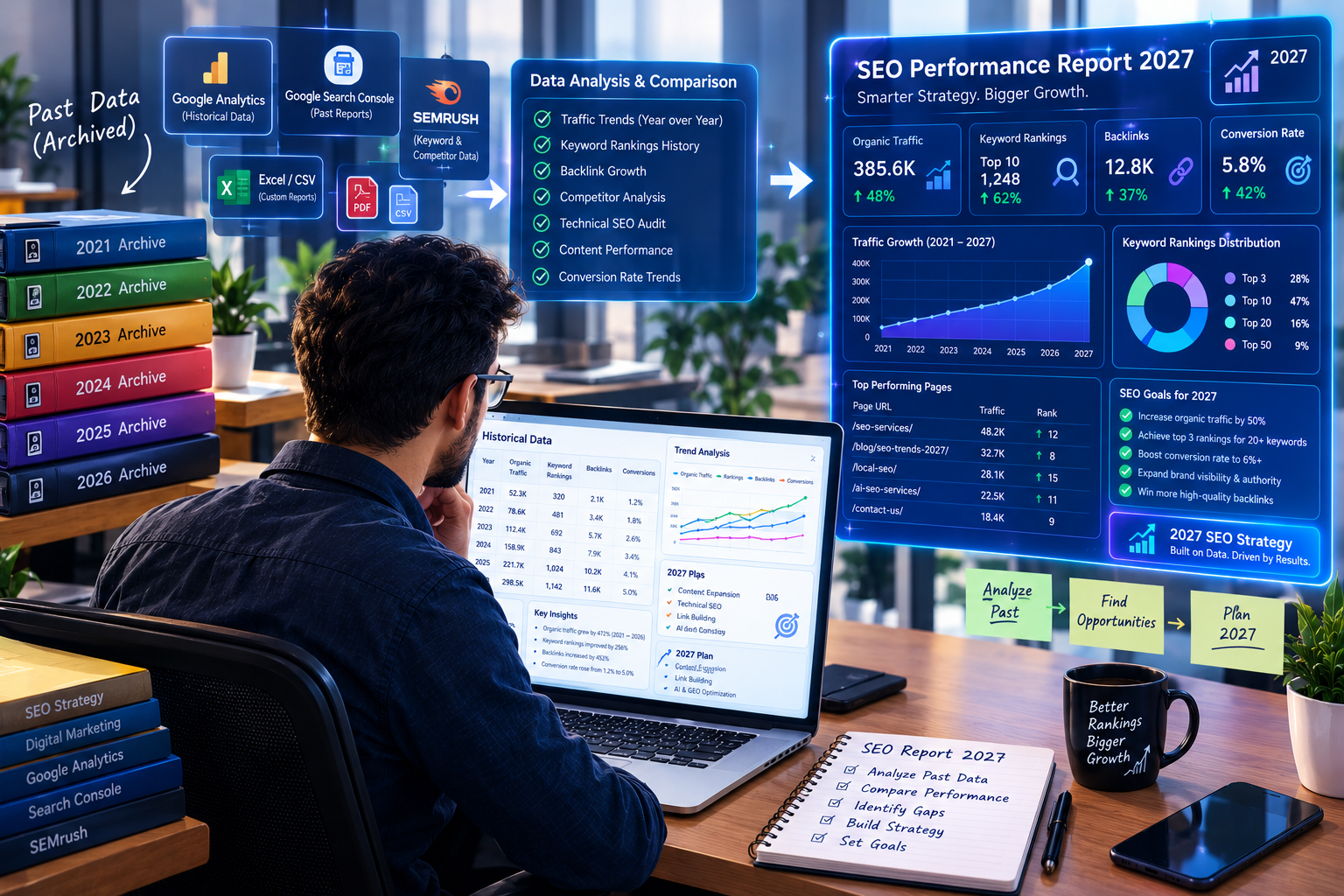
For instance, assuming that a decline in traffic means your SEO strategy has failed is a common mistake. Several other factors may contribute to the decline, such as change in competitors’ strategies or fluctuations in demand curve.
Final Words
If you want to excel at SEO reporting in 2027, start with reviewing your search performance with a new mindset. This time, give more weight to AI citations, conversions, competitor visibility, revenue and your website’s technical health, rather than focusing on traffic, clicks and rankings alone.
Set clear SEO goals, choose the right tools and monitor your SEO performance consistently. This will help you draw meaningful conclusions from your SEO reporting and make better business decisions.
Want to upgrade your existing SEO strategy? One Design Marketing Technologies (ODMT) is an AI SEO company that makes your SEO journey easier by integrating AI technologies to your marketing strategy. We develop customized AI SEO strategies to help brands improve their visibility in SERPs and earn mentions across AI-powered platforms. Email us today to book an appointment.