Google Updates SEO Rules for Content
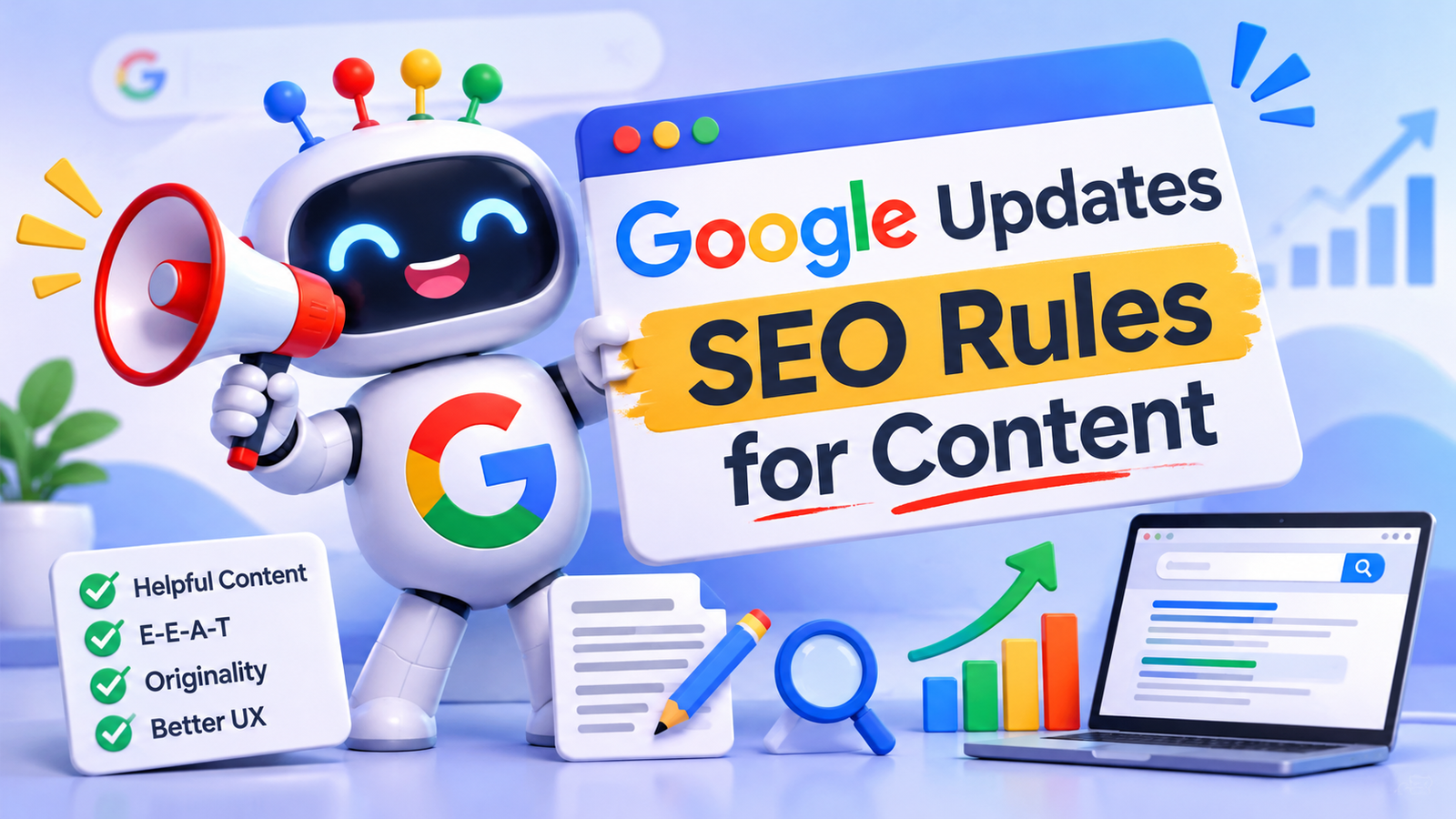
Google keeps making changes to its SEO rules. You can easily ignore them, but that comes with a heavy cost of losing the ranking of your site. You can’t blame the platform for that, because you simply ignored Dumbledore’s warning not to step into the forbidden forest!
Now, you have the first hand lesson of adhering to Google updates, and since you’re on the right path, let me tell you about the new October 2026 update on the usage of creating helpful, reliable and audience-oriented content and on using generative AI content.
Google also started rolling out the 2026 spam update on September 24. Although the rules are short and compact, you get the idea how Google comprehends quality of content. If you are publishing your pieces on the platform, it will work as an important checklist, so you can easily audit your webpages.
The AI Mandate: Check the Content Manually
Yes, I know AI makes writing easier. It’s like waving the wand and you get the thing you wanted. But the fact is spells can go wrong and similarly AI makes mistakes. It has a habit of predicting words without understanding the facts. Thus, the output most of the time comes with free hallucinations.
Now, this doesn’t mean you are banned from using your wand, because there’s no penalty for this from Google. The message is that you can use your wand/AI, but you need to check the result before you go on and publish it for your target audiences to see.
I’ve faced a situation with one of my contents. It was on the topic of the latest collection of smartphones, and I needed help regarding some detailed information. So, the AI tool I used for this gave me a list of latest phones, but two of them were from the previous year, and I almost published the content, but then I checked it myself and caught the mistake. If I published it, my customers would have been misled.
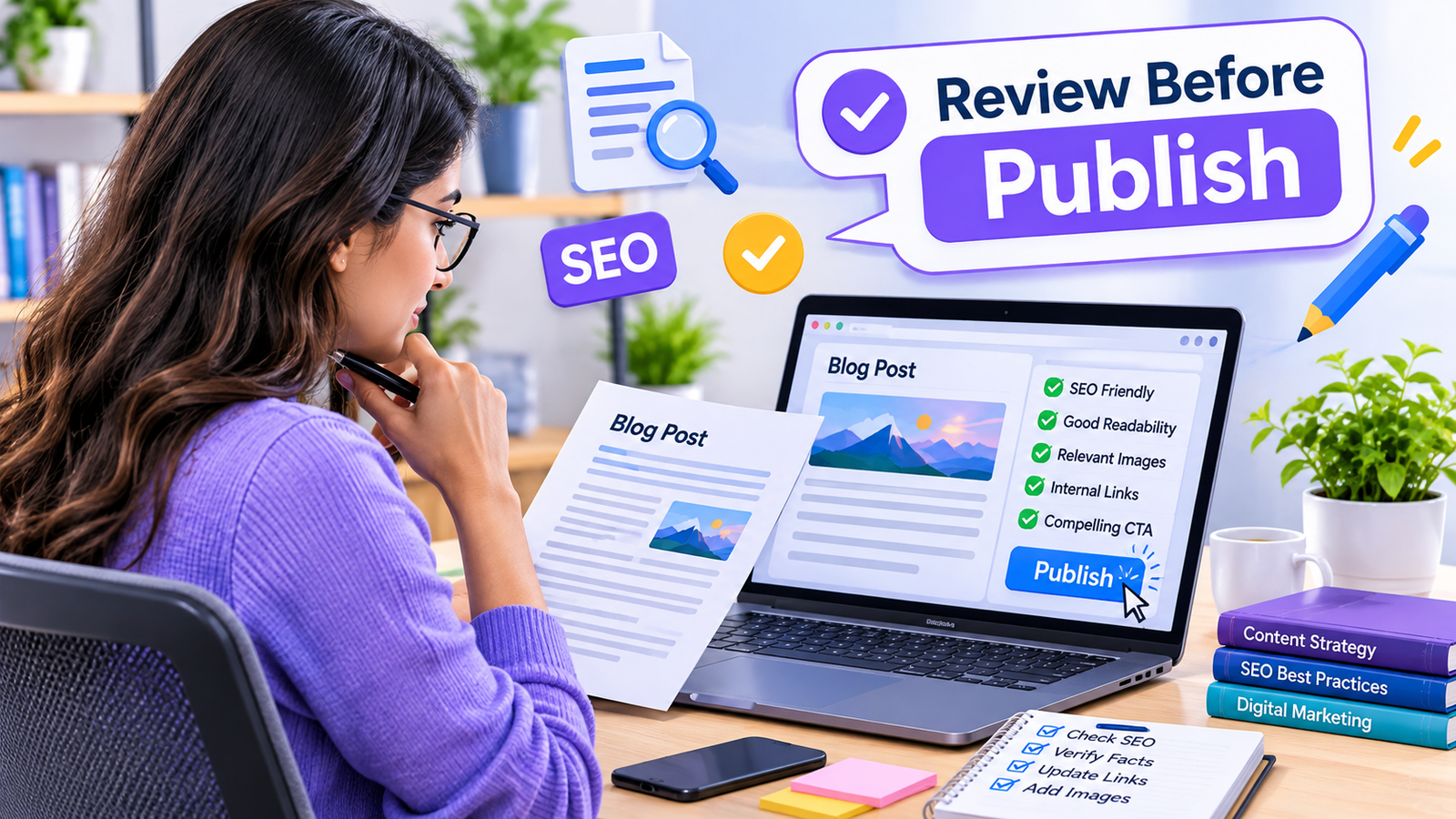
Review the Entire Page
Just reviewing the specific content won’t do. Google says, you need to go through the entire page, like the schema, image alt text, meta title, descriptions and the data.
It’s like mugging up just the spells, and not reading what they can do and how to dispel them if anything goes wrong, can be a huge mistake.
In the case of your website, you need to understand that the image alt text talks about the same thing that’s displayed. Schema text must have the same price, detail or rating that’s on the webpage and the meta description and title that’s not filled with promise or extra explanations.
Give Main Content Importance
The main content on your webpage gives your audience the full overview of what it actually offers. The things you need to check are the headings, tabs, tools, media, user contribution and other texts. Some said that Google goes through the headings to see if they are exaggerating the intent of the site.
The best thing you can pull here is to give the trailer before the movie begins. You know how movies work; trailers grab the attention even before they go to the theatre.
Give the answer right at the top of the webpage, it can be a compact text or tool that can help your visitors get the perfect idea. Try not to bury the main concept under long introductions.
Google Notices the Crucial Attributes
Accuracy, expertise, authenticity and effort, these are the four attributes Google pays attention to. These are the things that only a human can provide and AI can’t.
Before you take the AI content as your gospel and publish it, make sure they clarify these four points.
- Accuracy: Whatever you’re publishing must be true and have proper evidence to prove your claim.
- Expertise: Do you really know about the things you’re writing about? If you don’t have the exact information regarding that topic, Google might frown a bit. Not really, but your customers will go somewhere else.
- Effort: How much effort are you putting in your webpages, counts. Just putting on the page what your AI pal told without giving an effort of checking what actually works can put your site at a huge risk.
- Authenticity: Your content must be original. It has to be informative that your customers will not get from somewhere else. If you copy and paste the same format, your audiences will not choose you.
An article you worked so hard on will fall short if it provides the same information as everyone else. The quickest fix is to put a detail that only you can offer.
For my website, I added some specific information that’s only exclusive to our business, others don’t offer the same. So, where’s your Snitch? Find it and put it there to draw more customers.
Avoid Mentioning Fake Authors
“Deceptive authorship,” this is a thing Google continuously flags. Remember Alastor Moody? How Barty Crouch Jr. faked him and made Harry believe he actually meant well? At the end his disguise was exposed, and he had to return to Azkaban.
When it comes to your website, faking names of authors, made up biographies signifies low quality content. Like Harry Potter, Google might not identify the deception immediately, but if anyone tries to verify them and finds out, it can be an issue.
So, skip the polyjuice potion, and put real person’s name, their bio, headshots and their true credentials to keep things honest.
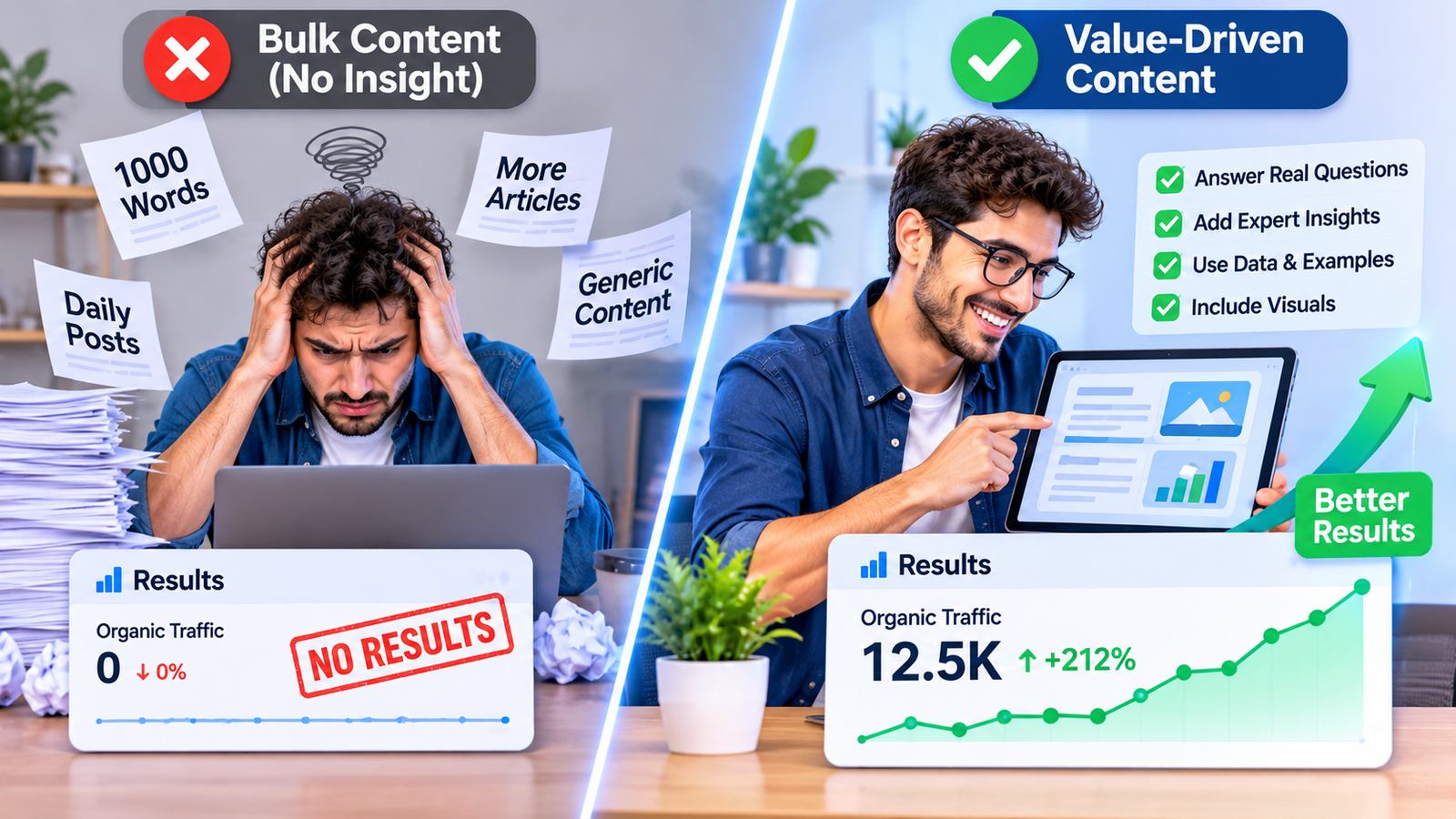
Bulk Content without Real Insight is Problematic
Publishing content in bulk each month, without real insights is a major flag. And it can downgrade your website on the search results.
The best example for this is, adding different cities where you provide services and copy pasting the same detail on each page, just altering the city name.
Before putting the content online, ensure the pages have something different to offer. If it’s a different city, then it must have that place specific information, such as pricing, details of the team serving there and local case studies.
A client came to me with a similar issue and I fixed it by adding details about the cities they serve, unique information that’s available in that city only, etc. These audits helped them regain a higher rank than before.
Fake Updates isn’t Proper
Take the content that you wrote in 2025 and you just changed the date and detail to 2026, will it work? NO. Real update means accuracy, media, examples, structure and usefulness.
In 2026 the process you mentioned might have some new ways, or someone has explained a different way. You have to research a bit and update the same.
When it Comes to Content Keep Things Transparent
Google checks the content quality based on who wrote it, why and how. This doesn’t signify you have to put a disclaimer on every page. Check what the content is about, if it’s research-based, a review or something that helps your audience to make their buying decision.
After that, put a short note about how AI helped framing the content and how a person checked the entire thing for accuracy. This can build trust.
Final Thoughts
Google updates isn’t going to punish you for using AI, all it asks from you is to review the content for its authenticity, honest claims and real updates. Use AI for speed, then add real human knowledge before you publish them.
And if you’re looking for an SEO company that can do the hard work for you, contact One Design Marketing Technologies. We offer top notch SEO services with PPC services, content marketing services, AI SEO, LLM SEO and more. Call us today!