How to Create Strong Title Tags in SEO in 2027
A title tag is not just a heading; it’s an SEO fundamental that helps make your website content understandable to the search engines. Your page title tags should give your users a brief but clear description of the purpose of your webpage, blog, article or any other piece of content.
The smarter the title the easier it becomes for search engines to relate it to the user query and potentially improve its visibility in the search results. Moreover, creating a meaningful page title can improve your chances of attracting qualified leads and increasing sales. If you are also wondering how to make the most out of your title tag in 2027, this article is for you.
Understanding Title Tags
A title tag is actually an HTML element that can be found in browser tabs and search results. It defines the actual title of a webpage, specifying its purpose and target audience.
The title tag can influence a user’s decision to decide whether they should visit a page or not. A title’s job is to establish the actual purpose of the page rather than giving a generic label to it. For instance, a title such as “Digital Marketing Services” sounds more general than “Local SEO Services for Small Businesses”.
What Should be the Length of the Title in 2027?
While there is no fixed character limit, an ideal title character count is often kept between 50 to 60 characters. However, no matter how long the title is, search engines may truncate or rewrite it if necessary.
Hence, your focus should rather be on creating smart titles that clearly communicate the context of the content. Always remember to keep the most important detail near the beginning and make the title concise. An example could be: Ecommerce SEO for Enterprises.
Understanding Keyword Placement in Title Tags
Always place your primary keyword naturally near the beginning of your title tag for the best results. Also, ensure the keyword is not repeated unnecessarily, creating redundancy.
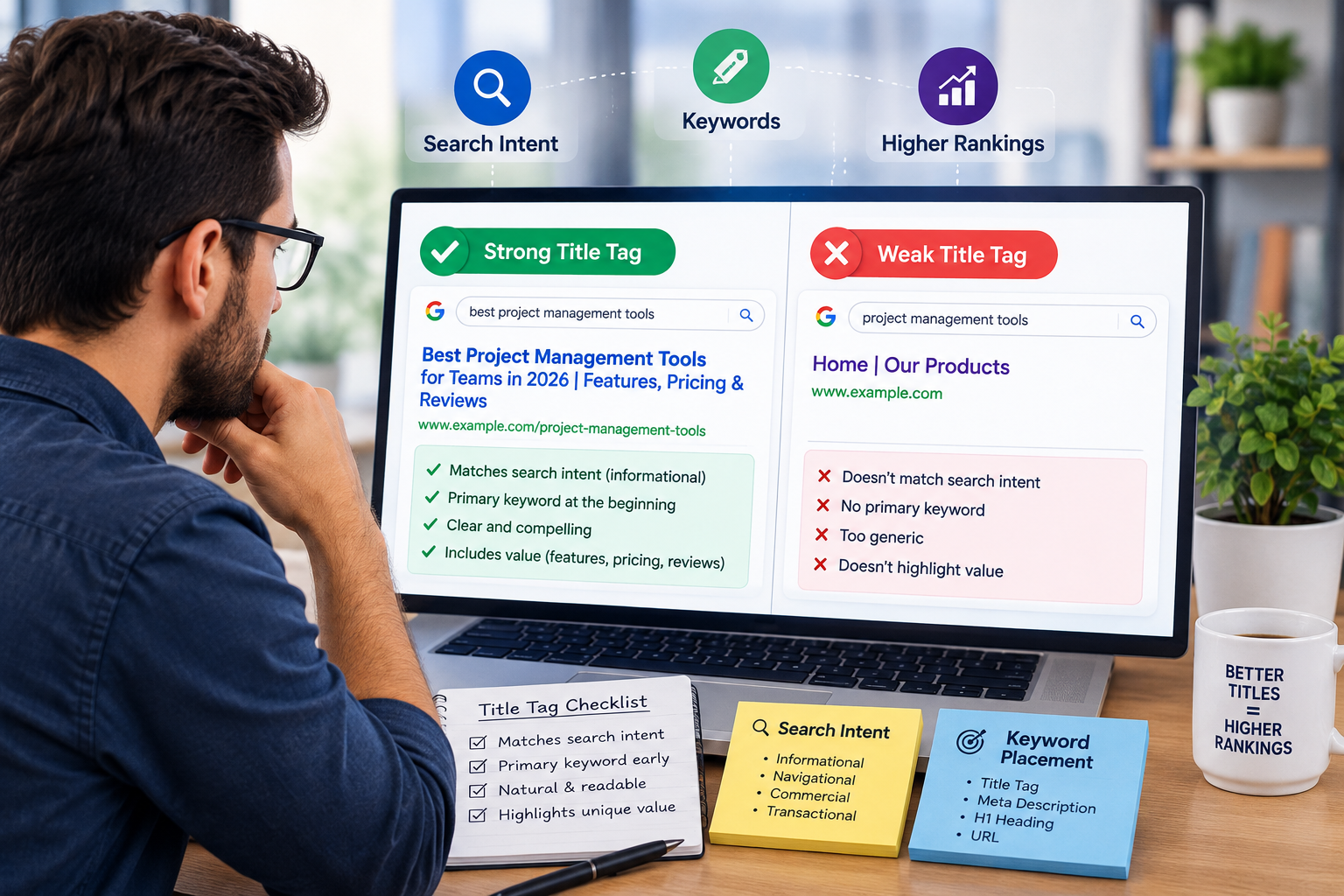
Let us understand with the help of an example:
Good Title: SEO Services for Small Businesses
Bad Title: Grow Your Small Businesses Online With Our Professional Digital Marketing Services
Good Title: SEO Services for Global Brands
Bad Title: International SEO Services for Global Brands
Should Title Tags Match Search Intent?
Absolutely yes. What’s the point of creating content if it does not fulfill the user query? And to ensure the user finds your content, you should give it a suitable title. However, a title tag shouldn’t be taken for granted. If you are giving your content a suitable title, it should accurately represent the information provided on the page.
Using clickbait titles can give your website quick clicks but can damage its reputation in the long run. Below are a few examples of how your title tags should look like:
Comparison Blog – Traditional SEO vs. AI SEO: Key Differences
Service Landing Page – SEO Services for Online Businesses | ODMT
Information Blog – What is Answer Engine Optimization (AEO)? A Complete Guide
Ecommerce Landing Page – Gaming Laptops – Premium Collection
Can Google Rewrite Your Title Tag?
Have you ever noticed search engines changing your landing page or blog title in the SERPs? Well, Google might alter your exact HTML title at times, creating a version that better represents your website content or aligns better with the user query.
Your SEO company must ensure the page title aligns well with the H1 heading and the actual content. For instance if your title says “Best AI SEO Services for Brands”. But the H1 and the content instead focus specifically on Social Media marketing, Google may use a different title to represent your page.
Title Tags in AI-Powered Search Environment
Modern AI SEO strategies not only assist brands with better content creation and digital marketing in conversational search environments but also help in creating meaningful title tags. Nowadays, user queries are not limited to keyword-based searches but are becoming more conversational and question-based.
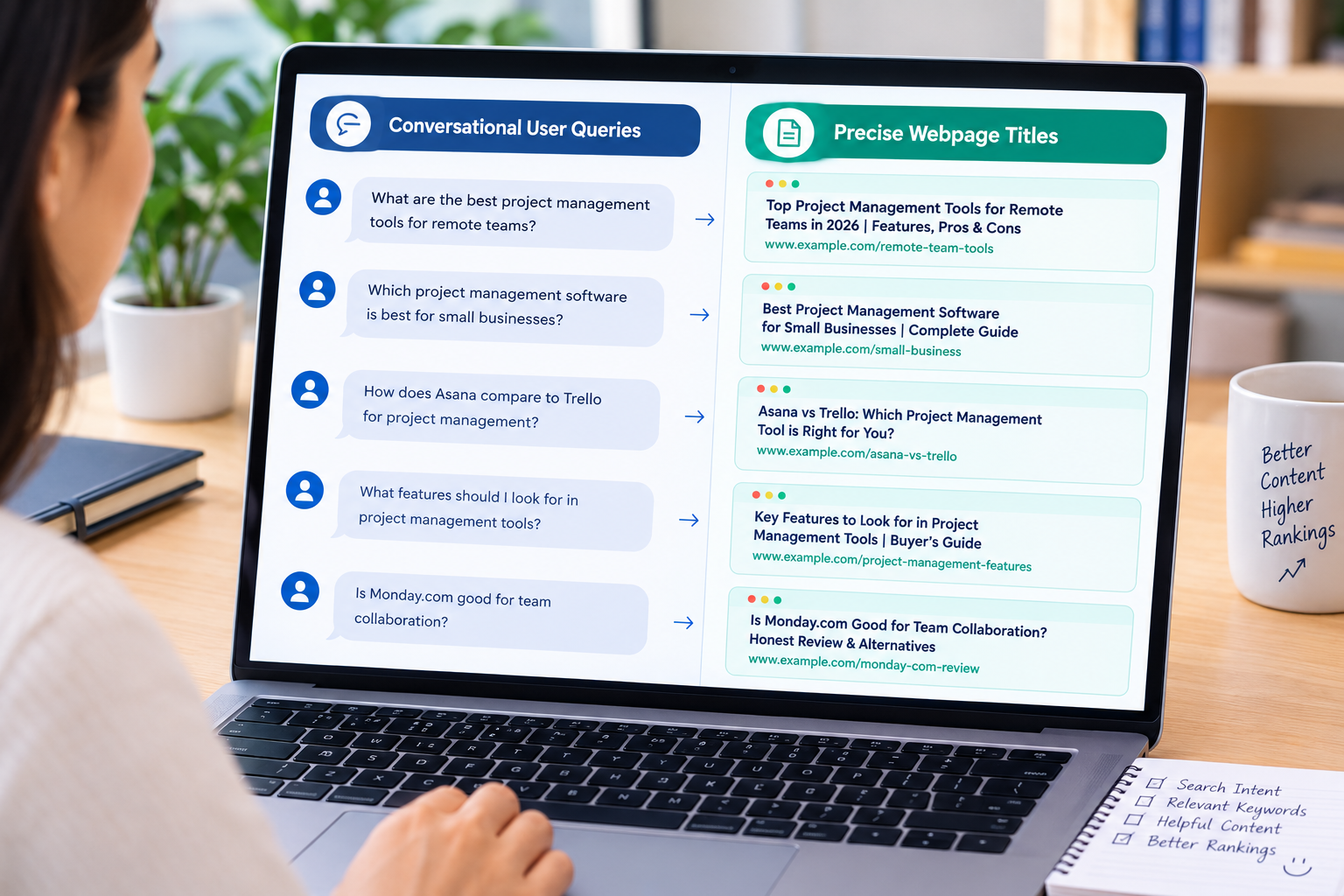
For instance, instead of searching for “Ecommerce AI SEO strategy”, users may search for “How to build an AI SEO strategy for ecommerce”. In this regard, a title with a clear topical context can naturally help attract more impressions and clicks.
Title Tag Optimization in 2027
Just like your website content needs optimization, so do your title tags. Here’s how you can optimize them in 2027:
- Identify the search intent and the primary topic for your landing page or blog.
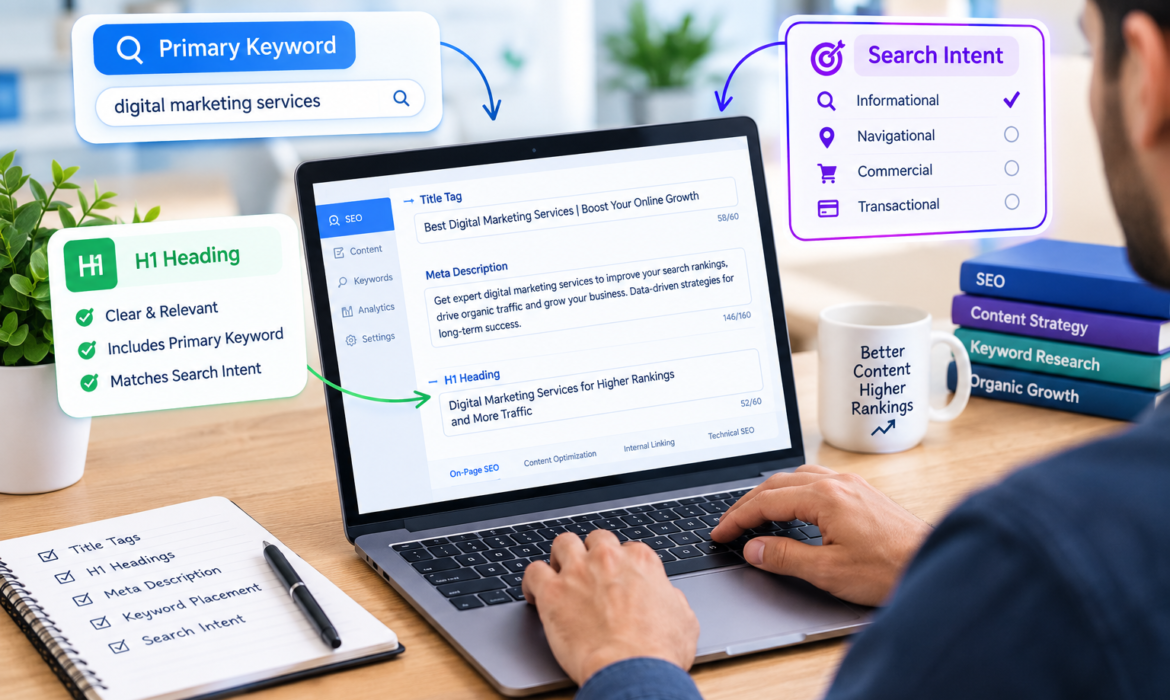
- Create a short and relevant title that aligns with the subject, including the primary keyword naturally near the beginning.
- Ensure your title aligns with the H1 heading and the main content.
- Keep monitoring the page performance and update titles if required.
Are you struggling with handling title tags for your ecommerce or enterprise-level website? Our SEO experts at ODMT can help you audit existing titles for your business website. We identify title duplication, ensure the right keyword targeting and establish scalable title optimization rules.
Mistakes to Avoid With Title Tags
If you are an ecommerce brand or operate an international website, this is especially important for you. By avoiding the following common mistakes, you can make your title tags more engaging and aligned with your content:
- Generating misleading or ambiguous titles
- Ignoring the H1 when creating a title
- Repeating keywords without a clear need
- Making unnecessarily long titles
- Creating generic titles
- Ignoring search intent in titles
- Using the same titles across multiple pages or blogs
- Creating titles using automated templates without quality checks
Final Words
Gone are the days when title tags would just influence traditional search rankings for a brand. They can also contribute to business sales by bringing in more qualified leads and conversions. The key is to opt for a clear, search intent-driven title that aligns with the H1 heading, content and the overall website structure.
Want help with your title tags? ODMT helps your business website become search-ready by building a customized AI SEO solution and providing PPC services for your brand. Connect with us today by booking a virtual appointment and get started on your SEO journey toward SEO success.
Explore Our Digital Marketing Services
Our Core Services
AI SEO Services
SEO by Location
SEO by Industry
Law Firm SEO Services
Healthcare SEO Services
Real Estate SEO Service
Dental SEO Services
Chiropractic SEO Services
HVAC SEO Services
Car Dealer SEO Services
Catering SEO Services
Fitness SEO Services
Gym Trainer SEO Services
Jewelry SEO Services
Limousine SEO Services
SEO for Luxury Travel
Insurance Agents SEO Services
Junk Removal SEO Services
Small Business SEO Services
Yoga Studio SEO Services