Top E-Commerce Search Trends That Matter in 2027
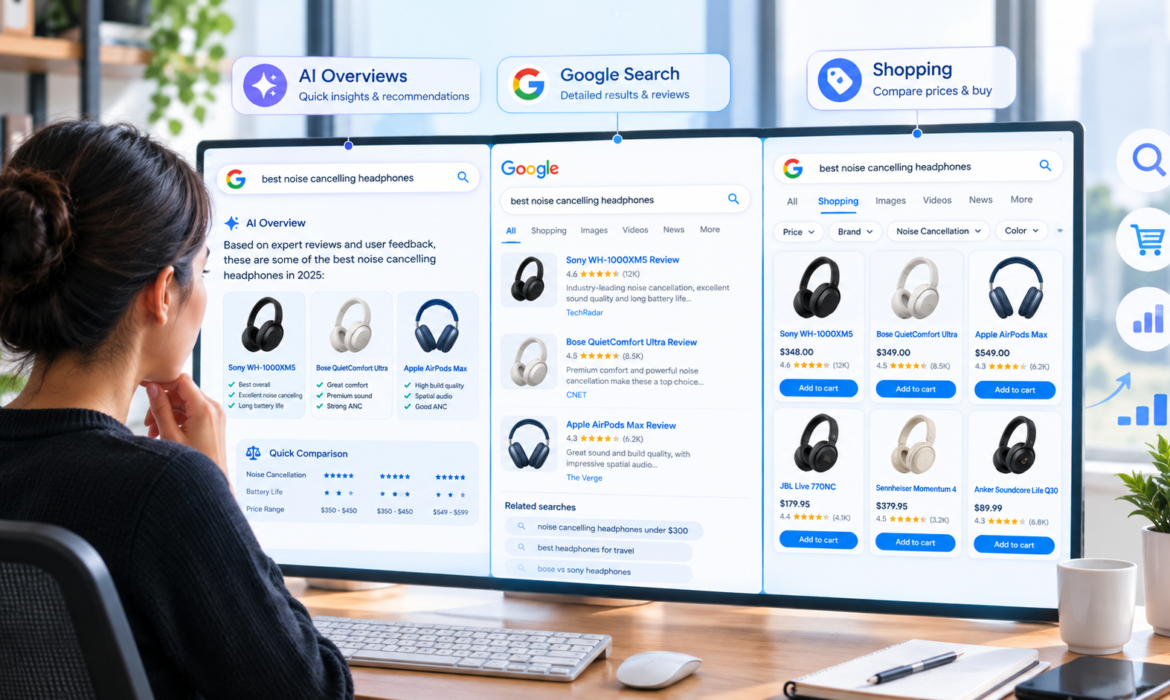
With the rapidly changing digital marketing environment, ecommerce brands are searching for new ways to improve their online visibility. Buyers are also getting used to new ways of discovering products and websites, namely, Google product listings, AI-generated responses and conversational queries.
So, to generate more revenue, brands need not just to rank higher but also to get recommended by AI assistants. For this, businesses must optimize their ecommerce websites for different platforms and understand customer search patterns as well as their comparison and evaluation criteria. In this article, we will discuss the top ecommerce trends that can help your e-commerce website stand out in 2027.
Use of AI Search Will Grow Stronger
With the growing use of AI tools, such as ChatGPT, Claude, Perplexity and other AI assistants, product research is no longer the same as before. Ecommerce websites will need to optimize their content just for traditional search engines but also for AI in 2027. AI optimization can help your website become more discoverable.
Some of the AI technologies you can use in this regard are Answer Engine Optimization (AEO), Large Language Model (LLM) SEO, Generative Engine Optimization (GEO) and ChatGPT optimization. Since AI searches are more conversational in nature, optimize your content around questions and answers rather than targeting keywords alone.
Non-Branded SEO Will Bring More Revenue
What if the user is not focused on a particular brand but us only searching for the best option based on utility or budget? Non-branded product-based queries can introduce several new ecommerce websites to the users.
Get ready to gain an edge over your ecommerce competitor and generate higher revenue in 2027. You can follow this emerging ecommerce trend by optimizing your product and category pages as well as informational content. Target high search-intent queries that increase your chances of being cited by AI tools.
Google Shopping Will Continue To Seek Attention
Keeping your product information updated on your website can make your product eligible to be recommended in Google Shopping grid in 2027. This is one of those ecommerce trends that requires you to keep your product feed optimized alongside your content.

Once you do that, it makes your products eligible to be placed in Google product grids when users search for products with commercial intent. Users are likely to pick and compare options from the grid first than going for organic search. This arrangement not only promises higher visibility but also can generate better leads and higher conversion rates.
Search Experience Will Hold As Much Relevance As Ratings
Ratings are still among the most favored factors in ecommerce, says the previous ecommerce trends. But in 2027, we would like to turn your attention to providing a better search experience. Because what if your website appeared first but your page took all the time in the world to load, making your potential customer lose their interest? What if your website hides small but very relevant details about your policies or makes it difficult for users to evaluate products? That’s where lead generation and sales will eventually drop.
This is where Search Experience Optimization (SXO) comes into the picture. Make sure to elevate the user experience by making relevant product reviews, pricing, availability, specifications, images, comparisons and shipping details easily available. A better search experience can increase the chances of conversions.
Less Dependence on Agentic Commerce
Ever heard of AI-powered shopping agents? Well, these promising AI tools are redefining the future of the ecommerce landscape by automating the entire online search and purchase process for you. These agents can search for the requested product, compare multiple options and even buy the most viable product.
While the innovation seems quite tempting for the modern-day ecommerce brands to adopt readily, the technology is still in its early stages. As such, heavy dependence on it might not be the best solution for your business. Instead, we advise you to work on polishing your APIs, product descriptions and other technical aspects of your website.
AI Traffic Will Become More Intent-Driven
AI search will heavily influence ecommerce trends and user decisions in 2027. From making simple informational queries to asking for the best recommendations for specific products, AI assistants are answering user queries with increasing precision.
These platforms can summarize product details, compile reviews, narrow down choices and compare alternatives before the user reaches your ecommerce website. So, what you need is to perform ecommerce SEO on your website using AI capabilities to improve your visibility across traditional search engines and AI platforms.
Conversational Searches Will Become More Relevant
As for ecommerce trends, modern users are not limited to keyword-based searches. They may instead prefer to ask direct questions, making conversational queries that specify their product preferences, requirements, budget or other specifications. For instance, a user can search for “a laptop for graphic designing under $10,000 with 16GB RAM.”
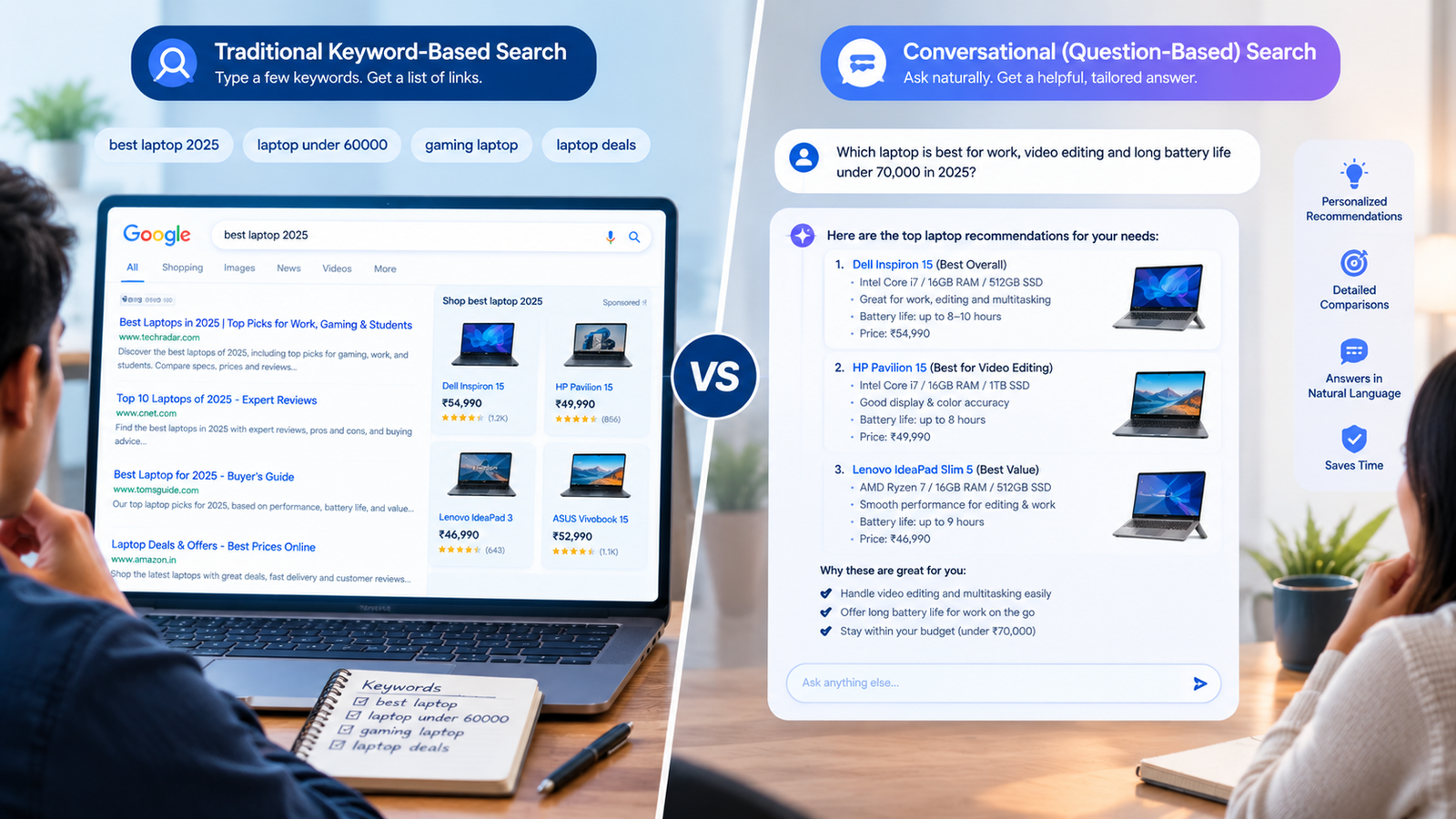
Now, if your product page clearly provides this information in an easily understandable format, then chances are high that an AI platform will recommend it. For instance, performing ChatGPT optimization can help make your content more easily accessible to AI platforms.
Future for E-Commerce Brands
Traditional SEO is here to stay even as digital marketing practices continue to shift rapidly. So, in 2027, brands need a comprehensive SEO solution combining SEO with PPC services along with GEO and AEO capabilities.
Ecommerce brands need to track their product offerings across different platforms, including AI overviews, Google, conversational search and shopping results. If you are also planning to give a boost to your ecommerce website in 2027, consider switching to AI-powered search optimization. Connect with us today and get started on your journey in digital marketing.
Explore Our Digital Marketing Services
Our Core Services
AI SEO Services
SEO by Location
SEO by Industry
Law Firm SEO Services
Healthcare SEO Services
Real Estate SEO Service
Dental SEO Services
Chiropractic SEO Services
HVAC SEO Services
Car Dealer SEO Services
Catering SEO Services
Fitness SEO Services
Gym Trainer SEO Services
Jewelry SEO Services
Limousine SEO Services
SEO for Luxury Travel
Insurance Agents SEO Services
Junk Removal SEO Services
Small Business SEO Services
Yoga Studio SEO Services