How to Build an AI Content Workflow From the Ground Up
Gone are the days when brands would create SEO and content strategies manually. Now, with AI systems assisting digital marketing agencies, brands can now create and manage their content instantly.
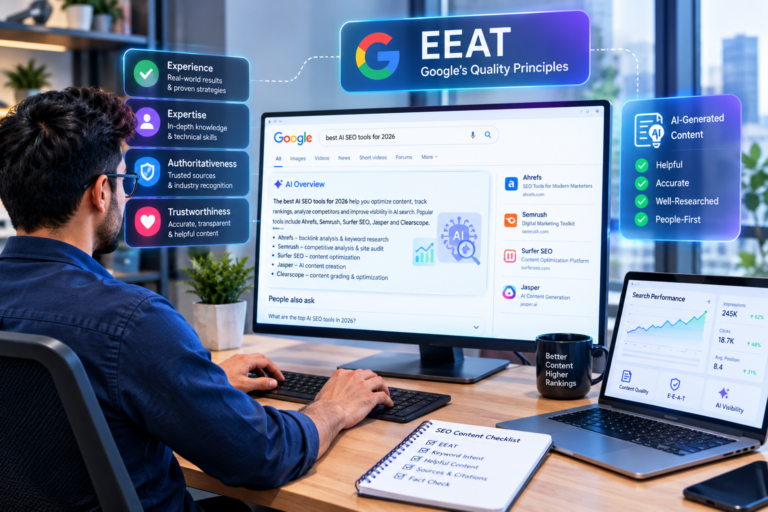
However, just prompting AI tools does not generate better results. Only a comprehensive AI content workflow can help you create unique content that addresses your search intent and brand goals. Such a workflow combines AI assistance with human expertise to simplify and improve the content creation and management process.
In this article, we shall discuss in detail how to create an AI content workflow from scratch. Let’s get started
Define Your Content Objectives
Start by specifying your objectives for publishing the content. Is it for increasing organic traffic or generating leads? Do you wish to educate your potential customers about your brand offerings or increase conversions? Building brand authority, supporting sales campaigns or improving AI search visibility might be other prominent reasons.
Before you further define your AI content workflow, you also must understand who your target audience is. Identifying their age, search behavior, buying patterns and social background can help you create content that suits their needs and personality.
Align With Your Brand Voice
Wondering how you can make your AI content sound unique? Align it with your brand guidelines to make it sound like your brand content. Share your existing content with AI to identify its tone and personality. Specify the writing style, preferred vocabulary, sentence length, formatting and brand positioning for better understanding.
Develop a Content Strategy
Before you automate your AI content workflow, create a detailed content strategy, including relevant topics and ideas for content clusters. Research focus keywords, search intent, content gaps, trending topics, competitor websites and customer queries.
For instance, if you wish to create a topic cluster for a digital marketing agency, use ‘SEO’ as the core topic for your pillar page. The supporting pages can be around technical SEO, local SEO, content optimization, link building, etc.
Build Detailed Content Brief
Before generating the actual content draft, create a detailed content brief to figure out what you want to achieve with your website. Define your primary topic, search intent, target audience and content objective.
Now, suggest a title, target keywords, major sections, FAQs, internal links, external sources, CTA, etc. Provide context for your article, define its structure and suggest outcomes.
Choose AI Tools for Content & Research
Pick a few specific AI tools that you could use throughout your AI content workflow for generating content and research insights. And before using any tool, evaluate its features. You will need dedicated AI tools for performing the following activities:
- AI research tools for topic research
- SEO platforms for keyword research
- AI writing tools for creating content drafts
- AI editors for checking readability
- AI design tools for creating visual content
- Automation tools for performing repetitive tasks
- AI analytical tools for tracking performance

Create your own suite of AI tools and also look for alternatives in case you cannot access the ones you usually prefer.
Perform Content Research With AI
The best way is to use credible online resources to research and gather data for your content. Nonetheless, you can still use AI to generate topic ideas, suggest content structures, frame questions, group keywords and summarize publications. You can then incorporate these AI suggestions into your original research.
Fact-check every statistic, industry trends, expert quotations, names and dates, research findings, product details, links and references before publishing. This is because you cannot fully validate AI-generated content without manually cross-checking it. Verifying the facts improves your site’s credibility and protects your brand reputation.
Create the Content Outline
Once you have researched all the topics, generate a detailed outline for your content using AI. Your entire AI content workflow, let alone the outline, should match the user search intent and showcase a logical flow of ideas.
It should touch on all the relevant topics and subtopics while avoiding anything that is out of context. Make sure your outline answers all the questions that your target audience is searching for. Once done, review the outline before moving on to the next step.
Generate the First Draft With AI
Use an AI content generation tool to produce the first draft by providing the desired prompt and content outline. Ask AI to add short paragraphs, natural language, clear explanations, logical examples and infographics.
Also, specify primary and secondary keywords, their frequency and natural placement throughout the article for a natural flow. So, basically, by the end of this step, you should have a complete article ready to be humanized.
Incorporate Human Expertise
This most important step in your AI content workflow is to review the AI draft and add human insights to it.

A human expert should include original data, expert opinions, first-hand experiences, case studies and industry recommendations. Adding such inputs to your content improves its credibility and gives it a distinct edge over AI-generated articles.
Optimize Content for AI Search
Your content is not just for traditional search engines to rank. It is also for AI platforms and answer engines to cite in their quickly generated responses.
Wondering how to make that happen? Well, for that, you need to optimize your content so that AI systems can understand and recognize it. Use descriptive headings, direct answers, factual data, clear examples, first-hand insights, lists, tables and infographics for better readability.
Human Edit Before Publishing
You might be using an AI content workflow but you shouldn’t rely on AI to edit or proofread your content. Instead, edit the content manually to check for its tone, sentence structure, uniqueness, grammar, accuracy, logical flow and brand alignment.
Remove fluff or generic sentences and replace them with your brand voice. Your job as a human editor should be to convert an AI draft into branded content.
Reuse Content Across Platforms
Why create separate content for multiple channels when you can reuse one strong piece of content everywhere?
Use AI to turn a well-structured blog or article into an email newsletter, social media post, podcast or short video script, infographic and FAQs. Ensure your original content aligns with the content length and format required for other platforms to target different audiences.
Measure Content Performance
Track the performance of your published content on a regular basis to identify gaps and fix your content workflow accordingly. Look for organic traffic, leads, engagement, backlinks, search rankings, conversions and CTR along with your website’s AI search visibility.
Parting Words
Creating an AI content workflow is not about making AI do the entire job for you. Rather, it is the process of generating a structured content strategy that utilizes AI for suggesting ideas while human expertise is used for creativity and quality.
The objective is to automate repetitive tasks and simplify the content research and writing process without turning it robotic. AI content doesn’t call for more quantity; it requires content to be original, useful and credible.
Want to create your own AI content workflow for your website? At One Design Marketing Technologies, we provide our clients with professional AI-powered search engine optimization services, including content creation and content management. Our customized SEO solutions are designed specifically for individual clients, meeting their business goals and budget considerations.
Book your appointment today for a free consultation.
How to Increase AI Visibility and Citations by Monitoring Trends
Are you still following the old content marketing strategies? Simply looking for website ranking and established keywords, and ignoring the AI platforms such as Gemini, Google AI Overviews, AI Visibility and Perplexity? Then it’s time to look forward and adapt to the trend that’s not going to stay, which is AI optimization.
You may have been missing out a lot just following the traditional SEO path, but today’s customers don’t care about ranking that much. That’s the reason you need to change this playbook and only that way you can win the hearts of your target audience with AI SEO optimization and visibility. But have you thought about how to achieve this success? It’s through tracking trends and creating best content proactively.
In this article, we will walk you through the right ways to monitor trends and augment your content strategies. At the end, it will help improve your chances of being cited and mentioned in AI-generated responses.
How to Use Trend Data to Publish Before Your Competitor Does
Every topic that becomes popular online follows the same strategy. It starts with a small number of readers, like you might have seen on forum posts, then it takes flight, as AI search picks it up and then it gets the best visibility ever.
If you’re planning to achieve that kind of success for your website, you have to post content in its early growth phase. Let’s take a look at the steps:
Step 1: Incoming Queries
Incoming queries are the first signal. This is the place where the search volume stays low, competition also remains almost nonexistent, and the topic hasn’t been covered too much.
This might seem like the hardest step to act on, but it’s also the most important and valuable one from where the content takes off because here you can establish a solid presence even when there’s tough competition in the marketplace.
Step 2: The Growth Section
This is the phase where the opportunity to dominate the conversion rate increases. Search volume is going up, but conversion is just a few steps away. This is the best spot for a lot of content teams.
Step 3: Peak on the Trend
This is the trend where everyone jumps on board with it. This can be higher competition, higher search volume and a search engine result page that is already filled with established content and has authoritative domains. Although, it’s crucial to understand that gaining citations isn’t possible in this stage, because it’s harder to fight when others have already claimed it.
Step 4: Decline of Trend
Decline of trend is the time when the topic already had its moment. Traffic will still come, but the trend line started to go down. Content published on the topic may start to have a short shelf life and is unlikely to become a strong source of citation in AI responses.
For instance, if you create content at peak, you’re already late. But if you create them during the growth phase, you have a shot with the AI responses. And creating content at the emerging level gives a better advancement.

Ways to Identify the Phase of Your Topic
There are some ways, using which you can identify which phase your content is. Let’s take a look:
Tools to Understand Trend Phases
You can easily take help of the SEMrush to check the keyword positions and volume trends over time for any given keyword. This will give you a quick overview on the topic’s standing.
If you want to grab the trendy topics at the emerging stage, use exploding topics that’s fit for more proactive research. These topics track millions of data across the web to display trends years and months before they go mainstream.
Here are the top features of the three exploding topics that are perfect for AI optimization and website content.
Trending Topics
Search the trends by filter and category by growth classification:
- Peaked (Ones that are already declining)
- Regular (Experiences a consistent growth)
- Exploding (A quick upward movement)
To build a better content strategy, you need to target regular and exploding trends before they reach the peak stage.
Trend Analysis
After spotting the potential subject, the analysis report allows you to comprehend the data, which includes related trends, platform coverage, search volumes and key indicators.
Trend Forecasting
If you find any relevant topic through the trend database, you will also receive a 12-month forecast, influenced by machine learning. You can use it to predict patterns in customer buying behaviors and help you determine which topic to go with.
The objective here is to get to the topic and publish content on it before your competitors claim it or SERP becomes too crowded, so you get improved citation.
How to Build Topical Authority with Emerging Subjects and Increase AI Visibility
To get AI citations, starting early on a potential topic and working with traditional SEO will not be enough, it will need depth. When Google generates an AI Overview, it goes through various subtopics and multiple sources instead of quoting the highest ranked link.
A single perfectly optimized webpage competes for the citations slots. But a topic cluster competes across many related sub-queries, which gives AI systems more reasons to cite your brand every time a query is made.
If you’ve already built strong topic clusters for traditional search engine optimization, you’ve already started. This is also the time when you create topic clusters around emerging trends.
The moment you identify an emerging trend using exploding topics, try not to publish content. Treat the trend as a topic domain and build a complete topical map.

How to Find Emerging Trends Relevant to Your Niche
If you’re ready to find that targeted content topic, go through this step-by-step workflow that includes AI visibility tools, keyword research and exploding topics data to identify the opportunities before your competitors do.
Step 1: Monitor and Analyze Trends That are Already Published
Start by adding exploding topics to the SEMrush account and you will get the topics from the app center menu. Move forward to the “Trends Database” section and select a category or find a subject that’s relevant to your brand.
For content strategy, use the growth filter and once you spot the trend that interests you. For traditional SEO competition use SEMrush keyword overview tool to add your trend as a keyword. If the subject you’re searching for is the latest, it may not have any result in the tool. But that’s fine; if it doesn’t show anything, move forward to the next step.
If you see some results, pay attention to two things:
The Number of Results Google Provides for the Query
Compare the topic against similar topics. When you get the lower numbers, you will know that the topic hasn’t been popular and you have the opportunity to use it in your content.
Authority Scores for the Highest Ranking Pages
If the webpages ranking comes from the sites you are unaware of, that’s a good signal that competition isn’t still strong. To check the AI visibility competition, open the “Prompt Research Report” inside SEMrush’s AI Visibility section.
Once you access the topic, check two numbers, “Source Domains,” and “Brands Mentioned.” Compare these across different prompts. When you get less numbers, it will give you a better chance to get cited.
Step 2: Content Planning and Creation
Once you have confirmed the emerging trendy topic with fewer competition in both AI and traditional search, it’s time to publish the content quickly. AI platforms will pick the content once it’s established. According to a 2026 study, only 14% of businesses only tracks AI citation visibility, even though 89% of companies are appearing in AI-generated responses.
This suggests, most of your competitors are showing up without a strong strategy, so you have the window open to build authority on the topic. But the opportunity narrows when you wait another month, and the moment your competitors earn consistent citations on a relevant topic, progressing on those trends becomes tough.
Start Tracking Trends before Your Competitors Do
To get improved citation, try not to wait for topics to arrive at their peak stage before creating content on them. Publish earlier, research and build the topical authority AI SEO optimization that the AI systems such as Gemini, Perplexity, Claude, Google AI Overviews and Copilot identify and cite.
With exploding topics, you can create content that will definitely dominate early, earn AI visibility and receive better traffic and ROI for your business. And if you’re still feeling overwhelmed, One Design Marketing Technologies is there for you. Contact us today and join a team of digital marketing experts to get better growth for your brand.

FAQ
Is AI visibility similar to generative engine optimization (GEO)?
GEO and AI visibility may look alike but they’re not the same. Generative engine optimization refers to the optimization tactics that improve the presence of the brand. AI visibility on the other hand, is the process of tracking and measuring your company’s presence in AI responses. AI visibility can be the metric and GEO is the optimization process.
Can I track AI visibility without paying for anything?
Yes, you can test queries in AI platforms such as Gemini, Perplexity, Copilot and Google AI Overviews for free. However, free methods don’t give information about day-to-day fluctuations, geographic differences and other variations. Dedicated AI tools give comprehensive details that manual testing cannot provide.
Should I focus on traditional SEO when AI SEO optimization is more important?
Both are significant to get better visibility. Traditional search engine optimization allows your brand to stay at the top of search results and AI visibility cites your company whenever a customer posts a query. A top rank also improves the chance of your brand to be mentioned in the AI-generated result.
What’s the most popular AI platform for brand visibility?
For answer engine optimization (AEO), ChatGPT and Google AI Overviews are the most popular places. Optimize your content so it can be mentioned in these platforms.
How long do AI SEO services take to show results?
Most brands take 1 to 2 months to implement the AI SEO strategy. After that it might take 3 to 9 months to show the real results. However, complex requirements might take more time.
Will I get ChatGPT optimization if I hire an SEO company?
Yes. A reputed SEO service company will provide a comprehensive AI-powered search engine optimization, and ensure your website is cited and mentioned across all AI platforms.
How SEO and PPC Build Trust Across Search: Case Study
Search has changed the way people discover, evaluate and trust businesses. One customer might see a brand in an organic result, then notice its paid ad, visit the website and come back through another search before finally making a decision. This back and forth journey will explain why one side of search visibility is not enough anymore. SEO and PPC are two different players. However, when they work hand in hand they can create a stronger and more consistent brand presence.
This case study digs into how the integration of organic search optimization and paid search advertising can help businesses build credibility, increase visibility and direct customers through different stages of the buying journey. Instead of thinking of SEO and PPC as separate marketing channels, the approach combines their strengths to create a more credible search experience.
The Challenge: Being Visible Was Not Enough
Imagine an ecommerce business in a competitive but growing landscape. The company had been investing in SEO and was starting to rank for a few valuable keywords. But its organic visibility was spotty, particularly for highly competitive commercial searches. At the same time, its PPC campaigns were driving traffic, but the business relied heavily on paid clicks. As soon as the ads were over, visibility fell off the cliff.
The company needed a strategy that could balance short-term traffic and long-term growth. This is where SEO and PPC came together. While SEO generates long-term visibility, PPC provides immediate exposure for high-value searches; it wasn’t just about getting more clicks. It was about making the brand appear consistently across search results and creating repeated opportunities for potential customers to interact with the brand.

Using SEO to Build Long-term Credibility
SEO plays an important role in establishing trust because organic rankings are often perceived as a natural result of relevance and usefulness. When a website consistently appears for searches related to a customer’s needs, it becomes more familiar and recognizable. The company began by optimizing the structure of its website, optimizing key landing pages, creating valuable informational content and targeting search terms that matched different stages of the customer journey. The strategy involved informational, commercial and transactional searches, not just broad keywords.
Over time, these efforts helped the brand build organic visibility around topics its customers were actively researching. This meant potential buyers could discover the business before they were ready to purchase. Therefore, SEO and PPC started working towards the same goal, with SEO supporting discovery and long-term brand recognition.
Using PPC to Capture Immediate Demand
While SEO took time to bring results, PPC allowed the business to reach customers instantly. Paid campaigns were created around high intent keywords where users were more likely to be comparing products, looking for services or preparing to buy. Also, PPC gave the company more control over messaging. Ad copies drew attention to promotions, product benefits, unique selling points or special offers.
To make the experience more seamless, landing pages were then aligned to the messages used in advertisements. The combination of SEO and PPC became particularly beneficial when the same brand appeared in both paid and organic results. A user searching for a product would see the company’s ad at the top, with the organic listing below. This repeated presence increased the number of opportunities for the customer to recognize the brand.

Creating Trust Through Search Consistency
Trust is rarely developed in a single interaction. Consumers typically need multiple signals before they feel comfortable selecting a business—especially when competitors are just a search away. It made it feel more present when the company came through both organic and paid results. A customer might click on a PPC ad, leave the website, then find an organic result while researching the same product. Because the brand was already familiar, the second interaction required less introduction.
This is one of the most powerful benefits of SEO and PPC working hand in hand. Paid search can build the brand quickly, but organic search can reinforce it over time. The channels help each other instead of working on their own.
Turning Search Data Into Better Decisions
Another big plus was the data generated from both channels. PPC campaigns gave us instant feedback on the keywords that were driving clicks and conversions. SEO data revealed what topics and queries were driving organic visibility and engagement. The company used this information to spot opportunities. For example, a PPC keyword that was always converting became an SEO content priority. And an organic page that was driving considerable traffic, was then supported by paid campaigns during key sales periods.
This made SEO and PPC more than just two separate traffic sources. Together, they offered a source for actionable customer insights. The marketing team could see what people were searching for, what messaging was catching attention and which pages were leading users to take action.

The Results: A More Connected Search Strategy
After following the combined approach, the company started to observe enhancements in several areas. Organic visibility increased for key commercial and informational searches and PPC continued to deliver targeted traffic for high-intent queries. More importantly, the brand established a greater presence in the search journey. Users saw the business even when an ad was not running. They could find it through organic content, paid campaigns, branded searches and returning visits.
This strategy took some pressure off on any single marketing channel. While PPC offered the flexibility of immediate visibility, SEO created a foundation for sustainable traffic. SEO and PPC combined, created a more balanced acquisition strategy. The results reveal a crucial lesson: search visibility is more than simply ranking number one or getting the most clicks. It’s about being there when the customer is researching, comparing and deciding.
Why Should Businesses Combine SEO and PPC
Businesses often view SEO and PPC as competing investments. In fact, their strengths complement each other. PPC is all about speed, control and precise targeting, whereas SEO is about building long-term authority and visibility. Using both channels can help businesses get more search real estate. When a customer sees the same company multiple times through paid and organic results, familiarity can be built. Consistent messaging across ads, landing pages and organic content can further reinforce the experience.
Moreover, the combined approach allows marketers to test and learn more quickly. SEO can turn those insights into lasting assets and PPC can quickly deliver useful insight into keywords and messaging. Meanwhile, strong organic performance can also show where paid advertising may not need to be the primary source of traffic. SEO and PPC are not separate strategies. They are two sides of a larger search eco-system that can drive awareness, consideration, conversion and retention.
The Bigger Lesson From the Case Study
The biggest takeaway from this case study is simple: trust grows when a brand consistently shows up with useful and relevant information. Customers do not always follow a straight path from search to purchase. They may discover a brand today, research it tomorrow, compare alternatives later and convert weeks afterward. A combined search strategy helps businesses remain visible throughout this process.
By connecting organic optimization with paid campaigns, businesses can create more touchpoints, learn more from search behavior and build a stronger digital presence. SEO and PPC are most effective when they are planned together, measured together and connected to the same business objectives. Need help here? Get in touch with One Design Marketing Technologies for a comprehensive SEO and PPC strategy.
Search success is no longer just about winning a single result. It is about creating a consistent experience wherever customers encounter your brand. When SEO builds the foundation and PPC adds reach and speed, businesses have a stronger opportunity to earn attention, and, more importantly, earn trust.
AI Can Knock on the Door. Your CRM Marketing Platform is Still in the House
Businesses today are using artificial intelligence to attract, engage and understand customers in new ways. AI tools can answer questions, recommend products, create content, forecast trends and even make buying decisions. This has led many marketers to wonder whether traditional marketing systems are becoming less important.
The fact is the other way. CRM marketing platform remains central to turning customer information into meaningful marketing action. While AI can help figure out what customers want, a CRM system helps businesses understand who those customers are, what they have done and how to build a relationship with them. Imagine AI as a person who comes to your door with news. You already have your CRM, the house with the customer history, preferences, conversations, purchases, and interactions needed to make that information useful.
AI Brings Intelligence, But CRM Brings Context
AI is powerful because it can process a lot of information at a very high speed. It can recognize patterns, make recommendations, predict customer behavior and automate routine tasks. Yet intelligence without context can still lead to poor marketing decisions. And that’s where the CRM marketing platform comes into play. It aggregates customer data across multiple touchpoints to provide marketers with a better understanding of each individual.
Instead of just knowing when someone searched for a product, marketers can know whether that customer has made a purchase in the past, opened past emails, contacted support or abandoned the cart. This combination becomes much more valuable than either technology working alone. AI is able to identify an opportunity and the CRM marketing platform can find the right customer, message, timing and channel to act upon it.

AI Does Not Replace the Customer Relationship
One of the biggest misconceptions about AI marketing is that automation can replace relationship building altogether. Customers love fast and personalized experiences, but they still expect brands to understand what they need. A CRM marketing platform helps you to keep that relationship. It tracks interactions and allows businesses to build consistent experiences across campaigns. Artificial intelligence can help with personalization, but CRM provides a base for that personalization.
Consider an ecommerce customer who has made three purchases from a brand. An AI tool might suggest another product based on browsing behavior. But CRM can tell you something more important: a customer has recently returned a similar product or complained about its quality.
Without that context, an AI-generated recommendation could feel irrelevant or frustrating. This is why customer data remains essential. AI can make marketing faster, but accurate customer information helps make it smarter.
The Real Power Comes From Combining AI & CRM
The future of marketing won’t be about choosing between AI and CRM technology. Instead, businesses will be using both together more and more. A modern CRM marketing platform can be the central environment where customer data, campaigns, automation and AI-powered insights come together. This allows marketing teams to move from simply collecting data to actively using it.
AI can evaluate customer journeys and detect trends that humans might miss. It can make recommendations of which customers are most likely to convert, recommend content topics, predict churn or help marketers determine the optimal time to communicate. The CRM system then provides the infrastructure to enable those insights. Campaigns can be segmented, automated, measured and adjusted based on real customer behavior. This creates a continuous cycle: collect data, analyze it, make a decision, communicate with customers, measure the response and improve the next interaction.

Data Quality Still Matters
AI systems are as good as the data they have access to. Even the most sophisticated AI can make weak recommendations when customer data is incomplete, outdated, duplicated or poorly organized. Therefore, it makes the CRM marketing platform important to keep customer data trustworthy. Companies need systems that can collect data from websites, email campaigns, sales teams, customer service interactions and more.
Clean data gives AI better material to work with. Also, it helps marketing teams see if their campaigns are actually reaching the right audiences. Picture an AI system suggesting a loyalty campaign to customers who seem highly engaged. If the CRM database is packed with old customer records, the campaign could reach people who have already stopped buying. Better data equals better automation. And better automation creates better customer experiences.
Marketing Becomes More Connected
Another benefit of combining AI with a CRM marketing platform is that it reduces disjointed marketing activity. Without a central system, customer data might be scattered across email marketing tools, sales software, analytics platforms, spreadsheets and support systems. AI could be generating insights from one source and marketers are making decisions using another.
These activities can be connected by a CRM system. Connecting AI knowledge to customer profiles and campaign data helps marketers move faster and measure results more accurately. Also, it creates a better collaboration of marketing, sales and customer services.
AI May Knock, But CRM Keeps the Door Open
AI is transforming marketing, but it’s not making customer relationship management obsolete. As AI expands, the need for trustworthy customer data and integrated marketing systems increases. A CRM marketing platform provides the infrastructure that converts AI-driven insights into actionable steps. It maintains customer context, allows for segmentation, drives automation, tracks interactions and helps businesses understand what happens after a recommendation is made.
The brands that will benefit most from AI won’t necessarily be the ones using the most advanced AI tools. It will be those who will be connecting AI with strong customer data, clear strategies and consistent relationship management. AI is able to knock on the door with predictions, recommendations and new possibilities. But the CRM marketing platform is the house where the customer relationship still resides.
One Design Marketing Technologies will help you get the best CRM Marketing Platform so that you are not left behind in the race of Ai driven marketing.
A Comprehensive Guide to Page Experience and Core Web Vital Updates
A more user-focused approach for SEO and web design and development rolled out on June 15 2021, and it was called Google page experience. Initially it was meant for only mobile devices, but later the desktop version rolled out on February 22 to March 3, 2022. Google also announced that the full-fledged experience would be provided later. It’s like adding colors to a painting gradually rather than clustering them all at once, which might ruin the art.
In November 2020, Google introduced Core web vitals to increase user experience, including mobile-friendliness and HTTPS to determine better brand visibility, Google usability and better search ranking. Google will continue with Google Search Console, but it will not remain a part of the Page Experience report.
In this blog we’re going to help you with the comprehensive details of Google page experience and core web vitals. Let’s get started.
Understanding Google Page Experience Signal and SEO
If your website is stuck on the third or fourth rank on Google search results, despite your hard work on SEO for months, then it’s due to the user experience with your site. Your webpages probably aren’t bringing the value to the online users, which is making it harder to rank higher on the result pages.
Brands facing such issues can take the help of Google updates that combine Core Web Vitals and UX-related search signals to get a clear image of page experience for buyers that stop them from accessing the quality details from the website. Google has listed the ranking signals as a part of this update:
- HTTPS
- Mobile-Friendly
- Largest Contentful Paint
- First Input Delay
- No Intrusive Interstitials
- Cumulative Layout Shift
Each of these signals must be used properly and implemented to ensure the site gets crawled and indexed by the search engine so it achieves the best ranking on the search page.
Why Does Google Page Experience Matter in Technical SEO and Web Design and Development?
To stand out in the competitive marketplace, businesses must ensure better user experience to determine top ranking. This suggests that you have added quality and understandable content. Other than that, the important features to take care of are as under:
- A responsive website design
- Pass the Google performance test
- Improve Google usability
- Improve Google page speed
These features allow technical SEO professionals and web developers to create better websites that offer improved user experience for online success.
Optimize for the Google Page Experience
Websites competing to rank higher on the search results must adapt to the rules of Core web Vitals. If you own an online business, it’s important to optimize your site so your target audience gets the best user experience, so it never gets flagged by Google.
Create fresh content, check the page speed, add valuable information and ensure the interlinking is perfect. All of it boosts your brand and finally makes it a trustworthy site.
What Is User Experience?

This is what your target customers experience from your business website. Consumers find it helpful, if the product and services are displayed and listed properly, if the pages open without delay and if they receive useful content with descriptions and features. To simply put, this is an all-encompassing experience one gets from the site.
A website with the best features and fewer flaws can create a rich web experience for the visitors. This can be achieved, when you know what your users prefer and optimize the website accordingly.
The design of your webpages must provide meaning and a relevant Google Page Experience. It considers the elements that draw user interaction, such as:
- Impression
- Navigation
- Site usability
- Design
- Page load speed
- Mobile-Friendliness
The objective is to accommodate the potential buyers, so they don’t face limitations and find whatever they want to find on your website.
Here, it’s significant to not confuse user interface with Google user experience. Marketers often use these two interchangeably, but there are some clear distinctions between the two.
User Interface vs User Experience
User interface includes visual features, such as gesture controls, buttons and icons that allow users to navigate more smoothly. UI must be simple and responsive so your customers can easily browse through the pages and find whatever they’re looking for.
User experience or UX is the feeling customers get when they visit your site. Ultimately, understanding the difference between UX and UI allows you to hire the right SEO services, which can help you achieve the perfect website. The moment you create a great first impression on your target audience, it will be the start of getting more traffic and ROI.
What are Google Core Web Vitals?
Google Core Web Vitals is the type of metrics that focus on page load speed, its stability and interactivity. This is important because it provides a better website experience. Core Web Vitals includes three features:
First Input Delay
This measures the input delay on a page. This has to be a FID score of 100 millisecond or less.
Largest Contentful Paint (LCP)
This feature evaluates the loading of a webpage. The ideal speed should be 2.5 seconds or less.
Cumulative Layout Shift (CLS)
This part takes care of the visual stability of the webpages, layout and content shifts. The CLS score should be less than 0.1 to offer good user experience according to Google’s experience.
Why is Google Core Web Vitals Update Important for SEO?
The updates from Google Core Web Vitals ensure mobile-friendly, fast-loading and high-quality websites that Google promotes to reach more customers. With these core ranking signals you can do things such as:
- Prepare your site for Google algorithm updates.
- Based on user experience, improve your website performance.
- Avoid Google penalties.
- Discover the webpages that provide poor and good user experience.
- Focus on creating responsive and high-quality websites.
- Determine the pages that need improvement.

Core Web Vitals Visual Indicator
Google also declared that it has begun a test that makes sure users choose the webpages they want to visit. Additionally, there are two methods to get the reports, such as lab test data and field data gathering.
Field Data Gathering
This part collects real user metrics from the previous month and takes in the visitor’s device and location to offer clear data, so it polishes user experience on the site. This method also determines ranking on Google search pages.
Lab Test Data Collection
This one uses settings that estimate user experience. This process is crucial for identifying website issues and tracking down bugs to ensure that the site works seamlessly. Other than collecting the report, it can also test website speed, fix issues and prepare for Google algorithm update.
Ways to Improve Core Web Vitals
If your website is optimized with algorithm updates, it’s important to know how to improve Core Web Vitals and to get a good score on the Google performance test. Here are the tips you can follow:
- Avoid large JavaScript libraries by adding JS and CSS libraries.
- Remove unused icons to avoid large DOM size.
- Remove unused JavaScript from files.
- Use web-safe fonts for the website.
- Remove critical requests and main-thread tasks for the betterment of website load time.
- Add images in JPG, JPEG and WebP formats.
- Use Content Distribution Network for website optimization and caching.
- Add encoded CSS and SVG images for the background images.
Other Google Page Experience Ranking Features
To provide a better user experience, Google also has three core ranking signals that are added in the core update. The features are:
- Mobile Friendly Site: Your brand website must work smoothly on mobile devices, as more customers look for products and services on their mobiles nowadays rather than on desktops. Having your site optimized for mobile is one of the best ways to draw more potential customers.
- No Intrusive Interstitials: This aspect measures content accessibility. To avoid any kind of penalties, check plugins, audit the popups and adhere to the interstitial guidelines.
Importance of Optimizing for the Google Page Experience Guide
If you fail to optimize your website according to Google updates, it will not draw the traffic and ROI you’re striving for. Here are the reasons that you must prepare for Google core update:
- Optimize your site with Google algorithm updates, which will boost your ranking and increase search page visibility.
- With a better user experience, your potential customers will visit the website rather than your competitor sites.
- If your brand website takes more time to open, the bounce rate will increase.

Final Thoughts
Search engine optimization experts also make sure the content on the site remains fresh and unique. Additionally, website security and performance matters a lot when you want enhanced and quality traffic.
To build a better website that truly brings continuous conversions, you can always contact an SEO company like One Design Marketing Technologies. Work with our expert team to experience the best site performance for your business.
FAQ
Is there a single page experience aspect that helps with website ranking?
There is no single signal for this. Brands need to follow the couple of rules provided by Google to get a better result. Some of the features are, mobile friendliness, page loading speed and adhering to Google algorithm updates.
What features of page experience are crucial for ranking?
Core Web Vitals are crucial for ranking systems. Marketers must achieve good Core Web Vitals to get better improvement with the search pages and ensure great user experience.
How significant is Google Page Experience for ranking progress?
When your potential customers get a better experience with your site, such as page speed, useful content, relevant images and other aspects, it naturally builds authority. And when it gets that kind of popularity, Google ranks it higher.
Is page experience good for generative engine optimization?
Yes. If you create a great website with fewer issues, your site will be automatically picked by AI-powered search engine optimization and generative engine optimization. This means that your brand will be cited and mentioned whenever a query is made.
How Business Context Changes AI Recommendations
Search is changing everyday. People aren’t just turning to traditional search results anymore for finding businesses, products and services. They are more frequently posing direct questions to AI tools and seeking clear, actionable recommendations. However, these answers are not just based on keywords. Artificial intelligence systems take a business’s background, including its services, location, audience, reputation, expertise and overall online visibility into account.
And that’s why two businesses with similar keywords could have very different visibility when compared to AI generated answers. Businesses can build stronger digital signals and become more relevant when potential customers ask AI for suggestions by understanding how AI recommendations function.
What Does Business Context Mean?
The business context is the information that helps AI understand what the company does and who it serves. It’s more than a business name, a website or a list of keywords. AI is able to read products and services, target customers, location of business, industry, what the business is good at, customer reviews, website content and mentions on trusted platforms.
For example, a digital marketing agency might offer SEO, content marketing and paid advertising. If its website outlines these services in a clear manner and shows experience with specific industries, AI has more information to know its place. Thus, robust context can shape AI recommendations by allowing systems to assess if a business is pertinent to a relevant query.
Why Context Matters More Than Keyword Matching
Classic SEO is usually all about aligning search queries with relevant keywords. Keywords still matter, but search powered by AI is becoming more conversational and contextual. Instead of simply typing “SEO agency”, a person may ask, “Which SEO agency is best for a small healthcare business?” The AI must be able to understand multiple factors at once such as the service, industry, business size and likely requirements.
An agency with a track record of working with healthcare clients may be more relevant than other agencies that simply repeat the phrase “SEO agency” across its website. Context is a major factor in AI recommendations, particularly for detailed and conversational queries.

Location Can Change AI Recommendations
Location is another important part of business context. A business can be very relevant for customers in one city, but not very useful for someone looking in another region. Artificial intelligence systems can evaluate information such as business addresses, service areas, local pages, Google Business Profile data, reviews, directories and location-specific website content.
For example, a user typing “a reliable dentist SEO near me” expects results that are geographically related. A dental clinic that has consistent location information and strong local signals is more likely to be considered. So, businesses wanting AI recommendations need to make sure their location, service areas, contact information and local presence are accurate and consistent.
Industry Expertise Builds Stronger Context
AI also needs to understand what a business is genuinely good at. Simply saying that a company is an expert does not provide much useful context. Claims can be reinforced by stronger signals generated through detailed content, case studies, original insights, certifications, customer experiences and examples.
Consider two accounting firms. One is a general financial writer and the other has a consistent track record of in-depth posts on tax planning for startups and experience working with early stage companies. If a question is asked of an AI system about startup tax planning, the second business is more clearly on topic. Such expertise can influence AI recommendations as the system has more evidence linking the company to a particular problem.
Customer Reviews Add Valuable Signals
Reviews can add yet another layer of business context. They do not simply show whether customers like a business. Instead, they show what customers like about a company and what products or services come to mind when they hear the name. For example, multiple reviews that mention fast emergency plumbing services can help a plumber get associated with emergency repairs.
Reviews that mention bridal consultations, custom designs and engagement rings can provide useful context for a jewelry store. Therefore, businesses should foster genuine feedback from consumers and maintain accurate profiles on relevant platforms. Consistent descriptions and customer experiences reinforce the signals that go into AI recommendations.

Content Should Answer Real Customer Questions
Businesses can improve their context by creating content around the questions their customers actually ask. Instead of generating dozens of pages targeted only around individual keywords, companies should create useful resources describing their products, services, processes and expertise.
FAQs, guides, comparisons, case studies, service pages and educational articles can all help AI understand a business more clearly. A roofer could publish content about the cost to replace a roof, how long repairs take, differences between materials and maintenance needs. Such content gives a wider picture of the company. This can make AI recommendations more likely when users ask questions related to the problems the business solves.
Consistency Across the Web Matters
A business’s website is not the only place where AI can find information. Search systems can encounter information across business directories, review websites, social platforms, industry publications, news articles and other credible sources. If these sources consistently describe a business in similar ways, they can reinforce its identity and expertise.
On the other hand, conflicting information can make the business harder to understand. A company should maintain consistent business names, locations, services, contact details, descriptions and other important information wherever possible. This broader digital consistency can strengthen the foundation for AI recommendations and make it easier for AI systems to connect the business with relevant queries.
Entity Understanding Is Becoming Important
AI-powered search increasingly needs to understand entities rather than simply individual words. An entity can be a business, person, product, place, organization or concept with a recognizable identity. For businesses, this means building a clear digital identity that connects the company with its services, industry, locations and expertise.
Moreover, structured data can help search engines interpret important information about a business, although it should accurately reflect visible content. When a business is consistently represented across its website and other trustworthy sources, AI has more information to work with. Strong entity signals can therefore support better AI recommendations when users ask for businesses with particular qualities.

Reputation Can Influence Visibility
Relevance is important, but reputation also matters. When people ask AI to recommend a company, they generally expect trustworthy options rather than businesses that merely match a phrase. Brand mentions, reviews, expert references, awards, industry coverage and customer experiences can contribute to a broader understanding of reputation.
This does not mean businesses should chase mentions randomly. Instead, they should focus on earning credible recognition through useful work, valuable content, strong customer service and genuine industry participation. A trustworthy reputation gives AI more context when evaluating potential recommendations. As a result, businesses that want stronger AI recommendations should think about authority and credibility alongside traditional SEO.
How Businesses Can Improve Their AI Context
Improving business context starts with understanding how customers describe their needs. Businesses should identify their main services, target audiences, locations, industries, differentiators and common customer questions. Their website should communicate these details naturally and clearly. Service pages should explain what the company offers, while supporting content can demonstrate expertise.
Businesses should also keep local listings accurate, collect genuine reviews, maintain consistent information across platforms and earn relevant third-party mentions. Technical SEO should support this strategy rather than replace it. The goal is to create a complete and trustworthy digital picture. When AI can easily understand what a company does and whom it helps, its chances of appearing in relevant AI recommendations can improve.
Build Context, Not Just Rankings
The future of search is moving beyond simple rankings and keyword positions. AI systems are increasingly getting better understanding businesses in context so they can provide more useful answers to users. A company’s services, expertise, location, reputation, content, reviews and online identity can all contribute to that understanding. This means businesses need to think beyond optimizing individual pages and focus on building a consistent digital presence.
Traditional SEO remains important. However, it should work alongside strong entity signals, helpful content and trustworthy business information. All in all, the goal is simple: make it easy for AI to understand what your business does, who it serves and why it deserves to be recommended. That is the foundation for stronger AI recommendations in an increasingly AI-driven search environment.
3 Phases to Build Authority and Earn AI Citations
In today’s ever-evolving world of digital marketing, brands need to build their online authority not only among traditional search engines but also among AI-powered answer engines. Hence, what serves as the biggest challenge for companies is to make AI identify their brand value and trust their content enough to cite their website.
AI citations go beyond mentions in AI-generated responses. They showcase direct links to your website, allowing visitors to explore your brand and verify the information. More AI citations simply mean higher organic traffic and improved domain authority.
Do you also wish to compete in AI search and earn citations for your brand? This article guides you through the three most important phases to strengthen your brand authority through AI citations.
Phase 1: Make Your Website AI Accessible
To make your website visible to AI answer engines, you must create logical navigation of your website. Also, note that in order to earn AI citations, you must restructure your content in a clear and concise manner.
Start with Page Optimization
Don’t stop at optimizing published content for AI. Every page of your website must be optimized for AI systems to crawl and understand its content. Whether it’s the homepage or the service pages, optimizing them for AI increases their chances of getting recommended.
For instance, product pages can have descriptive headings for each product along with their features, prices and other relevant details. Similarly, for service pages, you can discuss your offerings, whom you serve, the benefits and more.
Structure the Content Logically
There’s no point in creating a website if its landing pages feel disconnected. So, if you wish to earn AI citations for your website, learn to organize it. Align the entire website content with a logical structure and then use internal links to connect related pages.

You should also categorize information into smaller sections and use clear headings to mark each one. Adding key takeaways, lists, infographics, definitions and tables can further arrange your content into a readable format. This type of formatted data is more easily understandable by AI systems.
Phase 2: Create High-Quality, Original Content
What do AI systems look for in any piece of information? They recommend clear, structured and, most importantly, high-quality, original content. You can do it in two ways: first, by adding fresh content to your website and second, by refreshing the existing content.
Identify Content Gap
Creating content is good but to make AI systems recommend it, your content must serve a purpose. So, instead of creating content just for the sake of publishing a new article, find content gaps in the existing ones.
You can also look for seasonal topics, customer queries, emerging trends, new product or service related queries and competitor content gaps. Checking your web browser’s search bar and the ‘People Also Ask’ section can also give you better ideas on bridging the content gap.
Focus on Brand-Oriented Content
Want to build your authority while earning AI citations? Add first-hand information about your brand identity when publishing information on your website. Every piece of content should revolve around your product or service offerings. Even expert opinions, customer experiences and PR articles should reflect your brand voice.
For instance, instead of adding generic information, a digital market agency can include original statistics from campaigns, case studies, data analysis, industry reports or customer insights on SEO.
Update Successful Content
Why create a new piece of content when you can refresh an existing one that is already performing well? Look for landing pages and blogs that have the highest visibility, strong backlinks and steady organic traffic.
Now, modify these content pieces by adding new examples, updating statistics, simplifying explanations and removing fluff. Converting a high-performing blog post into a social media post or a short-form video can further make it eligible for AI citations.
Use Same Content Across Channels
Ever considered repurposing the same content across multiple platforms for consistent messaging?

If you haven’t, now is the time. For instance, a detailed piece of content published about AI-powered search engine optimization can be used for an infographic, carousel, newsletter or LinkedIn post. This way, you can distribute the same idea across all the channels, making AI systems recognize your brand more easily.
Create Content Based on User Prompts
Don’t rely on keywords alone to earn AI citations. Instead, create content based on question-based queries and follow-up prompts commonly raised by users on AI platforms. You can begin by creating a list of questions around your core topic. For instance, if you are targeting “SEO services”, you can answer questions, such as
- How long does SEO take?
- What does an SEO company do?
- Can SEO help with lead generation?
- What is the cost of SEO services?
Phase 3: Build Website Authority Through Digital PR
Another way to establish your website’s authority online is to use credible third-party sources to gain recognition from AI systems.
Identify Your Competition
Search for your target keywords and queries across AI platforms to identify which brands are currently cited. Track websites that appear repeatedly and study their content types.
Also, identify which publications accept digital PR content and what their outreach patterns are. This research can help you understand what type of content and sources are most likely to receive AI citations.
Use Credible Third-Party Sources
Communicate with third-party niche-based websites in your industry offering valuable content that can strengthen your brand’s authority. You can leverage their industry blogs, newsletters, industry events and online publications to promote your brand.
You can also utilize their podcasts or professional communities to attract organic traffic and engagement. This linking from credible industry sources can increase your chances of earning AI citations.
Collaborate With Influencers
A successful collaboration with industry-specific influencers who have a dedicated audience base can also increase your brand authority.

Satisfied customers or experts can also bring organic traffic to your website. All you need to do is offer high-quality content that aligns with your brand identity, publish consistently and encourage genuine engagement.
Keep Brand Messaging Consistent
For brands operating on multiple platforms, consistency is the key to getting AI attention.
Make sure your brand identity remains consistent across all platforms, including social media and third-party applications. Similarly, keep your products, services, target audience and value proposition aligned.
Final Words
If you wish to earn AI citations for your website, you need to make your website discoverable to AI answer engines. Well-structured, original content is easier for AI systems to comprehend. Besides, digital PR and outreach can further make your website more visible to AI systems.
Successfully implementing these three phases will ensure that your website builds domain authority over time. That’s exactly what we do at One Design Marketing Technologies. We provide cost-effective AI SEO services to brands across the globe. Our customized SEO solutions are tailored to meet the specific business needs of individual clients. Book your appointment today for a free consultation.
How to Build Topic Clusters That AI Will Cite
In today’s fast-paced digital marketing landscape, only websites with well-defined expertise survive the tough competition. Wondering how you can showcase your industry expertise through your website? Well, creating topic clusters is definitely one way to make traditional search engines and AI-powered platforms aware of your brand’s identity.
However, creating a well-structured topic cluster is not just about publishing multiple articles on related topics. What you need is strategic planning and a clear structure to target appropriate keywords, answer relevant questions and cover all possible topics regarding that subject.
In this article, we discuss how you can build topic clusters that appear in your AI-powered search. Let’s get started.
What is a Topic Cluster?
A topic cluster is a collection of related blogs, articles and other content focused on one broad subject. While the main page, called the pillar page, discusses the major highlights, supporting pages cover subtopics in depth.
These pages are then connected using strong internal linking to generate a content network. This provides readers with in-depth information about any particular subject on a single website only.
For instance, if a digital marketing website wants to create a topic cluster then the pillar page would be about SEO. The supporting content could cover technical SEO, keyword research, local SEO, link building, AI search optimization, etc.
Relevance of Topic Clusters for AI Search
As we stated above, topic clusters help websites build expertise on their particular subject matter. And that’s exactly what AI systems seek from websites when referencing information— credible sources that combine enough knowledge about any given topic.
So, if you wish to have your website cited by AI answer engines, don’t stop at publishing one or two articles only. Create a comprehensive topic cluster on that subject, covering answers to as many questions as users can ask.
Choose A Core Topic
What does your brand deal in— beauty products, real estate, educational content or any other services? Make that the central subject of your topic cluster. For instance, a digital marketing agency can choose “SEO” as its subject.
And in case you deal in a particular service only, divert the user’s attention to that service only. For a website offering social media services only, instead of choosing a broader topic such as SEO, “social media services” sounds more appropriate.
Identify Your Audience’s Search Intent
Before you start writing the content, identify what your audience is searching for across the internet. Knowing the intent behind a search makes it easier to frame your content. The most common search intents are:
- Commercial: when users wish to compare two or more options.
- Navigational: when users want to find a specific resource on the web.
- Informational: when users want to find new information.
- Transactional: when users wish to take some action.
For instance, if the user searches for the “best SEO companies in India”, what you need is a concise list of these companies, comparisons, pricing details, etc.
Create a Topic Map

Now, the next step would be to generate a topic map, showing the relationship between your core topic and the supporting pages. It’s basically a layout of your entire topic cluster, including all the categories to be included in the content structure.
Creating such a map helps you identify any missing subtopics, prevents repetition and keeps the content flow natural. For instance, if “Technical SEO” is the pillar, supporting topics could be “XML sitemaps”, “page speed”, “website crawling”, “indexing”, etc.
Build a Strong Pillar Page & Supporting Content
A pillar page serves as the overview of your topic cluster, giving you a peek into the rest of the content of the cluster. A strong pillar page should briefly discuss the subject and relevant subtopics. It should also include links to supporting pages, first-hand examples and FAQs.
Supporting pages, in turn, should focus on individual subtopics, providing detailed answers to user queries. Each supporting piece of content should be backed by links to other relevant cluster pages, thereby allowing AI systems to generate an in-depth response to a user query.
Incorporate Original Data From Reliable Sources
Want AI to reference your topic clusters? AI systems prefer websites incorporating primary data from verifiable sources. Add credible information from research papers, case studies, government websites and other original sources. Also, don’t forget to add evidence to factual or statistical data wherever necessary to help readers build trust.
Adding first-hand customer insights, original surveys and expert opinions can further make your website content unique.
Structure Your Content for Readability
The clearer your content structure, the higher the chances are for AI answer engines to cite your website. Use short paragraphs throughout the pages. Apply bulleted or numbered lists or use comparison tables wherever necessary.
Use clear, concise definitions with examples when answering direct questions. Use descriptive headings for every new logical section of a page. And, provide FAQs at the end of each page for quick reference.
Include Direct Answers Without Fluff
Want to build your website authority? Stick to creating content that serves a purpose rather than focusing on word count. High-quality content need not be lengthy but should be clear and well-structured.

Provide direct answers to questions without going out of context. Avoid repetition of information across supporting articles throughout your topic cluster. If you are not sure how to keep it direct, read your article once you have written it. Now, highlight all the lines that add fluff rather than provide useful information and remove them.
Avoid Keyword Cannibalization
Avoid creating multiple pages that serve the same search intent or target very similar keywords. Such a content structure may cause different pages to compete with each other for search rankings.
For instance, instead of creating five separate pages targeting “SEO services”, you can categorize the topic into several distinct subtopics. These can be: Types of SEO services, On-page SEO, Off-page SEO, Local SEO, Ecommerce SEO, etc. This way, each page will target distinct keywords and a unique set of questions within the same topic, avoiding keyword cannibalization.
Final Thoughts
AI-referenced topic clusters are not just a collection of well-researched and keyword-rich articles. They must fulfil search intent, offer first-hand experiences and include credible sources to make them trustworthy for AI systems to recommend.
Focus on creating meaningful content that serves a purpose and provides clear answers to user queries. Only such content will rank across both traditional search engines and AI-powered platforms.
Want to create content that AI cites? One Design Marketing Technologies is one of the most trusted SEO agencies in India, providing customized, AI-driven SEO solutions at budget-friendly prices. Connect with us today and get your free quotation.
Is Topical Focus Important for Your Brand Visibility
The digital landscape is ever-evolving platform. What worked for ranking your website two years ago might not be as relevant in 2026. That’s the reason to take note of Google algorithm updates and the new research that reveals the latest news. And according to new research, AI systems cite brands across multiple topics but recommend them when they have a better topical authority.
The question here is, should you retain your current content strategy that focuses on the core subjects or expand your reach to widen the funnel? So, does topical focus really matter in AI-generated search or is it just a myth? To find the truth, researchers tested the main topical map that is selected by the AI search optimization. They found out that there’s definitely a pattern of category owners who remain at the top over months.
Therefore, in this article, we’re going to find out more about topical authority and help you understand what your brand needs to stand out in the marketplace. Let’s begin.
The Details Behind the Findings
With the help of a big sample of AI visibility Toolkit data across 1000 categories from Semrush, specialists ran three tests.
- The future performance test that identifies brand mentions and citations across 6 months
- A relationship test that compares a website’s latest category visibility with categories that already appeared in 3 to 5 AI-generated prompts.
- The depth vs breadth test that compares whether brands mentioned in core categories face any disadvantage in focusing on main topics in depth and breadth.
According to the details provided by SEMrush there have been some results that proves the research usefulness. Let’s talk about that:
Topical Focus is Different from Brand Mentions

In search engine optimization the concept of topical authority suggests that brands must not get ranks based on various types of subjects, but they should maintain the topic that’s closely related to their expertise. However, there are exceptions and the question here is whether AI search is that exception? To find the truth, researchers embedded the 1000 categories from SEMrush in study data and matched them against the main expertise of the companies they have tested.
The Outcome
When it comes to getting cited outside their niche, they have a good chance, but this doesn’t bring the mentions. Categories distantly related to their core subject gets 50% appearance and mention is 25%. Among the companies they have examined, only 95 received both.
In case of close categories, topically relevant subjects cited around 74%, 44% were mentioned and 34% received both. Citation-only visibility barely changes across category relevance. Which means, you can provide any topic if it aligns with the regular criteria for source citations, but AI platforms only recommend your main topics?
Topical Authority Requires Depth
A domain can become visible once in 30 categories, but they might not own any of them.
- Category performance is measured by the share of brand mentions and citations in the AI-generated answers.
- Depth is measured by the times the 5 prompt topics in the brand have appeared.
- If the brand and its topic appear in the AI answers, it’s called presence.
So does the topical focus matter in AI search? Yes. This is because researchers saw a repeat presence of brands based on topical focus. If the company has structured topical map on its webpages, the authority will naturally build across AI platforms.
In addition, specialists found no disadvantage when brands received visibility for many categories. The engagement increases +0.012 in the one category to +0.062 when the site appears in all 5 subjects.
The Story of Brand Mentions
When it comes to brand mentions, the story changes. At 1/5 category the lowest mentions shares at -0.051. But at 5/5, it becomes a bit positive. This suggests that a business that owns a category gets more success at expanding their reach to other categories. It’s small but effective.
Overall, it means that being associated with many categories only helps you slightly, the spread is too thin. It’s important to note that it doesn’t mean brands can expand to unlimited numbers of categories, either.
Other Factors
There are additional factors like the association is not noteworthy, and companies must be careful when depending on the overall visibility. Additionally, comprehensive brand authority, writing style and third-party mentions play a huge role in topical matters.
No Industries Display Topical Authority Properly
The effect of topical focus in AI-generated results doesn’t always show up equally across industries. This is true for real estate and finance companies that show repeat-citations.
- Real-estate increases from +0.021 to +0.135.
- In the case of finance, it increases from +0.054 at 1 subject to +0.139 at all 5.
In these industries repeated mentions are linked to better visibility. This makes category expansion a good strategy to get increased citations. Also, this doesn’t mean every real estate and finance company gets success in every close category.
This suggests that researchers don’t see a thin penalty line for sources in these markets. When a website sees repeated mentions in specific category variants, it tends to get increased citation in the next month.
Healthcare and Legal Brand

Healthcare companies the patterns of 5-prompt citations such as -0.037. In case of legal brands mention breadth remains -0.058.
Enhanced and consistent coverage improves a website’s citations position, but it doesn’t transform into more brand name mentions. It’s safe to say that these topics include high-intent value, where being a trustworthy source isn’t enough to make a brand appear whenever a user conducts a relevant search.
Just getting citations in a category will not get the brand repeated mentions that only can build the authority for the company. And consistent topical authority creates a stronger opportunity to become a trustworthy source to target customers.
Tips to Build Topical Authority
Building topical focus for a brand is the way of telling AI search engines that it should cite and mention the website as a credible source. This doesn’t work with just traditional SEO. As artificial intelligence has become the most useful way of searching businesses online, creating increased authority gives you the chance to become visible and get all the clicks you deserve.
It’s true that you can always opt for closely related topics for ranking, but it’s also a fact that a single topic makes bigger waves than many, and AI search engines will easily recognize your site without getting confused. So, here’s how you can build topical authority:
Map The Content on Your Website
A topical map requires outlining the main and the sub topics, FAQs and headlines. Format your content throughout the webpages in H2, H3 categories so search engines crawl and index the context.
Keyword Research
Conduct in-depth keyword research and target terms that are trending at the moment. This will focus on the search intent of users.
Search Specific Content
Make sure your webpage content is specific to the intent of your target audiences. And they must be direct enough so AI platforms pick them in the answers.
Internal Linking
Build a strong internal linking within the website pages, so AI search engines understand the hierarchy on your site.
Optimize Your Content
Update and optimize old blogs and articles, and if required write new ones that cover the latest trends and news relevant to your niche.
These tips will help you create better authority for your brand on AI search engines. And the result will be improved clicks and return on investment.
Final Thoughts
Topical focus is important for your brand visibility. A latest test done by SEO specialists proved how your core subjects become a credible source.
Make your company a trustworthy site on AI search answers, and get in touch with a reputed SEO company like One Design Marketing Technologies. We will help your website to get the citations and mentions it deserves across all AI platforms. So, what are you waiting for? Call us now!
FAQ
How can I boost my website visibility?
Create unique and straightforward content so that AI search engines understand and find your webpages easily. Post on social media pages and create fresh content with relevant keywords, so your customers find them whenever they conduct a relevant search.
Does hiring an SEO company help me with my brand authority?
Yes. When you work with an SEO services company, it not only helps with the ranking of your website, but also ensures your site gets AI-powered search engine optimization. So, the brand gets mentioned in the AI answers.
Can I get more traffic with an AI SEO strategy?
Yes. Once you start working with AI SEO services, you’ll not just get ChatGPT optimization, but a boost in Answer engine optimization (AEO), so your target customers find your brand in the AI answers.
Can a small company build topical authority?
Of course they can. This requires a better website structure, relevant content and high-intent keywords. And with better optimization, your brand can build the authority and get mentioned in the AI answers.
Is it possible to rank my company website in different categories?
It’s possible, but your niche category will always rank and get mentioned in AI responses first. The other closest categories will get visibility, mostly citations rather than name mentions.
SEO Priorities in 2027: Your Guide to Search Success
SEO is evolving in 2026 with improved Artificial Intelligence (AI) strategies. Brands are shifting from focusing just on search engine rankings to creating and optimizing content for AI answer engines. But in 2027, SEO is going to become more competitive and user-focused with a dire need to address voice searches, video queries, image prompts and local results.
Smartly implemented SEO strategies boost the reliability of your website, making it trustworthy to search engines and visitors. If you are also planning on restructuring your SEO strategy in 2027, then this guide is for you. Here, we discuss a basic roadmap with you for improving your website’s SEO health.
Start with Solid Website Foundation
For search engines to crawl and index your web pages, you need a well-structured website. A strong SEO strategy can help you create a solid framework for your website, naturally earning rankings from search engines. This is because issues in the technical architecture of your website can also limit its online visibility.
Running technical audits on a regular basis can help maintain your website’s technical health. Fixing XML sitemaps, removing redundant pages, resolving page-indexing, fixing broken links and ensuring proper redirects also work wonders. Moreover, ensuring secure HTTP connections can definitely prevent malicious attackers from infiltrating your network.
Focus on Understanding Search Intent
What does your target audience seek on the internet? Study the most relevant keywords searched in your niche or industry and identify topics that users are most confused about.

Some of the most common search intents include local, informational, commercial, navigational and transactional. Make sure your content matches the intent behind each user query. This will attract more qualified traffic and organic engagement to your website in 2027.
Optimize Content for AI-Generated Responses
Traditional search engines are now providing quick AI-generated responses to user queries, making answer-focused content a necessity in 2027.
Create clear and concise answers for different topics on your web pages. Include short definitions, bullet points, numbered lists, comparison tables and summarized paragraphs along with FAQ sections on your landing pages.
Shift to Search Experience Optimization
Search Experience Optimization (SXO) is the new norm for 2027. It combines SEO best practices with content usability to improve the user interface and user experience of your website.
Focus on enhancing the search experience of your users by improving loading performance, website navigation, content readability, mobile accessibility, image optimization, etc.
Improve Your E-E-A-T Score
In 2027, every brand will need to focus on Google’s E-E-A-T framework to improve the Experience, Expertise, Authoritativeness and Trustworthiness of your website.
Wondering how you can do that? Start with updating outdated content and publishing accurate information on your pages to strengthen domain authority. Include credible citations and customer testimonials from trusted sources. Add relevant credentials and author information for transparency.
Establish Topical Authority
Want to make your website stand out in your industry? Create a variety of content around your niche or topic to establish your expertise with search engines. Use a strong internal linking mechanism to connect related blogs, articles and case studies.
This not only strengthens your website authority in the digital marketplace but also improves your organic traffic. For instance, if you are hosting a digital marketing website, then you can create meaningful content around topics, such as AI search, SEO fundamentals, link building, local SEO, technical SEO, content marketing, etc.
Extend Your Search Formats
User search is no longer restricted to keyword-based inputs; users are now making queries around screenshots, images, videos and voice commands.
As such, your SEO strategy in 2027 should be to optimize your website content for infographics, product images, diagrams, charts and videos along with alt text and video transcripts. Using SEO-friendly file names, metadata details, titles, descriptions and chapters for image and video based data is going to be of great help.
Work on Improving Your Local SEO
If your business is located in a specific geographic location, strengthening your local SEO is essential for growth. In 2027, brands must prioritize improving their online visibility and conversion rate by optimizing their Google Business Profile (GBP).

Updating your business details and local landing pages at regular intervals is also a great way to keep your customers updated. Furthermore, you can add relevant local links, local citations and genuine customer reviews for new visitors to take cues from.
Earn Meaningful, High-Quality Backlinks
Not the quantity but the quality of your backlinks is going to give your website an edge over your competitors in 2027. Conduct original research and include data-driven content and useful reference resources on your website.
Focus on acquiring meaningful and credible links through digital PR, partnerships, industry studies and expert contributions. Also, generate valuable content for other websites to reference on their websites.
SEO Best Practices in 2027
Let’s shed some light on how you can get the best out of your SEO strategy in 2027.
- Avoid keyword stuffing; use keywords naturally.
- Refrain from publishing low-quality AI content; prioritize high-quality, human-written content.
- Stop using poor-quality backlinks; switch to fewer high-quality ones.
- Never ignore the technical health of your page.
- Avoid duplicating landing pages.
- Do not rely on rankings alone; focus more on providing quality content and trust building.
Final Words
SEO in 2027 is definitely going to be AI-powered but not without a human touch. Brands would need to combine the capabilities of AI with human expertise to make marketing decisions based on the ever-evolving digital marketing landscape.
Your focus should be to serve your website visitors with the right information. For this, you must first understand the search intent of your target audience and then create user-focused content around it. You can then optimize your content to generate desired results.
One Design Marketing Technologies (ODMT) is one of the most trusted SEO agencies in India, offering AI-powered search engine optimization strategies to our clients. We provide cost-effective, customized SEO solutions to businesses of all types and sizes. Book your appointment today for a free consultation. (more…)